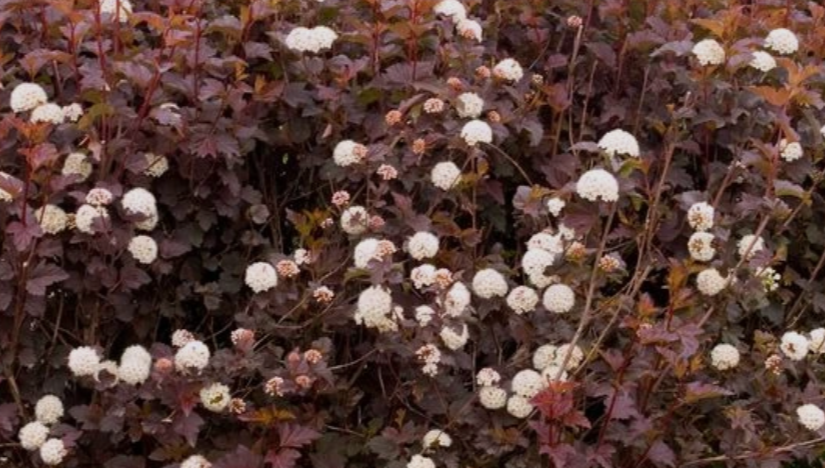
Diabolo Ninebark: The Purple-Leaved Shrub That Made Ninebark Famous
Diabolo ninebark is the shrub that turned an overlooked native plant into one of the best-selling landscape shrubs in North America. Before it arrived in the late 1990s, common ninebark was a plain green shrub used mostly in windbreaks and conservation plantings. Diabolo changed that with leaves of deep, glossy purple, so dark they look almost black in some light. It quickly became a favorite of garden designers, landscapers, and homeowners from Minnesota to Maryland.
It is still one of the most widely planted purple-leaved shrubs on the continent, more than 25 years after its release. It is tough enough to survive the coldest winters of the northern Plains. It also has white spring flowers, red summer seed pods, and peeling winter bark, so it has something to look at in every season.
Botanical Classification
Diabolo ninebark is a cultivar, or named garden variety, of common ninebark, a deciduous shrub in the rose family native to central and eastern North America. Its official cultivar name is ‘Monlo’. Diabolo is its registered trademark name. Nurseries and garden centers also sell it as Diablo, or simply as purple ninebark, and all 3 names refer to the same plant.
As a selection of common ninebark, it shares the species’ toughness and growth habit. The difference is its leaf color. Everything else, from its lobed leaves and arching branches to its flowers, seed pods, and peeling bark, is typical of the wild shrub.
Brief History
Diabolo was developed at Kordes Nursery in Germany, a company better known for its roses. It was introduced to American gardens in 1999 and patented in the United States in February 2000 under plant patent number 11,211. Monrovia Nursery now owns the trademark. McKay Nursery in Wisconsin was also involved in bringing it to American gardeners.
The name causes some confusion. The plant is often sold as “Diablo,” the Spanish word for devil, but the original trademark name is “Diabolo.” According to Monrovia, the name comes from the Latin and Greek words for devil, not from Spanish. Either way, the devilish name suits the shrub’s dark, smoky foliage. By the early 2000s, Diabolo had become a sensation in garden design circles. Its success led breeders to develop dozens of new ninebark cultivars in purple, red, gold, and copper.
Also Read: Different Types of Ninebark Shrubs
Identifying Characteristics
Diabolo ninebark is a large, multistemmed shrub with an upright, spreading form and gracefully arching branches. At maturity it usually reaches 8 to 10 feet tall and wide, though it can be kept smaller with pruning. The leaves are alternate, 3-lobed, and toothed, about 2 to 3 inches long. They emerge deep reddish-purple in spring and darken to a rich maroon or nearly black purple by summer.
In late spring to early summer, typically late May to mid-June, the shrub produces rounded clusters of small, white to pinkish-white flowers. They stand out sharply against the dark leaves. The flowers are followed by showy clusters of inflated, bright red seed pods in late summer. On older stems, the bark peels away in papery, tan to cinnamon-brown strips, giving the shrub texture after the leaves have dropped.
Seasonal Interest
Diabolo ninebark is a 4-season shrub. In spring, the new purple leaves unfold early and give the garden instant color. Late spring and early summer bring the flower clusters. By late summer, the bright red seed pods add another layer of color, and in many gardens they hang on into fall.
The leaves usually hold their purple color until frost and may turn bronze or yellowish-bronze before dropping in late fall. In winter, the bare, arching stems show off their shaggy, peeling bark. That bark adds texture to a snowy landscape, especially when the shrub is planted where it can be seen from a window.
Landscape Uses
Diabolo ninebark is one of the most versatile large shrubs for North American gardens. It works as a hedge, privacy screen, or windbreak, and as a backdrop at the back of a mixed border. Its size and dark color make it an excellent accent or focal point in large beds. It can also be massed on slopes, where its roots help control erosion.
Designers often use Diabolo as a color contrast plant. Its dark purple foliage makes a dramatic background for plants with silver, chartreuse, gold, or blue-green leaves. Good partners include gold ninebarks, golden spireas, silver-leaved Russian sage, blue spruce, lime-green hydrangeas, ornamental grasses, and bright perennials such as yellow coneflowers or orange daylilies. Against a light-colored fence or wall, its dark silhouette is especially striking.
Growing Considerations
Diabolo ninebark is easy to grow across most of the United States and southern Canada. It is hardy in USDA zones 2 to 7, which means it survives winters as cold as minus 40 degrees Fahrenheit. It grows best in full sun, at least 6 hours of direct light a day. Sun is needed to keep the leaves deep purple. In shade, the foliage fades to a dull greenish-purple and the shrub flowers less.
Leaf color also fades in hot climates. In the South and lower Midwest, summer heat often turns the leaves a muddy green-bronze by midsummer. Afternoon shade helps a little in those regions, but the cooler northern half of the country is where Diabolo looks its best.
The shrub tolerates a wide range of soils, including clay, sand, and rocky ground, and does well in both acidic and slightly alkaline conditions. Water newly planted shrubs regularly through their first growing season. Once established, Diabolo is fairly drought-tolerant, though it looks best with occasional deep watering during long dry spells. Fertilizer is rarely needed. Too much nitrogen produces soft, leggy growth that is more prone to disease.
Pruning
Diabolo ninebark blooms on wood from the previous year, so prune right after flowering in early summer to keep the next year’s flowers. Every 2 to 3 years, remove about ⅓ of the oldest, thickest stems at ground level. This keeps the shrub vigorous and open, and the new shoots that replace the old ones often have the brightest purple color.
Overgrown shrubs can be renewed by cutting the entire plant back to about 1 foot above the ground in late winter or early spring. Diabolo regrows quickly, though it will skip a season of flowers and lose much of the showy peeling bark that develops on older stems. For a more formal look, it can be sheared lightly into a hedge after flowering.
Pests and Diseases
Powdery mildew is the most common problem with Diabolo ninebark, especially in hot, humid summers and on shrubs growing in shade or crowded sites. It shows up as a white, dusty coating on the leaves in mid to late summer. It is mostly cosmetic but can make the dark foliage look grayish and unattractive. Plant Diabolo in full sun with good air circulation, water at the base rather than overhead, and thin crowded stems to reduce problems. Newer purple cultivars such as Summer Wine have better mildew resistance.
Leaf spot and, occasionally, fire blight can affect stressed plants. Insect pests are usually minor, though leaf beetles and aphids sometimes feed on the foliage. Deer generally avoid ninebark, which makes Diabolo a good choice for gardens in deer country.
Diabolo Versus Newer Purple Ninebarks
Since Diabolo’s success, breeders have released many newer purple ninebarks, and some gardeners now prefer them for smaller spaces. Summer Wine and Tiny Wine are more compact and have finer-textured leaves. Little Devil, a dwarf selection, stays small enough for containers and foundation plantings. Several newer cultivars also resist powdery mildew better than the original.
Diabolo is still the best choice for gardeners who want a large, fast-growing purple shrub for screening, hedging, or a bold accent. No other purple ninebark combines its size, dark leaf color, and track record. More than 2 decades on, it remains the standard that newer purple ninebarks are measured against.
Sources
Oklahoma State University Extension, “Diabolo Ninebark”
Oregon State University Landscape Plants, “Diabolo Ninebark”
Purdue Arboretum, “Diabolo Eastern Ninebark”
NC State Extension Gardener Plant Toolbox, “Ninebark”
University of Connecticut Plant Database, “Common Ninebark, Eastern Ninebark”