Pacific Ninebark: The Native Streamside Shrub of the West Coast
Pacific ninebark is one of the most useful native shrubs in western North America. It grows along creeks, wet meadows, and woodland edges from Alaska to California. Gardeners in the East know its cousin, common ninebark, mostly through purple- and gold-leaved nursery varieties. Pacific ninebark has had no such makeover. It is still mostly a plant of wild places, restoration projects, and native gardens, where its job is holding stream banks together and feeding native bees.
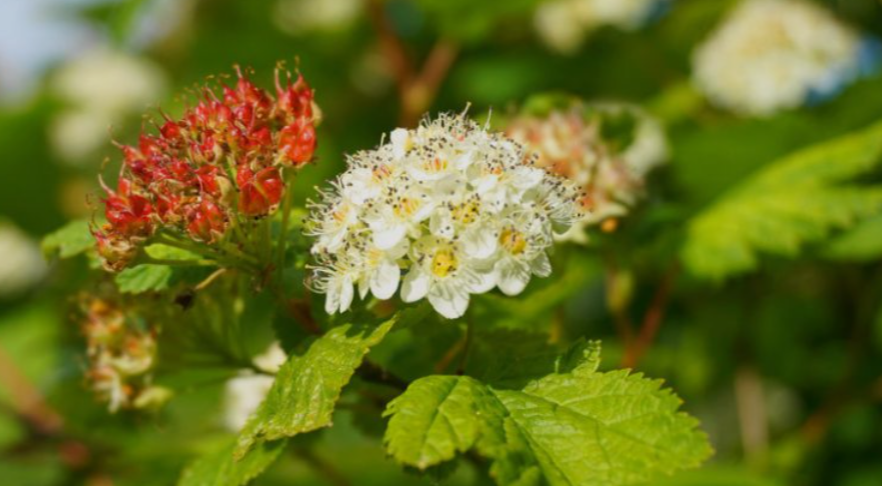
Few shrubs fill that role as well. It grows quickly, tolerates soggy soil that kills many ornamentals, and forms dense thickets that shelter songbirds. In late spring it covers itself in rounded clusters of white flowers, followed by reddish seed pods that hang on into winter. It is a mainstay of Pacific Northwest restoration work.
Botanical Classification
Pacific ninebark belongs to the rose family, alongside roses, spireas, thimbleberry, salmonberry, and Indian plum. Its small, 5-petaled flowers and maple-like leaves are typical of its branch of the family. It is also called tall ninebark, a nod to its large size compared with the low mountain and dwarf ninebarks found farther inland.
The ninebark group is small. There are only about 8 to 10 species worldwide, and all but 1 are native to North America. The exception grows in northeastern Asia. Pacific ninebark is the western counterpart of common ninebark of the eastern United States. The 2 look much alike, but Pacific ninebark has larger, more rounded flower heads and slightly bigger seed pods. It is also adapted to the mild, wet winters and dry summers of the West Coast.
Brief History
Pacific ninebark has a long record of use by Indigenous peoples of the Northwest. Tribes made children’s hunting bows, needles, and other small tools from its tough, flexible wood, and used the straighter shoots for arrows. The bark and roots were also prepared as an emetic, purgative, and laxative. The USDA notes that the plant is considered toxic by some, so it should never be used as a home remedy.
Like other ninebarks, it gets its common name from its shredding bark. Early observers believed each stem carried 9 layers of peeling bark. Settlers and botanists in the 19th century recognized it as a characteristic shrub of Northwest wetlands and riverbanks. Since the late 20th century it has become a staple of watershed restoration in Washington, Oregon, and northern California, where agencies and land trusts plant it by the thousands to stabilize eroding banks and restore salmon habitat.
Identifying Characteristics
Pacific ninebark is a deciduous, multistemmed shrub with an upright to arching habit. Most plants reach 6 to 12 feet tall. In ideal streamside sites, old shrubs can reach 15 feet tall and 15 feet wide. The leaves are alternate, glossy, dark green, and shaped like small maple leaves, with 3 to 5 lobes and toothed edges. In fall they can turn yellow to reddish-brown before dropping.
The flowers appear in late spring to early summer. They are small, white, sometimes faintly pink, and packed into dense, rounded clusters about 2 to 3 inches across that look like snowy puffs against the dark leaves. After flowering, each bloom develops into a cluster of small, inflated, reddish to brown seed pods up to about ½ inch long. These dry pods split open when mature and often persist on the branches through winter. The older stems are covered in brown bark that peels away in thin, papery strips.
Native Range and Habitat
Pacific ninebark is native from southeast Alaska through British Columbia, Washington, and Oregon, south to the coast ranges of Santa Barbara County in California. It also extends inland to Idaho, Montana, and Utah. It is most common west of the Cascade Range, in lowlands and foothills with abundant winter rain.
In the wild it grows along streams and rivers, in wet meadows and coastal marshes, on lakeshores, and at the edges of moist woods. It also appears in ash swales and sometimes at drier, shrubby sites. It often grows alongside willows, red-osier dogwood, twinberry, and Douglas spirea, forming the dense shrub layer that shades streams and keeps water cool for fish.
Also Read: Types of Ninebark Shrubs
Landscape Uses
Pacific ninebark is a top choice for rain gardens, bioswales, pond edges, and other spots that stay wet through winter. It handles seasonal flooding well, and its roots bind soil on stream banks and slopes. Oregon State University Extension recommends it for streamside plantings, where it provides cover for wildlife, erosion control, and attractive white flowers in late spring.
In home gardens, it makes an excellent informal hedge, privacy screen, or background shrub in a native border. Its size and loose, arching shape suit naturalistic landscapes better than tightly clipped formal gardens. Gardeners with less space can look for ‘Tilden Park’, a low, spreading selection about 5 feet tall that spreads by underground runners. It works well as a tall groundcover on banks.
Wildlife Value
Pacific ninebark is a valuable plant for native pollinators. Its flowers are pollinated mostly by native bees, and butterflies visit as well. Because it blooms after many early spring shrubs have finished, it helps fill a gap in the nectar supply in late spring and early summer.
Its dense thickets give birds excellent nesting sites and shelter many other species, including small mammals and amphibians near water. The plant has low palatability for deer, elk, and bear, although mountain goats have been seen eating it. That browse resistance makes it a reliable choice for rural properties and restoration sites where deer wipe out more palatable shrubs.
Growing Considerations
Pacific ninebark is easy to grow in the Pacific Northwest and northern California, as long as it gets enough moisture. It thrives in full sun to partial shade. In full sun it flowers most heavily and stays bushy, while in shade it grows taller and looser with fewer blooms. It tolerates a wide range of soils, from sandy to heavy clay, and prefers slightly acidic conditions.
Moisture is the key requirement. In the wild it grows where soil stays damp for much of the year, so in gardens it does best in naturally moist spots or with regular summer watering. Established plants handle short dry spells, but long summer droughts cause leaf drop and stress, especially in sunny, inland gardens. A 2- to 3-inch layer of mulch helps hold soil moisture. Fertilizer is rarely needed.
Pruning is simple. Pacific ninebark blooms on wood from the previous year, so do any shaping right after flowering. Every few years, remove some of the oldest stems at the base to keep the shrub vigorous and open. Overgrown plants can be cut back hard in late winter and will regrow quickly, though they will flower less the following spring.
Propagation
Pacific ninebark is one of the easiest native shrubs to propagate, which is part of why restoration crews use it so heavily. It grows well from seed, hardwood cuttings, and live stakes. Seed needs a cold treatment of about 2 to 4 months before it will germinate. Gardeners can mimic this by sowing seed outdoors in fall and letting winter weather do the work.
Cuttings are the quicker route. Softwood cuttings taken in late spring and hardwood cuttings taken in winter root readily. Along streams, restoration crews often push dormant live stakes, freshly cut sections of stem, directly into moist soil in late winter, where they sprout roots and leaves the following spring. Plants are routinely available in containers or bare-root from west coast native plant nurseries.
Pests and Diseases
Pacific ninebark is a tough, low-maintenance shrub with few serious problems. Powdery mildew can appear on the leaves in late summer, especially in shaded, crowded, or drought-stressed plantings. It is mostly cosmetic. Good airflow, adequate water, and enough sun keep it under control.
Aphids may cluster on tender new shoots in spring, and leaf-chewing beetles and caterpillars sometimes nibble the foliage. Healthy shrubs shrug off this minor damage, and the insects feed birds and beneficial predators. Chemical treatments are rarely needed and are best avoided near streams, where they can harm fish and aquatic insects.
Sources
USDA Natural Resources Conservation Service, “Plant Fact Sheet: Pacific Ninebark”
Oregon State University Extension Service, “Pacific Ninebark”
University of Washington Bothell, “Pacific Ninebark”
USDA Forest Service, “Woody Plant Seed Manual: Ninebark”
University of Washington, “Plant Propagation Protocol for Pacific Ninebark”