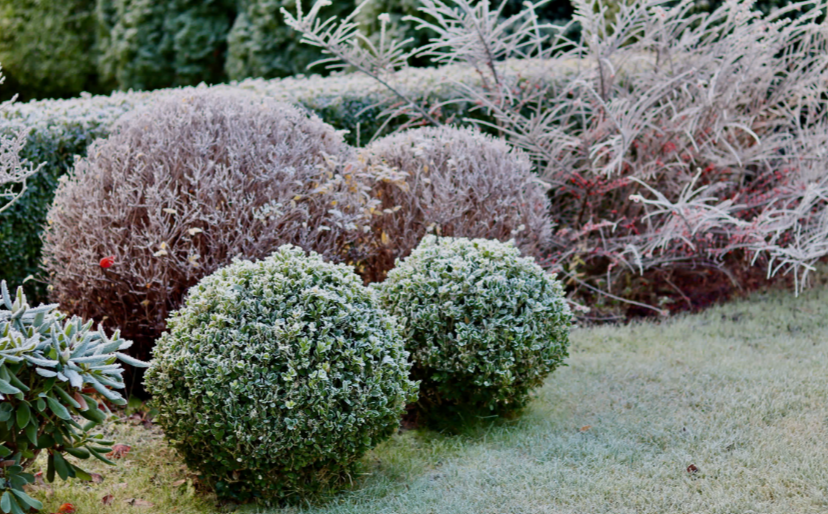
Chicagoland Green boxwood is a cold-hardy evergreen shrub selected at the Chicago Botanic Garden for one demanding job: staying green and healthy through the long, windy winters of northern Illinois. It forms a dense, rounded mound of glossy green leaves that closely resembles classic English boxwood. Unlike English boxwood, however, it tolerates the harsh cold of the Upper Midwest. Since its introduction, it has become one of the most widely planted boxwoods in the northern United States, valued for hedges, foundation plantings, and formal gardens.
Chicagoland Green is sold under the cultivar name ‘Glencoe’, after the Chicago suburb where the Chicago Botanic Garden is located. It is part of a small group of cold-hardy hybrid boxwoods that brought the formal boxwood look to gardens where traditional varieties could not survive. This guide covers its origin, how to identify it, how it compares with similar boxwoods, and how to grow it well.
Botanical Classification
Chicagoland Green is a broadleaf evergreen shrub in the boxwood family, a small group of slow-growing shrubs and small trees best known for their dense, fine-textured foliage. It is a hybrid between Korean boxwood and common, or English, boxwood. That parentage gives it the best traits of both. Korean boxwood contributes exceptional cold hardiness and a compact habit. English boxwood contributes richer green color and a fuller, more refined appearance.
This same cross produced several other cold-hardy hybrid boxwoods. Among them are the famous Sheridan hybrids developed in Ontario, Canada, including ‘Green Velvet’, ‘Green Mountain’, and ‘Green Gem’. Chicagoland Green is so similar to ‘Green Velvet’ in size, shape, and leaf color that many nursery professionals find the 2 varieties very difficult to tell apart. Both are often recommended interchangeably for northern gardens.
Brief History
Chicagoland Green was selected from the boxwood collection at the Chicago Botanic Garden in Glencoe, Illinois. Northern Illinois is known for some of the toughest winter conditions in the country for broadleaf evergreens. Bitter cold, strong winds off Lake Michigan, and bright winter sun often damage boxwoods. Plants that remained healthy and green through these conditions were evaluated for their potential as landscape plants.
The variety was introduced through Chicagoland Grows, a plant introduction program formed by the Chicago Botanic Garden, the Morton Arboretum, and the Ornamental Growers Association of Northern Illinois. The Chicago Botanic Garden explains that the program promotes plant cultivars that perform well in northern Illinois. Chicagoland Green proved so dependable that it spread far beyond the Chicago region. It is now grown across the Midwest, the Northeast, and other cold-winter areas of the United States.
Also Read: Best Boxwood Varieties for Zone 3 Gardens
Identifying Characteristics
Chicagoland Green forms a dense, rounded to broadly oval shrub that is usually wider than it is tall. Plants typically reach 3 to 4 feet tall and up to 5 feet wide after about 15 years. Twelve-year-old plants at the Chicago Botanic Garden measure about 3 feet tall and 5 feet wide. Its uniform shape gives it a naturally neat appearance even with little pruning.
The leaves are small, oval, and glossy, typically about ½ to 1 inch long, with a medium to deep green color. They are arranged in opposite pairs along the stems and are packed closely together, creating a fine, dense texture. The foliage holds its green color well through most winters, though plants in exposed, sunny sites may take on a light bronze tint. In spring, tiny, fragrant, pale yellow-green flowers appear among the leaves and attract early bees.
Chicagoland Green grows at a slow to moderate rate, typically adding about 2 to 3 inches per year. That makes it easy to keep tidy in hedges and borders. It looks very much like a small English boxwood in the landscape. Its hybrid vigor and cold tolerance, however, make it far more reliable in northern climates.
Hardiness and Climate
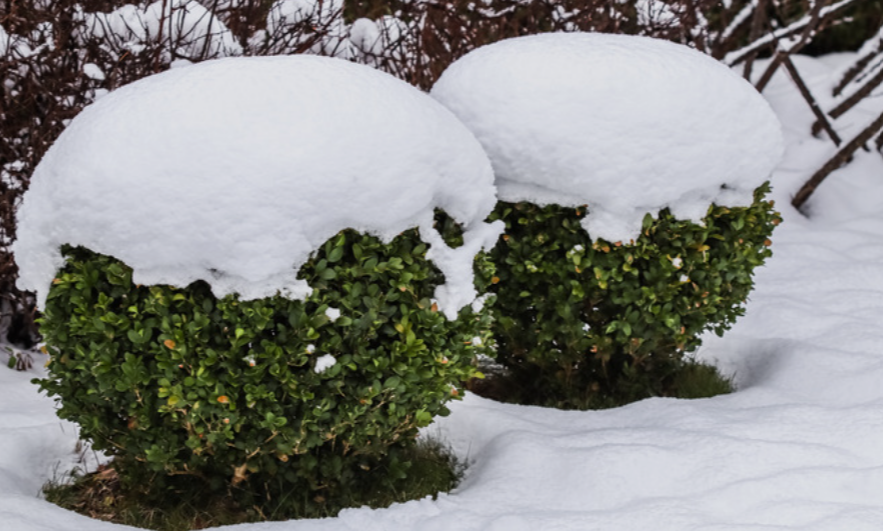
Chicagoland Green is generally rated hardy in Zones 4b or 5 through 8, depending on the source. That makes it suitable for much of the northern and central United States. It tolerates cold winters, summer heat, and humidity better than English boxwood, and it adapts well to the variable weather of the Midwest. It also tolerates both full sun and shade, though its winter color is best in partial shade.
Like all boxwoods, Chicagoland Green can suffer winter burn in harsh, exposed locations. Strong winter winds and bright sun can dry out the leaves while the ground is frozen, causing browning, especially on the side facing the wind. Iowa State University Extension notes that boxwoods are marginally hardy in Iowa and can suffer from foliar burn and twig kill in severe winters in exposed locations. Choosing a sheltered site greatly reduces the risk.
Landscape Uses
Chicagoland Green is one of the best boxwoods for low to medium hedges in northern gardens. Its broad, uniform shape fills in quickly between plants to form a continuous green wall. It responds well to shearing and can be trimmed into rounded, squared, or formal shapes. Many gardeners use it to edge walkways, define garden beds, and frame entrances.
It also works well as a foundation shrub, providing year-round greenery along the base of homes. Its rounded form makes it attractive as a specimen or in groups, and it pairs well with flowering perennials, ornamental grasses, and taller evergreens. Its moderate size allows it to fit into both large and small gardens. It also grows well in large containers for patios and entryways.
Chicagoland Green is generally resistant to deer and rabbits, a major advantage in suburban and rural landscapes where wildlife browsing is common. That makes it useful in areas where yews, arborvitae, and other evergreens are often damaged. Its fragrant spring flowers also offer a small but welcome nectar source for early-season pollinators.
Growing Considerations
Plant Chicagoland Green in spring or early fall in a site with well-drained soil. Boxwoods have shallow, fine roots that are easily damaged by soggy conditions, so avoid low spots where water collects. The shrub tolerates a range of soils, including clay and slightly alkaline soils, as long as drainage is good. Plant at the same depth as the root ball or slightly higher, never deeper.
Water new plants deeply once or twice a week through their first growing season. Once established, Chicagoland Green needs about 1 inch of water per week during dry weather. Spread 2 to 3 inches of mulch over the root zone to keep the soil cool and moist, but keep mulch a few inches away from the stems. Fertilize lightly in early spring if needed, and avoid feeding after midsummer.
Prune Chicagoland Green in late spring or early summer, after the first flush of new growth has hardened. Light shearing once or twice a year keeps hedges neat. Every few years, thin the interior by removing a few small branches to improve airflow. Avoid heavy pruning in late summer or fall, which encourages tender growth that can be damaged in winter.
Also Read: Different Types of Boxwood Shrubs
Winter Protection
In exposed, windy, or sunny locations, Chicagoland Green benefits from winter protection. Water plants deeply in late fall before the ground freezes, so they enter winter well hydrated. A burlap screen placed on the windward and sunny sides, with space left between the burlap and the shrub, can reduce winter burn. Avoid wrapping plants tightly.
Heavy snow can bend or split boxwood branches. Gently brush snow off plants after storms, sweeping upward rather than pressing down. Avoid piling salty snow from driveways and sidewalks on top of plants, since road salt damages leaves and roots. In spring, prune out any dead or damaged branches once new growth begins.
Pests and Diseases
Chicagoland Green is generally a tough, low-maintenance shrub, but it has some notable weaknesses. It is very susceptible to boxwood leafminer, a small fly whose larvae feed inside the leaves. The damage causes blister-like swellings and yellowing. Inspect plants in spring and early summer for blistered leaves and treat according to local extension recommendations if infestations become heavy.
Chicagoland Green shows variable results with boxwood blight, a serious fungal disease that causes rapid leaf drop and dieback. Good spacing, airflow, and avoiding overhead watering help reduce the risk. Like all boxwoods, it is also susceptible to the box tree moth, an invasive caterpillar now spreading through parts of the Midwest and Northeast. Regular inspection for chewed leaves, webbing, and caterpillars is essential where that pest is present.
Sources
Chicago Botanic Garden, “Buxus ‘Glencoe’ (Chicagoland Green Boxwood)”
Iowa State University Extension and Outreach, “Managing Winter Injury to Boxwood”
University of Wisconsin–Madison Extension, “Boxwood Blight”
Purdue Landscape Report, “Blight, Leafminers, and Moths: The Plight of Boxwoods”