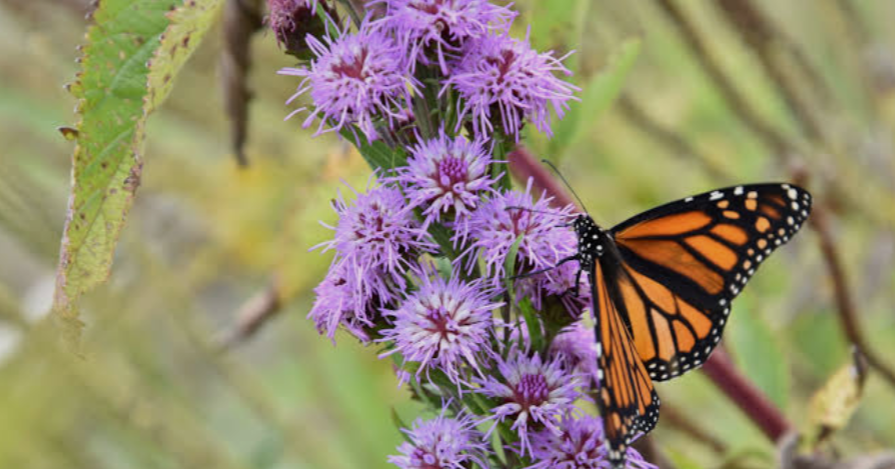
Learning how to grow and care for liatris is one of the easiest ways to bring height, color, and a crowd of butterflies into a sunny garden. Commonly called blazing star or gayfeather, liatris is a native North American perennial that sends up tall, bottlebrush-like spikes of fuzzy purple, pink, or white flowers from midsummer into fall. Unlike almost every other spike-forming flower, liatris opens from the top down, so the tip of each spike blooms first and the color travels slowly toward the base. That unusual habit stretches each spike’s display over several weeks and gives the plant its fiery, “blazing” look.
Liatris belongs to the aster family, the same plant group as coneflowers, goldenrods, and sunflowers. About 40 species grow wild across North America. They range from dry, sandy prairies and pine barrens to wet meadows and bog edges, and the most widely sold garden species, dense or marsh blazing star, is native across much of the eastern United States. Most garden types are hardy from USDA Zones 3 through 8 or 9, so liatris grows in gardens from Minnesota and Maine to Texas and northern Florida.
Liatris is also remarkably long-lived. Penn State Extension notes that dense blazing star is an erect, slender perennial that often lasts as long as 20 years, an impressive lifespan for a plant that needs so little attention. It grows from a rounded underground storage organ called a corm, which looks much like a small, lumpy potato. Each spring the corm sends up a clump of narrow, grass-like leaves, followed by flower stalks that typically reach 2 to 4 feet tall, with some species reaching 6 feet or more.
Few garden plants are as valuable to wildlife. Blazing star flowers are a favorite nectar source for monarch butterflies, swallowtails, fritillaries, skippers, hummingbird moths, and native bees. Large clumps can attract dozens of butterflies at once during late summer, when monarchs are fattening up for their fall migration. After the flowers fade, the fluffy seed heads feed goldfinches and other songbirds well into late fall and winter.
Liatris is just as useful to gardeners as it is to pollinators. It is deer resistant in most areas and tolerates summer heat and humidity. Once established it handles drought and poor soil better than many traditional perennials. Its tall, vertical spikes are prized in cut-flower arrangements and dried bouquets, and the foliage often turns a warm golden-bronze in autumn, adding a final season of color before the plant dies back to the ground.
The secret to success with liatris is understanding where it comes from. Blazing star evolved in open, sunny grasslands where soils drain quickly and competition is fierce, so it struggles in rich, soggy, or shady garden beds. Give it sun, sharp drainage, and a little patience, and it will reward you with years of reliable blooms. The 16 steps below walk you through everything from choosing the right species to dividing mature clumps and preparing plants for winter.
16 Steps for Growing and Caring for Liatris
1. Choose the Right Blazing Star for Your Garden
Not all liatris species grow the same way, so choosing the right type for your conditions is the first step to success. Dense or marsh blazing star is the most common garden species and the most forgiving. It tolerates average to moist soils and is the parent of popular cultivars such as ‘Kobold’, ‘Floristan White’, and ‘Alba’. Rough blazing star and prairie blazing star are excellent choices for dry, sunny prairie-style plantings. Meadow blazing star is especially valued in the Upper Midwest as a monarch magnet.
Height is another important consideration. Compact cultivars such as ‘Kobold’ typically grow 18 to 30 inches tall, making them ideal for borders, small gardens, and containers. Taller species, such as prairie blazing star, can reach 4 to 5 feet and look best toward the back of a border or in a meadow planting. Whenever possible, choose a species native to your region, since local types are best adapted to your climate and support the most native pollinators.
2. Pick a Location with Full Sun
Liatris needs full sun to perform its best, ideally at least 6 to 8 hours of direct sunlight each day. In full sun, the stems grow strong and upright, the flower spikes are dense and colorful, and the plants resist disease better. Liatris grown in partial shade often produces thinner stems that lean or flop and fewer, weaker flower spikes.
In the hottest parts of the South, a little afternoon shade is acceptable, especially for dense blazing star, which tolerates more moisture and slightly less sun than prairie species. In most of the United States, however, the sunniest spot in your garden is the right choice. Open beds, south-facing borders, meadow plantings, and sunny slopes are ideal locations for blazing star.
3. Prepare Well-Drained, Lean Soil
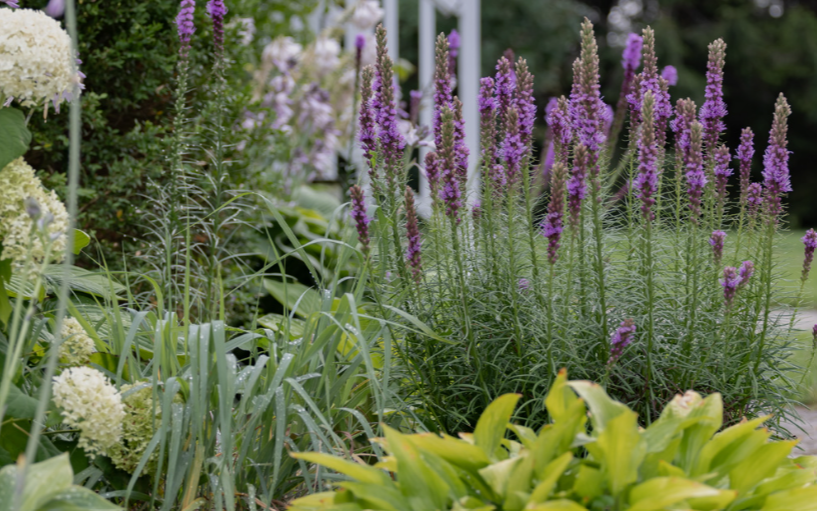
Good drainage is the single most important factor in growing liatris. The corms rot quickly when they sit in cold, wet soil, especially in winter. Before planting, check that water drains away within a few hours after a heavy rain. In heavy clay, improve drainage by planting on a gentle slope, in a raised bed, or in a mounded area of soil mixed with coarse sand or fine gravel.
Unlike many garden perennials, liatris does not need rich soil. In fact, soil that is too fertile or high in compost produces tall, soft stems that tend to flop over. Average to lean garden soil is best, and most species grow well in sandy, rocky, or clay-loam soils as long as drainage is good. Liatris tolerates a soil pH from mildly acidic to neutral, so most garden soils are suitable without adjustment.
4. Decide Between Corms, Seeds, or Potted Plants
Liatris can be grown from dormant corms, from seed, or from nursery-grown potted plants, and each method has advantages. Corms are inexpensive and widely available in garden centers each spring, and they usually bloom the first summer after planting. Potted plants cost more but establish quickly and often bloom the same season. They are a good choice for gardeners who want instant results.
Growing from seed is the most economical way to plant large areas, such as meadows and prairie restorations, though seed-grown plants generally take 2 years to bloom. When buying corms, choose large, firm corms with no soft spots or mold. Larger corms generally produce taller, fuller flower spikes in their first season. Store corms in a cool, dry place until planting.
Also Read: How To Grow And Care For Liatris
5. Plant Corms at the Right Time and Depth
Plant liatris corms in spring, after the danger of hard frost has passed and the soil has begun to warm. In mild-winter regions, corms can also be planted in fall. Planting depth matters more than many gardeners realize. Corms are usually planted about 1 to 2 inches deep, with the top of the corm facing upward. Planting too deeply can delay emergence and increase the risk of rot.
The top of a liatris corm is usually the side with a slight depression or dried remains of old stems, while the bottom often has small root nubs. If you can’t tell which end is up, plant the corm on its side and it will naturally send roots down and shoots up. Water thoroughly after planting to settle the soil. From planting to bloom, liatris corms typically take about 70 to 90 days.
6. Start Liatris from Seed with Cold Stratification
Liatris seeds need a period of cold, moist conditions before they will germinate well. This process, called cold stratification, mimics the winter conditions the seeds would experience in the wild. Seeds sown outdoors in late fall or early winter receive this treatment naturally and will sprout the following spring. This is the easiest method for meadows and large plantings.
To start seeds indoors, mix them with slightly damp sand or seed-starting mix and seal them in a plastic bag. Refrigerate them for about 60 days, then sow them in flats or small pots, barely covering the seeds with soil. Keep them at room temperature in bright light. Seedlings grow slowly in their first year, focusing on building a healthy corm, and they usually bloom in their second summer.
7. Space Plants for Airflow and Visual Impact
Proper spacing keeps liatris healthy and helps it look its best. Space corms or young plants about 12 to 15 inches apart, a little closer for compact cultivars and a little wider for tall species. Good spacing allows air to circulate between plants, which reduces leaf diseases, and gives each clump room to expand as its corms multiply over the years.
For the most dramatic effect, plant liatris in groups of at least 5 to 7 corms rather than as single plants. A cluster of blazing star spikes makes a far stronger vertical statement and attracts more butterflies than a scattered planting. Pair liatris with coneflowers, black-eyed Susans, butterfly weed, coreopsis, bee balm, and ornamental grasses for a classic prairie-style combination that blooms in waves from summer into fall.
8. Water Wisely, Especially in the First Year
Newly planted liatris needs regular watering until it is established. Water deeply about once a week during dry weather in the first growing season, keeping the soil lightly moist but never waterlogged. Deep watering encourages roots to grow downward, which helps the plants tolerate drought in later years.
Once established, most liatris species are quite drought tolerant and rarely need supplemental watering except during prolonged dry spells. Dense blazing star appreciates more consistent moisture than prairie species and performs well in rain gardens and along pond margins, as long as water doesn’t pool around the corms. Avoid overhead watering in the evening, which keeps the foliage wet overnight and encourages leaf diseases.
9. Skip Heavy Fertilizer
Liatris is adapted to lean prairie soils and seldom needs fertilizer. Too much fertilizer, especially nitrogen, produces lush, soft growth and tall stems that bend or flop. It can also reduce flowering and make the plants more vulnerable to disease. In most gardens, the natural fertility of the soil provides all the nutrients blazing star needs.
If your soil is extremely poor or sandy, you can work a small amount of compost into the planting area, or apply a light dose of balanced, slow-release fertilizer in early spring as new growth emerges. Avoid fertilizing later in the season. Late feeding encourages soft growth that is more prone to flopping and winter damage.
10. Mulch Lightly and Keep the Crown Clear
A thin layer of mulch helps conserve soil moisture, suppress weeds, and moderate soil temperature around liatris. Use a light mulch, such as shredded leaves, fine bark, or pine straw, spread about 1 to 2 inches deep. In very dry regions, a gravel mulch works especially well, since it keeps the crown dry while still holding moisture in the soil below.
Keep mulch pulled back a few inches from the base of the plant. Heavy mulch piled against the crown traps moisture around the corms and can lead to rot, particularly in winter and early spring. Weed carefully around young liatris, since the emerging grass-like leaves are easy to mistake for weedy grasses and pull out by accident.
11. Stake Tall Varieties When Needed
Most liatris stems stand upright on their own when grown in full sun and lean soil. Taller species and cultivars, however, can lean or flop, especially after heavy rain or in windy, shady, or overly fertile sites. If your plants tend to fall over, insert thin stakes or install a small ring support in spring, before the flower stalks reach full height.
You can also reduce the need for staking by planting liatris among sturdy companion plants such as ornamental grasses, coneflowers, and asters, which help support the tall stems naturally. Choosing compact cultivars, avoiding excess fertilizer, and providing plenty of sun are the best long-term strategies for keeping blazing star upright.
12. Deadhead or Leave Seed Heads for Birds
Because liatris blooms from the top down, the upper part of a spike often fades while the lower flowers are still open. You can neaten plants by snipping off the faded top portion of each spike, which encourages the remaining flowers to keep blooming and may produce a few smaller side spikes. Once the entire spike has finished flowering, you can cut the stem back to the foliage.
Many gardeners prefer to leave the spent flower spikes standing. The fluffy seed heads are an important late-fall and winter food source for goldfinches, chickadees, and other songbirds, and they add texture to the winter garden. Leaving seed heads also allows liatris to self-sow lightly. That can be welcome in meadow and naturalistic plantings, but in formal borders you may want to remove the seed heads instead.
13. Harvest Liatris for Cut and Dried Flowers
Liatris is one of the best garden flowers for cutting, and it is widely grown commercially for the florist trade. For fresh arrangements, cut stems when about the top third of the spike is open. The remaining buds will continue opening in the vase. Cut early in the morning, strip the lower leaves, and place the stems in cool water right away. Fresh liatris usually lasts 1 to 2 weeks in a vase.
Liatris also dries beautifully. For dried arrangements, cut the stems when the spikes are nearly fully open, then bundle them and hang them upside down in a dark, dry, well-ventilated place for 2 to 3 weeks. Dried liatris keeps its color well and often develops a light vanilla-like fragrance, making it a lovely addition to everlasting bouquets and wreaths.
Also Read: How to Grow and Care for Chrysanthemums: The Simple Way
14. Divide Clumps Every Few Years
As liatris matures, its corms multiply and form larger clumps. After about 3 to 5 years, the centers of older clumps can become crowded, producing fewer and smaller flowers. Dividing the clumps refreshes the plants and gives you new plants to expand your garden or share with friends.
Divide liatris in early spring, just as new growth appears, or in fall after the foliage has died back. Carefully dig up the clump, keeping as much of the root system intact as possible. Gently separate the corms with your hands or a sharp knife, making sure each division has at least 1 healthy growing point. Replant the divisions at the same depth as before, and water them well.
15. Protect Liatris from Voles, Rabbits, and Pests
Liatris has few serious insect problems, but its corms and young shoots are a favorite food of voles, mice, and rabbits. Voles can tunnel underground and eat the corms during winter, while rabbits often nibble the tender new growth in spring. To protect plants, consider planting corms inside wire mesh baskets, and use fencing or repellents around new shoots where rabbits are common.
Diseases are usually limited to powdery mildew, leaf spots, and rust, which appear mainly in humid, crowded, or shady conditions. Good spacing, full sun, and watering at the base prevent most of these problems. The most serious threat is corm rot caused by poorly drained soil. Native liatris also hosts specialized caterpillars, such as the liatris flower moth, which feeds on the flowers and seeds but rarely causes significant damage.
16. Prepare Liatris for Winter
Liatris is very cold hardy and needs little winter protection in most of the United States. After a hard frost, the foliage turns golden-brown and dies back to the ground. You can cut the stems back to a few inches above the soil in late fall. Alternatively, leave them standing through winter to feed birds and provide shelter for overwintering insects, then cut them back in early spring before new growth begins.
The biggest winter danger for liatris is not cold but wet soil. In regions with heavy winter rain or snowmelt, make sure water drains away from the crown, and avoid heavy mulch over the corms. Liatris grown in containers is more exposed to cold, so move pots to a sheltered spot, such as an unheated garage, or sink them into the ground for winter. With good drainage and a sunny location, blazing star will return reliably every summer for many years.
Sources
Penn State Extension, “Dense Blazing Star”
NC State Extension Gardener Plant Toolbox, “Marsh Blazing Star”
University of Wisconsin–Madison Extension, “Liatris”
University of Florida IFAS Extension, Northwest District, “Blazing Star”