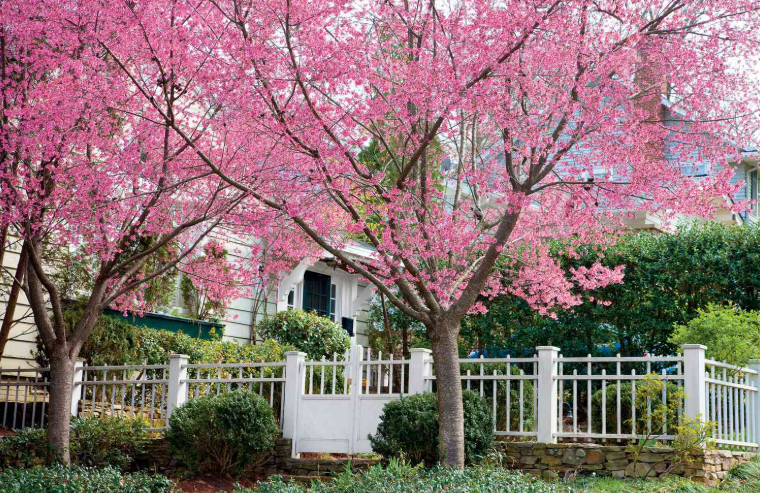
Cherry trees that grow in DC go far beyond the handful of names most visitors learn on a single walk around the Tidal Basin. The National Park Service manages approximately 3,800 cherry trees across the city’s monumental core, and the original 1912 gift from Japan alone included 3,020 trees representing 12 different named varieties. Add in the U.S. National Arboretum’s ongoing breeding program, the native cherry species found in Rock Creek Park and along the Potomac, and the fruiting cherry varieties Mid-Atlantic home gardeners plant for actual eating rather than blossoms, and the full list of cherry trees growing in the District runs well past what most cherry blossom guides cover.
Washington’s climate sits in USDA hardiness zone 7, cold enough in winter to satisfy the chill requirements most ornamental and fruiting cherries need, yet mild enough that the region hosts an unusually wide range of Japanese cultivars alongside American native species. Roughly 70 percent of the cherry trees around the Tidal Basin are a single variety, Yoshino, but the U.S. National Arboretum alone maintains around 70 different cherry species and cultivars, with new hybrids still being bred and released there today. Peak bloom dates have shifted earlier over the decades as the region has warmed, and the National Park Service now tracks bloom timing for each variety separately since they rarely flower in unison.
The 21 varieties below span the famous Tidal Basin cultivars, the lesser-known trees tucked into East Potomac Park and the National Arboretum, DC’s native woodland cherries, and the fruiting cherry trees grown in home orchards across the metro area.
Yoshino Cherry
Yoshino cherry makes up roughly 70 percent of all cherry trees in the park and is responsible for the white, cloud-like effect that circles the Tidal Basin and spills north onto the Washington Monument grounds each spring. The hybrid was first noticed in Tokyo around 1872 and is now one of the most widely cultivated flowering cherries in the world. Trees reach 30 to 50 feet at maturity with a round, wide-spreading habit and clusters of two to five almond-scented white blossoms.
Kwanzan Cherry
Kwanzan cherry accounts for approximately 13 percent of the park’s cherry trees and blooms about two weeks after Yoshino, extending the flowering season well into mid-April. Named after a mountain in Japan, the tree grows to about 30 feet with an upright, spreading form and produces dense, pendulous clusters of double pink blossoms carrying around 30 petals each. Kwanzan is concentrated mainly in East Potomac Park rather than around the Tidal Basin itself.
Akebono Cherry
Akebono cherry makes up about 3 percent of the park’s trees and is a naturally occurring mutation of Yoshino, introduced into cultivation by a California nursery in the 1920s. Its pale pink blossoms fade to white and open at the same time as the surrounding Yoshino trees, adding a subtle blush of color to the earliest stage of peak bloom. Trees reach the same 30- to 50-foot mature size as their Yoshino parent.
Afterglow Cherry
Afterglow cherry was developed as the modern successor to Akebono, offering the same pale pink coloring in a deeper, more saturated shade that has made it increasingly popular in the nursery trade. The National Park Service has been gradually favoring Afterglow over Akebono in new plantings as older Akebono specimens are replaced. Like its parent Yoshino, it shares the same general size and rounded growth habit.
Weeping Higan Cherry
Weeping Higan cherry, sometimes simply called the Weeping Japanese Cherry, makes up about 2.4 percent of the park’s trees and flowers roughly a week before the Yoshino display begins. The tree grows 20 to 40 feet tall with a gracefully weeping, round-flattened crown, and its flower color and form vary considerably by cultivar, ranging from single white blooms to double deep pink clusters. It is interspersed throughout the Tidal Basin among the Yoshino, Akebono, and Kwanzan trees.
Takesimensis Cherry
Takesimensis cherry represents about 5 percent of the park’s cherry population and is notable for tolerating consistently wet, poorly drained soil better than most other cultivars. The tree grows upright to 30 or 40 feet with large clusters of white flowers on short stalks. Because of its moisture tolerance, it has been used experimentally in the low-lying, flood-prone sections of East Potomac Park.
Autumn Flowering Cherry
Autumn Flowering cherry makes up roughly 3 percent of the park’s trees and stands apart from every other Tidal Basin variety by blooming twice: sporadically during warm spells in fall and winter, then fully the following spring. The tree grows 25 to 30 feet tall with a rounded, upright form and semi-double pink flowers. It is also the most cold-hardy of the park’s cherries, tolerating winter lows far below what the other cultivars can withstand.
Usuzumi Cherry
Usuzumi cherry represents about 1.3 percent of the park’s trees and carries a remarkable lineage, propagated from cuttings of a single tree in Japan believed to be more than 1,400 years old and declared a National Treasure there in 1922. The DC trees grow to about 40 feet with a rounded, ascending crown and single white flowers that gradually turn grey as they age. Most of the Usuzumi trees in the District are found in West Potomac Park near the Tidal Basin welcome area.
Sargent Cherry
Sargent cherry accounts for less than 1 percent of the park’s cherry trees but stands out for its exceptional cold hardiness, tolerating winter temperatures as low as negative 20 to negative 30 degrees Fahrenheit. The tree grows upright to 40 or 50 feet with a spread roughly equal to its height and single, deep pink flowers in clusters. Its hardiness has made it a useful parent species in several of the National Arboretum’s newer breeding programs.
Fugenzo Cherry
Fugenzo cherry holds a unique place in DC history as the very first cherry variety planted in the city, when ninety trees were purchased and installed along the Potomac in April 1909, three years before the famous 1912 Japanese gift. The tree grows up to 20 feet with a broad, often flattened crown and double rose-pink flowers, up to 30 petals per bloom, that lighten with age but never fade fully to white. It is counted among the oldest cultivated cherry varieties in Japan.
Shirofugen Cherry
Shirofugen cherry has an unusual origin story in Washington: it was originally mislabeled as Fugenzo when the first 1909 planting occurred, and botanists later determined the trees were actually this closely related cultivar. Its double flowers open white and gradually age to pink, a distinguishing trait from true Fugenzo blossoms, which stay rose-colored throughout. The original mislabeled planting has since disappeared, though the cultivar remains part of the broader historical record of DC’s cherry trees.
Okame Cherry
Okame cherry represents less than 1 percent of the park’s trees but is the earliest-blooming cherry in Washington, often flowering in the District’s streets and parks before most other varieties have broken dormancy. The tree grows to about 25 feet with a 20-foot spread and semi-double pink flowers. Beyond the Tidal Basin, Okame is widely planted throughout the city as a street tree and is a favorite at spots like the National Arboretum and Oxon Run Park.
Dream Catcher Cherry
Dream Catcher cherry was released by the U.S. National Arboretum in 1999 as one of the first two flowering cherry selections from its ongoing breeding program, developed from open-pollinated seedlings of the Okame cultivar. The tree grows to about 25 feet in a distinctive vase-shaped form with dark green foliage and medium-pink flowers. It was bred specifically to combine strong disease resistance with an extended, reliable bloom.
First Lady Cherry
First Lady cherry was released by National Arboretum geneticist Margaret Pooler in 2003 as a cross between the Okame cultivar and Taiwan cherry, part of a planned series honoring former first ladies. The tree reaches about 25 feet with an upright form and dark-pink, single, semi-pendulous flowers. Several specimens grow near the historic Capitol Columns display on the Arboretum grounds.
Helen Taft Cherry
Helen Taft cherry, named for the first lady who helped bring cherry trees to Washington in 1912, was released by the National Arboretum around the centennial of that original gift. It was bred by crossing a Yoshino cherry, cloned from a tree once planted by the Japanese ambassador’s wife, with a Taiwan cherry. The variety continues the arboretum’s ongoing First Lady series of flowering cherry introductions aimed at broadening the genetic diversity of DC’s cherry trees.
Black Cherry
Black cherry is one of the native cherry species that grow wild throughout DC’s wooded parkland, particularly in Rock Creek Park, where mature specimens can reach 60 to 80 feet in the forest canopy. Its small, dark fruit ripens from red to nearly black in late summer and provides an important food source for birds and other wildlife. In fall the glossy leaves turn shades of yellow, orange, and red before dropping.
Chokecherry
Chokecherry grows as a native shrub or small tree in wooded and edge habitats around the District, typically reaching 10 to 25 feet with a thicket-forming habit. It produces clusters of small, extremely tart red to purple-black fruit in late summer, historically used in jellies and syrups since the fruit is too astringent for fresh eating. Unlike the ornamental Japanese cultivars around the Tidal Basin, chokecherry is grown for wildlife value and naturalized landscaping rather than spring display.
Stella Cherry
Stella is a self-fertile sweet cherry variety well suited to Mid-Atlantic home gardens, including those in and around the District, since a single tree can produce a full crop without a second pollinator planted nearby. It typically ripens in early to mid-June, producing firm, dark red fruit on a moderately vigorous tree. Its self-fertility makes it one of the more practical sweet cherry choices for smaller DC-area yards.
Montmorency Cherry
Montmorency is the standard tart cherry grown by Mid-Atlantic home gardeners for baking and preserves, valued for its reliable annual yields and tolerance of the region’s variable winters. The tree is self-fertile and typically ripens in early to mid-June, producing bright red fruit well suited to pies and jams. It remains one of the most widely planted sour cherry cultivars in the eastern United States.
North Star Cherry
North Star is a genetic dwarf sour cherry that rarely exceeds 8 to 10 feet, making it a practical choice for DC-area gardeners working with rowhouse-sized yards or container growing. The tree is self-fertile and ripens in the same general window as Montmorency, producing tart red fruit used mainly for cooking. Its compact size and cold hardiness have made it a popular recommendation for small Mid-Atlantic home orchards.
Bing Cherry
Bing is grown by some DC-area home gardeners willing to provide the well-drained soil and cross-pollination partner the variety requires, typically pairing it with a compatible cultivar like Van planted nearby. The region’s zone 7 winters provide enough chill for Bing to set fruit reliably in favorable microclimates. Fruit ripens to a deep mahogany red in early summer and remains among the most recognized sweet cherries among home growers who attempt it in the area.