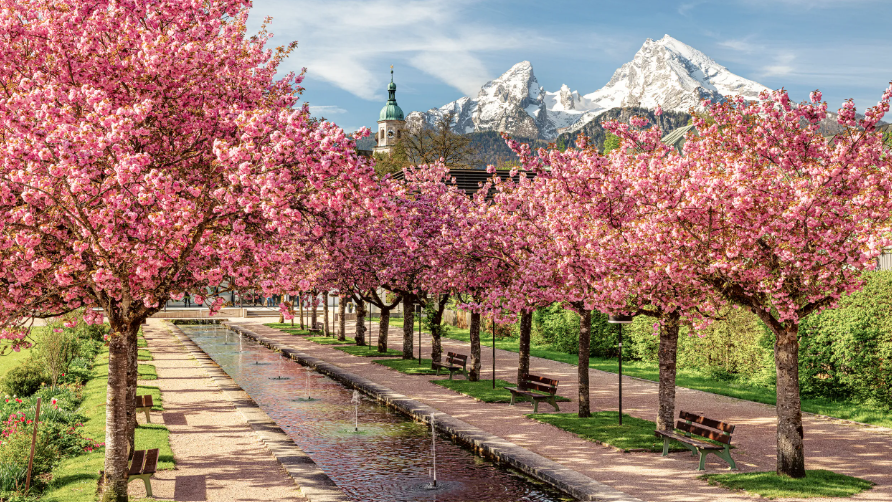
Growing cherry trees in USDA Zone 8 can be surprisingly rewarding, but variety selection matters. Zone 8 has relatively mild winters, and that can be a challenge for traditional cherry cultivars that need substantial winter chilling before they flower and fruit. In warmer parts of the zone, low-chill cherry trees are generally the safest choice, while gardeners in cooler Zone 8 locations may have success with a broader selection.
Another important distinction is that not every cherry tree grown in Zone 8 is grown for its fruit. Some, such as Yoshino and Kwanzan cherries, are planted primarily for spectacular spring flowers. Sweet cherries can also have pollination requirements, although several modern cultivars are self-fertile.
Here are 15 cherry trees worth considering for a Zone 8 garden.
1. Minnie Royal Cherry
Minnie Royal is one of the more interesting choices for warmer Zone 8 gardens because it was selected for relatively low winter-chill conditions. It produces sweet, dark-red fruit and is commonly paired with Royal Lee for pollination.
For gardeners in the warmer portions of Zone 8, this type of low-chill cherry can make more sense than planting a traditional high-chill cultivar.
2. Royal Lee Cherry
Royal Lee is another low-chill sweet cherry suited to warmer climates. It is particularly valuable because it can be planted alongside Minnie Royal to provide compatible cross-pollination.
The combination of Minnie Royal and Royal Lee is one of the more practical choices when winter temperatures are too mild for many conventional sweet cherries.
3. Royal Rainier Cherry
Royal Rainier is an attractive option for cooler parts of Zone 8. It produces light-colored fruit with a reddish blush and is essentially a warm-climate alternative worth investigating where sufficient winter chilling occurs.
It is better suited to a cooler Zone 8 microclimate than to the warmest locations in the zone.
4. Stella Cherry
Stella is a classic sweet cherry with large, dark-red fruit and excellent fresh-eating quality. One of its biggest advantages for home gardeners is that it is self-fertile, meaning a second cherry tree is not necessarily required for pollination.
However, gardeners in Zone 8 should pay close attention to local winter chill before planting it, particularly in warmer areas.
Also Read: Cherry Trees For USDA Zone 4
5. Lapins Cherry
Lapins is a popular self-fertile sweet cherry known for large, dark-red fruit. It can be particularly appealing to homeowners who want a productive tree without needing to plant a separate pollinizer.
Its fruit is also noted for relatively good resistance to cracking compared with some other sweet cherries.
6. Black Gold Cherry
Black Gold produces dark-red, heart-shaped sweet cherries and has another useful characteristic for gardeners: it is self-fertile and late-blooming.
Late flowering can be an advantage in locations where spring temperatures fluctuate, because blossoms may avoid some late-frost damage.
7. Starkrimson Cherry
Starkrimson is a more compact sweet cherry that can reach roughly 12–14 feet, depending on growing conditions and rootstock. It produces large red cherries and is self-pollinating.
Its relatively manageable size makes it interesting for homeowners who want fruit without committing to a huge traditional cherry tree.
8. Benton Cherry
Benton is another sweet cherry worth considering where Zone 8 conditions provide adequate winter chill. It produces mahogany-colored fruit and is self-fertile, simplifying pollination.
Oregon State University lists Benton among its sweet cherry cultivars and notes its excellent fruit quality.
9. Van Cherry
Van is an old and productive sweet cherry with fruit resembling Bing but with a firmer texture. The tree is vigorous and can produce substantial crops under suitable conditions.
It is generally associated with cooler zones, so in Zone 8 it is best considered for sites that receive enough winter chilling rather than for the warmest areas.
10. Royal Ann Cherry
Royal Ann, sometimes called Napoleon, is an old-fashioned cherry famous for its yellow skin and attractive pink to red blush.
Unlike the dark cherries commonly seen in supermarkets, its unusual coloring makes it especially interesting for home orchards. It is a traditional sweet cherry and should be planted in a sufficiently cool Zone 8 location.
11. Montmorency Cherry
Montmorency is one of the best-known tart or sour cherries. Its bright red fruit has traditionally been used for pies, preserves, juice and other cooked preparations.
The tree is vigorous and spreading, while its fruit ripens relatively early. Because tart cherries generally have different chilling requirements from many sweet cherries, Montmorency can be an option for gardeners whose climate is suitable.
12. Balaton Cherry
Balaton is another tart cherry with large, firm fruit. It has a vigorous upright growth habit and is noted for some resistance to cherry leaf spot and brown rot.
Its rich-colored fruit makes it useful for both cooking and processing. As with other traditional cherries, local winter chill should be considered before planting it in a warm Zone 8 location.
13. North Star Cherry
North Star is a genetic dwarf sour cherry that can reach approximately 6–12 feet. Its compact habit makes it especially appealing where garden space is limited.
The fruit is dark red and the tree is known for heavy production. It is more commonly associated with colder regions, so Zone 8 gardeners should consider their local climate rather than assuming every Zone 8 site will provide ideal conditions.
14. Yoshino Cherry
If your main goal is spring flowers rather than edible cherries, Yoshino cherry is one of the most beautiful choices.
It produces clouds of white to pale-pink blossoms in spring and develops an attractive spreading canopy. Yoshino is frequently used as an ornamental landscape tree, where its floral display is more important than fruit production.
15. Kwanzan Cherry
Kwanzan cherry is another spectacular ornamental option for Zone 8 landscapes. Its greatest attraction is its masses of double pink flowers, which can transform the tree into a dramatic spring focal point.
Unlike fruiting cherry trees, Kwanzan is primarily planted for ornamental value. It works particularly well as a specimen tree in lawns, gardens and larger landscapes.
Choosing the Best Cherry for Zone 8
The biggest mistake Zone 8 gardeners can make is choosing a cherry based solely on the USDA hardiness-zone number. Winter chill is just as important as winter survival. A tree may tolerate Zone 8 temperatures yet fail to flower and fruit properly if its chilling requirement is not satisfied.
For warmer Zone 8 areas, start by investigating low-chill varieties such as Minnie Royal and Royal Lee. For cooler Zone 8 locations, traditional cultivars such as Stella, Lapins, Black Gold, Benton and selected sour cherries may be possible.
Site preparation also matters. Cherry trees prefer full sun and well-drained soil, and poor drainage can seriously reduce tree performance.
If you want spectacular blossoms instead of a dependable fruit harvest, ornamental varieties such as Yoshino and Kwanzan remove much of the concern about producing edible cherries.
Ultimately, the best Zone 8 cherry is not necessarily the most famous variety—it is the one whose chilling requirement, pollination needs, mature size and purpose match your particular Zone 8 microclimate.