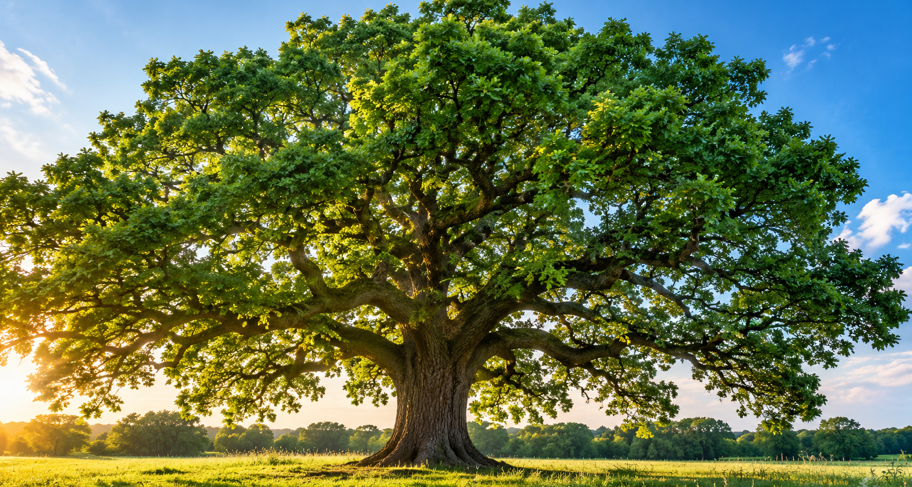
Oak trees rank among the most recognized and ecologically important trees on the planet, with roughly 500 species distributed across the Northern Hemisphere and even a handful reaching into tropical highlands. A single mature oak can support more than 500 species of caterpillars alone, making it one of the greatest wildlife hosts of any tree genus in North America and Europe. From towering white oaks that live for 300 years or more to compact shrubby oaks that barely reach 10 feet, this family shows an extraordinary range of size, leaf shape, and acorn design.
Oaks are typically divided into two broad groups based on their leaves and acorns: those with rounded, smooth-edged lobes that take one growing season to mature acorns, and those with pointed, bristle-tipped lobes that need two years to ripen their fruit. This split explains why some oaks drop acorns every autumn while others hold them through a second winter before releasing them. Bark texture, growth rate, and drought tolerance also vary enormously between species, which is why foresters and gardeners alike treat oak selection as a serious decision rather than a single generic choice.
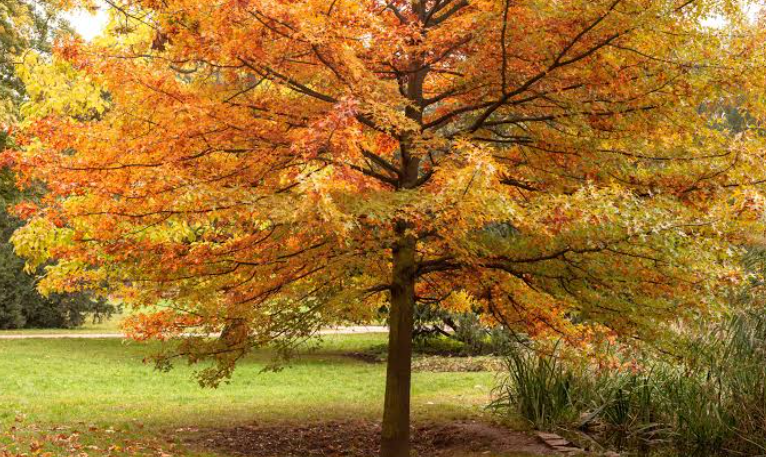
This guide walks through 60 distinct types of oak trees, covering familiar shade trees, coastal evergreens, mountain specialists, and lesser-known regional varieties. Each entry highlights the traits that set that particular oak apart, including size, leaf form, native range, and any notable statistics worth knowing before planting or identifying one in the field.
White Oak
White oak is one of the most valued hardwoods in North America, often reaching 80 to 100 feet tall with a broad, rounded crown. Its leaves carry 7 to 9 rounded lobes and turn a deep wine-red in autumn. This tree can live well past 300 years, and its acorns mature in a single season, making it a reliable food source for deer, turkeys, and squirrels almost every year.
Northern Red Oak
Northern red oak grows quickly compared to most oaks, often adding 2 feet of height annually when young, and can eventually reach 90 feet. Its leaves have 7 to 11 pointed, bristle-tipped lobes, and the bark develops distinctive shiny ridges that look almost painted onto the trunk. Acorns take two years to mature and are notably bitter, requiring heavy leaching before animals or humans can use them for food.
Southern Red Oak
Southern red oak thrives in the drier uplands of the southeastern United States, tolerating poor, sandy soils better than most red oaks. Its leaves are deeply lobed with a distinctive bell-shaped base, and the tree typically reaches 70 to 80 feet at maturity. Southern red oak is often confused with black oak, though its leaf undersides carry a rusty fuzz that helps distinguish the two.
Pin Oak
Pin oak is easily identified by its layered branching habit, with lower limbs drooping toward the ground and upper limbs reaching upward. This species tolerates wet, compacted soils better than almost any other oak, which is why it appears so often as a street tree in cities. Pin oak leaves have 5 to 7 sharply pointed lobes and turn a bright bronze-red in fall, though small acorns barely half an inch wide can persist on the tree into winter.
Bur Oak
Bur oak produces the largest acorns of any North American oak, with caps so fringed and shaggy they look almost like tiny hats. This tree is remarkably drought and fire tolerant, with a deep taproot system that allows it to survive prairie conditions where few other oaks can grow. Mature bur oaks can live over 400 years and develop thick, corky bark that protects the trunk from grass fires.
Swamp White Oak
Swamp white oak is built for wet feet, thriving in floodplains and low-lying areas where standing water is common for weeks at a time. Its leaves have a glossy dark green top and a pale, silvery underside, creating a two-toned shimmer in the wind. This tree typically reaches 50 to 60 feet and produces acorns on long stalks, a feature that separates it from most other white oak relatives.
Chestnut Oak
Chestnut oak earns its name from leaves that resemble those of the American chestnut, with wavy, toothed edges rather than deep lobes. This species favors rocky, dry ridgetops where soil is thin and nutrients are scarce, conditions few competing trees can tolerate. Chestnut oak bark is unusually thick and deeply furrowed, historically harvested for its high tannin content used in leather tanning.
Post Oak
Post oak is one of the toughest oaks for hot, dry, poor soils, often found growing in rocky clay where little else survives. Its leaves have a distinctive cross or Maltese-cross shape formed by the middle lobes, making identification straightforward even from a distance. Growth is slow, often under a foot per year, but the wood is exceptionally durable and was historically prized for fence posts, giving the species its common name.
Black Oak
Black oak gets its name from the nearly black, deeply furrowed bark that develops on older trees, along with a bright orange inner bark once used as a dye source. Leaves are variable, sometimes shallowly lobed and sometimes deeply cut, which makes this species one of the trickier oaks to identify with confidence. Black oak tolerates poor, dry soils and often reaches 60 to 80 feet, with acorns that take two full years to mature.
Scarlet Oak
Scarlet oak is grown almost as often for its brilliant fall color as for shade, with leaves turning a vivid scarlet-red that can last several weeks longer than most competing species. The leaves are deeply cut with C-shaped notches between narrow, pointed lobes. This oak grows fast for the genus, often gaining 13 to 24 inches per year, and prefers sandy or rocky, well-drained soils over heavy clay.
Willow Oak
Willow oak breaks the typical oak mold entirely, with narrow, unlobed leaves that closely resemble those of a willow tree rather than a classic oak leaf. This species is a popular urban shade tree because of its fast growth and fine-textured canopy, often reaching 60 to 75 feet within a few decades. Small, round acorns barely half an inch across mature in two years and are heavily used by songbirds and waterfowl.
Water Oak
Water oak is semi-evergreen in the Deep South, holding onto many of its leaves through mild winters before dropping them just before new growth emerges in spring. Leaves are spatula-shaped, widest near the tip, and highly variable even on the same branch. This species grows quickly but is relatively short-lived and prone to storm damage, rarely surviving past 60 to 80 years compared to centuries for slower oaks.
Live Oak
Live oak is the iconic evergreen oak of the southern United States, famous for wide, sprawling canopies that can spread over 100 feet, often wider than the tree is tall. Spanish moss frequently drapes from its heavy horizontal limbs, though the moss itself is a separate plant that causes no harm to the tree. Live oak wood is exceptionally dense and was historically used in shipbuilding, including for the hull of the USS Constitution.
Overcup Oak
Overcup oak takes its name from acorns almost completely enclosed by their cap, sometimes covering 90 percent or more of the nut. This species tolerates flooding and standing water for extended periods, often found in bottomland forests alongside bald cypress and water tupelo. Overcup oak typically reaches 45 to 60 feet and has a slower growth rate than most floodplain oaks.
Shumard Oak
Shumard oak is one of the largest of the red oak group, capable of reaching 100 feet with a straight, tall trunk well suited for timber production. Its leaves have 7 deep lobes with bristled tips and turn a rich red to reddish-brown in autumn. This species tolerates urban conditions, compacted soil, and moderate drought better than many other red oaks, making it a common choice for street plantings.
Nuttall Oak
Nuttall oak is a fast-growing bottomland species native to the Mississippi River floodplain and similar wet lowland habitats across the South. Leaves closely resemble pin oak leaves but are larger and have deeper sinuses between the lobes. Nuttall oak acorns are notably large for a red oak, an important food source that helps sustain wintering waterfowl in flooded timber habitats.
Cherrybark Oak
Cherrybark oak is considered one of the finest timber oaks in the southern red oak group, prized for tall, straight trunks that can exceed 100 feet in ideal bottomland conditions. Its bark resembles that of a black cherry tree, smooth and dark with distinctive ridges, which gives the species its common name. Leaves have 5 to 11 lobes and are less deeply cut than most other red oaks in its group.
Blackjack Oak
Blackjack oak is a small, scrubby tree rarely exceeding 30 to 50 feet, adapted to some of the poorest, driest, and most compacted soils in its range. Its leaves are unusually thick and leathery, broadly triangular with three shallow lobes near the tip. Growth is extremely slow, and blackjack oak often grows in association with post oak on sites too harsh for most other hardwoods.
Chinkapin Oak
Chinkapin oak has leaves that closely resemble chestnut foliage, with sharply toothed rather than lobed margins, and a yellow-green color that stands out among darker-leaved oaks. This species favors limestone-based soils and is one of the few oaks that actively prefers alkaline conditions over acidic ones. Acorns mature in a single season and are among the sweetest of any native oak, often eaten directly by wildlife without the bitterness typical of the genus.
Laurel Oak
Laurel oak produces narrow, glossy leaves that resemble those of a true laurel tree, staying semi-evergreen through mild southern winters. This species grows rapidly, often reaching 60 to 70 feet within 30 to 40 years, but its wood is comparatively weak and prone to storm and ice damage. Laurel oak is commonly planted for quick shade despite this trade-off, since few other oaks establish as fast.
Sawtooth Oak
Sawtooth oak is native to eastern Asia but widely planted across North America for its fast growth and heavy, reliable acorn production, often starting within 8 to 10 years of planting. Leaves are long, narrow, and sharply serrated along the edges, resembling chestnut foliage more than a typical oak leaf. This species is popular in wildlife food plots because of how consistently and early it produces acorns compared to native oaks.
English Oak
English oak is one of the most culturally significant trees in Europe, historically associated with British naval shipbuilding and centuries of folklore. This species can live over 500 years and develops a broad, irregular crown with acorns held on distinctively long stalks. Leaves have rounded lobes and very short leaf stalks, a detail used to distinguish it from its close relative, sessile oak.
Sessile Oak
Sessile oak grows across much of Europe alongside English oak, but its acorns sit directly on the twig without a stalk, the opposite arrangement from its close relative. Leaves have longer stalks and more evenly spaced lobes than English oak, and the tree tends to favor higher elevations and more acidic soils. Sessile oak timber has long been prized for barrel making, particularly in wine and whisky production.
American Turkey Oak
American turkey oak is a small, drought-tolerant species native to sandy uplands of the southeastern coastal plain, rarely growing taller than 30 to 40 feet. Its deeply lobed leaves are said to resemble a turkey’s foot, which is the source of the common name. This oak thrives on nutrient-poor, well-drained sand where few other hardwoods can compete effectively.
European Turkey Oak
European turkey oak is a fast-growing species native to southern Europe and Asia Minor, distinguished by acorn caps covered in shaggy, mossy-looking scales. This tree can reach 100 feet or more and tolerates urban pollution and poor soils better than many native European oaks. Its leaves are variable, ranging from shallowly to deeply lobed even on the same individual tree.
Cork Oak
Cork oak is the primary commercial source of natural cork, with bark that can be harvested every 9 to 12 years without harming the tree. A single cork oak can be sustainably stripped for well over 150 years across its lifetime, making it one of the most economically valuable oaks in the world. This evergreen species is native to the western Mediterranean and shows strong drought resistance suited to hot, dry summers.
Holm Oak
Holm oak, also called holly oak, has small, spiny, evergreen leaves that closely resemble holly foliage rather than typical broad oak leaves. This Mediterranean species tolerates salt spray, wind, and drought exceptionally well, making it a common choice for coastal plantings across southern Europe. Holm oak can reach 60 to 90 feet and often forms dense, dark evergreen canopies used historically for livestock shade.
Pyrenean Oak
Pyrenean oak is native to mountainous regions of southwestern Europe, favoring elevations where cooler, wetter conditions prevail compared to lowland Mediterranean oaks. Its leaves are deeply lobed and covered in soft down when young, gradually smoothing out as they mature through the growing season. This species is deciduous and among the last European oaks to leaf out in spring, an adaptation that helps it avoid late mountain frosts.
Downy Oak
Downy oak, sometimes called pubescent oak, is covered in fine hairs on its young leaves, twigs, and acorn cups, giving the whole tree a soft gray-green appearance. This species is highly drought tolerant and common on dry, rocky, calcareous slopes throughout southern and central Europe. Downy oak rarely exceeds 65 feet and often grows in a twisted, gnarled form shaped by wind and thin soil.
Kermes Oak
Kermes oak is a low, shrubby evergreen oak rarely growing beyond 10 to 20 feet, forming dense thickets across dry Mediterranean hillsides. Its small, spiny leaves closely resemble holly and provide effective protection against grazing animals. This species is historically notable as the host plant for the kermes insect, once a major source of red dye before synthetic alternatives replaced it.
Valley Oak
Valley oak is the largest native oak in California, capable of reaching 100 feet or more with a massive trunk and deeply furrowed bark. This species is deciduous and prefers deep, fertile valley soils near seasonal streams, unlike many drought-adapted California oaks. Valley oak can live over 600 years, and its acorns are notably long and narrow compared to most other white oak relatives.
Coast Live Oak
Coast live oak is an evergreen species native to California’s coastal ranges, known for a broad, dense canopy that often spreads wider than the tree’s height. Leaves are small, convex, and spine-tipped, an adaptation that reduces water loss along the dry California coast. This oak can live several hundred years and is highly resistant to the region’s periodic drought cycles.
Interior Live Oak
Interior live oak is closely related to coast live oak but adapted to hotter, drier inland foothill conditions across California. Its leaves are similarly small and evergreen, though often slightly more elongated with fewer spines along the margin. This species commonly grows as a large shrub or multi-trunked tree in areas where fire has repeatedly top-killed the main stem.
California Black Oak
California black oak is a deciduous species found across mountain slopes of California and southern Oregon, often reaching 60 to 80 feet at elevations between 2,000 and 8,000 feet. Its leaves have deep, bristle-tipped lobes and turn yellow to golden brown in autumn. Acorns from this species were historically a critical food staple for many Native American communities in California, ground into flour after leaching out the bitter tannins.
Canyon Live Oak
Canyon live oak grows across a remarkably wide elevation range in the West, from low coastal canyons up to rocky mountain slopes above 9,000 feet. This evergreen species has extremely variable leaf shape, sometimes spiny and holly-like, sometimes smooth-edged, even on the same tree. Canyon live oak produces some of the heaviest, densest wood of any oak, historically used for tool handles and wagon wheels.
Blue Oak
Blue oak is named for the distinctive blue-gray tint of its leaves, an adaptation that helps reflect intense summer sun across California’s inland foothills. This deciduous species is exceptionally drought tolerant, capable of surviving extended dry seasons that would kill most other California oaks. Blue oak grows slowly, often taking well over 100 years to reach full maturity at heights of 50 to 60 feet.
Engelmann Oak
Engelmann oak is a rare, semi-evergreen species found only in a limited range of Southern California and northern Baja California. This oak tolerates both summer drought and occasional winter flooding, an unusual combination among California oaks. Habitat loss has significantly reduced its historic range, and Engelmann oak is now considered a species of conservation concern across much of its native territory.
Oregon White Oak
Oregon white oak is the only native oak species found across much of the Pacific Northwest, forming open, park-like woodlands known as oak savannas. This deciduous tree grows slowly but can live over 500 years, developing a broad, rounded crown when given open growing space. Oregon white oak supports an outsized share of regional wildlife, with more than 200 species of birds, mammals, and insects documented using its habitat.
Gambel Oak
Gambel oak is a small, often shrubby oak common across the Rocky Mountains and Intermountain West, frequently forming dense thickets through root sprouting after fire. Its leaves have deep, rounded lobes typical of the white oak group, turning orange-brown in fall. This species rarely exceeds 20 to 30 feet in most of its range, though it can grow taller in favorable canyon bottoms.
Emory Oak
Emory oak is an evergreen species of the southwestern United States and northern Mexico, notable for leaves that stay dark green through the region’s hot, dry summers. Its acorns mature quickly within a single season and are noticeably sweeter than most oaks, historically an important food source for Indigenous communities across the Southwest. This species tolerates rocky, shallow soils in canyon and mountain foothill habitats up to about 7,000 feet.
Silverleaf Oak
Silverleaf oak has narrow, willow-like evergreen leaves with a striking silvery-white underside that flashes visibly whenever wind moves through the canopy. This species is found in mountain canyons of the Southwest and Mexico, often growing alongside pine and other oak species in mixed woodland. Silverleaf oak typically reaches 30 to 50 feet and holds its leaves through winter in all but the coldest years of its range.
Netleaf Oak
Netleaf oak gets its name from the prominent, net-like vein pattern visible on the underside of its evergreen leaves. This shrubby to small tree species grows across dry mountain slopes of the Southwest, often forming dense thickets on rocky, exposed terrain. Netleaf oak rarely exceeds 20 feet and shows strong resilience to both drought and periodic wildfire.
Mexican Blue Oak
Mexican blue oak is a small evergreen species with blue-green leaves found primarily in oak woodlands of northern Mexico and the southwestern United States. Leaves are typically smooth-edged rather than lobed, an unusual trait among oaks in this region. This species tolerates extreme heat and thin, rocky soils, often forming open savanna-like stands alongside grasses.
Arizona White Oak
Arizona white oak is a medium-sized evergreen species common in mountain canyons and foothills across the Southwest, often reaching 40 to 50 feet in favorable sites. Its leaves are leathery, gray-green, and variable in shape, sometimes smooth and sometimes toothed. This species is an important component of oak-pine woodlands that support diverse wildlife across its elevational range.
Bluejack Oak
Bluejack oak is a small, deciduous species adapted to deep, dry, sandy soils across the southeastern coastal plain, rarely exceeding 20 to 30 feet. Its narrow, blue-green leaves are unlobed and covered in fine hairs on the underside. This oak often grows in association with longleaf pine on sandhill sites too dry and nutrient-poor for most other hardwoods.
Dwarf Chinkapin Oak
Dwarf chinkapin oak is a shrub-sized relative of chinkapin oak, typically growing only 3 to 15 feet tall and often forming dense colonies through root suckering. Its toothed, chestnut-like leaves closely resemble those of its larger relative on a much smaller scale. This species is notable for producing acorns at a young age, sometimes within just a few years of germination, unusually early for any oak.
Shingle Oak
Shingle oak has smooth-edged, unlobed leaves that look more like a magnolia or laurel leaf than a classic oak leaf, a trait that often confuses casual observers. Historically, its wood was split into shingles by early American settlers, which is the origin of the common name. This species typically reaches 50 to 60 feet and holds onto its dead, bronze-colored leaves well into winter.
Bear Oak
Bear oak is a small, scrubby species native to the eastern United States, rarely growing taller than 20 feet and often forming dense thickets on dry, rocky ridges. Its leaves have shallow lobes and a grayish underside, distinguishing it from similarly sized scrub oak relatives. Bear oak acorns are an important early-successional food source for wildlife following fires or other disturbances that clear competing vegetation.
Sand Post Oak
Sand post oak is a smaller, shrubbier relative of post oak, adapted specifically to deep, well-drained sandy soils across the southern United States. Leaves share the same cross-shaped lobing pattern as post oak but are typically smaller and more leathery. This species rarely exceeds 30 to 40 feet and often grows as a multi-stemmed shrub on the driest, sandiest sites in its range.
Myrtle Oak
Myrtle oak is a small evergreen species with thick, glossy, unlobed leaves that resemble those of a true myrtle shrub rather than a typical oak. This species grows on dry, sandy coastal scrub habitats across the southeastern United States, often alongside sand live oak and Chapman oak. Myrtle oak rarely exceeds 20 to 25 feet and plays an important role stabilizing sandy coastal soils.
Chapman Oak
Chapman oak is a small, shrubby evergreen species restricted to sandy scrub habitats along the Gulf and southern Atlantic coastal plains. Its leaves are variable, sometimes smooth-edged and sometimes shallowly toothed, with a leathery texture suited to intense coastal sun. This species rarely grows taller than 20 feet and is often found in dense mixed scrub alongside other small coastal oaks.
Sand Live Oak
Sand live oak is closely related to live oak but adapted specifically to deep coastal sand dunes and scrub habitats across the Southeast. Its evergreen leaves are smaller and more convex than typical live oak foliage, an adaptation to intensely dry, sandy conditions. This species plays a critical role stabilizing dune systems, with root systems that extend far below the surface to reach available moisture.
Delta Post Oak
Delta post oak is a variety adapted to periodically flooded bottomland sites within the Mississippi River delta region, distinguishing it from the typical upland habitat of standard post oak. It shares the cross-shaped leaf lobing of post oak but tolerates wetter, heavier clay soils than its upland relative. This oak is less common and more regionally restricted than most other post oak types.
Mongolian Oak
Mongolian oak is a cold-hardy deciduous species native to northeastern Asia, including Mongolia, Korea, and parts of China and Russia. This tree tolerates extreme winter temperatures well below freezing, among the most cold-tolerant oaks in the world. Leaves are large, deeply lobed, and turn a rich golden brown in autumn, with acorns maturing in a single growing season.
Daimyo Oak
Daimyo oak is native to Japan, Korea, and northern China, known for producing some of the largest leaves of any oak species, sometimes exceeding 12 inches in length. Its acorns are similarly oversized, with shaggy, fringed caps that partially cover the nut. This species is valued ornamentally for its bold, coarse foliage texture that stands out dramatically against finer-leaved trees.
Hungarian Oak
Hungarian oak is a large, fast-growing deciduous species native to southeastern Europe, capable of reaching 100 feet with a broad, spreading crown. Its leaves are deeply and evenly lobed, giving the canopy a distinctive symmetrical appearance. This species tolerates heat, drought, and poor soils better than many other European oaks, making it useful in difficult urban planting sites.
Algerian Oak
Algerian oak is a large evergreen to semi-evergreen species native to North Africa, notable for retaining much of its foliage through mild winters. This tree can reach 100 feet or more and develops a dense, rounded crown with glossy, leathery leaves. Algerian oak shows strong tolerance for both heat and moderate drought, traits suited to its native Mediterranean climate.
Lacey Oak
Lacey oak is a small to medium deciduous species native to the limestone hills of central Texas and northern Mexico, prized ornamentally for its distinctive blue-green foliage. Leaves are typically smooth-edged or only shallowly lobed, unusual among most white oak relatives. This species tolerates thin, rocky, alkaline soils and periods of extended drought common across its native Hill Country range.
Island Oak
Island oak is a rare evergreen species found only on a handful of California’s Channel Islands, making it one of the most geographically restricted oaks in North America. Its long, narrow leaves are unlobed and leathery, adapted to the salt-laden coastal winds of its isolated habitat. Conservation programs have worked to protect remaining Island oak populations, since grazing by introduced animals significantly reduced the species across the 20th century.