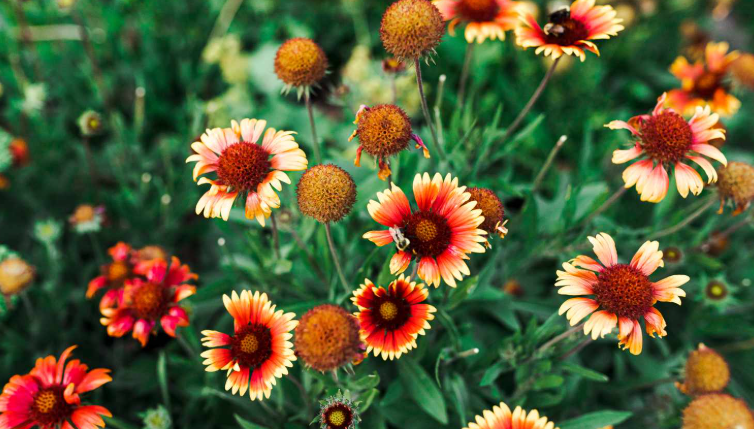
Few flower forms are as universally beloved as the daisy. With its cheerful ring of petals radiating outward from a central disc, the daisy shape is one of the most recognizable in the plant kingdom. This classic form — known botanically as a radiate flower head — appears across hundreds of plant species spanning dozens of genera, from tiny alpine wildflowers to towering garden perennials.
The daisy flower form belongs to the Asteraceae family, which is one of the largest flowering plant families on Earth, containing over 23,000 species. The characteristic “petals” are actually individual ray florets surrounding a dense central cluster of disc florets — a design that has proven extraordinarily successful at attracting pollinators across millions of years of evolution.
Daisy-like flowers come in nearly every color imaginable — golden yellow, electric purple, soft pink, pure white, fiery orange, and deep crimson — and they grow in an equally vast range of climates and conditions. Whether you are filling a sunny border, naturalizing a wildflower meadow, or planting up containers for a summer display, there is a daisy-like flower perfectly suited to your needs.
Gardeners and florists alike prize these flowers for their versatility. Many daisy-form flowers are exceptional cut flowers with vase lives of 7 to 14 days, and a large number are also highly valuable to pollinators — studies have shown that composite flowers of the Asteraceae family are visited by more bee species than almost any other flower family.
Shasta Daisy (Leucanthemum x superbum)
The Shasta Daisy is perhaps the most classic of all daisy-like flowers, producing large, pristine white ray petals surrounding a bright yellow central disc. It grows 2 to 3 feet tall and blooms prolifically from early summer through autumn, especially if deadheaded regularly. A single established clump can produce dozens of blooms simultaneously at peak season.
Echinacea (Echinacea purpurea)
Coneflower is one of the most popular daisy-like perennials in the world, with drooping rose-pink, purple, white, or orange ray petals surrounding a prominent, spiny central cone. It grows 3 to 4 feet tall, tolerates drought well, and is enormously attractive to bees and butterflies. Over 700 named cultivars of echinacea are currently available to gardeners.
Also Read: Flowers That Look Like Roses
Black-Eyed Susan (Rudbeckia hirta)
Black-Eyed Susan is a cheerful, sun-loving wildflower with golden-yellow petals and a distinctive dark brown or black central disc. Native to North America, it grows 2 to 3 feet tall and blooms from midsummer through autumn, providing some of the longest-lasting color of any daisy-form flower. It is also one of the most important late-season nectar sources for native bees.
Gerbera Daisy (Gerbera jamesonii)
Gerbera Daisies are among the most commercially important cut flowers in the world, ranking in the top five most sold cut flowers globally with over 700 million stems sold annually. They produce large, perfectly symmetrical blooms in virtually every color — red, orange, yellow, pink, white, and bicolor — on strong, straight stems. In mild climates, they can be grown as perennials in containers or borders.
African Daisy (Osteospermum)
African Daisies produce striking blooms in shades of white, purple, pink, orange, and yellow, often with contrasting centers in deep blue or violet. They are prolific bloomers in cool weather and can cover themselves so completely in flowers that the foliage is barely visible. Their petals have a distinctive spoon-like shape in some varieties, giving them a unique, sculptural appearance.
Gazania (Gazania rigens)
Gazanias are brilliantly colored, sun-loving flowers with bold, striped or zoned petals in shades of orange, yellow, red, pink, and cream around a contrasting central disc. They are native to South Africa and are exceptionally drought-tolerant once established. One of their most interesting traits is that their flowers close at night and on overcast days, opening fully only in direct sunlight.
Also Read: Grasses With Yellow Flowers
Swan River Daisy (Brachyscome iberidifolia)
Swan River Daisy is a delicate, free-flowering annual from Australia that produces masses of small daisy flowers in shades of blue, mauve, pink, and white. It grows 12 to 18 inches tall and is an outstanding container and hanging basket plant, forming a mounded cushion of finely cut foliage covered in bloom. Few small daisies can match its output of flowers per square foot of growth.
Feverfew (Tanacetum parthenium)
Feverfew is a bushy, aromatic perennial that produces clouds of small, white-petaled daisy flowers with bright yellow central discs from early summer through autumn. It grows 18 to 24 inches tall and self-seeds freely, naturalizing happily in garden borders. Beyond its ornamental value, feverfew has a long history in herbal medicine and is one of the most studied plants for the management of migraines.
Marguerite Daisy (Argyranthemum frutescens)
Marguerite Daisies are shrubby, tender perennials that bloom almost continuously in cool to mild weather, smothering themselves in white, yellow, or pink daisy flowers with cheerful yellow centers. They grow 2 to 3 feet tall and wide and are excellent container plants for patios and balconies. In frost-free climates, a well-tended Marguerite can remain in bloom for ten or more months of the year.
Cosmos (Cosmos bipinnatus)
Cosmos produce airy, cup-shaped blooms in shades of white, pink, crimson, and bicolor, held on slender stems above feathery, fern-like foliage. They grow rapidly to 3 to 4 feet tall from seed and bloom prolifically from midsummer until the first frosts. A single packet of cosmos seed can fill a large garden bed with flowers within just 7 to 8 weeks of sowing.
Helenium (Helenium autumnale)
Sneezeweed produces rich, velvety daisy-like flowers in warm shades of yellow, orange, red, and mahogany with a prominent, globe-shaped central cone. It grows 3 to 5 feet tall and blooms from late summer well into autumn, when most other daisy-form flowers are fading. It is one of the most important late-season nectar plants for migrating monarch butterflies.
Rudbeckia (Rudbeckia fulgida)
This perennial relative of Black-Eyed Susan produces masses of golden-orange flowers with bold black centers over a very long season from midsummer to hard frost. It grows 2 to 3 feet tall, spreads reliably to form dense clumps, and is one of the most dependable daisy perennials for sunny borders and containers. The variety ‘Goldsturm’ has won multiple awards for its outstanding garden performance.
Anthemis (Anthemis tinctoria)
Golden Marguerite is a clump-forming perennial that produces a profusion of bright yellow or creamy white daisy flowers on branching stems 18 to 24 inches tall. It blooms for weeks in early to midsummer and has a pleasantly aromatic, finely divided foliage. Historically, the flowers of Anthemis tinctoria were used to produce a golden-yellow dye, hence its common name.
Tansy (Tanacetum vulgare)
Tansy produces clusters of small, button-like yellow flowers that represent the disc portion of a daisy without the surrounding ray petals — making them a fascinating variation on the daisy theme. It grows 2 to 4 feet tall and has strongly aromatic, finely cut foliage that has historically been used as an insect repellent. It spreads vigorously and is best contained in a dedicated garden bed.
Also Read: Succulents With Pink Flowers
Chamomile (Anthemis nobilis / Chamaemelum nobile)
Roman Chamomile is a low-growing, apple-scented perennial that produces small, classic white-and-yellow daisy flowers throughout summer. It grows just 6 to 12 inches tall and can even be planted as a fragrant lawn substitute in light-traffic areas. Chamomile is one of the most widely consumed herbal teas in the world, with an estimated one million cups drunk globally every day.
Aster (Symphyotrichum novae-angliae)
Autumn asters are among the most prolific daisy-like flowers in the garden, producing hundreds of small, starry blooms in shades of purple, violet, pink, and white from late summer through October. They grow 3 to 5 feet tall and are invaluable for late-season color and as a nectar source for migrating butterflies. There are over 180 species of aster native to North America alone.
Callistephus (Callistephus chinensis)
China Aster is a showy annual that produces large, pompom or single daisy-like flowers in a remarkably wide range of colors including deep purple, red, pink, white, and bicolor. It grows 12 to 30 inches tall and is highly prized as a cut flower, with a vase life of up to 10 days. It has been cultivated in gardens for over 300 years since its introduction from China to Europe in the early 18th century.
Inula (Inula helenium)
Inula produces striking, bright yellow flowers with very narrow, finely fringed ray petals that give them a shaggy, distinctive appearance compared to other daisy-form flowers. Taller species can grow 4 to 6 feet high, making them among the most architectural of all daisy-type plants. The root of Inula helenium has been used in European herbal medicine since ancient Greek times.
Doronicum (Doronicum orientale)
Leopard’s Bane is a cheerful, early-flowering perennial that brightens spring gardens with clear yellow daisy flowers on stems 12 to 24 inches tall. It is one of the earliest daisy-like perennials to bloom, often flowering in March and April before most other perennials have emerged. After flowering, the foliage dies back in summer heat, making it a good companion for plants that fill the gap later in the season.
Heliopsis (Heliopsis helianthoides)
False Sunflower is a robust, heat-tolerant perennial that produces bold, golden-yellow daisy flowers with yellow or brown centers on bushy plants 3 to 5 feet tall. It blooms for an exceptionally long period from early summer through early autumn and is far more compact and container-friendly than true sunflowers. It is also highly resistant to deer browsing, making it popular in rural gardens.
Sunflower (Helianthus annuus)
The sunflower is one of the most recognizable daisy-form flowers in the world, with its massive golden head made up of hundreds of individual disc florets surrounded by bold yellow ray petals. Standard varieties can grow 6 to 10 feet tall, though dwarf container varieties stay under 2 feet. Sunflowers are among the fastest-growing flowering plants, capable of growing 12 inches per week under ideal conditions.
Helichrysum (Helichrysum bracteatum)
Strawflower produces papery, daisy-like blooms in shades of yellow, orange, red, pink, and white that hold their color and form even after drying, making them one of the most popular everlasting flowers. They grow 12 to 30 inches tall and bloom prolifically through summer and autumn. Their unique papery texture comes from the bracts surrounding the flower rather than true petals.
Bidens (Bidens ferulifolia)
Bidens is a trailing, sun-loving annual with masses of small, bright yellow or golden-orange daisy flowers produced continuously from spring until frost. It is especially effective in hanging baskets and window boxes, where its delicate, finely cut foliage cascades gracefully. Few flowering annuals can match Bidens for sheer length of bloom season, often flowering for six months or more without a break.
Venidium (Arctotis fastuosa)
Cape Daisy, also known as Monarch of the Veldt, produces spectacular large blooms with bright orange ray petals banded in black, white, and purple near a contrasting center. It is native to South Africa and thrives in hot, sunny positions with excellent drainage. Each flower can measure up to 4 inches across, making it one of the most visually striking of all daisy-type flowers.
Coreopsis (Coreopsis grandiflora)
Tickseed is a bright, cheerful perennial or annual that produces masses of yellow, orange, pink, or bicolor daisy flowers on airy stems 12 to 24 inches tall. It is among the most floriferous plants in the garden, capable of producing hundreds of blooms per season, and is exceptionally tolerant of heat, drought, and poor soils. Several species of coreopsis are native wildflowers of North America’s prairies and meadows.
Dimorphotheca (Dimorphotheca sinuata)
Cape Marigold is a fast-growing annual daisy from South Africa with vivid flowers in shades of orange, yellow, white, and cream, often with dark blue or violet central discs. It thrives in sunny, dry conditions and is one of the most drought-adapted daisy flowers available. Like Gazania, its flowers close at night and on cloudy days, opening brilliantly in full sunshine.
Anacyclus (Anacyclus pyrethrum var. depressus)
Mount Atlas Daisy is a low-growing, mat-forming perennial with finely cut, silver-green foliage and charming white daisy flowers that reveal a deep crimson-red reverse on the petals when closed. It grows just 2 to 4 inches tall, making it ideal for rock gardens and shallow containers, and blooms reliably from late spring through summer. The color contrast between the open and closed flower is remarkable.
Townsendia (Townsendia parryi)
Parry’s Townsendia is a compact alpine daisy native to the Rocky Mountains, producing large, lavender-blue or white flowers disproportionately large for such a small plant. It forms tight, ground-hugging rosettes just 3 to 6 inches tall and is perfectly suited to alpine troughs and shallow containers. Its ability to thrive in harsh, rocky conditions makes it a fascinating and unusual garden subject.
Rhodanthemum (Rhodanthemum hosmariense)
Moroccan Daisy is a low-growing, silver-leaved subshrub that produces a generous crop of white daisy flowers with yellow centers throughout spring and into summer. It grows 8 to 12 inches tall and wide, forming a neat, cushion-like mound of silky, finely divided foliage. It is exceptionally drought-tolerant once established and thrives in sunny rock gardens and terracotta containers.
Also Read: Perennials That Bloom All Summer
Erigeron (Erigeron karvinskianus)
Mexican Fleabane is an enchanting, free-spirited perennial that produces hundreds of tiny daisy flowers that open white and gradually age to deep pink and crimson, so that a single plant displays multiple colors simultaneously. It grows 12 to 18 inches tall and spreads enthusiastically, self-seeding into walls, paving cracks, and container edges. It is in flower for more months of the year than almost any other daisy perennial.
Nipponanthemum (Nipponanthemum nipponicum)
Montauk Daisy is a shrubby, late-season perennial that produces classic white daisy flowers with yellow centers on woody stems 2 to 3 feet tall from late summer through autumn. It is exceptionally salt-tolerant, making it popular in coastal gardens, and its bold, clean blooms stand out brilliantly against the rich colors of a typical autumn landscape.
Felicia (Felicia amelloides)
Blue Daisy, or Blue Marguerite, is a tender perennial from South Africa that produces sky-blue to violet daisy flowers with bright yellow centers over a very long season. It grows 18 to 24 inches tall and is one of the very few truly blue daisy-form flowers available to gardeners. It is an outstanding container plant for cool-season color in temperate gardens.
Leucanthemella (Leucanthemella serotina)
Moon Daisy is a tall, late-blooming perennial that produces classic white daisy flowers with green-centered discs on upright stems 4 to 5 feet tall. It blooms in September and October, making it one of the latest-flowering of all daisy perennials and an invaluable source of late-season interest and pollinator food. Its strong stems rarely need staking despite considerable height.
Glebionis (Glebionis coronaria)
Crown Daisy is an annual species widely grown across the Mediterranean and Asia for both its ornamental value and its edible leaves, which are commonly used in Asian cuisine, particularly in Chinese and Japanese cooking. It produces bright yellow or bicolor yellow-and-white daisy flowers on plants 18 to 24 inches tall. In East Asian markets, the edible greens are often sold as chop suey greens or shungiku.
Stokesia (Stokesia laevis)
Stokes’ Aster is a charming North American native perennial with large, fringed, cornflower-like blooms in shades of blue, lavender, white, yellow, and pink on stems 12 to 18 inches tall. It is a long-lived, low-maintenance perennial that thrives in sunny, well-drained borders and containers and blooms reliably from early summer through autumn. Its unusual, deeply fringed petals give it a distinctly lacy appearance compared to other daisy-type flowers.
Liatris (Liatris spicata)
While Blazing Star’s blooms open from the top of the spike downward rather than forming a classic daisy head, its individual florets are densely packed composite flowers true to the Asteraceae family. It grows 2 to 4 feet tall and produces vivid magenta-purple or white spikes that are among the most powerful butterfly and bee attractors in any garden. Liatris is also a highly prized cut flower with an excellent vase life.
Ratibida (Ratibida columnifera)
Prairie Coneflower, or Mexican Hat, is a distinctive wildflower with drooping yellow or red-brown ray petals surrounding an unusually tall, cylindrical central disc that gives it its memorable common name. It grows 18 to 30 inches tall and is native to the prairies and plains of North America, where it naturalizes freely in well-drained soils. It is one of the most drought-adapted of all daisy-type flowers.
Telekia (Telekia speciosa)
Telekia is a large, bold perennial with heart-shaped leaves and tall stems bearing golden-yellow, finely rayed daisy flowers reaching 4 to 5 feet. It is a plant of considerable architectural presence in the garden and thrives in moist, partially shaded positions that would defeat many other daisy-form plants. The large, aromatic leaves are ornamental in their own right even outside of flowering season.
Zinnia (Zinnia elegans)
Zinnias are among the most vibrant and diverse of all daisy-form flowers, with single-flowered varieties displaying the classic ray-and-disc form in nearly every color except blue. They grow 1 to 3 feet tall, bloom prolifically from midsummer until frost, and are one of the most recommended flowers for attracting monarch butterflies — studies have found that zinnias can support up to 12 times more monarch visits than many other common garden flowers.
Tridax (Tridax procumbens)
Coatbuttons is a modest but charming daisy-like flower native to tropical America that has naturalized widely across Africa and Asia. It produces small white-and-yellow daisy flowers on slender stems 12 to 20 inches tall and blooms almost continuously in warm climates throughout the year. Despite being considered a weed in agricultural contexts, it is a valuable nectar plant for small bees and butterflies and has documented uses in traditional wound-healing medicine across several cultures.