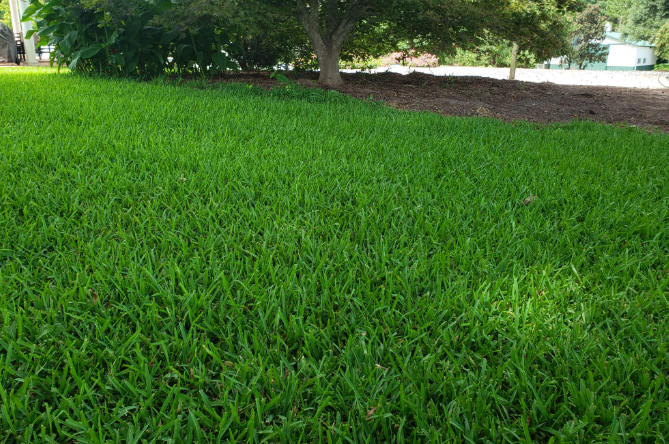
Water scarcity is one of the defining environmental challenges of the 21st century, and nowhere is its impact felt more immediately in everyday life than in the maintenance of lawns and turf. Traditional lawn grasses — particularly the lush, dark green, cool-season varieties that have dominated suburban landscaping for decades — can consume up to 55 gallons of water per square foot annually in hot, dry climates. Across the United States alone, outdoor watering accounts for nearly 30 percent of total household water use, and a significant portion of that is directed at keeping lawns alive through summer heat and drought.
The good news is that the world of turfgrass has changed dramatically in the past two to three decades. Advances in breeding, selection, and our understanding of grass physiology have produced a remarkable range of lawn grasses that maintain attractive, functional turf with a fraction of the water that conventional grasses demand. Some of the varieties in this guide can survive on natural rainfall alone in surprisingly dry climates. Others can go dormant during extended drought — turning brown temporarily without dying — and green up rapidly when rain or irrigation returns, a survival strategy that eliminates the need for supplemental watering entirely in many situations.
Drought tolerance in lawn grasses comes from several different physiological mechanisms. Deep, extensive root systems allow plants to access soil moisture unavailable to shallow-rooted grasses. Dormancy — the ability to shut down above-ground growth while maintaining the crown and roots in a viable state — allows some grasses to survive months without water. Reduced leaf surface area, waxy leaf coatings, and the ability to roll or fold leaves to reduce transpiration all contribute to efficient water use. The most drought-tolerant grasses typically combine several of these mechanisms simultaneously.
Choosing the right drought-tolerant grass for your situation begins with understanding your climate. Cool-season grasses perform best in regions with cold winters and moderate summers, while warm-season grasses thrive in hot climates and go dormant in winter. The transition zone — the band of the continental United States running roughly from Virginia to California — is the most challenging, and here several of the grasses in this guide offer better performance than either purely cool-season or purely warm-season alternatives.
1. Bermuda Grass
Bermuda grass is the gold standard of drought-tolerant warm-season lawn grasses — a tough, fast-growing, aggressive species that produces dense, attractive turf with water requirements significantly lower than most cool-season alternatives.
Its drought tolerance stems from a combination of deep roots that can extend three feet or more into the soil, a rapid dormancy response during extreme stress, and an extraordinary recovery rate when water returns. Studies have shown that bermuda grass can survive up to eight weeks of complete drought through dormancy and green up within days of rainfall or irrigation.
It thrives in full sun and warm temperatures, making it the dominant lawn grass across the American South, the Mediterranean, Australia, and the Middle East. It is less suitable for shaded positions and goes fully dormant and brown in winter in cooler climates.
2. Zoysia Grass
Zoysia is widely regarded as the most versatile and drought-tolerant of all warm-season lawn grasses for home use — producing a dense, lush, wear-resistant turf that requires significantly less water, fertilizer, and mowing than most alternatives while maintaining a consistently attractive appearance through the warm months.
It develops an exceptionally deep and extensive root system that accesses moisture deep in the soil profile, and its thick, dense sward shades the soil surface effectively, reducing evaporation. Research at the University of Arkansas found that established zoysia lawns require 25 to 50 percent less water than bermuda grass lawns in comparable conditions.
Zoysia is slower to establish than bermuda but forms a more refined, carpet-like turf once settled, and its superior shade tolerance — the best of any warm-season lawn grass — makes it suitable for gardens with significant tree cover where bermuda would thin and struggle.
3. Buffalo Grass
Buffalo grass is North America’s most drought-tolerant native lawn grass — a species that covered millions of acres of the Great Plains for centuries without a drop of supplemental irrigation and that remains one of the most ecologically appropriate lawn choices for the semi-arid regions of the American Midwest and Southwest.
Its root system is legendary in the turfgrass world — extending six feet or more into the soil and accessing moisture reserves unavailable to any other lawn grass. Studies have documented buffalo grass surviving over fourteen consecutive weeks of zero rainfall without irrigation, maintaining viable crowns throughout and recovering fully when rain returned.
Water savings compared to conventional cool-season lawns can exceed 75 percent in appropriate climates, and several prairie states actively promote buffalo grass as a sustainable alternative to Kentucky bluegrass and tall fescue lawns.
4. Tall Fescue
Tall fescue is the most drought-tolerant of the cool-season lawn grasses — a species that bridges the gap between the cool-season world and the drought demands of warm, dry summers with a resilience and adaptability that no other cool-season grass can match.
Its deep root system — extending three to four feet in well-prepared soil — allows it to access subsoil moisture during dry periods, and its ability to slow growth rather than die under moisture stress gives it a practical summer performance that Kentucky bluegrass and perennial ryegrass cannot approach. It retains its green color far longer into summer drought than other cool-season grasses.
Modern dwarf tall fescue varieties such as Rebel, Jaguar, and the elite turf-type cultivars represent a significant improvement over older, coarser selections and produce a finer-textured, more visually appealing lawn without sacrificing drought resistance.
5. Bahia Grass
Bahia grass is one of the most remarkably drought-tolerant lawn grasses for the American Southeast — a tough, deep-rooted, low-maintenance species that thrives on the sandy, infertile, poorly draining soils of Florida and the Gulf Coast with minimal supplemental irrigation.
Its root system is one of the deepest of any common lawn grass, reaching five to six feet into sandy soils to access moisture that other grasses simply cannot reach. Once established — typically within one growing season from seed — bahia grass requires very little irrigation and almost no fertilization, making it one of the lowest-input lawn options available in its target climate.
It is not a grass of fine visual quality — the coarse texture and persistent seed heads can look untidy if not regularly mowed — but for homeowners prioritizing low maintenance and drought survival over cosmetic perfection, bahia grass is difficult to beat.
6. Centipede Grass
Centipede grass earns its reputation as the “lazy man’s grass” through its genuinely exceptional low-maintenance character — a slow-growing, fine to medium-textured warm-season grass that thrives on the acid, infertile soils of the southeastern United States with minimal water, fertilizer, or management attention.
Its moderate drought tolerance comes from a shallow but dense root network combined with an efficient water use strategy that allows it to maintain acceptable appearance on limited moisture. It goes dormant rather than dying during extended drought, though it is less aggressive in drought survival than buffalo grass or bermuda.
Importantly, centipede grass performs poorly when over-managed — excessive fertilization and irrigation actually weaken it, making it one of the few lawn grasses that genuinely rewards a hands-off approach.
7. St. Augustine Grass
St. Augustine grass is the dominant warm-season lawn grass of the humid American South — a coarse-textured, vigorous, shade-tolerant species with moderate drought tolerance that produces one of the densest and most attractive lawn surfaces available in high-heat, high-humidity environments.
Its drought tolerance is supported by its aggressive spreading habit, which fills gaps rapidly when sections recover from stress, and by the dense canopy its broad leaves create — shading the soil and reducing evaporative moisture loss more effectively than finer-textured grasses. It is not as drought-tolerant as bermuda or zoysia in pure terms, but in the humid conditions of Florida, the Gulf Coast, and Hawaii, its combination of shade tolerance and moderate drought resistance makes it the practical choice for millions of homeowners.
St. Augustine covers an estimated 40 percent of all lawns in Florida — a state where its performance under the combination of heat, humidity, and sandy soils has made it effectively irreplaceable.
8. Kikuyu Grass
Kikuyu grass is a vigorous, rhizomatous warm-season grass originally from East Africa that has become one of the most drought-tolerant and dominant lawn grasses in California, Australia, South Africa, and other Mediterranean and subtropical climates — valued and occasionally cursed in equal measure for its extraordinary growth rate and resilience.
Its deep, extensive root system and rapid above-ground growth allow it to recover from drought stress with remarkable speed — a bermuda grass might recover in days, but a well-established kikuyu can green up almost overnight after rainfall. Studies in California found that kikuyu lawns used significantly less supplemental irrigation than Kentucky bluegrass lawns in the same conditions while maintaining acceptable summer appearance.
Its aggressive spreading habit means it requires containment at the lawn edges and will colonize garden beds if given the opportunity — a management trade-off that many homeowners in appropriate climates consider well worth the water savings.
9. Blue Grama Grass
Blue grama is a native North American prairie grass of outstanding drought tolerance that has attracted considerable interest as a low-water lawn grass alternative for the American West and Great Plains — a region where conventional lawn maintenance places severe demands on scarce water resources.
It produces a fine, blue-green, curly-leaved turf of reasonable quality and distinctive character, reaching only six to eight inches in height without mowing and requiring very little water once established. Its natural range extends from Canada to Mexico across the semi-arid plains, where it has survived centuries of drought without assistance.
Blue grama is often mixed with buffalo grass for lawn use in the Great Plains, the combination providing a broader range of soil and microclimate tolerance than either grass alone. Water savings compared to traditional cool-season lawns in appropriate climates can reach 80 percent or more.
10. Seashore Paspalum
Seashore paspalum is the most salt-tolerant of all commonly used lawn grasses — a warm-season species capable of tolerating irrigation with brackish or recycled water with a salt concentration up to ten times greater than bermuda grass can endure — making it genuinely irreplaceable in coastal gardens, areas with saline well water, and regions where only recycled wastewater is available for irrigation.
Beyond its salt tolerance, it performs well in the heat and humidity of tropical and subtropical coastlines and produces an attractive, medium-fine, blue-green turf of reasonable quality. It is widely used in Hawaii, the Caribbean, the Middle East, and coastal regions of Florida, California, and Australia.
As water scarcity drives increasing use of recycled and lower-quality irrigation water globally, paspalum’s unique salt tolerance is becoming an increasingly significant advantage over other drought-adapted lawn grasses.
11. Hard Fescue
Hard fescue is one of the finest and most drought-tolerant of the fine fescue group — a cool-season, bunch-forming grass with exceptionally narrow, bristle-like leaves and a natural low-growing habit that requires minimal mowing and produces a fine-textured turf of attractive, slightly blue-green color.
It thrives in the poor, dry, low-fertility soils where other cool-season grasses struggle — performing well on sandy, gravelly, and acidic soils without fertilization — and its drought tolerance is the best of any cool-season fine fescue. Research has shown that hard fescue maintains acceptable appearance with 40 to 50 percent less water than Kentucky bluegrass in comparable conditions.
It is widely used in low-maintenance lawn mixes, on roadsides, and in no-mow or reduced-mow lawn situations where its natural growth habit means it can be left largely uncut and still presents an attractive, naturalistic appearance.
12. Creeping Red Fescue
Creeping red fescue is the most widely planted of the fine fescues and a cornerstone of drought-tolerant cool-season lawn mixes across the northern United States, Canada, the British Isles, and northern Europe — valued for its fine texture, shade tolerance, and ability to maintain reasonable appearance with minimal irrigation.
It spreads by short rhizomes, creating a denser sward than the bunch-forming fine fescues, and this spreading habit allows it to fill thin patches and recover from localized drought damage more readily than non-spreading types. Its low nutrient requirements and tolerance of acidic, sandy, and infertile soils make it one of the most self-sufficient of all cool-season lawn grasses.
In mixes with Kentucky bluegrass and perennial ryegrass, creeping red fescue provides the drought-tolerance component that gives mixed cool-season lawns their summer resilience.
13. Sheep’s Fescue
Sheep’s fescue is one of the toughest and most drought-resistant of all the fine fescues — a compact, slow-growing, fine-leaved grass that forms tight, rounded tussocks of blue-grey to grey-green foliage and requires almost no maintenance once established in appropriate conditions.
It survives on remarkably little water — sheep’s fescue swards on chalk downland and exposed hillsides in England have survived centuries of summer drought without irrigation — and its natural low-growing habit means it can be maintained without mowing if a naturalistic, meadow-like appearance is acceptable.
It is most commonly used in no-mow lawn situations, on dry slopes and banks, in low-maintenance landscape settings, and in seed mixes for ecologically sensitive areas where minimal input and maximum environmental benefit are the primary goals.
14. Chewings Fescue
Chewings fescue is a fine, compact, non-spreading fescue with excellent drought tolerance and an upright, bunch-forming growth habit that produces a dense, fine-textured sward of good ornamental quality in cool, dry conditions. It is named after a New Zealand farmer, George Chewings, who first collected and marketed the seed in the late 19th century.
It is one of the most shade-tolerant of the fine fescues and performs particularly well in the combined stress conditions of shade and drought that occur under tree canopies, where soil moisture is depleted by both tree roots and reduced rainfall penetration. This combination of shade and drought tolerance makes it especially valuable in challenging lawn situations that defeat most other grasses.
In the UK, chewings fescue is a standard component of quality lawn seed mixes and has been part of the traditional fine lawn tradition for well over a century.
15. Buffalograss (Improved Varieties)
The modern improved buffalograss varieties — including Prestige, Legacy, Stampede, and Cody — represent a significant advance over the wild species, producing finer-textured, denser, more attractive lawns while retaining the extraordinary drought tolerance that makes buffalo grass so ecologically valuable in its native range.
Female-selected, sod-forming varieties such as Prestige produce a particularly dense, lush lawn that competes well with bermuda grass in visual quality while requiring a fraction of the water, fertilizer, and mowing. Studies at Kansas State University found that improved buffalograss varieties require 75 to 80 percent less supplemental irrigation than Kentucky bluegrass lawns in the same climate.
These improved varieties have expanded the practical use of buffalo grass beyond its traditional range in the central plains to include the Mountain West, the desert Southwest, and even parts of the Pacific coast in areas with the right soil and sun conditions.
16. Sideoats Grama
Sideoats grama is the official state grass of Texas — a fine-leaved native prairie grass with outstanding drought and heat tolerance that has attracted increasing attention as a low-water lawn grass alternative for the American Southwest and Southern Plains.
It produces a fine, grey-green, curly-textured turf of attractive character and grows naturally across an enormous range — from Canada to Central America — entirely without supplemental irrigation, surviving the prolonged droughts that periodically sweep the southern plains. Like buffalo grass and blue grama, it can be maintained as a no-mow lawn at its natural height of six to ten inches or mowed periodically to create a more conventional turf appearance.
Its ecological value is considerable — sideoats grama is an important food plant for birds and wildlife, and lawns planted with native grama grasses provide significantly better habitat than conventional turf monocultures.
17. Perennial Ryegrass (Endophyte-Enhanced)
Standard perennial ryegrass has moderate drought tolerance at best, but modern endophyte-enhanced varieties — in which naturally occurring fungal endophytes are introduced into the seed to provide protection against insect pests and improve stress tolerance — show significantly improved drought resistance compared to endophyte-free cultivars.
The endophyte fungi colonize the grass plant’s tissues and produce compounds that deter surface-feeding insects while also improving the plant’s ability to access and retain soil moisture under stress. Research at Rutgers University found that endophyte-enhanced ryegrass varieties maintained better color and density through summer drought than non-enhanced varieties under the same irrigation regimes.
Endophyte-enhanced ryegrass is increasingly the standard in quality lawn seed mixes in the northeastern United States, the Pacific Northwest, and the British Isles, where perennial ryegrass is a dominant component of most lawn and amenity turf.
18. Paspalum Notatum (Bahia Grass — Pensacola Selection)
Pensacola bahia grass is the most widely planted and most drought-tolerant selection of bahia grass — a variety selected specifically for its cold hardiness, fine texture, and superior performance on the deep, sandy soils of the Florida peninsula and the broader American South.
It extends the range of bahia grass further north than most other selections, tolerating temperatures that kill standard bahia varieties, while retaining the deep root system and low water requirements that make bahia grass such a practical choice for low-maintenance lawn situations. Pensacola bahia established from seed within one growing season and, once rooted, requires essentially no supplemental irrigation on Florida’s summer rainfall pattern.
It is the most economical of all low-maintenance lawn options for the sandy soils of the coastal plain, with seed costs well below those of sod-forming alternatives.
19. Desert Bluegrass
Desert bluegrass is a cool-season grass native to the American Southwest — one of the very few native bluegrass species with genuine drought tolerance — that has attracted interest from researchers and homeowners seeking drought-adapted lawn alternatives for the arid West.
It produces a fine-textured, medium-green turf of reasonable quality and remains green year-round in mild desert climates, which gives it a significant practical advantage over warm-season grasses that go brown in winter. It is shade-tolerant for a drought-adapted species and performs well under the partial shade of desert trees such as mesquite and palo verde.
Research at the University of Arizona found desert bluegrass to be one of the most promising low-water lawn grass options for Tucson and similar desert communities, and it is beginning to appear in commercial seed mixes developed for southwestern low-water landscapes.
20. Warm-Season Turf-Type Tall Fescue
Newer turf-type tall fescue varieties bred specifically for improved heat and drought tolerance in the transition zone — including varieties marketed under names such as Thermal Blue and various drought-enhanced selections — have pushed the drought performance of tall fescue significantly beyond what was achievable with older varieties.
These varieties combine the deep root system and cool-season adaptability of tall fescue with improved performance under the heat stress of transition zone summers, where the combination of high temperatures and dry conditions typically pushes conventional tall fescue beyond its limits. Some improved varieties include endophytes similar to those used in perennial ryegrass for additional stress resistance.
For homeowners in the mid-Atlantic states, the border South, and the lower Midwest who want a cool-season-looking lawn that survives summer drought without complete dormancy, improved turf-type tall fescue offers the best currently available combination of appearance, adaptability, and water efficiency.
21. Hybrid Bluegrass
Hybrid bluegrass — represented commercially by varieties such as Thermal Blue and other Kentucky bluegrass x Texas bluegrass crosses — represents one of the most promising developments in drought-tolerant cool-season lawn grass breeding, combining the ornamental quality and traffic tolerance of Kentucky bluegrass with the heat and drought tolerance of native Texas bluegrass.
The resulting varieties maintain the rich, deep blue-green color, fine texture, and rhizomatous spreading habit of Kentucky bluegrass while tolerating the summer heat and reduced irrigation that standard Kentucky bluegrass cannot endure. Studies have shown hybrid bluegrass varieties requiring 30 to 40 percent less water than pure Kentucky bluegrass during summer while maintaining significantly better color and density.
They are beginning to appear in premium drought-tolerant lawn seed mixes across the transition zone and the warmer portions of the cool-season grass belt — a development that may significantly expand the practical options for homeowners who want a Kentucky bluegrass-quality lawn without the water bills that traditionally accompany it.