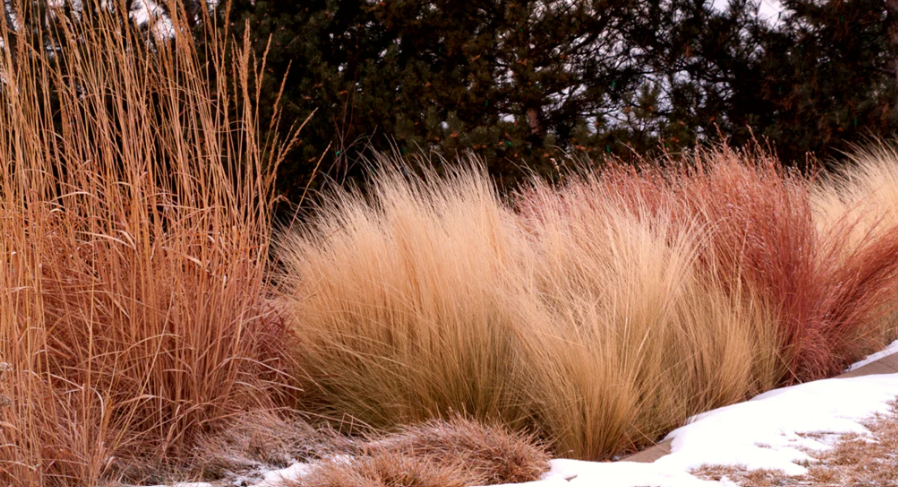
Winter is the season that separates the truly great garden plants from the merely seasonal ones. When the last perennials have collapsed, the shrubs stand bare, and the garden retreats into its dormant monochrome, the grasses that remain standing become the most important plants in the landscape. Their bleached, architectural forms catch frost and snow. Their dry stems and seed heads rattle and whisper in the winter wind. Their persistent structure creates rhythm, movement, and a sense of quiet, considered beauty in a season that most plants abandon entirely.
The value of grasses in the winter garden is both structural and sensory. Structurally, the upright or arching forms of dormant grasses provide the vertical accents and rhythmic repetition that design requires even when — especially when — flowering color is absent. The silhouette of a well-grown miscanthus against a grey winter sky, or the bleached columns of Karl Foerster feather reed grass dusted in hoarfrost, create landscape moments of genuine beauty that no summer display can replicate. Sensory appeal comes from the sound and movement of dry grass in the wind — a soft, persistent rustling that brings life and animation to the winter garden in ways that static plants cannot.
Despite this, a survey conducted by the Royal Horticultural Society found that only 38 percent of British gardeners considered winter ornamental interest when selecting plants — a statistic that reflects both the low priority many gardeners assign to the cold months and the significant opportunity that better plant selection represents. Among professional landscape designers, the figure is considerably higher — approximately 75 percent cite winter performance as a key selection criterion — reflecting the understanding that a garden used and observed year-round demands plants that contribute across all four seasons rather than merely the warmest three.
The grasses in this guide represent a wide range of genera, sizes, and seasonal characters — from compact, low-growing sedges that maintain their color and presence through the coldest months to towering miscanthus and pampas grasses whose bleached plumes and architectural forms dominate the winter landscape on the largest scales. Together, they demonstrate that the winter garden need not be dull, empty, or without character — that the right grasses, properly positioned and thoughtfully managed, make the cold months as rewarding and visually rich as any other season.
Karl Foerster Feather Reed Grass
Karl Foerster is the gold standard of winter-interest ornamental grasses — a narrow, upright, cool-season perennial whose bleached, wheat-buff flower stems persist through the entire winter in perfectly upright columns that provide structural definition and vertical accent in the winter landscape with remarkable reliability.
The stems rarely collapse under snow or wind, maintaining their architectural form through the most challenging winter weather. A row or mass planting of Karl Foerster in winter — the bleached columns catching frost and low winter sun — is one of the most celebrated and frequently photographed ornamental grass effects in contemporary landscape design.
It was named Perennial Plant of the Year in 2001 — the first grass to receive that honor — and its winter structural performance is cited by many landscape designers as the single most important quality that earned it that distinction.
Maiden Grass
Maiden grass develops one of the finest and most sustained winter displays of any large ornamental grass — the long-persistent, silver-white flower plumes aging from copper-pink in autumn through creamy silver-white in winter, the fluffy, light-catching plumes remaining ornamental for five to six months from their late summer emergence to their cutback in late February or March.
The combination of the arching, bleached-buff leaf mass and the persistent silver plumes creates a striking, layered winter form of considerable presence. In frost or snow, the plumes catch and hold ice crystals with a particular beauty — each delicate branch of the plume frosted in white against the pale sky.
More than 40 cultivars are available commercially, and many were specifically selected or bred for improved plume persistence through winter — reflecting the importance the nursery trade places on sustained winter performance in this widely planted grass.
Pampas Grass
Pampas grass produces the most spectacular and largest winter flower plume display of any ornamental grass — creamy-white to pale pink plumes reaching ten to thirteen feet that persist through the entire winter season, providing months of dramatic, large-scale ornamental presence in the winter landscape.
The plumes are resilient in cold, dry winter conditions but can become damaged by wet, heavy snow or prolonged rain — factors that influence their positioning and management in winter garden planning. In dry winters, established pampas plumes remain in excellent ornamental condition until well into the following spring.
In the right position — where low winter sun backlights the pale, feathery plumes against a dark background of evergreen hedge or dark sky — the winter display of pampas grass is among the most theatrical and immediately impressive available from any garden plant in the cold months.
Switchgrass ‘Northwind’
Northwind switchgrass is one of the finest grasses for winter structural performance — its exceptionally stiff, upright stems maintaining vertical form through snow, ice, and wind that flatten less robust grasses, creating a bold, architectural winter statement of considerable reliability.
The stems bleach from their summer blue-green through golden-buff to pale straw through the winter months, and the persistent, airy seed heads catch hoarfrost with a delicate, shimmering beauty. The stiffness that makes Northwind exceptional for winter — the stems tested against wind forces significantly higher than those encountered in most garden situations — is a genetically fixed characteristic of the variety.
Research from the Chicago Botanic Garden’s ornamental grass evaluation program consistently rated Northwind among the top-performing switchgrass varieties for sustained ornamental quality in winter — a formal recognition of the exceptional cold-season performance that has made it one of the most specified tall native grasses in contemporary landscape design.
Little Bluestem
Little bluestem provides one of the most beautiful and complete winter displays of any native ornamental grass — the vivid copper-red, orange, and burgundy autumn foliage persisting into winter as warm, sun-catching tones of bleached cinnamon and copper-buff, while the fluffy, white seed heads that develop simultaneously with the autumn color contrast beautifully against the warm-toned stems throughout the cold months.
The combination of warm-toned bleached stems and white seed heads is particularly effective in winter — the seed heads catching frost and snow with a delicacy that creates one of the most naturally beautiful frost effects of any garden plant. Birds feed on the persistent seeds through winter, adding wildlife interest to the ornamental display.
Studies have shown that little bluestem seed heads provide food for over 20 native bird species through winter — making its winter persistence an ecological contribution of genuine significance as well as an outstanding ornamental feature.
Ravenna Grass
Ravenna grass produces some of the most dramatically impressive winter plumes of any cold-hardy ornamental grass — its massive, silvery-white feathery plumes, carried on stems reaching ten to fourteen feet, persisting through the winter months in a display that is extraordinary in both scale and elegance.
The persistence of ravenna grass plumes through winter is remarkable — they typically remain in good ornamental condition from their late summer emergence right through to the following spring cutback, providing six to seven months of dramatic large-scale display from a single annual investment.
It is more cold-hardy than pampas grass — tolerating temperatures to -10°F (-23°C) — which makes it the preferred choice for cold-climate gardens seeking pampas-scale winter plume drama. The size and presence of mature clumps in winter is genuinely extraordinary.
Tufted Hair Grass
Tufted hair grass provides one of the most delicate and transparent winter displays of any ornamental grass — its open, branching flower heads composed of tiny spikelets persisting on fine, thread-like branches through winter, catching frost and low light with a crystalline, shimmering quality that is among the most beautiful frost effects in the winter garden.
When touched by hoarfrost, the delicate, open panicles are transformed into intricate, glittering structures of extraordinary beauty — each tiny spikelet perfectly outlined in ice crystals to create a display that photographs rarely fully capture. The effect lasts only as long as the frost, creating a constantly changing winter spectacle.
The combination of delicate winter structure, good shade tolerance, and genuine ornamental quality in summer makes tufted hair grass one of the most complete four-season ornamental grasses available for cool, moist garden conditions.
Blue Oat Grass
Blue oat grass is one of the few ornamental grasses that retains genuine foliage color and ornamental presence through the winter months — the metallic blue-grey leaves persisting in mild climates and in sheltered positions to provide a cool, structural blue color note in the winter garden at a time when color of any kind is rare and particularly appreciated.
In mild climates it is effectively semi-evergreen, maintaining a significant proportion of its leaves through winter and providing the blue foliage color that makes it so valuable in the spring and summer garden through the cold months as well. Even in harsher winters where the foliage browns and collapses, the persistent, straw-colored flower stems provide structural interest.
The cool, metallic blue of blue oat grass foliage in winter is particularly effective alongside the warm buff and orange tones of neighboring dormant miscanthus and little bluestem — a color contrast that creates a sophisticated, considered winter palette from relatively simple plant combinations.
Prairie Dropseed
Prairie dropseed provides a warm, golden-buff winter presence of considerable charm — its perfectly rounded, fountain-shaped mound of fine, arching leaves bleaching from bright green through warm yellow-gold to a soft, glowing buff that catches low winter light and creates one of the most intimate and fine-textured winter grass forms available.
The rounded, fountain-like form is maintained through winter in good condition, and the fine texture of the bleached leaves catches frost and dew in a delicate, sparkling display. Unlike many larger grasses that collapse or splay in winter, prairie dropseed maintains its characteristic mounded form reliably through cold weather.
It is one of the longest-lived of all ornamental grasses — documented specimens have been growing productively for over 30 years without division — and the accumulated presence of a mature prairie dropseed planting in winter, its multiple golden-buff mounds glowing in low sunshine, is one of the most quietly beautiful winter garden effects available from a native grass planting.
Molinia (Purple Moor Grass)
Purple moor grass provides one of the most spectacular autumn-to-winter transitions of any ornamental grass — the vivid golden-yellow of its autumn foliage change ranking among the finest and most sustained autumn color displays before the plant enters its characteristic total collapse in early winter, the stems and leaves falling simultaneously to leave the crown completely bare.
This total winter collapse — unusual among ornamental grasses — is a defining characteristic of molinia and a quality that makes it one of the lowest-maintenance of all perennial grasses in winter, as no cutback is required. The stems fall cleanly to the ground and decompose naturally, leaving the bare crown ready for new spring growth.
The autumn golden color display that precedes this collapse is extraordinary — molinia arundinacea varieties in particular develop a vivid, sustained golden-yellow that rivals the finest autumn-coloring trees and provides weeks of brilliant color in the late-season garden before the winter collapse.
Japanese Forest Grass
Japanese forest grass provides a warm, honeyed presence in the winter garden — the vivid golden-yellow and green-striped summer foliage transitioning through warm copper, orange, and buff tones in autumn before the plant dies back to leave a neat, modest mound of bleached, pale straw leaves that catch low winter light with a soft, warm glow.
In mild climates and sheltered positions it retains a proportion of its characteristic gold-and-green variegated foliage well into winter, providing genuine color interest in the shaded positions where it performs best. Even in harsher winters the bleached remains maintain the characteristic arching, cascading form that makes this such an elegant grass in all seasons.
It is consistently rated among the top three ornamental grasses for garden value across all four seasons in professional landscape designer surveys — a recognition that reflects the complete seasonal contribution, including winter interest, that makes this one of the most comprehensively valuable ornamental grasses available.
Hakonechloa ‘Beni-Kaze’
Beni-Kaze develops its most extraordinary display in autumn and early winter — the foliage transforming from green through orange to a vivid, burning scarlet-red that persists through the early winter months before the plant enters dormancy, providing one of the most spectacular and sustained red-autumn-into-winter transitions of any ornamental grass.
The vivid red winter presence — even partially retained in mild winters — creates a remarkable color statement in the winter garden where warm-toned color is so rare and so welcomed. Against a background of pale sky or frosted ground, the red foliage of Beni-Kaze creates an immediate and powerful visual impact.
The name means “red wind” in Japanese — an evocative description of the way the vivid red, fine-textured foliage appears to flow and ripple in a winter breeze like a flame of warm color in the cold landscape.
Northern Sea Oats
Northern sea oats provides one of the most persistently ornamental winter seed head displays of any shade-tolerant native grass — the flattened, oat-like seed clusters hanging from the arching stems in loose, elegant clusters from late summer through the entire winter, rattling pleasantly in the wind and catching frost and light with an attractive, graceful persistence.
The seed heads transition from green through golden-bronze to warm tan as the season progresses, and their distinctive, flattened form catches frost particularly effectively — each flat spikelet outlined in white ice crystals to create an intricate, geometric frost pattern of genuine beauty. Birds feed on the persistent seeds through winter.
It tolerates the shade and root competition beneath established deciduous trees — conditions that defeat most winter-interest grasses — making it one of the most practically useful winter-structural grasses for the challenging dry-shade situations common in mature gardens.
Zebra Grass
Zebra grass maintains one of the most striking and well-defined winter silhouettes of all the miscanthus family — the large, vase-shaped clump of arching, bleached stems and the persistent reddish-copper flower plumes creating a winter form of considerable architectural presence that is recognizably distinct from other miscanthus varieties even in its dormant state.
The horizontal yellow banding of the summer leaves is no longer visible in the bleached winter stems, but the large, copper-toned plumes that persist well into winter add warm color to the bleached stem structure and provide extended ornamental value beyond the basic structural contribution.
The dramatic, fountain-like winter silhouette of zebra grass is particularly effective in garden situations where it can be viewed in profile against a pale sky or a dark evergreen background — positions that allow the full scale and architectural character of the winter form to be appreciated.
Pink Muhly Grass
While pink muhly grass is most celebrated for its extraordinary autumn flower display, the bleached remains of those flower plumes persist through winter as a delicate, warm-buff haze of fine, transparent texture that catches winter light and frost with a softness and warmth quite different from the bold, solid structures of most winter-interest grasses.
The fine, airy nature of the winter muhly stems means they move in the slightest winter breeze, maintaining the animated, living quality that makes muhly grass so appealing even after the vivid pink color of the flower display has faded. Against low winter sunlight the transparent, warm-buff stems create a subtle, glowing haze.
It grows to two to three feet and is drought-tolerant and essentially maintenance-free — qualities that make its winter interest an effortless and reliable seasonal bonus rather than the result of any particular management effort.
Leatherleaf Sedge
Leatherleaf sedge is one of the most valuable winter-interest grasses for year-round color — its wide, arching, copper-bronze to reddish-brown leaves maintaining their rich, warm coloration through the entire winter season without the bleaching or collapse that affects most other ornamental grasses in cold weather.
The consistent winter color of leatherleaf sedge — warm copper-bronze, darkening slightly in cold weather to a rich, mahogany-red in the finest specimens — makes it one of the most reliable sources of warm-toned foliage color in the winter garden. It provides a year-round ornamental continuity that dormant-season grasses cannot offer.
It is native to New Zealand and performs best in USDA Zones 7 to 10, where its warm-colored, semi-evergreen foliage is most effectively maintained through the winter months. In colder climates it can be grown as a container plant and moved to a sheltered position for winter protection.
Black Mondo Grass
Black mondo grass maintains its near-black to deep purple-black leaf color through the entire winter season in mild climates — making it one of the very few ornamental plants that provides genuine, dark foliage color in the winter garden, a quality of extraordinary value in a season when foliage color of any kind is unusual and dark foliage color is essentially unique.
The glossy black berries produced in autumn persist through winter, providing a further season of ornamental interest alongside the evergreen dark foliage. The combination of dark leaf and dark berry against pale winter ground creates a minimalist, sophisticated winter effect of considerable elegance.
It grows to only six to eight inches — a modest scale that makes it most effective used in generous quantities as a winter edging or ground cover, where the combined effect of multiple plants creates a substantial, visually impactful dark carpet that anchors and defines the winter garden with quiet, persistent authority.
Blue Fescue
Blue fescue is a compact, tufted, cool-season perennial that maintains a proportion of its characteristic blue-grey foliage color through mild winters — providing a persistent, cool color note in the winter garden of modest but genuine ornamental value in the situations where full winter color retention is achieved.
In harsher winters the foliage browns and the ornamental contribution is primarily structural rather than colorful — the neat, rounded tussock forms providing a consistent low pattern of rounded shapes that provides rhythm and order in the winter border. The straw-colored flower stems that persist from summer add further texture.
It is estimated to be the most widely sold ornamental grass for container and rock garden use in European nurseries — a commercial dominance reflecting its consistent appeal across multiple seasons, including a winter presence that, while not spectacular, is reliably consistent and practically useful in mixed winter planting schemes.
Evergold Sedge
Evergold is one of the most consistently and brilliantly colored of all winter-interest grasses — its broad, creamy-yellow central stripe and deep green leaf edges maintaining their vivid, two-toned coloration through the entire winter without the browning or collapse that affects most other ornamental grasses in cold weather.
The vivid variegation is as bright in January as in June — a year-round consistency of color that makes Evergold one of the most practically useful and reliably performing winter ornamental grasses in cool, shaded garden situations. The rounded, twelve-inch mound catches whatever winter light is available.
It is one of the most popular sedges in the British nursery trade, where its year-round performance — including a consistently bright and attractive winter presence in the shaded positions that constitute a large proportion of British garden growing conditions — has made it a perennial bestseller across all seasons.
Stipa Gigantea
Giant feather grass provides one of the most architectural and long-lasting winter displays of any cool-season ornamental grass — the tall, open flower stems reaching five to six feet and persisting through the entire winter as bleached, golden-buff columns of considerable presence that maintain their characteristic open, oat-like structure long after the golden anther color of the summer display has faded.
The persistent winter stems catch frost with particular beauty — each individual oat-like spikelet outlined in ice crystals to create an elaborate, geometric frost structure of extraordinary delicacy. The effect of a well-established stipa in hoarfrost, backlit by low winter sun, is one of the finest frost-effects available from any garden plant.
The semi-evergreen basal mound of narrow leaves provides further winter interest at ground level — the dark green foliage contrasting with the pale, bleached winter stems above to create a two-level winter presence of considerable completeness and year-round value.
Calamagrostis ‘Overdam’
Overdam feather reed grass maintains the characteristic winter uprightness of the Karl Foerster varieties — a structural quality of exceptional value in the winter garden — while adding the ornamental dimension of its cream-and-green variegated foliage, visible in the bleached, pale stems that retain traces of the summer variegation pattern through the winter months.
The upright, narrow columns of bleached Overdam stems provide the same clean, structural winter contribution as Karl Foerster but with a slightly paler, warmer tone that reflects the cream variegation of the summer foliage. In a mixed planting the slight color difference between the two varieties creates subtle winter variation.
The consistent uprightness of all the feather reed grasses in winter — maintained even under the weight of snow that collapses most other ornamental grasses — is the result of stem structure that has been shown to withstand lateral loads significantly greater than those produced by typical winter weather events.
Lyme Grass
Lyme grass is one of the few ornamental grasses that provides vivid, sustained foliage color through the entire winter season in mild and maritime climates — the broad, stiff, metallic blue-grey leaves retaining their extraordinary blue color through cold months to create one of the most striking winter color effects available from any grass-like plant.
The vivid winter blue of lyme grass is most intense in the coolest months — a counterintuitive quality that makes it genuinely more ornamentally effective in winter than in the heat of summer when the blue tends to fade slightly. Against winter ground it creates a cool, vivid, architectural statement of considerable distinctiveness.
Its vigorous spreading habit by rhizomes makes containment important in formal settings, but in naturalistic coastal and dune plantings the winter blue of established lyme grass colonies is one of the most striking seasonal features of the winter maritime landscape.
Variegated Lilyturf
Variegated lilyturf maintains its attractive cream-and-green variegated evergreen foliage through the entire winter season — providing reliable year-round ground coverage with genuine foliage interest in the winter months when most other ground cover plants offer little beyond a flat, undifferentiated green carpet.
The bold, white-margined leaves remain bright and attractive in winter, and the glossy black berries produced in autumn persist through much of the winter on the plants, adding a further season of fruiting interest alongside the consistent foliage contribution. The combination of winter berries and evergreen variegated foliage provides a genuinely multi-element winter display.
It is estimated to be the most widely planted groundcover in the southeastern United States — a dominance reflecting its extraordinary all-season performance including a winter interest that few other evergreen ground covers can match for the combination of foliage color, berry interest, and year-round reliability.
Indiangrass
Indiangrass provides a warm, honey-golden winter presence of considerable character — the vivid copper and orange autumn foliage bleaching through winter to warm, sun-catching tones of gold and amber, while the persistent, shaggy seed heads add a wild, naturalistic quality to the winter landscape that reflects the plant’s prairie origins.
The seed heads are an important winter food source for native birds — research has documented over 20 bird species feeding on persistent indiangrass seeds through winter in restored prairie plantings, making the winter persistence of this grass an ecological contribution as well as an ornamental one.
The warm, golden winter tones of indiangrass combine beautifully with the blue-grey of dormant little bluestem and the white seed heads of the muhly grasses — creating a winter prairie-planting palette of warm, cool, and neutral tones that is as carefully considered as any summer color scheme.