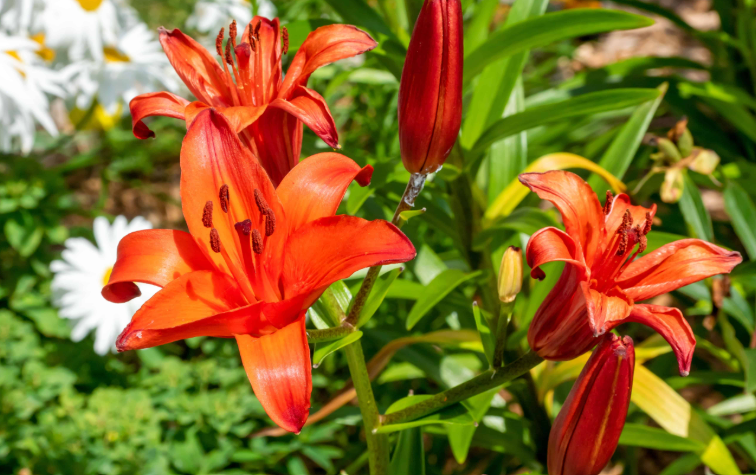
Orange lilies bring a bold, fiery presence to the garden, and for many people the color orange is the very first thing that comes to mind when picturing a classic lily bloom. Most orange lily types grow from bulbs planted 6 to 10 inches deep and send up a single upright stem reaching anywhere from 1 to 7 feet tall depending on the division, with individual blooms measuring 3 to 8 inches across. Orange lilies are considered among the earliest-blooming and fastest-growing lily colors, with many Asiatic and native species types opening in late spring to early summer, well ahead of the Oriental and Trumpet divisions.
The color orange in lilies covers a remarkably wide range, from soft, pale apricot and creamsicle tones to deep, saturated pumpkin and burnt orange, often layered with contrasting freckles, spots, or margins in burgundy, red, or brown. A single mature stem can produce anywhere from 5 to over 25 blooms depending on the cultivar, with some of the most prolific Trumpet and Turk’s Cap types capable of producing up to 50 flowers on a single well-established stem. Fragrance varies significantly by division, with most Asiatic hybrids bred to be unscented while Trumpet types often carry an intense, sweet perfume capable of scenting an entire garden.
Orange lily bulbs are generally long-lived and vigorous, with many types multiplying readily into large clumps that benefit from division every 2 to 3 years to prevent overcrowding. Most orange lily types are hardy across USDA zones 3 through 9, and several native North American species tolerate damp, boggy soil conditions far better than the average hybrid lily. As cut flowers, orange lilies are prized for their long vase life and bold visual impact, and many of the unscented Asiatic types are specifically favored for indoor arrangements where a strong fragrance would be unwelcome.
Symbolically, orange lilies are associated with warmth, confidence, energy, and honor, making them a popular choice for celebratory gifts and bold garden statements, though in a small number of cultural contexts the color has taken on different, less favorable associations. Several true wild lily species that produce orange flowers are native to North America, found naturally in prairies, woodlands, and wet meadows across the continent, while dozens of additional hybrids have been developed over the past century specifically to expand and refine the available range of orange tones. Whether grown as a naturalized wildflower, a border accent, or a cut flower for bouquets, orange lilies remain one of the most vivid and reliably eye-catching flowering bulbs available to gardeners.
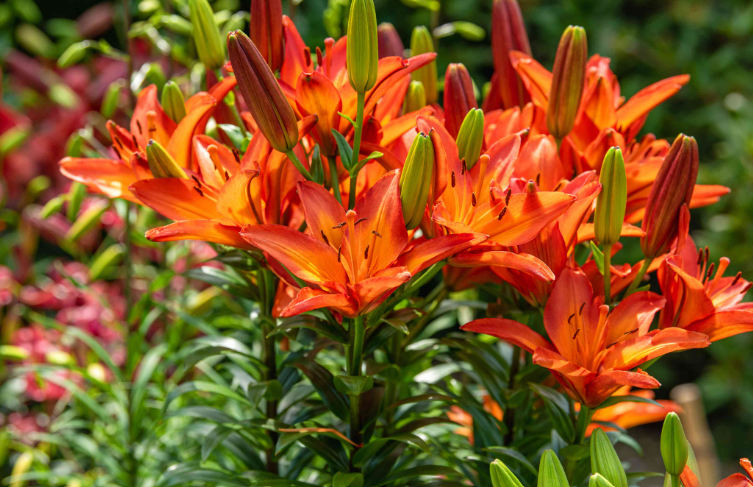
Types of Orange Lilies
Brunello
Brunello is an Asiatic cultivar with bowl-shaped, pale orange blooms that give off a creamsicle-like glow, produced on stems reaching 2 to 3 feet tall. Each plant can offer up to 12 flowers reaching widths of 8 inches, held above waxy, narrow, arching foliage that creates a striking contrast with the blooms above. This cultivar is unscented, making it a good companion for stronger-smelling plants elsewhere in the garden.
Orange Ton
Orange Ton produces velvety orange, trumpet-shaped blooms with a subtle shift from light orange at the petal midrib to a darker, pumpkin shade at the margins, with every flower part, including the stamens and anthers, sharing the same orange tone. Flowers reach an extra-large 8 inches wide and appear plentifully on each stem in midsummer. Its light, delicate fragrance and unusually long vase life make Orange Ton a favorite for cutting gardens.
African Queen
African Queen is a celebrated Trumpet division cultivar with huge, tubular apricot-orange blooms marked with garnet-brown shading on the exterior, hanging downward from sturdy, extra-long stems that can reach 6 feet tall. A single stem can produce up to 20 fragrant blossoms, each measuring 6 to 8 inches long, and this cultivar has won the Royal Horticultural Society’s Award of Garden Merit. Staking is often recommended given its impressive height and heavy, drooping blooms.
Enchantment
Enchantment is a classic Asiatic cultivar with deep orange, upward-facing blooms measuring 4 to 6 inches wide, marked with brown to red freckling and thick, sturdy stems that hold up well even in high winds. It spreads generously through clumps and returns reliably for many years, making it a good candidate for dividing and replanting every 2 to 3 years. Enchantment flowers in early summer and has remained one of the most widely grown orange Asiatic cultivars for decades.
Easy Love
Easy Love is a pollen-free Asiatic cultivar with brilliant orange-red, upward-facing blooms measuring nearly 7 inches wide, produced on broad-petaled stems exceeding 3 feet tall. Each plant produces 5 to 9 blooms from multiple points along the stem, and its lack of pollen makes it especially popular with allergy sufferers who still want bold color in the garden or in a vase.
Fiery Belle
Fiery Belle is an interdivisional hybrid resulting from a cross between Asiatic and Aurelian lilies, producing bell-shaped, fiery orange blooms tinged with hints of deep red. It offers a light, delicate fragrance and shows improved disease resistance compared to many single-division cultivars, including resistance to botrytis, making it a durable choice for gardeners in humid climates.
Michigan Lily
Michigan Lily is a graceful native North American species with slender stems clad in whorled, lance-shaped leaves, producing orange-red, Turk’s Cap-shaped blooms in early to midsummer that last about a month. The strongly reflexed, downward-facing petals are covered in purple speckling that gives the flower a tiger-like appearance, and this species is a favorite for naturalizing in prairies and open meadows.
Japanese Turk’s Cap Lily
Japanese Turk’s Cap Lily is a vigorous, erect species producing racemes of up to 12 small, fragrant, bright yellow-orange blooms in early summer. Its compact clusters of recurved flowers give it a delicate, wildflower appearance distinct from the larger, showier hybrid Turk’s Cap types, and it performs well when naturalized in lightly shaded garden settings.
Tiger Lily
Tiger Lily is the species most commonly associated with the color orange in the entire lily family, producing bowl-shaped, strongly recurved blooms covered in dark mahogany speckling across the entire petal surface rather than just the throat. Mature plants typically reach 3 to 5 feet tall and produce shiny black bulblets along the stem that can be used for easy propagation, and this species is among the hardiest lily types available, tolerating USDA zones as cold as zone 3.
Double Tiger Lily
Double Tiger Lily is a fully double-flowered variation of the classic Tiger Lily, retaining the same bright orange coloring and dark freckling while producing significantly more petals per bloom for a fuller, more layered appearance. It reaches a similar height to the standard Tiger Lily, generally 3 to 5 feet, and flowers in mid to late summer with the same old-fashioned garden charm.
Orange Pixie
Orange Pixie is a hardy, dwarf Asiatic hybrid and one of the shortest lily types available, generally staying between 2 and 3 feet tall while producing large, upward-facing orange blooms without fragrance. This compact species has been used extensively in breeding programs and is a parent to many modern Asiatic cultivars, valued for its excellent performance as both a garden plant and a cut flower.
Philadelphia Lily
Philadelphia Lily, also known as the Wood Lily, produces upward-facing, star-shaped blooms with red-orange petals fanning outward from a yellow, brown-speckled center. It typically grows 1 to 3 feet tall with a 9 to 12 inch spread, flowering from midsummer into August, and performs best in cooler climates with full sun and moist, well-draining soil.
Columbia Lily
Columbia Lily is an attractive North American perennial wildflower, sometimes called the wild tiger lily or Oregon lily, producing reflexed, downward-nodding, brick-red-freckled orange blooms clustered atop the stem. A single healthy bulb can produce up to 20 blooms over an unusually long flowering period, and this species typically reaches 2 to 6 feet tall depending on growing conditions, thriving in moist, acidic to neutral soil.
King Pete
King Pete is a fascinating Asiatic cultivar with showy, upward-facing, wide-open blooms featuring broad, bright yellow petals contrasting with a deep orange heart and chocolate freckling. Blooming in early to midsummer, it makes an excellent border plant, providing striking color and contrast within a mixed perennial planting.
Orange Marmalade
Orange Marmalade produces dainty, star-shaped, bright tangerine-orange blooms with strongly recurved petals resembling a Turk’s Cap, forming a floral candelabra effect with up to 30 blooms possible on a single stem. This type is an ideal naturalizing subject, growing well between shrubs or in light woodland conditions where its downward-facing flowers can cascade freely.
Tiny Double You
Tiny Double You is a dwarf lily specially bred in the Netherlands, producing double, pollen-free orange blooms on a compact plant ideal for sunny front borders, containers, or edging along a walkway. Its small stature and full, layered flower form make it a popular choice for gardeners with limited space who still want bold orange color.
Royal Sunset
Royal Sunset is an Asiatic-Longiflorum hybrid with large, upward-facing blooms measuring 4 to 6 inches across, blending hues of burnt orange, apricot, gold, and rose with slightly reflexed petals and light freckling near the center. Notably, its coloring shifts depending on sunlight intensity, appearing different on overcast days compared to full sun, and it flowers for about a month at the start of summer.
Sunny Morning
Sunny Morning features a golden-orange hue covered in dark red spots, with downward-facing blooms and prominently protruding stamens. It typically reaches 2 to 3 feet tall with a 4 to 8 inch spread, performing best in full to partial sun with slightly alkaline, moderately moist, well-draining soil, and it is among the earliest orange lily types to bloom each season.
American Turk’s Cap Lily
American Turk’s Cap Lily, also called the Swamp Lily, is a native species that thrives in damp growing conditions unusual for most lilies, producing large, deep orange blooms with dark brown spotting and a distinctive green star at the flower’s center. It typically reaches 3 to 6 feet tall in favorable wetland habitat and can produce up to 50 nodding blooms on a single mature stem.
Splendens Tiger Lily
Splendens Tiger Lily is a hybrid strain of the classic Tiger Lily prized for its prolific, unscented, downward-facing blooms in bright orange with bold black freckling. Blooming from late summer into early fall, mature bulbs can produce up to 25 flowers on stems reaching 3 to 4 feet tall, making it one of the more floriferous orange lily types available.
Fire King
Fire King produces deep orange blooms with black spotting at the center, held above pointed, dark foliage that provides an appealing contrast to the bright flowers. It typically reaches 3 feet tall, favors rich, organically amended soil with medium moisture, and is unscented, multiplying readily once established in a favorable spot.
Gran Paradiso
Gran Paradiso is a large, upward-facing Asiatic cultivar with wide, glossy, red-orange petals that curl gracefully at the ends, creating a bold, showy presence in the garden. Its vivid coloring and substantial bloom size make it a popular choice for gardeners seeking maximum visual impact from a single planting.
Apricot Fudge
Apricot Fudge is a specialty Oriental Trumpet hybrid with rose-shaped, layered petals in soft apricot-orange tones, giving the bloom a texture and form more reminiscent of a rose than a traditional lily. This unusual flower structure has made Apricot Fudge a standout choice among collectors seeking something visually distinct from standard trumpet or star-shaped lily blooms.
Tiger Babies
Tiger Babies is technically classified as an Asiatic hybrid but displays the recurved petal shape typical of a Martagon-type lily, in a lovely shade of peach-orange with a darker raspberry-salmon throat. Its unusual combination of Asiatic vigor and Martagon-like flower form makes it a distinctive addition to a mixed orange-toned border.
Must See
Must See is a pollen-free, fully double Asiatic cultivar offering a fuller, richer bloom shape without the pollen mess of standard single-form lilies. Its layered petals and vivid orange coloring make it a popular choice for allergy-conscious gardeners who still want a bold, statement-making bloom in their beds or containers.
Fire Lily
Fire Lily, also known as the Orange Lily, is a species native to Europe that has become widespread throughout parts of southern North America after being introduced by early gardeners. Its bright orange, downturned blooms are a favorite of butterflies and other pollinators, and some greenhouses have developed specialty cultivars from regional wild genetic lines, making it a great choice for wildflower-style plantings.
Kellogg’s Lily
Kellogg’s Lily is a large North American species producing showy, down-facing, hanging blooms in warm orange tones with characteristic recurved petals. It is native to parts of the Pacific coast and is valued by native plant gardeners for its architectural form and its ability to naturalize in appropriate woodland and meadow habitat.
Flore Pleno
Flore Pleno is a double-flowered form of the classic Tiger Lily, retaining the familiar orange coloring and dark freckling while producing noticeably more petals per bloom for a fuller, more dramatic presentation. Blooming in mid to late summer, this fragrant cultivar can produce up to 25 flowers on stems reaching 6 feet tall, making it one of the tallest orange lily types commonly grown.
Susan Elizabeth
Susan Elizabeth is a Trumpet-type cultivar with light orange, recurved petals and long, protruding anthers, closely related to some of the large-flowered hybrid trumpet lines bred for dramatic garden presence. It shares the general growth habit and fragrance profile typical of the Trumpet division, reaching several feet tall with outward-facing blooms in mid to late summer.
Forever Susan
Forever Susan is a striking Asiatic cultivar with vivid, deep burgundy petals highlighted by bright orange-gold tips, creating a dramatic two-tone effect that sets it apart from solid-colored orange types. It flowers in early summer on compact, unscented stems typical of the Asiatic division, and its bold contrast makes it a popular choice for gardeners looking to add visual complexity to an orange-and-red themed planting.