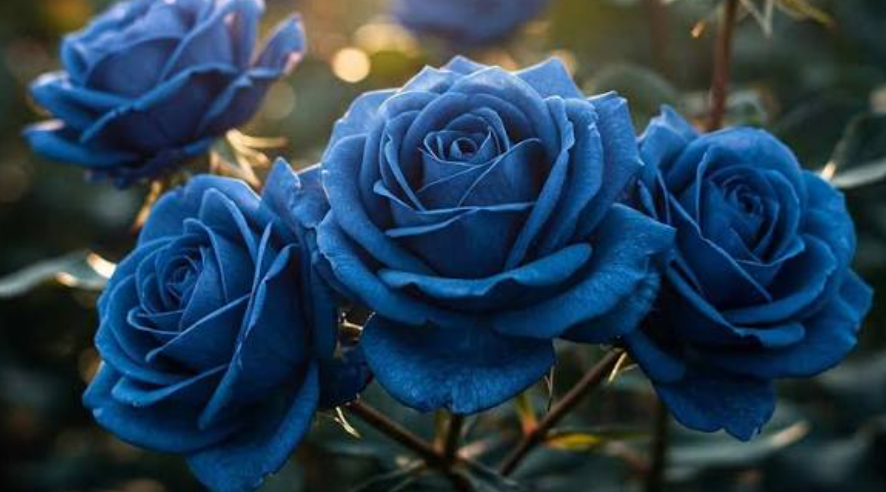
Blue roses hold a unique and almost mythical status in the world of flowers, since no rose in existence, with one very recent and heavily engineered exception, actually produces true blue pigment. Roses lack the natural genetic pathway to synthesize delphinidin, the blue pigment found in flowers like delphiniums and pansies, which means that every rose marketed as “blue” over the past century has actually been a lavender, lilac, mauve, or silvery-purple cultivar that reads as cooler and bluer than a typical pink or red rose, especially in cool morning light or overcast weather. This has not stopped generations of hybridizers from chasing the color as something of a horticultural holy grail, and the roses that resulted from this decades-long pursuit, while technically violet or lavender rather than blue, remain some of the most fragrant, elegant, and sought-after cultivars in the entire genus.
Blue-toned roses are produced across nearly every classification recognized by the American Rose Society, including hybrid tea, floribunda, grandiflora, climbing, and shrub types, though hybrid teas and floribundas dominate the category since most breeders working toward a bluer rose have focused on refining a single, elegant high-centered or clustered bloom rather than a climbing or old garden form. A mature hybrid tea or grandiflora blue-toned rose typically reaches 3 to 6 feet tall with large blooms averaging 3 to 5 inches across, while floribundas stay more compact at 2 to 4 feet and produce their cooler-toned blooms in generous, repeat-flowering clusters. The exact shade a given “blue” rose displays can shift dramatically with light, temperature, and soil chemistry, with cooler weather and morning or filtered light generally bringing out the coolest, most convincingly blue-leaning tones, while intense summer heat tends to push the same bloom toward a warmer, pinker lavender.
In 2004, a joint venture between the Australian biotechnology firm Florigene and the Japanese beverage company Suntory achieved what conventional breeding never could, using genetic engineering to insert a blue pigment gene borrowed from pansies into a white rose, silencing the rose’s own red pigment production in the process. The result, a cultivar named ‘Applause,’ was released to Japanese florists in 2009 and later reached North American markets, and while many rose purists still argue its color reads as lavender-blue rather than a true, saturated blue, it remains the closest thing to a genetically blue rose ever produced. Most conventionally bred blue-toned roses are hardy across USDA zones 5 through 10, and because the genetics responsible for cooler coloring have historically been linked to somewhat reduced vigor, several of the classic mid-20th-century blue roses require more attentive disease management than many of today’s sturdier introductions.
Symbolically, blue roses represent mystery, the unattainable, and in some traditions, the fulfillment of an impossible wish, a meaning directly tied to their long-standing absence from nature and the decades of failed attempts to breed one through conventional means. Many of the cultivars below were bred by some of the most respected names in rose history, including Mathias Tantau of Germany, Kordes of Germany, Georges Delbard of France, and the amateur English breeder Frank Cowlishaw, whose 20-year personal quest for a bluer rose eventually produced one of the category’s most celebrated results. Whether grown for exhibition, cut for a bouquet, or simply admired for representing one of horticulture’s most persistent and romantic pursuits, the following 20 types represent the closest the rose world has come to a color nature never intended it to have.
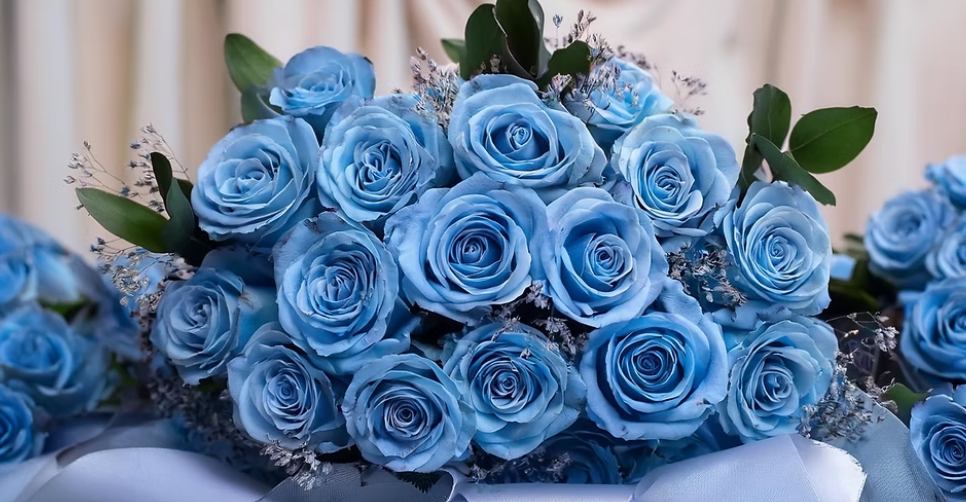
Types of Blue Roses
Blue Moon
Blue Moon is a hybrid tea bred by Mathias Tantau Jr. in Germany and introduced in 1964, winning the Rome Gold Medal the same year and going on to become perhaps the single most famous blue-toned rose ever produced. Its large, elegant blooms open slowly from tall, pointed buds into a soft, silvery lilac-lavender color, releasing a strong, refined fragrance that has made it as popular for cutting as for garden display. A climbing sport also exists for gardeners who want its cool coloring trained vertically, and the bush form performs best in a warm, sheltered spot in full sun, where its delicate petals are protected from the kind of intense heat that can scorch and dull its signature silvery tone.
Blue Girl
Blue Girl, also known by the names Cologne Carnival and Koelner Karneval, is a hybrid tea bred by Kordes in Germany and introduced in 1964, the same year it won the Rome Gold Medal alongside its rival Blue Moon. Its large, refined blooms open in a clear, silvery-purple lavender tone with moderate fragrance, and while its breeders at Weeks Roses openly acknowledge the color is technically lavender rather than true blue, its clean, consistent tone, tidy growth habit, and notably better disease resistance than many earlier blue-toned hybrids have kept it a widely available and dependable choice in nurseries and plant catalogs for over half a century.
Blue Nile
Blue Nile is a hybrid tea bred by Georges Delbard in France and introduced in 1981, producing large, fully double, mauve-blue blooms with an intense fragrance, named for the famous African river celebrated for its own striking blue coloring. Its cool, violet-blue tones become especially pronounced in cooler weather, when the blooms take on their most convincingly blue-leaning appearance, and its powerful scent combined with its elegant, high-centered hybrid tea form has made it a long-standing favorite among growers specifically chasing the coolest possible tone in a garden rose.
Rhapsody in Blue
Rhapsody in Blue, originally registered under the name Fantasia in 1999 before being renamed in 2002 in honor of George Gershwin’s celebrated composition, is a floribunda shrub rose bred by the amateur English hybridizer Frank Cowlishaw after a personal breeding effort spanning roughly 20 years, crossing ‘Summer Wine,’ ‘International Herald Tribune,’ ‘Blue Moon,’ ‘Montezuma,’ and ‘Violacea’ to arrive at the final result. Its buds open a rich purplish-violet that takes on a genuinely bluish cast at dusk or in shaded, filtered light, and the plant’s excellent frost resistance, long bloom season, and strong resistance to fungal disease have made it one of the most widely recommended blue-toned roses for gardeners in cooler climates, provided it is given some afternoon shade to protect its color from scorching in direct sun.
Blue for You
Blue for You is a floribunda bred by Peter J. James in England and introduced in 2001, producing semi-double blooms in a distinctive slate-lavender tone accented by golden stamens and a contrasting silver reverse on the petal underside. Its rare, mesmerizing purplish-blue coloring and compact, well-branched growth habit have made it a favorite for small gardens and container culture, and it is frequently cited among rose growers as one of the closest conventionally bred roses to a genuine blue, particularly when grown in cooler conditions with some protection from harsh afternoon sun.
Ebb Tide
Ebb Tide is a floribunda bred by Tom Carruth for Weeks Roses in the United States and introduced in 2004, frequently cited by rose growers as among the “bluest” roses commercially available despite its officially deep, smoky plum-purple coloring. Its double blossoms carry an intoxicating clove fragrance, and the compact, rounded shrub takes some time to fully establish after planting, but once settled it becomes an exceptionally disease-resistant garden showpiece whose darkest blooms can appear to shift toward blue-violet in low or overcast light.
Applause
Applause is a genetically engineered hybrid tea rose developed jointly by the Australian biotechnology company Florigene and the Japanese beverage company Suntory, first released to Japanese florists in 2009 after 13 years of collaborative research, representing the only rose in existence to actually contain a genuine blue pigment gene rather than merely approximating the color through conventional breeding. Scientists achieved this by silencing the rose’s natural red pigment production and inserting a blue pigment gene borrowed from the pansy, resulting in a lavender-blue bloom that, while still debated by purists as not quite a true, saturated blue, remains the single closest thing to a scientifically blue rose ever produced, sold in limited quantities in Japan and later North America at a considerable premium reflecting its extraordinary development cost.
Sterling Silver
Sterling Silver is a hybrid tea introduced in the United States in 1957, historically significant as the rose that first sparked widespread interest in breeding lavender and blue-toned roses, inspiring decades of subsequent hybridizing that produced cultivars like Blue Boy, Blue Girl, Blue Moon, and Blue Nile in its wake. Its pale, silvery lavender, high-centered blooms carry a strong, sweet, old rose fragrance, though the plant is prone to fading toward a duller gray tone as flowers age and shows somewhat weaker vigor and disease resistance than the many blue-toned roses that followed and improved upon its groundbreaking but imperfect original color.
Terra Limburgia
Terra Limburgia, also sold under the names ORYlila and Oryblue, is a floribunda bred by Jozef Orye in Belgium and introduced in 2004 to commemorate the 10th anniversary of the Dutch regional radio station L1 in Limburg. Its large, double blooms display a distinctive pinkish-blue shade with a medium fragrance, carried on a compact bush with matte, dark green foliage that can be somewhat susceptible to powdery mildew in humid conditions, typically reaching 70 to 80 centimeters tall with 3 to 5 flowers per stem and around 30 petals per bloom.
Afrika Star
Afrika Star is a hybrid tea bred by Olga West in Zimbabwe and introduced in 1965, producing captivating, fragrant, light lilac-blue blooms with an average of 40 petals apiece on sturdy stems. Reaching about 120 centimeters tall and 60 centimeters wide, it shows notable resistance to both powdery mildew and black spot, making it a robust and dependable choice for gardeners in USDA zones 6 through 9 who want a blue-toned rose bred specifically for resilience in warmer, drier climates than many of its European counterparts were designed to handle.
Rainy Blue
Rainy Blue is a climbing rose producing white-lavender blooms with a mild scent that flush intermittently throughout the growing season on vigorous canes well suited to a trellis, arch, or pillar. Its soft, pale coloring, cooler and more washed-out than the deeper violet tones found in many bush-form blue roses, has made it a distinctive choice for gardeners wanting the vertical impact of a climber combined with a gentler, more understated approach to the blue-lavender color category.
Shocking Blue
Shocking Blue is a floribunda bred by Kordes in Germany and introduced in 1974, producing purple-blue, double blooms with an exceptionally strong fragrance on long, sturdy stems well suited to cutting, considered by many rosarians among the most intensely perfumed roses ever bred regardless of color. Its bold, saturated purple-blue tone and remarkable scent have kept it a favorite among fragrance-focused gardeners for half a century, prized as much for its powerful perfume as for its unusually cool, eye-catching coloring.
Blue River
Blue River is a hybrid tea producing charming blooms with a soft lilac center fading to magenta-pink edges, creating a gentle, two-toned effect that gives the flower a soothing, almost watercolor-like quality in the garden. Its delicate petals and blended lilac-magenta coloring set it apart from the more uniformly purple-toned blue roses on this list, offering a softer, more romantic alternative for gardeners who want cooler tones without the deeper, more saturated violet found in cultivars like Shocking Blue or Ebb Tide.
Blueberry Hill
Blueberry Hill is a semi-double floribunda producing huge yet delicate-looking, mauve-to-lavender blooms with a sweet apple fragrance, blooming so profusely all summer that the plant can come to resemble a flowering azalea shrub in overall form and bloom coverage. Reaching up to 4 feet tall, its exceptionally heavy, continuous bloom production and fruity scent have made it a popular choice for gardeners wanting maximum lavender-blue color impact from a single floribunda shrub.
Blue Bajou
Blue Bajou is a floribunda bred by Kordes in Germany, producing clusters of lilac-purple blooms with a light fragrance on a compact, disease-resistant shrub well suited to borders and mass plantings. Its dependable, continuous bloom and the strong garden performance characteristic of Kordes breeding have made it a reliable modern choice for gardeners wanting consistent blue-lavender floribunda color without demanding maintenance.
Stainless Steel
Stainless Steel is a hybrid tea bred by Frank Strickland in the United States and introduced in 1991, producing large, cool silvery-lavender blooms with a strong, sweet fragrance on a vigorous, upright plant reaching 4 to 5 feet tall. Its clean, metallic-toned coloring, from which the cultivar takes its name, reads as one of the coolest and most convincingly blue-silver tones among modern hybrid teas, and its dependable, continuous bloom throughout the growing season has made it a popular choice among gardeners seeking a disease-resistant alternative to older, more delicate blue-toned hybrid teas.
Lagerfeld
Lagerfeld is a grandiflora bred by Herbert Swim and O.L. Weeks for Armstrong Nurseries in the United States and introduced in 1986, producing large, silvery-lavender, high-centered blooms on tall, vigorous canes clothed in large, deep green leaves. Its cool, steely tone and classic exhibition form have made it a favorite among rose show competitors specifically seeking a blue-leaning bloom with the refined, high-centered shape traditionally associated with the finest hybrid teas and grandifloras, its clustered flowering habit typical of the grandiflora class adding an extra dimension of garden display beyond single-stem cutting.
Neptune
Neptune is a hybrid tea introduced in 2003, producing rich, saturated lavender blooms with noticeable purple-blue undertones that deepen further in cooler weather, held on a vigorous, upright plant with the classic high-centered hybrid tea form prized by exhibitors. Named for the distant blue planet, its improved disease resistance compared to many older lavender-blue hybrid teas reflects decades of breeding progress specifically aimed at correcting the fragility long associated with roses in this challenging color range.
Wild Blue Yonder
Wild Blue Yonder is a grandiflora bred by Tom Carruth for Weeks Roses in the United States and introduced in 2006, winning the All-America Rose Selections award the same year for its rich, saturated mauve-purple blooms with a distinctly cool, blue-leaning cast and a notably strong, spicy-sweet fragrance. Its vigorous, disease-resistant growth habit and reliable, continuous bloom throughout the growing season have made it one of the most celebrated modern blue-toned grandifloras, its evocative name directly referencing the elusive, sky-blue color the entire category has spent a century chasing.
Arctic Blue
Arctic Blue is a floribunda bred by Kordes in Germany, producing clusters of silvery lavender-blue blooms on a compact, disease-resistant shrub that reflects the Kordes breeding program’s continued pursuit of a genuinely cool-toned, blue-leaning rose. Its reliable, repeat-flowering habit and strong resistance to black spot and powdery mildew have made it a dependable modern choice for gardeners specifically drawn to the coolest, iciest end of the blue and lavender rose spectrum.