River Birch Tree Identification: How to Recognize the South’s Native Birch
River birch tree identification starts with the bark. Most people picture birches as white-trunked trees of the far north, but river birch has peeling cinnamon and salmon-colored bark and grows comfortably in heat and humidity that would kill a paper birch. It is native to the eastern United States, from southern New England and Minnesota down to Florida and eastern Texas. Across most of the Southeast, it is the only native birch you will see growing in the wild.
As its name suggests, river birch grows mainly along rivers, streams, swamps, and floodplains, and you will often find it leaning out over the water. In the wild, a mature tree usually grows 40 to 70 feet tall, and the largest reach about 80 to 90 feet. Landscape trees are usually smaller. River birch naturally grows with one trunk, but nurseries often sell it with two to five trunks per tree, so in yards and parks you will mostly see the clumped form.
Bark
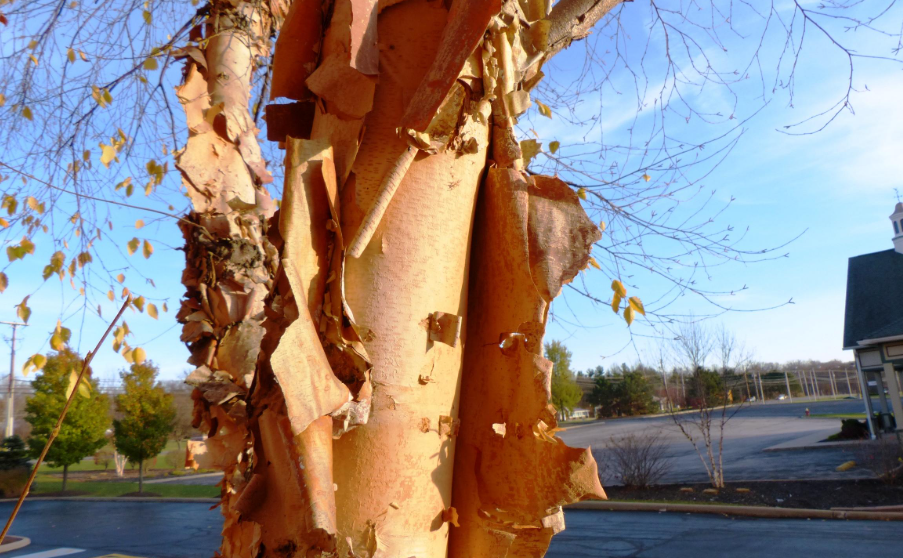
River birch bark is its most dependable feature. On young trees and upper branches it is smooth, reddish-brown, and marked with pale horizontal lenticels. As the tree ages, the bark peels in thin, film-like curls that range from cream and pale pink to orange, salmon, and deep cinnamon. These shaggy layers give the trunk a ragged texture that looks different from the clean, wide sheets of paper birch.
The base of an old trunk looks different from the rest of the tree. After several decades, the lower trunk turns dark gray-brown, with thick, scaly plates and rough furrows, and it stops peeling. Higher up on the same tree, the trunk and branches keep their peeling, colorful bark. That two-toned contrast, rough and dark at the bottom with curling cinnamon bark above, is a strong sign of a mature river birch.
Leaves
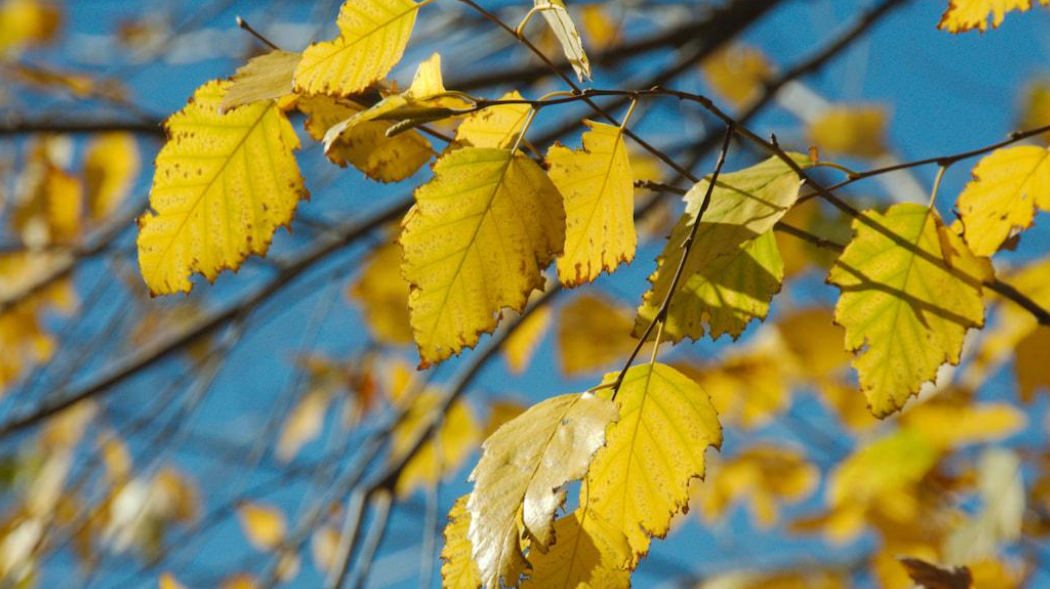
River birch leaves are simple, alternate, and roughly diamond-shaped or triangular. They usually measure about 1.5 to 3.5 inches long and 0.75 to 2.5 inches wide. The base of the leaf is wedge-shaped and tapers to the stem, which separates it from the rounded leaf base of paper birch. The edges are doubly serrate, with large teeth that carry smaller teeth along their sides, and on many leaves the margin also looks slightly wavy or shallowly lobed.
The upper surface of the leaf is a glossy dark green. The underside is paler, often whitish-green and somewhat fuzzy, especially along the veins. In autumn the leaves turn a soft yellow, which is usually less bright than the yellow of northern birches. During hot, dry summers, river birch often drops some of its inner leaves early, so a scatter of yellow leaves under the tree in July or August doesn’t necessarily mean it is sick.
Also Read: Different Types of Birch Trees
Catkins and Seeds
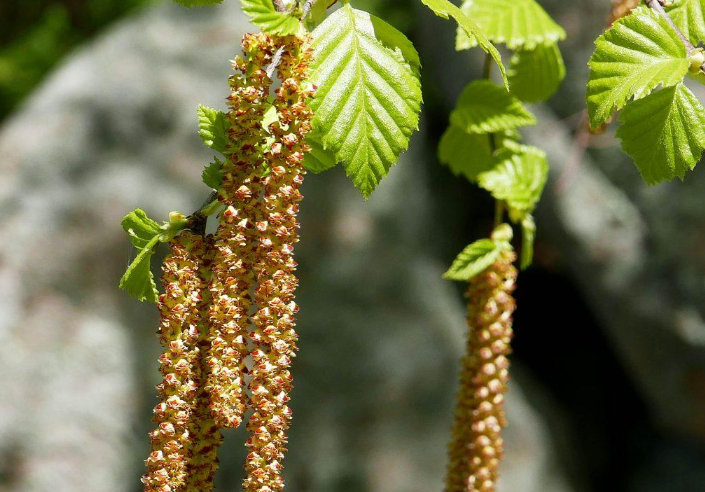
River birch has male and female flowers in separate catkins on the same tree. The male catkins form at the branch tips in late summer or fall and stay through winter as small, tight, brownish clusters. In early spring they lengthen to about 2 to 3 inches, droop, and release pollen as the new leaves come out. The female catkins are shorter, green, and less noticeable, and they sit upright on short side shoots.
River birch also differs from most other birches in when its seeds ripen. Most birches drop their seeds in autumn, but river birch ripens its cone-like seed clusters, about 1 to 1.5 inches long, in late spring or early summer. The clusters break apart into hundreds of tiny winged seeds just as rivers fall back after spring floods, so the seeds land on freshly exposed wet mud where they can sprout.
Twigs and Buds
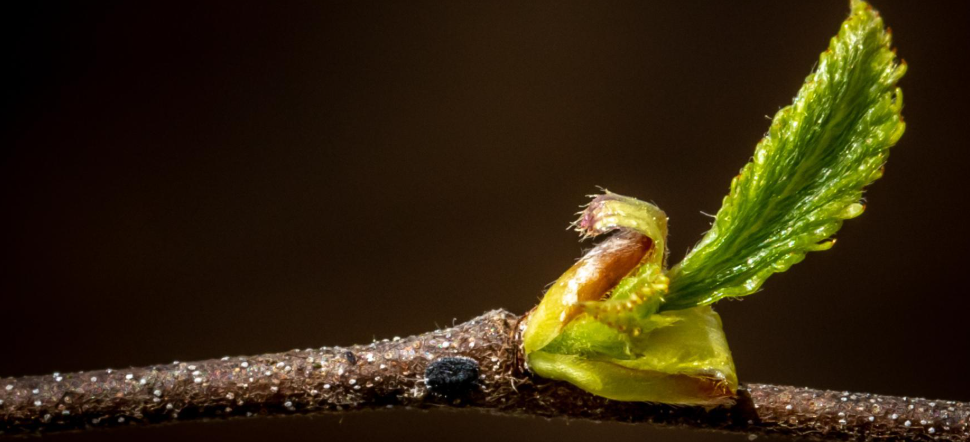
In winter, look closely at the twigs. They are slender, flexible, and reddish-brown, and young growth is often covered in fine hairs that wear off over time. The twigs are dotted with small pale lenticels, and the buds are small, pointed, and reddish-brown. Unlike yellow birch and black birch, a scraped river birch twig has no wintergreen scent, which is a quick way to tell them apart in the field.
Look-Alikes and Common Confusions
River birch is most often confused with other birches planted in landscapes. Paper birch and European white birch both have bright white bark, while river birch is never truly white. The exception is the popular cultivar ‘Heritage’, whose bark can look pale cream to almost white in places. Even then, its pinkish-tan layers and diamond-shaped leaves give it away. Black birch can look similar when young, but it has darker, tighter bark that doesn’t peel, and its twigs smell strongly of wintergreen.
Sycamore sometimes causes confusion along the same streams, since its bark also flakes in patches of cream, tan, and brown. Sycamore leaves are large and maple-like with three to five lobes, and its fruit is a hanging round ball, not a cone-like catkin. Check the leaf shape, the doubly toothed edge, and the curling cinnamon bark together, and you can identify river birch with confidence in any season.
Common Regions Where River Birch is Found in North America
River Birch (Betula nigra) is native to the eastern and southeastern United States. It is commonly found in states such as Florida, Georgia, Alabama, Mississippi, Louisiana, Tennessee, North Carolina, South Carolina, Virginia, and Arkansas. Its natural range also extends northward into parts of the Midwest and Northeast, including Missouri, Illinois, Indiana, Ohio, Pennsylvania, and New York.
In the wild, River Birch typically grows along riverbanks, streams, floodplains, wetlands, and moist woodland areas. It is particularly common in low-lying landscapes with consistently moist soils. Although it is not native to Canada, it is sometimes planted as an ornamental tree in Canadian gardens and parks.
River Birch Identification: Key Characteristics
The following features are particularly useful when identifying River Birch:
- Bark: Reddish-brown or cinnamon-colored bark that peels in thin, papery layers.
- Leaves: Triangular or diamond-shaped leaves with pointed tips and serrated edges.
- Height: Typically grows 40–70 feet tall.
- Growth habit: Often develops multiple trunks and a spreading crown.
- Twigs: Slender, reddish-brown branches with alternate buds.
- Catkins: Hanging male and female flower clusters that appear in spring.
- Seeds: Small, winged seeds released from cone-like fruiting structures.
River Birch is one of the easiest birch species to recognize because of its distinctive peeling bark. Its combination of cinnamon-colored trunks, triangular leaves, and multi-stem growth habit makes it relatively easy to distinguish from Paper Birch, Yellow Birch, and other North American birches.
Sources
- University of Wisconsin–Madison Extension, “River Birch”
- NC State Extension, “North Carolina Extension Gardener Plant Toolbox: River Birch”
- Washington University in St. Louis, “River Birch – Tree Identification”
- University of Florida IFAS, “Plant Identification Learning Module: River Birch”
- University of Vermont, “River Birch: Physiological Characteristics”