Some palms stand alone like a single column, but others grow more like a family, with a whole cluster of trunks rising from one shared root system. Palm trees with multiple trunks, often called clumping or clustering palms, look full and lush even when young. They fill space quickly and soften corners, walls, and fences in a way a single-trunked palm rarely can. For gardeners who want privacy, shade, or a tropical feel, they are often the better choice.
A clumping palm spreads by sending up new shoots, called suckers, from its base. As those shoots grow, they become new trunks, and the clump slowly gets wider. Some clumps stay tight and upright, while others lean outward in a loose, fountain-like shape. Over the years, one plant can grow from two or three trunks to more than a dozen.
Multi-trunked palms range from knee-high shrubs to trees more than 30 feet tall. Some have feathery fronds, while others carry stiff, fan-shaped leaves. Many tolerate shade, so they also make excellent houseplants. Several of the hardiest palms in the world are clumping types.
In the United States, most multi-trunked palms grow outdoors in Florida, the Gulf Coast, Southern California, Arizona, and Hawaii. A few cold-hardy species grow much farther north, into the Carolinas, Tennessee, and the mid-Atlantic states. Tropical types do well indoors anywhere with bright light and steady humidity.
1. Senegal Date Palm
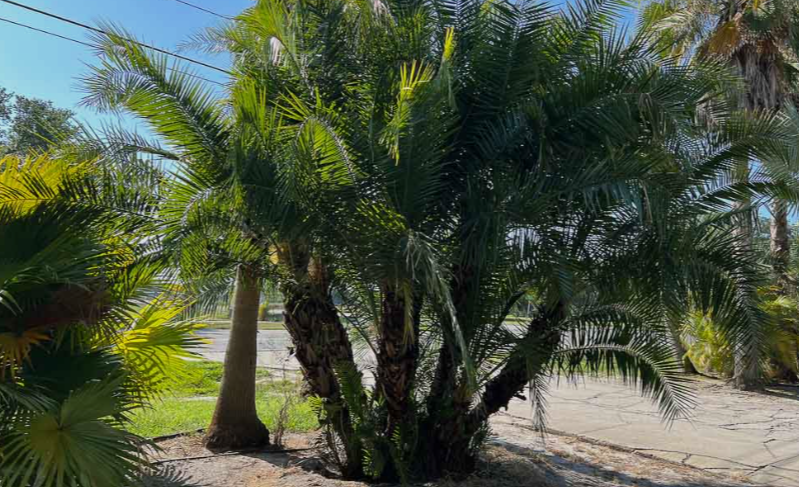
The Senegal date palm forms a striking clump of slender, leaning trunks that curve gracefully outward from the base. A mature clump can reach about 35 feet tall and spread 12 to 20 feet wide, so it creates a light, open canopy. Its feathery, bright green fronds have sharp spines near their bases, so it is best kept away from walkways. The trunks are covered with old leaf bases and brown fibers that give them a rugged texture.
The Senegal date palm is native to tropical Africa, from Senegal south to South Africa. In the United States it grows outdoors in Central and South Florida, Southern California, and along the Texas Gulf Coast. It handles heat, salt spray, and brief frosts well. Many landscapers remove some of the suckers to keep the clump tidy and show off the curving trunks.
2. Mediterranean Fan Palm
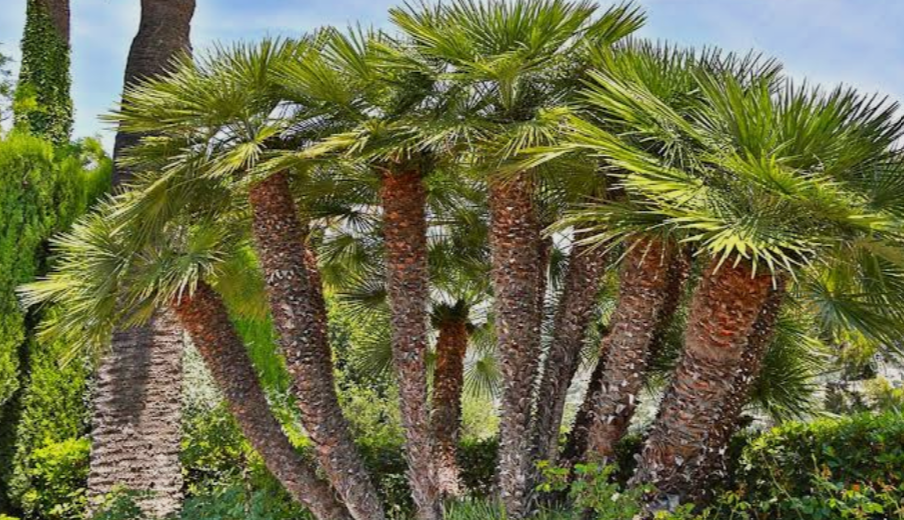
The Mediterranean fan palm is a slow-growing clumping palm with several short, fiber-covered trunks. Its stiff, fan-shaped leaves range from deep green to silvery blue, depending on the variety, and they sit on stalks lined with sharp teeth. Most clumps reach only 10 to 15 feet tall over many years. It is one of only two palms native to mainland Europe.
This palm is native to Spain, Portugal, southern Italy, and North Africa. In the United States it is one of the best palms for areas with cold winters, and it survives temperatures down to about 10°F. It grows well in California, Arizona, Texas, the Gulf Coast states, and coastal Georgia and South Carolina. It handles drought, wind, and poor soil with little care.
3. Lady Palm
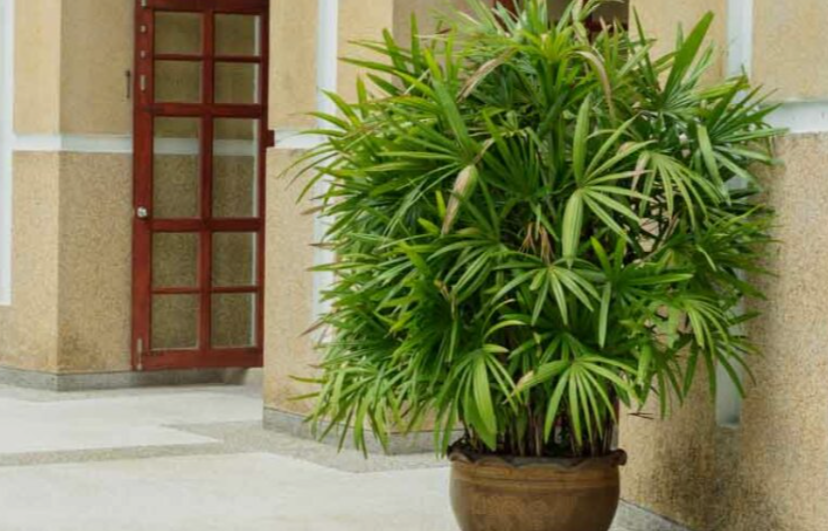
The lady palm forms dense clumps of slim, bamboo-like canes, each covered in a net of dark brown fibers. Its glossy, dark green fan leaves are divided into broad, blunt-tipped segments that give the plant a neat, layered look. It usually grows 6 to 12 feet tall and slowly spreads by underground stems. Variegated forms with cream-striped leaves are rare and highly valued by collectors.
The lady palm is native to southern China and Taiwan, and it has been grown as a prized ornamental for centuries. In the United States it grows outdoors in Florida, the Gulf Coast, and Southern California, mainly in zones 9 through 11. It thrives in shade and is one of the best palms for north-facing walls and shady corners. It is also one of the best palms for low-light indoor spaces.
4. Bamboo Palm
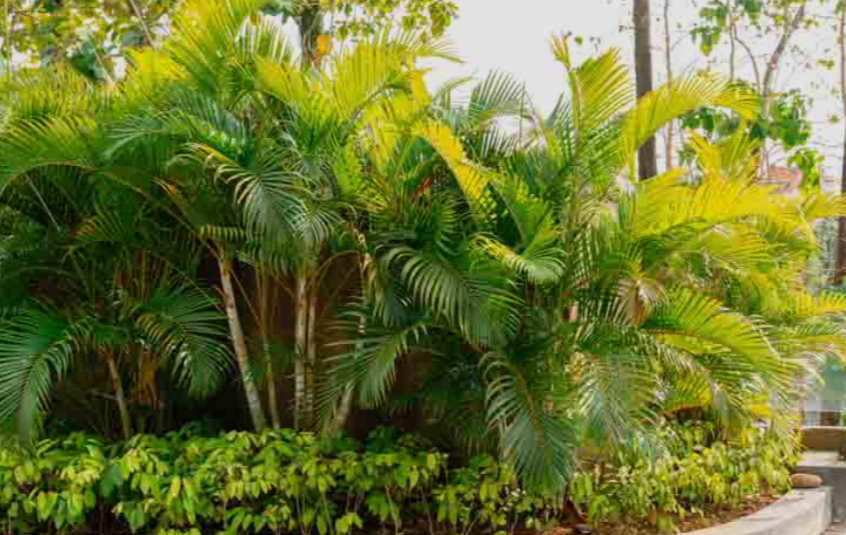
The bamboo palm grows as a cluster of thin, green, ringed canes that look remarkably like bamboo. Each cane is usually about an inch thick and topped with soft, feathery fronds. Clumps usually reach 4 to 12 feet tall and grow denser as new canes sprout from the base. Its fine texture makes it a soft, graceful screen.
The bamboo palm is native to the forests of Mexico and Central America. In the United States it grows outdoors in South Florida, Hawaii, and frost-free parts of Southern California. It prefers shade and steady moisture, and it is often planted under taller trees. It is also one of the most popular indoor palms in homes and offices across the country.
5. Cat Palm
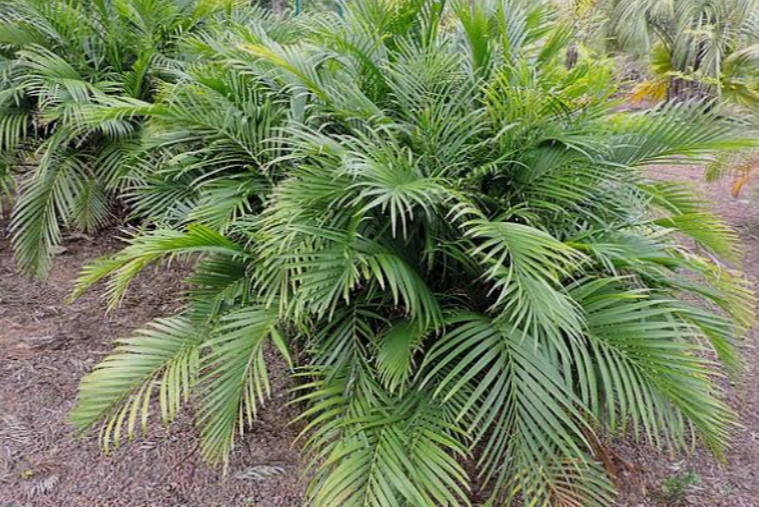
The cat palm, also called the cascade palm, grows as a low, dense mound of short stems that often stay hidden beneath the foliage. Its glossy, dark green fronds arch outward in every direction, so the plant looks like a fountain of leaves. It usually grows 4 to 6 feet tall and wide. New shoots keep the clump full and bushy from the ground up.
The cat palm is native to southern Mexico, where it grows along streams and riverbanks. Because of that, it loves water and tolerates wet soil better than most palms. In the United States it grows outdoors in South Florida and Hawaii, usually in partial shade. It is also widely sold as a houseplant and does well near bright windows.
6. Lipstick Palm
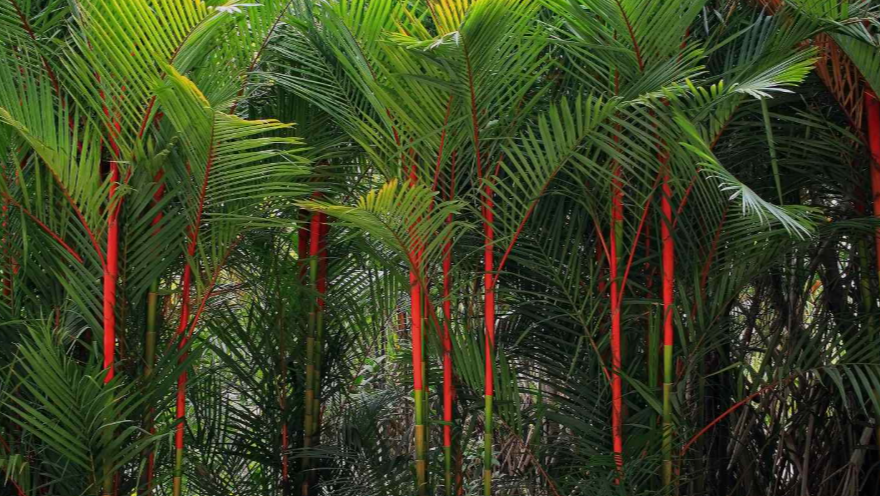
The lipstick palm is one of the most colorful palms in the world. Its slender, clustered stems are topped by bright scarlet crownshafts and red leaf stalks. Each stem is only a few inches thick, and a clump can hold many stems that rise to 20 or 30 feet in the tropics. The red color stands out against the dark green fronds like a splash of lipstick.
The lipstick palm is native to the swamp forests of Malaysia, Sumatra, Borneo, and southern Thailand. It is extremely sensitive to cold and needs constant warmth and moisture. In the United States it grows outdoors only in Hawaii and the warmest protected spots of South Florida and the Florida Keys. It thrives in wet soil and even grows well at the edge of ponds.
7. Clustering Fishtail Palm
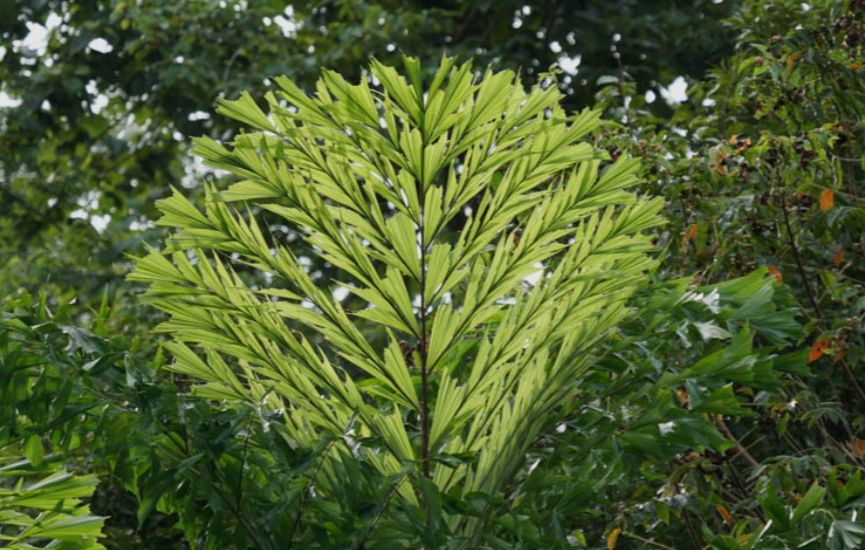
The clustering fishtail palm forms a dense clump of slender, ringed stems topped with unusual twice-divided fronds. Its leaflets are wedge-shaped with ragged tips, so they look like the tails of fish. A clump usually grows 15 to 25 feet tall. Each stem flowers from the top downward and dies after fruiting, but new stems keep the clump alive.
The clustering fishtail palm is native to Southeast Asia, from Myanmar and Thailand through Malaysia, Indonesia, and the Philippines. In the United States it grows outdoors in South Florida and Hawaii, and it is sometimes grown indoors elsewhere. Its fruits contain sharp crystals that irritate skin and mouths, so handle them with gloves. It grows in sun or shade and makes a fast, leafy screen.
8. Saw Palmetto
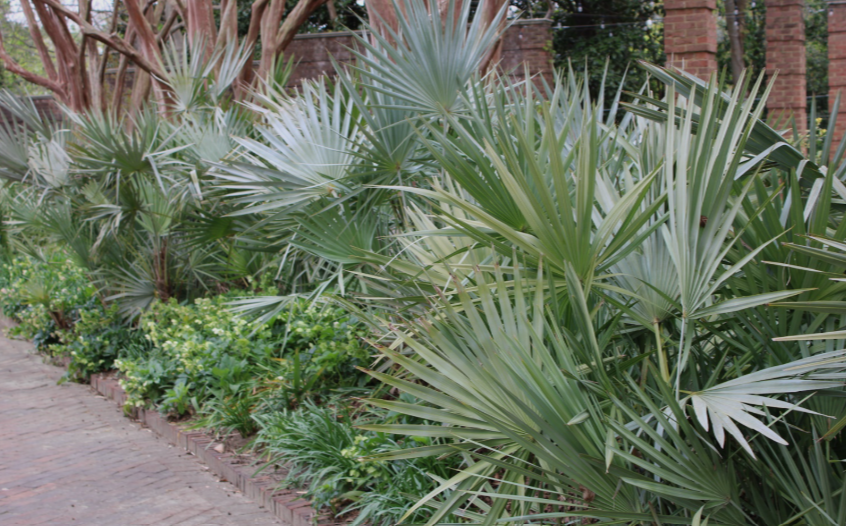
Saw palmetto is a tough, clumping native palm with stout stems that usually creep along the ground. It typically grows 5 to 10 feet tall and spreads 4 to 10 feet wide. Its fan-shaped leaves are usually green, though silver to blue-silver forms are common along Florida’s east coast. Each leaf stalk carries two rows of sharp teeth, which give the plant its name.
Saw palmetto is native to the southeastern United States, from South Carolina through Florida and west to Texas. It is the dominant ground cover in many southern pine forests, sometimes covering hundreds of acres. Its spring flowers attract bees and produce a prized honey, and wildlife depends on its fruit. It grows in zones 8a through 11 and thrives in sandy, salty coastal soils.
9. Needle Palm
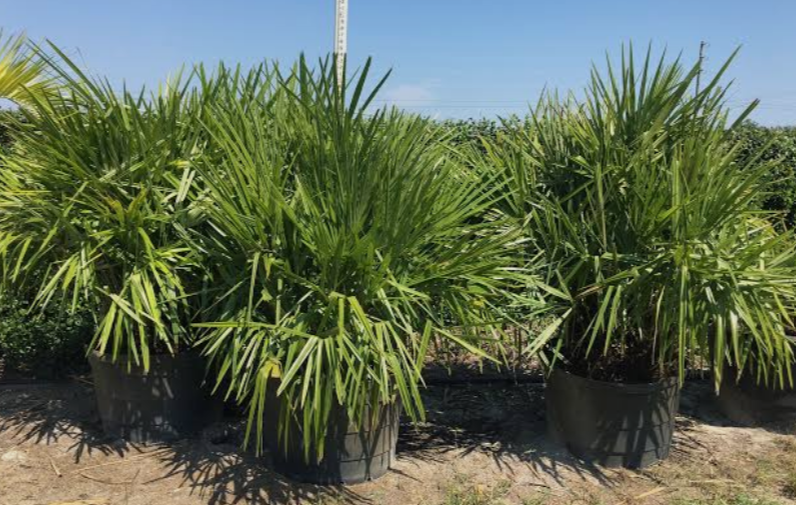
The needle palm is a low, clumping native palm with several short trunks packed tightly together. Its trunks are covered with long, sharp, needle-like spines, which give it its name and protect the growing bud. Its glossy, deep green fan leaves have silvery undersides. Most plants grow 3 to 8 feet tall and spread slowly over time.
The needle palm grows wild from coastal South Carolina south into Florida and west across southern Georgia, Alabama, and Mississippi. It is considered the most cold-hardy palm in the world and survives in zone 6b. With protection, it has lived through temperatures below 0°F. Gardeners grow it as far north as Virginia, Tennessee, and the Ohio Valley.
10. Mazari Palm
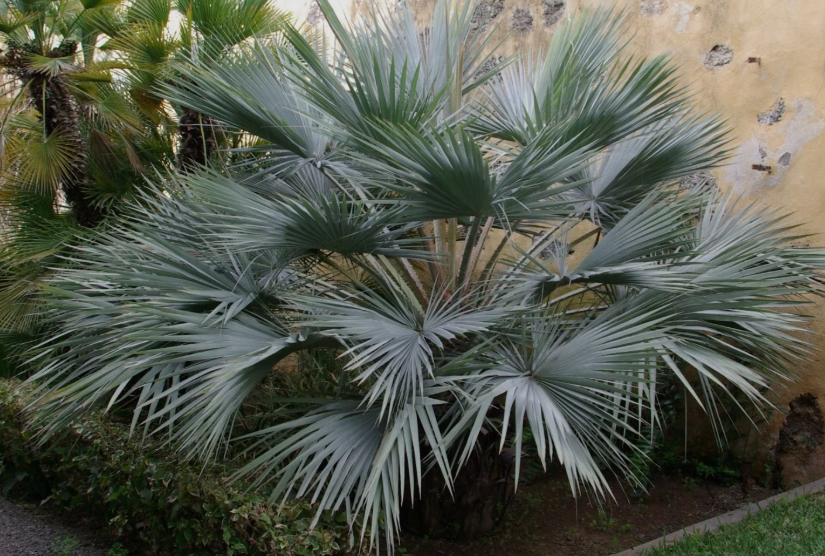
The Mazari palm is a rugged clumping palm whose trunks often crawl along the ground before rising upward. Its stiff fan leaves range from gray-green to silvery blue and give the plant a desert look. It grows slowly, usually reaching 6 to 20 feet tall. Unlike most palms, its trunks can branch, especially after flowering.
The Mazari palm is native to the dry mountains of Afghanistan, Pakistan, Iran, and the Arabian Peninsula. It tolerates extreme heat, drought, and cold, and survives temperatures near 0°F once established. In the United States it grows well in Arizona, New Mexico, Nevada, Texas, and the California deserts. It needs full sun and fast-draining soil.