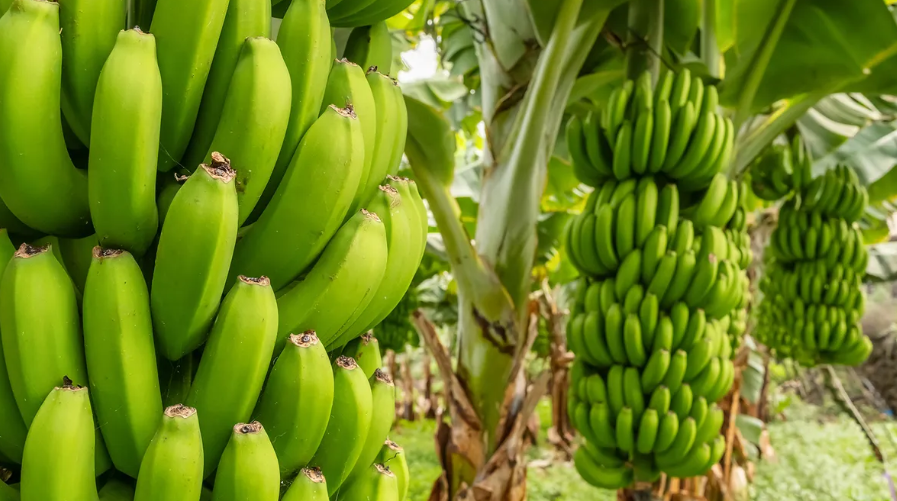
Bananas are one of the most widely eaten fruits in the world, easily recognized by their elongated, curved shape and thick, peelable skin. They grow in large hanging clusters called bunches on tall, tree-like plants that are technically herbaceous rather than true trees, since the trunk is made of tightly layered leaf sheaths rather than wood. Their skin transitions from green to yellow as they ripen, often developing small brown spots as the fruit reaches peak sweetness.
Banana plants thrive in warm, tropical climates and grow quickly, often producing fruit within a year of planting. Each plant flowers only once, sending up a large purplish bud that gradually opens to reveal rows of small bananas, known as fingers, arranged in groups called hands. After the bunch is harvested, the plant is typically cut back, while a new shoot from the base continues the growth cycle.
Nutritionally, bananas are known for their high potassium content, along with natural sugars, fiber, and a range of vitamins. Their soft, creamy texture and mild sweetness make them easy to eat on their own, and they are also widely used in baking, smoothies, and desserts. Unlike many fruits, bananas continue to ripen after being picked, which makes them convenient to buy slightly underripe and let mature at home.
Because of their long, curved shape and smooth skin, bananas are sometimes compared to other fruits that share a similar silhouette or growth pattern, even though many of them belong to completely different plant families. Some of these lookalikes are true botanical relatives, while others simply resemble bananas because of their elongated form or clustered growth.
Fruits That Look Like Bananas
Plantains
Plantains are the closest relatives to bananas and share nearly the same elongated, curved shape and similar green-to-yellow color progression. They are typically larger and starchier than dessert bananas, with a thicker skin that is harder to peel by hand. Unlike bananas, plantains are rarely eaten raw and are usually fried, boiled, or baked before eating.
Finger Bananas
Finger bananas, sometimes called lady finger bananas, look almost identical to standard bananas but are noticeably smaller and more slender. They grow in the same curved shape and ripen through the same green-to-yellow color change, making them easy to mistake for young or immature bananas. Their flavor is often sweeter and creamier than a typical full-sized banana.
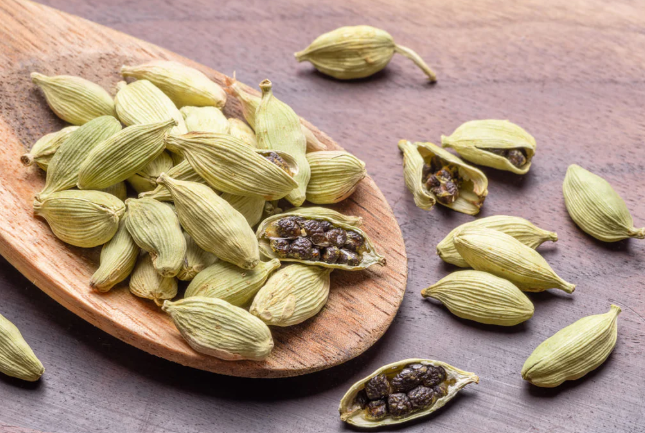
Cardamom Pods (Fresh)
Fresh cardamom pods, before drying, have an elongated, slightly curved shape with a ridged green exterior that can loosely resemble a small banana from a distance. The resemblance is only surface-level, since cardamom pods are firm, fibrous, and inedible in their raw pod form. They are grown primarily as a spice rather than a fruit, with the seeds inside used for flavoring.
Chayote (Certain Varieties)
Certain elongated varieties of chayote squash have a smooth, pale green skin and a curved, tapering shape that can bring bananas to mind, especially when viewed among other produce. Chayote is a vegetable rather than a sweet fruit, with a mild, slightly crisp flesh similar to a cucumber or summer squash. Its flavor and texture are completely different from banana once tasted.
Okra
Okra pods share a similar elongated, slightly curved shape with a tapering end, though they are typically much smaller and ridged compared to a banana. Their green color can echo an underripe banana, especially in a produce display. Okra is a vegetable with a mild, slightly grassy flavor and a mucilaginous texture when cooked, nothing like the soft sweetness of a banana.
Snake Beans (Yardlong Beans)
Snake beans, also called yardlong beans, are long and slender with a slight curve, giving them a passing resemblance to a very thin banana. Their green color and elongated form make them easy to mistake for banana-shaped produce at a market. They are eaten as a vegetable, typically stir-fried or steamed, with a flavor closer to a green bean.
Horned Melon (Unripe)
Unripe horned melon, before its skin turns bright orange, has an elongated oval shape with a pale green to yellow-green color that can loosely resemble a banana in early stages. Once mature, the spiky exterior sets it apart quickly, but in its early growth phase, the smoother, elongated form draws occasional comparisons. Its flavor, once ripe, is tart and cucumber-like, quite different from a banana.
Cucumbers
Certain long, slender cucumber varieties share a similar curved, tapering shape with bananas, particularly when the skin is a lighter shade of green approaching yellow. Both fruits have a smooth exterior and an elongated form that can cause visual mix-ups in photographs or produce bins. Cucumbers are crisp and watery inside, a stark contrast to the soft, creamy texture of a banana.
Zucchini (Certain Varieties)
Some yellow zucchini varieties share a similar elongated shape and smooth, slightly curved form that can resemble a banana, especially at a glance in a grocery display. The color similarity is strongest with the yellow-skinned types, though the flesh inside is firm and mild rather than soft and sweet. Zucchini is typically cooked as a vegetable rather than eaten raw as a snack.
Chinese Yam
Chinese yam tubers are long, slender, and slightly curved, with a pale brown to tan skin that can bring an unripe or underripe banana to mind. Once peeled, the interior is white and starchy rather than soft and sweet, and the yam must be cooked before eating. Its shape is the main point of resemblance, since its flavor and texture are entirely different from banana.
Sausage Tree Fruit
The fruit of the sausage tree is long, cylindrical, and slightly curved, hanging from the tree on long stalks in a way that can visually echo a large banana or plantain from a distance. Despite the resemblance in shape, the fruit is fibrous, tough, and not eaten raw by humans, as it can cause irritation if consumed unprepared. It is more commonly used in traditional medicine and as animal fodder in some regions.
Water Caltrop
Water caltrop has an unusual curved, horn-like shape with two pointed ends that can loosely bring to mind a small, twisted banana, particularly in its dark, ripened form. It grows on aquatic plants rather than on tall stalks like bananas, and its tough outer shell must be removed before eating the starchy interior. Once peeled, the texture and flavor resemble a chestnut more than a banana.