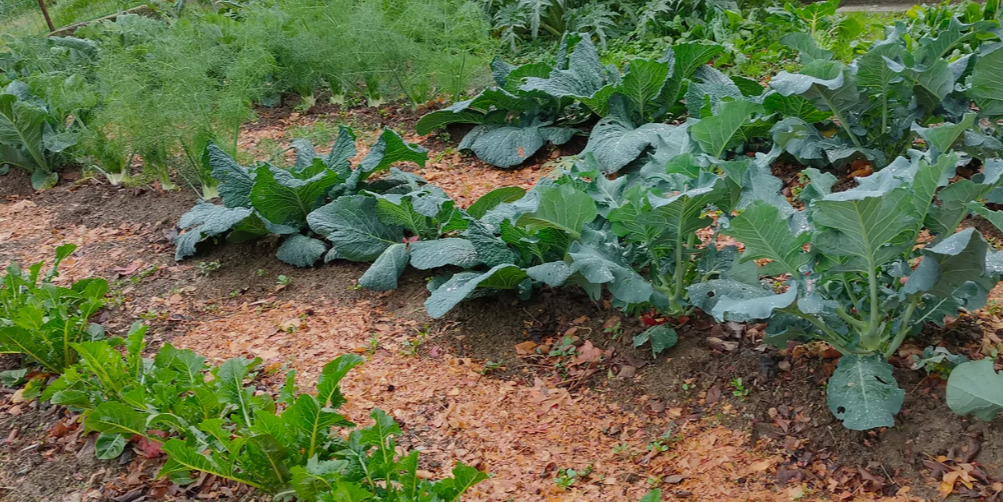
The best mulch for a vegetable garden keeps soil moist, smothers weeds, steadies soil temperature and keeps fruit clean. Mulch is any material spread over the soil around crops, from straw and shredded leaves to compost, paper and plastic film. In a vegetable garden it also stops rain from splashing soil, and the disease spores in it, onto leaves.
Organic mulches are made from things that were once alive, and they slowly feed the soil as they break down. Oregon State University notes that organic mulches provide food for earthworms and other soil microbes and need to be reapplied as they decompose. Plastic and paper mulches work differently, warming or cooling the soil and blocking weeds completely.
Each kind of mulch suits different crops and seasons. Black and red plastic warm cold spring soil for tomatoes, peppers, melons and okra, while straw and leaves keep soil cool for lettuce, peas, potatoes and broccoli. Commercial vegetable growers have used plastic mulch since the early 1960s, and home gardeners now have biodegradable options too.
Organic mulch is usually spread 2 to 4 inches deep once the soil has warmed and seedlings are a few inches tall. One warning applies to straw, hay, grass clippings, manure and compost from outside sources, which can carry weed killers that damage vegetables for months. The 18 mulches below are among the best for vegetable gardens, along with where each one is produced or works best.
1. Straw
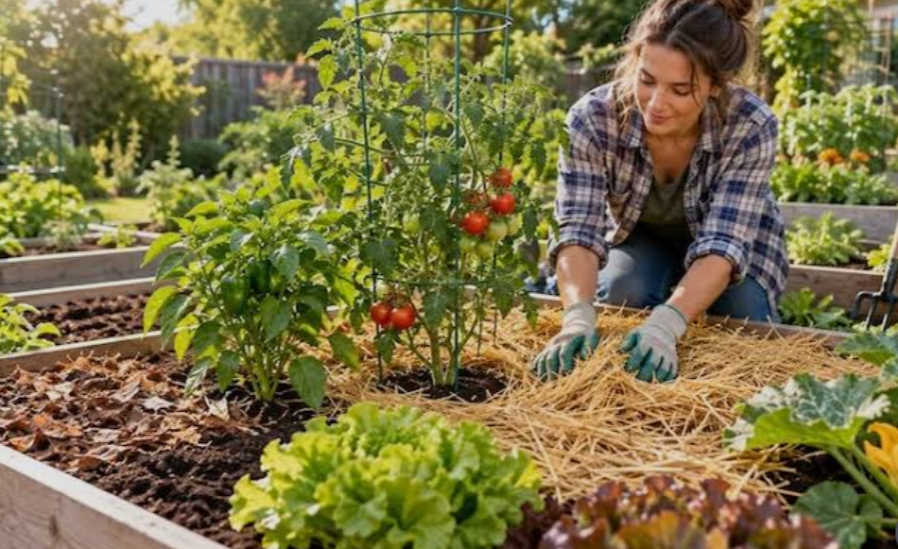
Straw is the classic vegetable garden mulch. It is made from the dried stalks of wheat, oats, barley or rice. It is light, golden and easy to spread. It keeps soil cool and moist through summer. It breaks down within a season. It is inexpensive and widely available.
Oregon State University warns that some herbicides can remain active in hay, straw and grass clippings taken from treated fields. Gardeners should ask the seller whether the straw came from sprayed fields. It should be applied after the soil warms in spring, because it keeps soil cool. It is excellent around tomatoes, potatoes, squash and garlic. It should not be confused with hay, which contains weed seeds. It is produced on grain farms across the American Midwest and Great Plains, Canada and Europe.
2. Shredded Leaves
Shredded leaves are one of the best free mulches for vegetables. They are made by running fallen leaves through a mower or shredder. They form a light, natural layer. They break down quickly and add organic matter. They attract earthworms. They suit almost every vegetable crop.
Shredding keeps leaves from matting into a soggy layer. They can be stockpiled in fall and spread in late spring. They are free of the weed killers sometimes found in hay and grass clippings, as long as the trees were not sprayed. They work well around tomatoes, peppers, beans and squash. They need replacing every year. They are available in any region with deciduous trees, especially the eastern United States, Canada and Europe.
3. Grass Clippings
Grass clippings are a free mulch from mowing the lawn. They are rich in nitrogen. They break down quickly. They feed the soil as they decay. They are green when fresh and turn tan as they dry. They suit fast-growing vegetables.
They should only come from lawns that have not been treated with weed killers. They should be dried before use and applied in thin layers. Thick layers of fresh clippings mat down, heat up and smell. They need to be added often through the season. They work well around beans, corn, tomatoes and squash. They are available anywhere lawns are grown.
4. Compost
Compost is decomposed plant and food waste. It is dark, crumbly and rich in nutrients. It feeds vegetables as it breaks down. It improves both sandy and clay soils. It encourages soil life. It suits heavy-feeding crops.
It is best applied in a layer of 1 to 2 inches. Weed seeds can land on it and sprout, so it is often topped with straw or leaves. It should come from a trusted source, because compost made from treated manure or hay can carry herbicides. It is excellent around tomatoes, squash, cabbage and corn. It breaks down within a season. It is produced wherever yard and food waste is composted, including municipal programs across North America and Europe.
5. Leaf Mold
Leaf mold is partly decomposed leaves. It is dark, crumbly and earthy. It holds a great deal of water. It improves soil structure. It is gentle enough to use around seedlings. It has a natural, forest-floor smell.
It is made by piling leaves and letting them rot for one to two years. It is rich in beneficial fungi. It does not add many nutrients but greatly improves soil texture. It is excellent around lettuce, spinach, carrots and other small crops. It is free to make at home. It is used most in regions with abundant fallen leaves, such as the eastern United States, Canada and Northern Europe.
6. Salt Marsh Hay
Salt marsh hay is grass harvested from coastal salt marshes. It is fine, wiry and light brown. It is nearly free of weed seeds, because land weeds cannot grow in salt water. It breaks down slowly. It does not mat down. It can be reused for more than one season.
It is a traditional mulch in coastal New England gardens. It suits tomatoes, peppers, strawberries and squash. It keeps fruit off the soil. It is lightweight and easy to spread. Harvesting is limited in some areas to protect marshes. It is harvested mainly along the Atlantic coast of New England and the Mid-Atlantic.
7. Pine Straw
Pine straw is made of fallen pine needles. It is light, airy and reddish-brown. Its needles interlock and stay in place. It lets water reach the soil easily. It breaks down slowly. It is a traditional mulch in the American South.
It is especially good for acid-loving crops such as blueberries and strawberries. It also works around potatoes, garlic and onions. Research has shown that it changes soil acidity very little. It is lightweight and easy to handle. It is sold in compressed bales. It is harvested mainly from pine forests in Georgia, the Carolinas, Florida and Alabama.
8. Black Plastic Mulch
Black plastic is the most widely used mulch on commercial vegetable farms. It is a thin sheet laid over the bed before planting. Crops are planted through holes cut in the plastic. It warms the soil in spring. It blocks nearly all weeds. It keeps fruit clean.
Oklahoma State University notes that black sheet mulches prevent most weeds by excluding light and keep soil under them loose and well aerated. It is usually paired with drip irrigation underneath. It is excellent for tomatoes, peppers, eggplant, melons, cucumbers and okra. It must be removed and disposed of at the end of the season. It adds no organic matter to the soil. It is used on vegetable farms throughout North America, Europe and Asia.
9. Silver Reflective Mulch
Silver reflective mulch is plastic with a shiny, reflective surface. It bounces light up onto the undersides of leaves. The reflected light confuses aphids, thrips and whiteflies. This can reduce insect-spread viruses. It keeps soil cooler than black plastic. It also controls weeds.
It is useful in hot climates where black plastic would overheat the soil. It suits squash, cucumbers, melons, peppers and tomatoes. It is most effective early in the season before plants cover it. It is laid like black plastic, with planting holes. It must be removed at the end of the season. It is used in the southern United States, California, the Mediterranean and other hot regions.
10. Brown Infrared-Transmitting Mulch
Brown infrared-transmitting mulch is a special plastic film. It lets warming infrared light through to the soil. It blocks the light weeds need to grow. It warms soil faster than black plastic in spring. It suits heat-loving crops. It is often labeled IRT.
It combines the soil-warming of clear plastic with the weed control of black. It is excellent for melons, peppers and tomatoes in cool climates. Not every brown plastic is a true infrared-transmitting film, so labels should be checked. It is laid like black plastic. It must be removed at the end of the season. It is used mainly in the northern United States and Canada.
11. Red Plastic Mulch
Red plastic mulch is a colored film designed for fruiting crops. It reflects red light up into the plant canopy. That light may encourage some plants to put more energy into fruit. It warms the soil and blocks weeds. It is laid like black plastic. It is popular for tomatoes.
The University of Massachusetts reports that USDA and Clemson University researchers found tomatoes yielded 20% more fruit on red mulch than on black. Penn State researchers also found yield increases for tomatoes and eggplant. Results vary by region and season. It also works well for strawberries and peppers. It must be removed at the end of the season. It was developed in the United States and is used in home gardens across North America.
12. Biodegradable Plastic Mulch
Biodegradable plastic mulch looks like regular plastic film. It is made from plant starches and other materials that soil microbes can break down. It warms soil and blocks weeds. It can be tilled into the soil at the end of the season. It does not need to be pulled up and thrown away. It comes in black and clear.
Research at Cornell University found that it works as well as black plastic for warming soil and increasing yields. It costs more than regular plastic. It can tear if handled roughly. It breaks down at different rates depending on soil and climate. It reduces plastic waste in the garden. It is used on farms and in gardens across North America and Europe.
13. Paper Mulch
Paper mulch is a heavy, biodegradable paper made for vegetable beds. It comes in rolls like plastic mulch. It blocks light and smothers weeds. It lets water and air pass through. It breaks down in the soil by the end of the season. It can be tilled in.
North Carolina A&T State University notes that planters paper, bark and leaves are all biodegradable, so there is no used plastic to deal with at the end of the season. It is useful for organic gardeners who want to avoid plastic. Its edges must be weighed down or buried to stop it blowing away. It can tear in heavy rain or wind. It suits tomatoes, peppers, squash and lettuce. It is used on organic farms and in home gardens across North America.
14. Newspaper
Newspaper is a free, easy mulch for vegetable beds. It is laid in layers several sheets thick. It blocks light and smothers weeds. It breaks down within a season. It is usually covered with straw or leaves. The top layer hides the paper and holds it in place.
Most modern newspaper inks are soy-based and considered safe. Glossy, colored inserts should be left out. It should be wetted after laying so it stays in place. It works well between rows and around transplants. It adds a little organic matter as it decays. It is available anywhere newspapers are printed.
15. Cardboard
Cardboard is a free mulch for smothering weeds. Plain brown cardboard is laid flat over the soil. It blocks light and kills grass and weeds underneath. It is usually covered with compost, straw or wood chips. It breaks down over several months. It is popular for starting new beds.
All tape, labels and staples should be removed first. It is best used for paths and for preparing new beds rather than around growing crops. Some researchers caution that thick layers can reduce air and water movement into the soil. It should be wetted after laying. It attracts earthworms as it decays. It is available almost everywhere.
16. Wood Chips for Paths
Wood chips are an excellent mulch for vegetable garden paths. They are coarse and long-lasting. They keep paths dry and mud-free. They smother weeds between beds. They break down slowly. Arborist wood chips are often free from tree services.
They are best kept on paths and around perennial crops like asparagus and rhubarb. In annual rows, they can get mixed into the soil during planting. Research has shown that surface wood chips do not rob nitrogen from nearby plants. They improve soil slowly as they decay. They need topping up every year or two. They are available wherever tree services operate.
17. Living Mulch
Living mulch is a low cover crop grown between vegetable rows. Common choices include white clover, crimson clover and annual ryegrass. It covers bare soil with living plants. It shades out weeds. It protects soil from erosion. Clovers add nitrogen to the soil.
It must be mowed or trimmed so it does not compete with crops. It works best between rows of tall crops like corn, tomatoes and squash. It attracts beneficial insects when it blooms. It needs time to establish. It can be turned into the soil at the end of the season. It can be grown in any region, using cover crops suited to the local climate.
18. Landscape Fabric
Landscape fabric is a woven or nonwoven synthetic sheet. It blocks weeds but lets water and air pass through. It lasts several years. It is laid over beds and pinned down. Crops are planted through cut holes. It is often covered with straw or wood chips.
It is best for long-lived crops like strawberries, asparagus and berry bushes. It also works well on garden paths. Weeds can root into any soil or mulch that builds up on top. It adds no organic matter to the soil. It can be hard to remove once roots grow into it. It is used in gardens across North America and Europe.
Further References:
- Oregon State University: Gardening with Mulches
- Oregon State University: Herbicide Carryover in Hay, Manure, Compost, and Grass Clippings
- Oklahoma State University: Use of Plastic Mulch and Row Covers in Vegetable Production
- University of Massachusetts: Using Colored Plastic Mulches in the Vegetable Garden
- North Carolina A&T State University: Alternatives to Plastic Mulch
- Oregon State University: Aminopyralid residues in compost
- New Mexico State University: Commercial Vegetable Production With Plastic Mulches
- Washington State University: Sustainable Mulch Management newsletter
- University of Florida: Residual herbicides in hay and straw