Birch Tree Identification: A Four-Season Field Guide
Birch tree identification is easier than most people expect once you know that bark is only part of the picture. Many people know the chalk-white trunk of a paper birch, but North America has several native birches, and some of them have bark that is bronze, cinnamon, or almost black. If you check the leaves, catkins, twigs, and growing habitat along with the trunk, you can name a birch confidently in any month of the year.
A birch is a deciduous broadleaf tree. Most common species reach around 40 feet in landscapes, and paper birch can grow to about 70 feet in the wild. Many birches grow with several trunks from one base, which gives them a clumped, airy outline that you can often recognize from a distance.
Bark
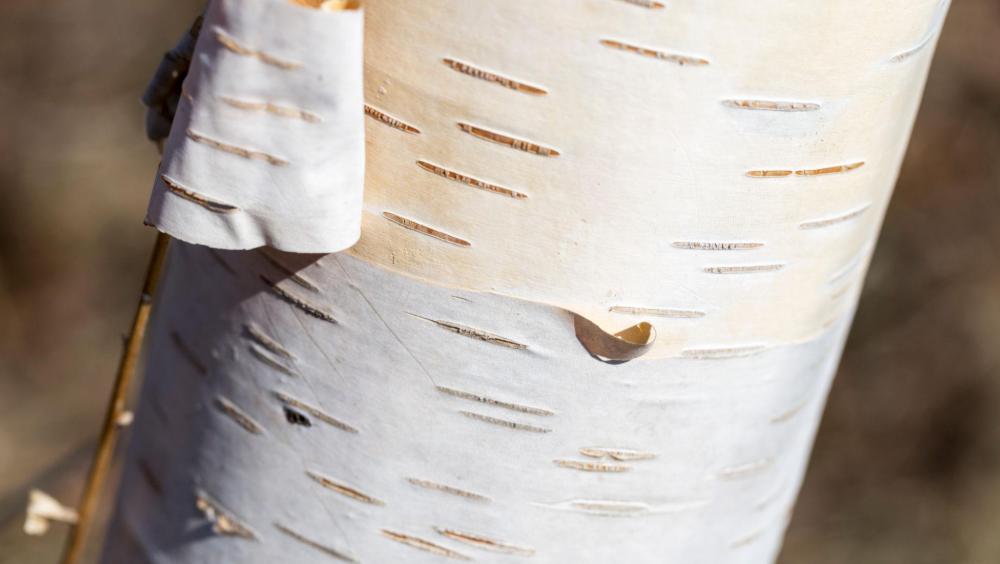
Bark is the first thing most people notice. Nearly every birch has lenticels, which are the horizontal lines of raised pores running across the trunk like dashes. On young trees the bark is often reddish-brown. As the tree matures it usually turns white, silver, gray, or tan, and in many species it peels in thin, papery layers that curl away from the trunk.
The way the bark peels tells you a lot. Paper birch sheds wide, clean white sheets. Yellow birch peels in thin, shreddy curls that shine bronze or silvery-gold. River birch peels in layers of salmon, cinnamon, and cream that give the trunk a ragged, textured look. Black birch, also called sweet birch, has dark, smooth bark that breaks into scaly plates as it ages and doesn’t peel at all.
Leaves
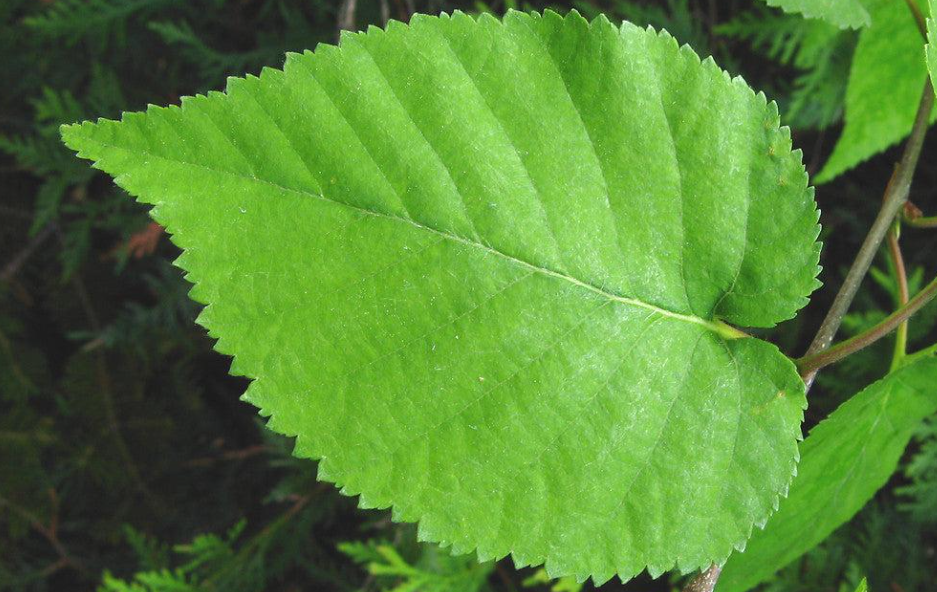
Birch leaves are simple and alternate on the stem, and most are oval or egg-shaped with a pointed tip. The best leaf clue is the edge. Birch leaves are usually doubly serrate, meaning large teeth have smaller teeth between them, so the margin looks like a saw with a second, finer saw built in.
Paper birch leaves run roughly 2 to 4 inches long with a rounded base. Gray birch has a more triangular leaf that tapers into a long, drawn-out point. River birch leaves are somewhat diamond-shaped with a wedge-shaped base. Most birch leaves turn clear yellow in autumn, which makes stands of birch stand out against oaks and maples.
Also Read: Different Types of Birch Trees
Catkins and Seeds
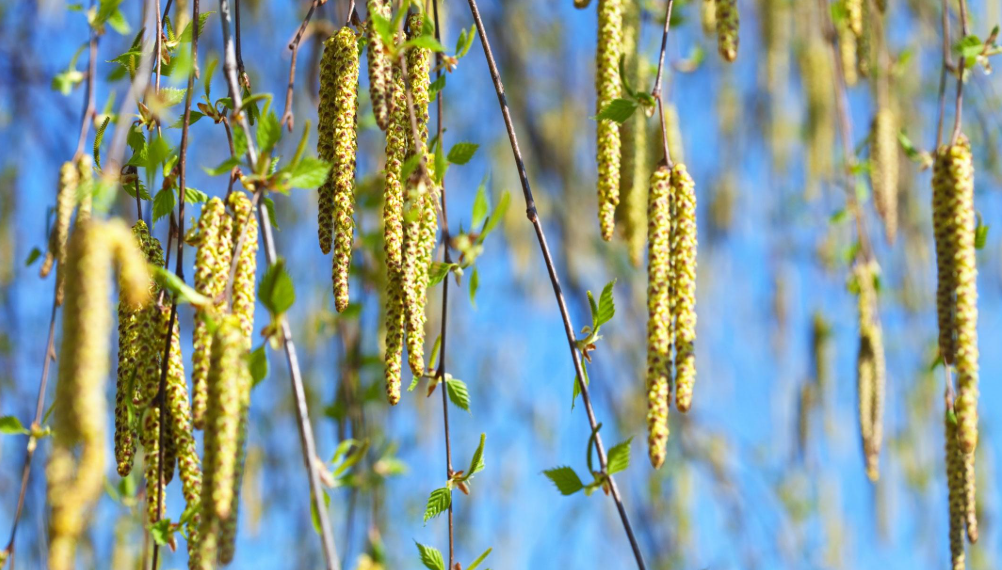
Birches carry both male and female flowers on the same tree, in separate catkins. The male catkins are long, slender, and cylindrical. They form at the branch tips in late summer or fall and stay on the tree through winter, which is one of the most reliable cold-season clues. In spring they lengthen, droop, and release pollen at about the same time the leaves come out.
Female catkins are shorter and stand more upright on the twigs. They ripen into small, cone-like seed clusters about 1 to 2 inches long. When mature, these clusters fall apart into tiny winged seeds and scales, often scattering across snow or pavement below the tree.
Twigs and Buds
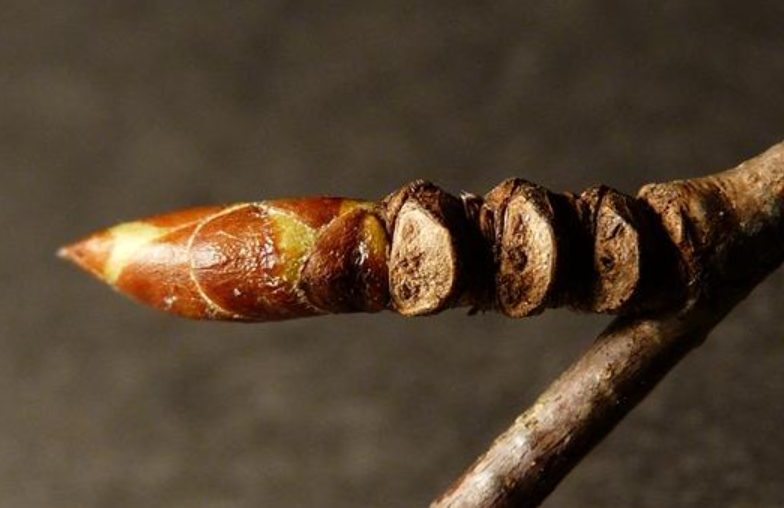
In winter, twigs and buds take over from leaves. Birch twigs are slender and dotted with lenticels, and the buds are small, oval, and sometimes slightly resinous. Two species have a well-known scratch-and-sniff test. If you scrape a young twig of yellow birch or black birch, it gives off a strong wintergreen scent, which separates them from every other birch in the woods.
Telling the Common Birches Apart
Paper birch is the classic northwoods tree, with bright white bark that peels in sheets. It often grows in pure stands across Canada, the Great Lakes, New England, and Alaska. Gray birch is a smaller, short-lived tree of the Northeast with chalky white bark that doesn’t peel easily and has dark triangular patches where branches meet the trunk.
Yellow birch is a large forest tree with golden, shreddy bark and wintergreen-scented twigs. River birch is the one most people in the South will meet, since it is the only birch that grows widely in the southeastern United States. It favors stream banks and wet soils and is a popular landscape tree because of its peeling cinnamon bark and its tolerance of heat. Black birch has dark cherry-like bark and the strongest wintergreen aroma of all.
Common Look-Alikes
Quaking aspen is the tree most often mistaken for paper birch. It can have smooth, pale white bark, but that bark doesn’t peel, and its round, finely toothed leaves flutter on flattened stems. Young birches with dark bark are sometimes confused with cherry trees, because both have strong horizontal lenticels. Cherry leaves are singly toothed, though, and cherries lack the long winter catkins of a birch. If you check two or three features instead of relying on bark color alone, you will rarely misidentify a birch.
5. Common Birch Trees in North America
Several birch species are native to the United States and Canada. Some of the most recognizable include:
- Paper Birch: Recognized by its bright white, peeling bark and oval leaves.
- River Birch: Identified by its reddish-brown peeling bark and triangular leaves.
- Yellow Birch: Known for its golden-bronze bark and aromatic twigs.
- Gray Birch: A smaller species with chalky white or grayish bark that generally does not peel as extensively as paper birch.
- Sweet Birch: Recognized by its dark brown bark and wintergreen-scented twigs.
- Water Birch: A western North American species with reddish-brown bark, commonly growing near streams.
6. How to Identify a Birch Tree Quickly
When identifying an unfamiliar birch tree, examine several characteristics rather than relying on bark color alone.
- Bark: Look for white, yellow, reddish-brown, or dark bark, including its peeling pattern.
- Leaves: Examine their shape, size, pointed tips, and serrated edges.
- Twigs: Some species have aromatic twigs, particularly sweet birch.
- Catkins: Look for hanging male and female flower clusters.
- Growth habit: Observe whether the tree has a single trunk or several stems growing from the base.
Sources
- Michigan Technological University, “Paper Birch, Yellow Birch – Upper Peninsula Tree ID”
- Virginia Tech Dendrology, “Paper Birch Fact Sheet”
- Montana State University Extension, “Birch – Plant Identification”
- Oregon State University, “Birches – Trees of the Pacific Northwest”
- University of Arkansas Cooperative Extension, “River Birch – Landscape Tree Identification”