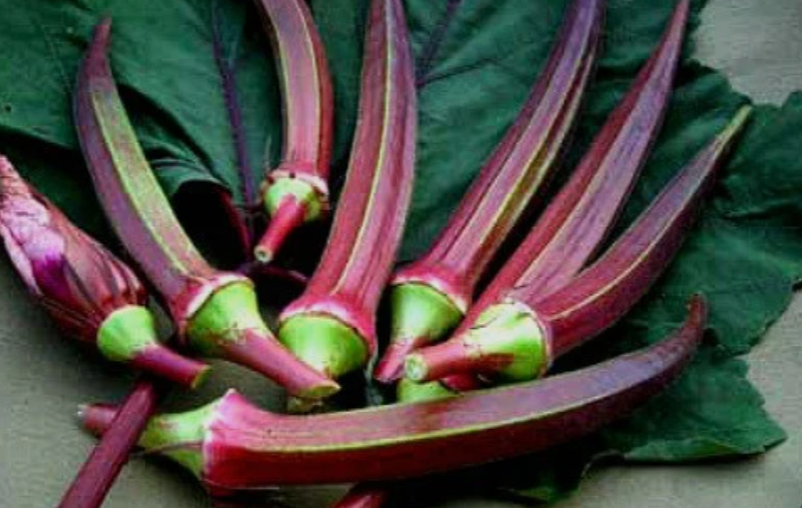
Red Velvet Okra: The Scarlet-Podded Okra That Doubles as an Ornamental
Red Velvet okra is a red-podded variety that looks as good in a flower bed as it does in a vegetable garden. The plants carry scarlet-red pods on deep red stems, set against green leaves and large, pale yellow flowers with dark purple centers. Many gardeners first plant it for that show of color and then find it is also a productive okra for the kitchen.
Red okras like Red Velvet have become popular with home gardeners, market growers, and edible landscapers across the South. They handle the same heat that green okras love, and they produce the same tender pods for frying, stewing, and pickling. The difference is that they add a striking splash of red to the garden from midsummer until frost.
Botanical Classification
Okra belongs to the mallow family, which also includes hibiscus, hollyhocks, rose of Sharon, and cotton. In North America it is grown as a warm-season annual vegetable. The large flowers of Red Velvet show the family resemblance clearly. They look like small hibiscus blooms and last only a day.
Red Velvet is sold as an open-pollinated variety, so seeds saved from the plants should grow true to type if they are kept from crossing with other okras. It belongs to a group of red-podded okras that also includes Burgundy, Hill Country Red, Alabama Red, and Bowling Red. These differ mainly in pod shape, plant size, and how much red shows on the stems and leaves.
Brief History
The red color in okra comes from natural plant pigments, the same kind that color red cabbage, beets, and purple basil. Red-podded okras have been grown in Southern gardens for generations. Texas, Alabama, and other Southern states have their own local red heirlooms passed down through families. Red Velvet is one of the better-known named red varieties sold in seed catalogs today.
Its exact origin is not well documented. At least 1 seed company credits it to Clemson University breeder Leon Robbins. Robbins is best known for developing Burgundy okra, a red variety that won an All-America Selections award in 1988. Whether Red Velvet came out of the same program or was selected separately is unclear, and published records are scarce. What is certain is that it has earned a steady following among gardeners who want okra with color.
Identifying Characteristics
Red Velvet plants are upright and moderately tall, usually reaching 4 to 5 feet and sometimes more in long, hot summers. The stems and leaf stalks are a deep red to burgundy, while the large, lobed leaves stay mostly green, often with red veins. The flowers are big and showy, with creamy yellow petals and a dark purple to maroon center.
The pods are scarlet to deep red, slender, and slightly ribbed, with a velvety surface. They are usually harvested at about 3 to 5 inches long. Some seed companies report that they stay tender up to about 8 inches, though most gardeners find smaller pods have the best texture. The pods are often slightly paler at the tip and deepen in color as they grow.
Also Read: Different Types of Okra
Red Velvet Versus Other Red Okras
Burgundy is the most widely grown red okra, and gardeners often compare the 2. Burgundy bears long, deep wine-red pods on plants that can grow 4 to 6 feet tall and wide. It is known for staying tender at larger pod sizes. Red Velvet’s pods are a brighter scarlet, and its red stems give it a more ornamental look in many gardens.
Other red okras have their own character. Hill Country Red, a Texas heirloom, produces chunky, deeply ribbed pods that are mostly green with red tinting. Alabama Red has fat, blocky pods in a mix of red and light green. Hybrids such as Carmine Splendor bear early, uniform red pods on compact plants. Red Velvet sits between these types, combining bright red pods with an attractive, upright plant.
Landscape Uses
Red Velvet is one of the best okras for edible landscaping. Its red stems, red pods, and hibiscus-like flowers look at home in flower borders, mixed beds, and large containers on patios. Planted in a row along the back of a sunny bed, it makes a colorful seasonal screen from midsummer through fall. Pollinators such as bees regularly visit the large flowers.
In vegetable gardens, Red Velvet makes a cheerful contrast with green okras, peppers, eggplants, and tomatoes. It also pairs well with ornamental annuals that enjoy heat, such as zinnias, marigolds, cosmos, and celosia. Its moderate height makes it easier to fit into mixed plantings than towering okras like Star of David.
Growing Considerations
Red Velvet thrives in heat, like all okras. It grows best in full sun when days are above about 85 degrees Fahrenheit and nights stay warm. It is ideally suited to the South and Southwest. Gardeners farther north can grow it successfully in sunny, sheltered spots during warm summers, though yields may be smaller. Full sun also brings out the richest red color in the stems and pods.
Plant it in well-drained soil enriched with compost, with a pH between about 6.0 and 7.5. Okra does poorly in heavy, waterlogged soils. Raised beds or large containers are good options where drainage is a problem. Avoid heavy nitrogen fertilizer early in the season, since it produces lush leaves and fewer pods.
Planting
Okra is very sensitive to cold, so wait until all danger of frost has passed and the soil has warmed to at least 65 to 70 degrees Fahrenheit before sowing. Soak the seeds in warm water overnight to soften their hard coats and speed germination. Sow them about ¾ to 1 inch deep, in rows about 3 feet apart.
Thin seedlings to about 12 to 18 inches apart once they have a few true leaves. In containers, plant 1 okra per pot of at least 5 gallons. Gardeners with short summers can start seeds indoors in peat pots about 4 weeks before the last frost, then transplant carefully to avoid disturbing the roots.
Care
Once established, Red Velvet tolerates heat and short dry spells. Even moisture produces the most tender pods and steady yields, so water deeply about once a week, and more often during heat waves or in containers. A 2- to 3-inch layer of mulch conserves moisture, keeps weeds down, and keeps the soil warm.
Side-dress plants with a nitrogen fertilizer once they begin flowering, and again about a month later. In the Deep South, plants that slow down in midsummer can be cut back by about a third, then fertilized and watered. They will resprout and produce a fresh crop into fall. Container plants need more frequent feeding with a balanced fertilizer.
Harvesting
Red Velvet begins producing about 60 to 70 days after planting. Pods grow very quickly, reaching harvest size just a few days after the flower fades. For the best texture, pick pods at about 3 to 5 inches long, when they are still tender and snap easily. Oversized pods become tough and fibrous.
During peak season, harvest every 1 to 2 days. Pods left to mature on the plant signal it to slow down. Cut pods off with a sharp knife or pruners. Wear gloves and long sleeves, since okra leaves, stems, and pods carry fine hairs that can irritate the skin.
Pests and Diseases
Red Velvet shares the same pests and diseases as other okras. Root-knot nematodes are the most damaging pest in sandy Southern soils, causing knotted roots and stunted plants. Rotating crops and adding organic matter to the soil help reduce problems. Aphids, stink bugs, and corn earworms may feed on pods and leaves, and most can be managed with hand-picking, strong sprays of water, or insecticidal soap.
In hot, wet seasons, okra can develop leaf spots and wilt diseases. Good drainage, wide spacing, and watering at the base rather than overhead help prevent them. Remove plant debris at the end of the season so diseases don’t carry over to next year’s planting.
In the Kitchen
Red Velvet pods taste much like green okra, with a mild, grassy flavor and okra’s familiar tender texture. They can be fried, roasted, grilled, sautéed, stewed, or added to gumbo. There is one surprise for first-time growers: the red color usually fades during cooking, and the pods turn green or olive green once heated.
To enjoy the color, serve young pods raw in salads, slice them thinly as a garnish, or use them in quick pickles, which may hold some of their color. Gardeners who grow Red Velvet mainly for looks still get a full harvest of tasty okra.
Sources
NC State Extension, “Okra: A Southern Tradition in Every Garden”
Clemson Cooperative Extension, “Okra”
Texas A&M AgriLife Extension, “Okra”
University of Georgia Cooperative Extension, “Growing Okra in the Home Garden”
University of Arkansas Cooperative Extension Service, “Home Gardening Series: Okra”