Emerald Okra: The Round-Podded Heirloom Bred for Soup
Emerald okra is an heirloom variety with an unusual origin. It was bred by a soup company, not a university or a seed house. Campbell Soup Company developed it in the late 1940s and introduced it around 1950, aiming for an okra that would hold up in its canned gumbo. The result was a smooth, round, deep green pod that stays tender at larger sizes and keeps its bright color after cooking and canning.
That combination still sets Emerald apart. Most American okras have sharply ridged pods that look like little stars when sliced, Clemson Spineless included. Emerald pods are nearly round and smooth-sided, and their slices look like tiny wagon wheels. For gardeners who find standard okra too woody or fibrous, Emerald has long been a favorite, especially in Louisiana and across the Gulf South.
Botanical Classification
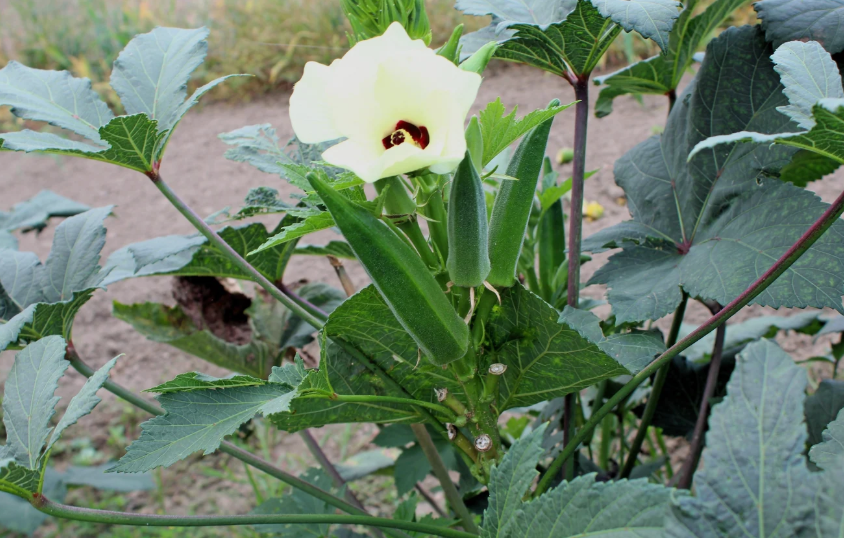
Okra belongs to the mallow family, which also includes hibiscus, hollyhocks, cotton, and rose of Sharon. It is a warm-season annual vegetable in North America, grown for its immature seed pods. Its large, creamy yellow flowers with deep red centers show its close kinship with hibiscus.
Emerald is an open-pollinated heirloom, so seeds saved from the plants grow true to type. It falls into the group of okras with round, velvety pods, along with Louisiana Green Velvet. That group stands apart from the ridged, star-shaped okras that dominate most gardens. The 2 types differ mainly in pod shape and texture, while the plants themselves look much alike.
Brief History
Emerald was bred at Campbell Soup Company’s agricultural research operation in Riverton, New Jersey. In the mid-20th century, Campbell ran its own breeding programs to develop better ingredients for its canned products. Tomatoes are the best-known result, but okra was another target. The company needed an okra that would hold its color, texture, and shape through cooking and canning.
According to USDA cultivar records, Emerald’s parentage combines 4 older okras: Campbell’s Long Green, Clemson Spineless, Louisiana Green, and Cow Horn. It was formally described in Seed World in September 1950 as a spineless okra with round, slender, long, deep green pods and thick walls. Campbell’s earlier Evergreen okra was listed as similar. Emerald soon left the soup company’s fields and spread into home gardens and commercial farms across the country. Some seed companies sell it as Emerald Green Velvet.
Identifying Characteristics
Emerald okra is a vigorous plant with large leaves and sturdy stems. The original 1950 description calls it semi-dwarf. In home gardens with long, hot summers, though, seed companies commonly report plants of 5 to 8 feet tall, so it is best to plan for a tall plant. The leaves are large and only shallowly lobed, compared with the deeply cut leaves of some other okras.
The pods set Emerald apart. They are deep emerald green, smooth, spineless, and nearly round in cross-section rather than strongly ridged. They taper gently to a point, have thick walls, and remain tender even at 6 to 8 inches long. Most ridged okras turn tough and woody well before reaching that size. When cooked, the pods keep a bright green color instead of fading to olive.
Also Read: Different Types of Okra Varieties to Grow
Emerald Versus Clemson Spineless
Emerald and Clemson Spineless are the 2 most widely grown heirloom okras in the United States, and Clemson Spineless is one of Emerald’s parents. The biggest difference is pod shape. Clemson Spineless pods have 8 prominent ridges and a star-shaped cross-section. Emerald pods are round and smooth. Gardeners who dislike the slightly fibrous texture of ridged okra often prefer Emerald.
There are also differences in how they are harvested and used. Clemson Spineless is best picked at 2 to 4 inches, and its pods turn tough quickly after that. Emerald gives gardeners a little more leeway, staying tender at larger sizes. Clemson Spineless is often preferred for frying and pickling, where its ridged slices hold their shape. Emerald shines in soups, stews, gumbos, and canned or frozen okra, the uses it was bred for.
Growing Considerations
Emerald okra thrives in heat and humidity. It grows best when days are above about 85 degrees Fahrenheit and nights stay warm. It is especially well suited to the South, Gulf Coast, and Southwest, but it can be grown in northern gardens with a long, warm summer. Because it can grow tall, plant it at the north side of the garden, where it won’t shade shorter vegetables.
Okra needs full sun and well-drained soil. Sandy and loamy soils with a pH of about 6.0 to 7.5 are ideal. Work compost into the soil before planting. Avoid heavy nitrogen fertilizer early in the season, which encourages lush leaves at the expense of pods.
Planting
Wait until all danger of frost has passed and the soil has warmed to at least 65 to 70 degrees Fahrenheit before planting. Emerald seeds have hard coats, so soak them in warm water overnight to speed germination. Sow seeds about ¾ to 1 inch deep, in rows 3 to 4 feet apart, or farther apart for tall plants in rich soil.
Thin seedlings to about 12 to 18 inches apart once they have a few true leaves. Emerald grows into a large plant and needs more space than compact okras. In regions with short summers, start seeds indoors in peat pots about 4 weeks before the last frost date. Then transplant carefully, since okra resents root disturbance.
Care
Emerald is fairly drought-tolerant once established, but steady moisture produces the most tender pods and the heaviest yields. Water deeply about once a week, more often during heat waves or in sandy soils. A 2- to 3-inch layer of mulch conserves moisture, keeps weeds down, and holds warmth in the soil.
Side-dress the plants with a nitrogen fertilizer when they begin flowering, and again about a month later to keep them producing. Tall plants in windy sites may benefit from staking. In the Deep South, plants that slow down in midsummer can be cut back to about 2 feet tall, fertilized, and watered. They will resprout for a second crop that lasts into fall.
Harvesting
Emerald begins producing about 55 to 60 days after planting, and earlier in hot weather. Pods grow very fast, reaching harvest size within a few days of the flower opening. For the best texture, pick most pods at about 3 to 5 inches long. Unlike many okras, Emerald pods are still usable at 6 to 8 inches, which makes harvesting more forgiving.
Harvest every 2 to 3 days during peak season to keep the plants productive. Mature pods left on the plant slow new production. Cut pods off with a sharp knife or pruners rather than pulling them. Wear gloves and long sleeves, since the leaves and stems carry fine hairs that can irritate the skin. Fresh pods keep for several days in the refrigerator.
Pests and Diseases
Emerald okra is a tough, productive plant with few serious problems. Root-knot nematodes are the most damaging pest in sandy Southern soils, causing swollen, knotted roots and stunted plants. Rotate okra to a new location each year, and add organic matter to the soil to keep nematode populations down. Aphids, stink bugs, and corn earworms may feed on leaves and pods. Most can be managed with hand-picking, strong sprays of water, or insecticidal soap.
In hot, wet seasons, okra can develop leaf spots and wilt diseases. Plant in well-drained soil, avoid overhead watering, and give plants plenty of space for good airflow. Clean up plant debris at the end of the season to reduce disease carryover.
In the Kitchen
Emerald was bred for soup, and soups, stews, and gumbos are where it shines. Its round, thick-walled pods hold their shape and bright green color during long simmering, and they add body without turning stringy. It is also an excellent okra for canning and freezing. Blanch the pods for a few minutes, cool them in ice water, and freeze them for winter gumbos.
Emerald’s smooth pods are also good roasted whole, grilled, sautéed with tomatoes and onions, or sliced and fried. Their round slices give fried okra a different look from star-shaped Clemson Spineless. For gardeners who want a single, dependable okra for both cooking and preserving, Emerald remains one of the best heirloom choices.
Sources
NC State University, “Vegetable Cultivar Descriptions for North America: Okra”
University of Georgia Cooperative Extension, “Commercial Okra Production”
Clemson Cooperative Extension, “Okra”
Texas A&M AgriLife Extension, “Okra”
University of Arkansas Cooperative Extension Service, “Home Gardening Series: Okra”