Boxwood alternatives have become one of the most searched topics in American gardening, and for good reason. For centuries boxwood has been the backbone of formal hedges, knot gardens, foundation plantings, and topiary. Two serious threats have now made it far less reliable. Boxwood blight, a fungal disease first confirmed in the United States in 2011, can strip a hedge of its leaves within weeks. The box tree moth, an invasive caterpillar that arrived in North America in nursery shipments in the early 2020s, can defoliate entire plants in a single season.
Both problems usually require repeated fungicide or insecticide treatments, and many gardeners are no longer willing to make that commitment. Cornell University’s Integrated Pest Management program notes that because blight and box tree moth both require regular spraying, many gardeners are now looking for other evergreen shrubs. The good news is that many shrubs can deliver the same tidy, evergreen structure without boxwood’s problems.
No single plant is a perfect match for boxwood. Some alternatives look almost identical up close, while others create a similar effect with slightly different leaves, colors, or growth habits. The best choice depends on your climate, soil, sun exposure, and whether you need deer resistance, a formal clipped look, or a native plant that supports wildlife.
The 21 boxwood alternatives below include native shrubs, compact evergreens for cold northern gardens, heat-loving plants for the South, and classic knot-garden plants. Each entry explains how closely the plant resembles boxwood and where it grows best in the United States. You’ll also find what to watch out for, so you can choose a replacement with confidence.
1. Inkberry Holly
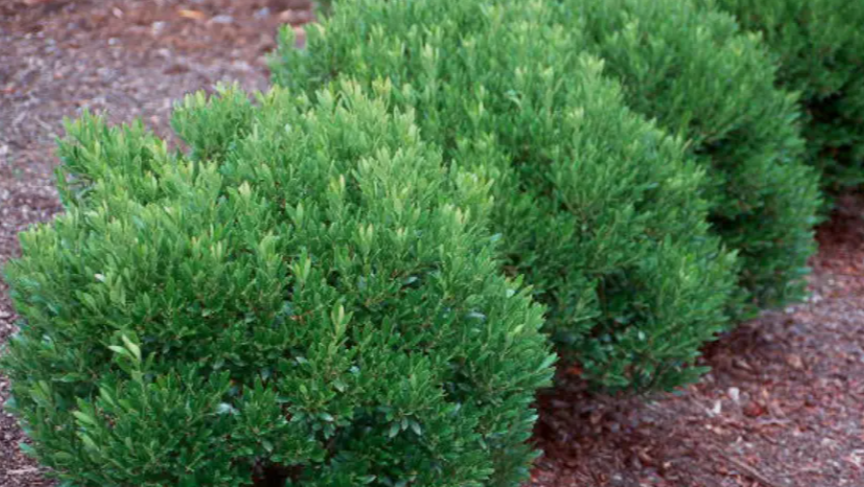
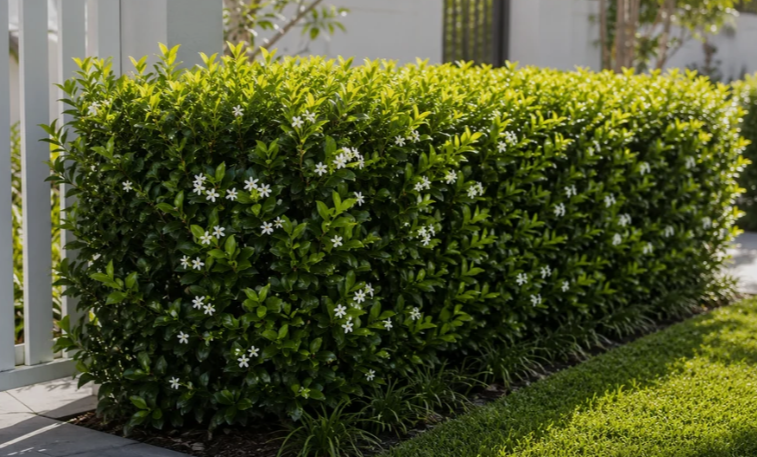
Inkberry holly is widely considered the closest native substitute for boxwood. Its small, smooth, oval leaves look much more like boxwood than a typical spiny holly, and they are soft to the touch. Compact cultivars such as Gem Box and Strongbox were bred specifically as boxwood replacements and keep their leaves all the way to the ground. Like boxwood, they can be sheared into globes, low hedges, and formal edging.
Inkberry is native to the eastern United States, from Nova Scotia to Florida and west to Texas, and grows in Zones 4 through 9. It prefers moist, acidic soil and tolerates wet sites that boxwood would not survive. It is not drought tolerant and may yellow in alkaline soil. Female plants produce black berries that feed birds in winter.
2. Dwarf Yaupon Holly
Dwarf yaupon holly is one of the most popular boxwood alternatives in the South. Cultivars such as ‘Schilling’, ‘Nana’, and ‘Bordeaux’ form dense, rounded mounds of tiny evergreen leaves. They shear beautifully into low hedges and globes. Their fine texture closely matches boxwood in formal plantings.
Yaupon is native to the southeastern United States and grows in Zones 7 through 10. It handles heat, humidity, drought, salt spray, and sandy or clay soils far better than boxwood. Most dwarf forms produce few or no berries. Deer generally leave it alone, which makes it a strong choice in suburban landscapes.
Also Read: Different Types of Boxwoods
3. Japanese Holly
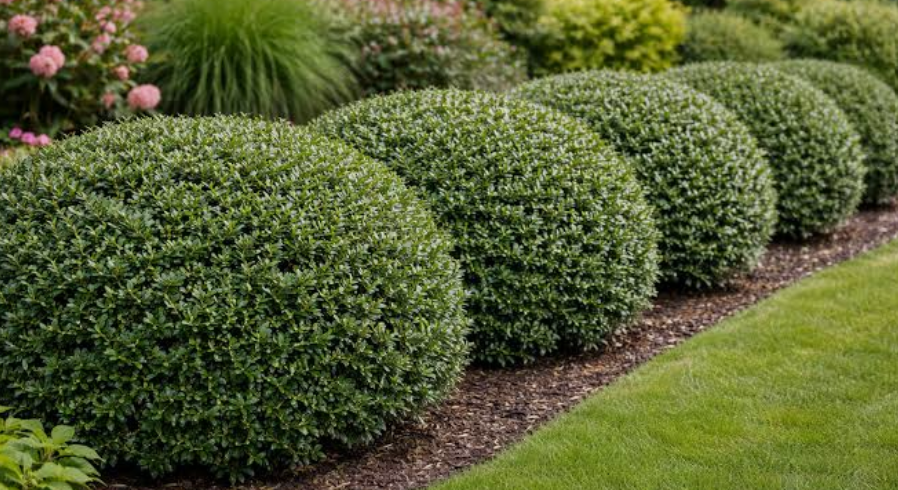
Japanese holly has small, glossy, rounded leaves and dense branching that make it look remarkably like boxwood. It responds well to shearing and is available in rounded, spreading, and narrow upright forms. Popular cultivars include ‘Soft Touch’, ‘Compacta’, and the columnar ‘Sky Pencil’. It has long been used as a direct boxwood substitute in foundation plantings.
Japanese holly grows in Zones 5 through 8 and prefers moist, acidic, well-drained soil. It is vulnerable to spider mites, black root rot, and nematodes in poorly drained sites. Gardeners in the mid-Atlantic should check local guidance, since seedlings of this species have spread into woodlands in some areas. Choosing a native inkberry instead avoids this concern.
4. Dwarf Walter’s Viburnum
Dwarf Walter’s viburnum is a native evergreen that many southern extension agents now recommend as a boxwood replacement. Compact cultivars such as ‘Whorled Class’, ‘Mrs. Schiller’s Delight’, and ‘Densa’ have small, glossy leaves and stay 3 to 5 feet tall. They can be sheared into neat low hedges or left to form soft mounds. Unlike boxwood, they cover themselves with white flowers in late winter.
Walter’s viburnum is native to the Southeast coastal plain and grows best in Zones 7 through 10. It handles heat, humidity, wet soils, and drought once established. The flowers feed early pollinators, and the red-to-black fruit attracts birds. It has few serious pests in southern gardens.
5. Yew
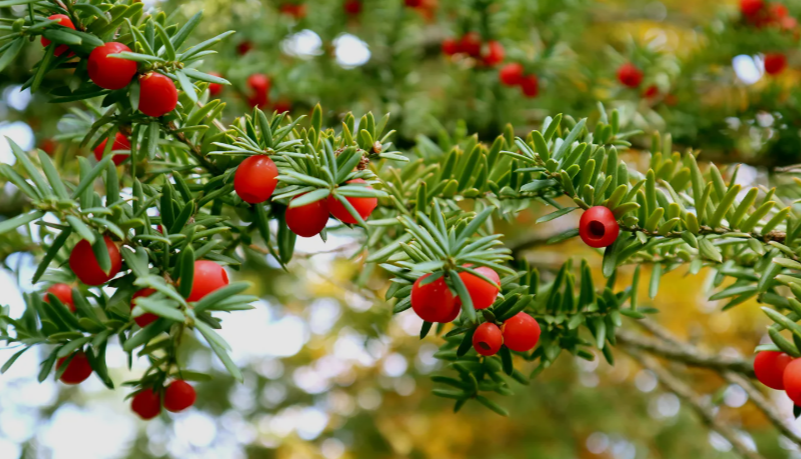
Yews have long been used alongside boxwood in formal gardens, and they are among the most shade-tolerant evergreens for hedging. Their soft, dark green needles take shearing extremely well and can be clipped into hedges, cones, and complex topiary. Compact forms such as ‘Densiformis’ and ‘Hicksii’ are common in northern foundation plantings. Yews also regrow well after hard pruning.
Yews grow in Zones 4 through 7 and need well-drained soil, since they quickly decline in wet ground. Unlike boxwood, they are a favorite food of deer in many areas. All parts of the plant except the red fruit flesh are highly toxic to people, pets, and livestock. Plant them away from areas where children or animals might chew on them.
6. Globe Arborvitae
Globe arborvitae forms naturally round, dense balls of soft, scale-like foliage. It mimics the shape of a clipped boxwood without regular pruning. Cultivars such as ‘Mr. Bowling Ball’, ‘Little Giant’, and ‘Danica’ stay 2 to 4 feet tall and wide. They are especially useful for low hedges and repeated globes along walkways.
Globe arborvitae is very cold hardy, growing in Zones 3 through 7, which makes it a strong choice for northern gardens. It prefers full sun to light shade and moist, well-drained soil. Deer browse arborvitae heavily in winter, so protection may be needed. Some cultivars bronze slightly in cold weather.
7. Pyracomeles
Pyracomeles is a newer hybrid shrub bred as a boxwood alternative. Cultivars such as Juke Box and Berry Box form dense, rounded mounds of tiny, glossy evergreen leaves. They look very much like boxwood when sheared. Unlike many substitutes, they also bear white spring flowers and, on some types, small red fruit.
Pyracomeles grows in Zones 5 through 9 and prefers full sun to part shade with well-drained soil. It tolerates heat and drought well once established. Michigan State University Extension lists it among its recommended boxwood alternatives. It shears easily into globes, cubes, and low hedges.
8. Dwarf Hinoki Cypress
Dwarf Hinoki cypress has rich, dark green foliage arranged in shell-like fans, giving it a dense, refined texture. Compact cultivars such as ‘Nana Gracilis’ and ‘Kosteri’ grow slowly into irregular mounds. They are best used as specimen plants rather than clipped hedges. Their elegant form suits Japanese-style and formal gardens.
Hinoki cypress grows in Zones 4 through 8 and prefers moist, well-drained, slightly acidic soil. It does best with morning sun and some afternoon shade in hot climates. It grows slowly, so plants stay compact for many years. Avoid heavy shearing, which ruins its natural layered shape.
Also Read: Boxwood Diseases
9. Seedless Privet
Privet has small leaves and dense branching that make it one of the fastest-growing hedge plants for a formal look. It shears easily into crisp hedges and can be shaped much like boxwood. Newer seedless cultivars such as Golden Ticket offer the same benefits without the invasive spread. Golden-leaved types add brighter color than boxwood.
Many older privets are highly invasive across the eastern and southern United States, because birds spread their seeds. Choose only seedless cultivars, as the University of Connecticut recommends. Privet grows in a wide range of soils and climates, depending on the variety. It needs frequent trimming to stay tidy because it grows quickly.
10. Rosemary
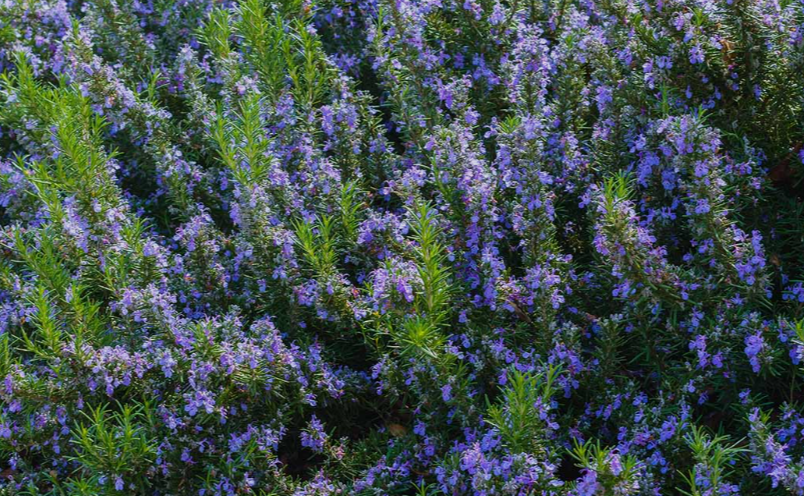
Rosemary is an aromatic evergreen with narrow, needle-like leaves that can be clipped into low hedges and knot garden patterns. Upright cultivars such as ‘Tuscan Blue’ and ‘Arp’ work well for structure. Its fragrant leaves and blue flowers add more interest than boxwood. It doubles as a culinary herb.
Rosemary is hardy outdoors mainly in Zones 7 through 10, with ‘Arp’ among the most cold tolerant. It needs full sun and very well-drained soil and quickly rots in wet ground. It handles drought, heat, and salt spray well. It is deer and rabbit resistant, making it useful in many southern and western gardens.
11. Wall Germander
Wall germander is a small evergreen subshrub that has been used in European knot gardens for centuries. Its tiny, glossy, toothed leaves form a low, dense mass that can be clipped into crisp edging. It grows about 12 to 18 inches tall. In summer it produces small pink to purple flowers that attract bees.
Wall germander grows in Zones 5 through 9 and prefers full sun and well-drained soil. It is drought tolerant once established and resists deer and rabbits. It works especially well for edging herb gardens, paths, and parterres. Shear it after flowering to keep it compact and tidy.
12. Lavender Cotton
Lavender cotton is a low, mounding shrub with finely divided, aromatic silver-gray or green foliage. It is a classic knot garden plant, often paired with dark green hedges to create contrasting patterns. Its soft texture and compact size make it a lovely low edging. Buttonlike yellow flowers appear in summer.
Lavender cotton grows in Zones 6 through 9 and needs full sun and lean, well-drained soil. It thrives in hot, dry climates and dislikes humidity and wet winters. Shear it lightly after flowering to keep it dense. It is deer resistant and tolerates poor, rocky soil.
13. Dwarf Euonymus
Dwarf evergreen euonymus cultivars offer small, glossy leaves on compact, upright plants. Varieties such as ‘Green Spire’ and ‘Microphyllus’ form narrow columns or low hedges with a boxwood-like texture. Some variegated types add color. They shear well into formal shapes.
Evergreen euonymus grows in Zones 6 through 9 and tolerates sun or shade. It is prone to euonymus scale, a pest that can weaken plants. Inspect stems regularly and choose healthy stock. Avoid spreading species of euonymus, which can become invasive in some regions.
14. Compact Myrtle
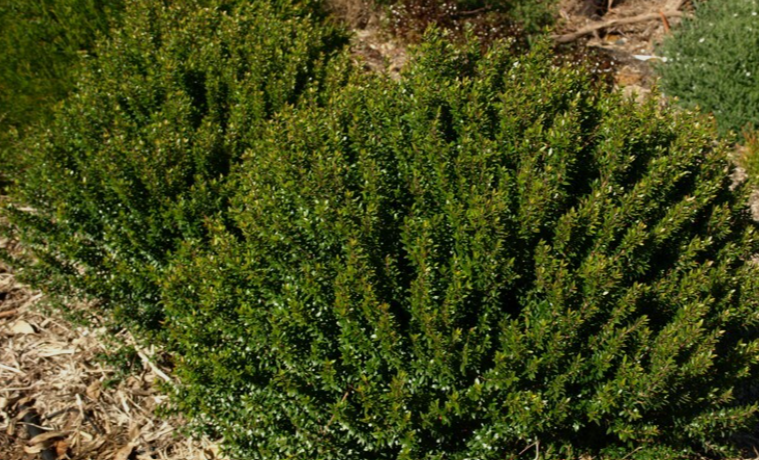
Compact myrtle has small, glossy, aromatic leaves and dense growth that closely resemble boxwood. It is widely used in Mediterranean gardens for low hedges and topiary. The dwarf form ‘Compacta’ stays especially small and tidy. White summer flowers and dark berries add interest.
Myrtle grows outdoors in Zones 8 through 11, especially in California, the Southwest, and the Gulf Coast. It needs full sun to light shade and well-drained soil. It tolerates heat, drought, and salt spray. In colder regions, it can be grown in containers and brought indoors for winter.
15. Dwarf Indian Hawthorn
Dwarf Indian hawthorn forms naturally rounded mounds of thick, glossy evergreen leaves. It is a common foundation and low hedge plant across the South. In spring it covers itself with pink or white flowers, followed by blue-black berries. Its neat shape requires little pruning.
Indian hawthorn grows in Zones 8 through 10 and thrives in heat, humidity, and coastal conditions. It prefers full sun and well-drained soil. Leaf spot disease can be a problem in wet, crowded sites, so choose resistant cultivars and water at the base. It is a strong choice where boxwood suffers in southern heat.
16. Dwarf Loropetalum
Dwarf loropetalum cultivars offer compact, mounding forms with small, often purple or burgundy evergreen leaves. Varieties such as ‘Purple Pixie’ and ‘Purple Diamond’ add rich color where boxwood would provide only green. In spring they bear fringe-like pink flowers. They can be lightly sheared into low hedges.
Loropetalum grows in Zones 7 through 10 and prefers acidic, well-drained soil. It tolerates heat and humidity and does well in full sun to part shade. Some full-sized cultivars grow much larger than labeled, so choose truly dwarf types for edging. It has few serious pests in southern gardens.
17. Dwarf Podocarpus
Dwarf podocarpus has narrow, dark green, leathery leaves and a dense, upright habit. Compact selections such as ‘Pringles’ are popular in Florida and the Gulf Coast as boxwood replacements. They shear well into hedges and formal shapes. Their deep green foliage stays attractive year-round.
Podocarpus grows in Zones 8 through 11 and tolerates heat, humidity, salt, and a range of soils. It grows in full sun to partial shade. It has few pests and is moderately deer resistant. Its fruit and seeds can be toxic if eaten, so use caution around pets.
18. Dwarf Mugo Pine
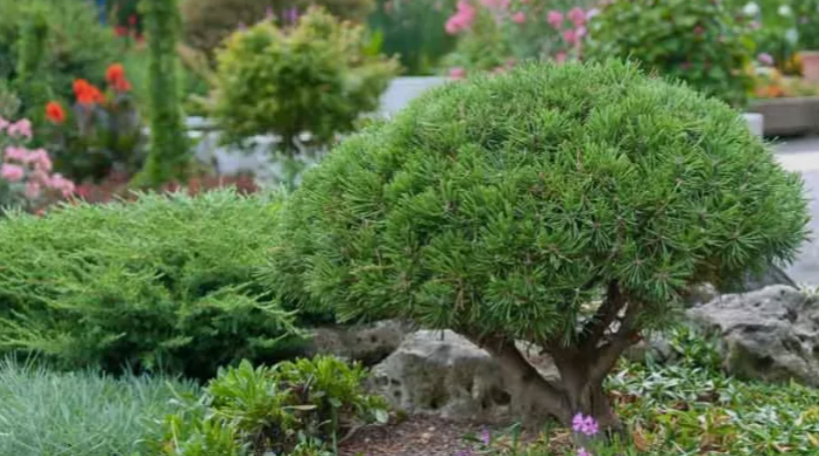
Dwarf mugo pine forms dense, rounded mounds of short, dark green needles. Compact cultivars such as ‘Mops’ and ‘Slowmound’ create a boxwood-like globe shape without shearing. They add a coarser, more natural texture than boxwood. They are excellent for rock gardens and low borders.
Mugo pine is extremely cold hardy, growing in Zones 2 through 7. It needs full sun and well-drained soil and tolerates poor, rocky conditions. It does not do well in hot, humid southern climates. Pine sawflies and scale can occasionally be problems.
19. Carissa Holly
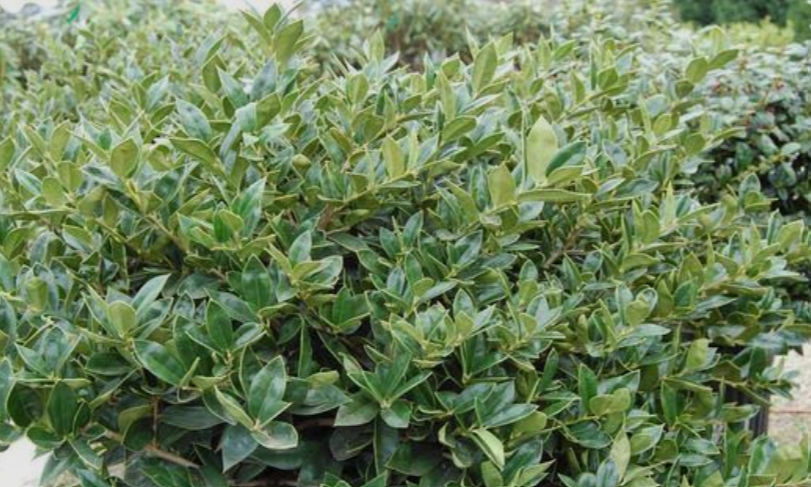
Carissa holly is a dwarf Chinese holly with glossy, dark green leaves that have a single spine at the tip. It forms a dense, rounded mound about 3 to 4 feet tall and wide. It is widely used as a low hedge and foundation shrub in the South. It rarely needs pruning to stay compact.
Carissa holly grows in Zones 7 through 9 and tolerates heat, drought, and a range of soils. It prefers full sun to partial shade. It produces few or no berries. Its spiny leaf tips make it less friendly along walkways than soft-leaved alternatives.
20. Holly Fern
Holly fern is an evergreen fern with glossy, holly-like fronds. The University of Georgia suggests it as a non-traditional boxwood alternative for shady sites. Its bold, dark green texture adds structure to shaded borders and foundation plantings. It forms neat clumps about 2 feet tall.
Holly fern grows outdoors in Zones 6 through 10 and thrives in partial to full shade. It prefers moist, well-drained soil rich in organic matter. It tolerates heat and humidity well. It is deer resistant and requires very little maintenance.
21. Boxleaf Honeysuckle
Boxleaf honeysuckle has tiny, glossy, oval leaves that look almost exactly like boxwood. It has long been used in Europe for hedges and topiary. Cultivars such as ‘Baggesen’s Gold’ and ‘Maigrün’ offer yellow or bright green foliage. It shears easily into formal shapes.
Boxleaf honeysuckle grows in Zones 6 through 9 and prefers full sun to part shade. It grows quickly, so it needs frequent trimming to stay tidy. It tolerates a range of soils and coastal conditions. Unlike invasive bush honeysuckles, it is not considered a major invasive species in most of North America, but check local guidance before planting.
Sources
Cornell University Integrated Pest Management, “Alternatives to Boxwood”
UMass Amherst Landscape, Nursery and Urban Forestry Program, “Boxwood Blight”
Purdue Landscape Report, “Blight, Leafminers, and Moths: The Plight of Boxwoods”