Snowball Viburnum: A Complete Guide to the 3 Shrubs Behind the Classic “Snowball Bush”
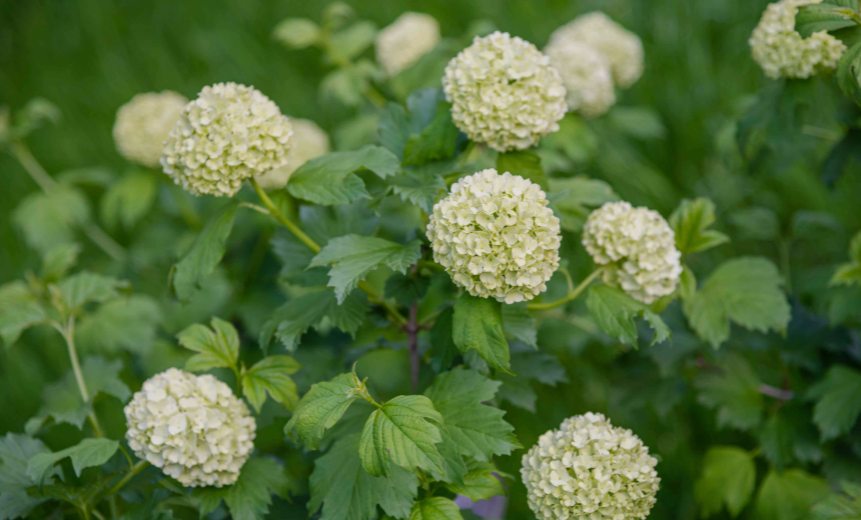
Snowball viburnum is the name gardeners use for a small group of spring-flowering shrubs that cover themselves in round, pure white flower clusters. From a distance, the flowers look exactly like snowballs balanced along the branches. For many people, these shrubs bring back memories of grandparents’ gardens, old farmhouses, and churchyards, where they bloomed reliably each spring for decades. Their heirloom appeal is matched by real garden value: they are long-lived, easy to grow, and among the showiest shrubs of the spring season.
What most gardeners don’t realize is that “snowball viburnum” refers to 3 different shrubs. They come from 3 different parts of the world and differ greatly in size, hardiness, and care. A fourth plant, the snowball hydrangea, is often mistaken for all of them. This guide explains how to tell each snowball shrub apart, which one suits your climate and garden, and how to grow it for the biggest, longest-lasting display.
Botanical Classification
All 3 snowball viburnums belong to the viburnum genus, a group of roughly 150 to 175 species of shrubs and small trees found mostly in the Northern Hemisphere. Over the years the genus has moved between plant families. Older references put it in the honeysuckle family, others in the moschatel family, and current classifications give viburnums their own family. Each of the snowball types is a special garden form of a different wild species.
What unites them is a trait called sterility. In a wild viburnum, each flower cluster has a center of small fertile flowers that produce fruit, surrounded by a few large, showy sterile flowers whose only job is to attract pollinators. In the snowball forms, nearly every flower in the cluster has become a large sterile one. They are packed into a dense ball instead of a flat lacecap. That transformation creates the snowball look, but it also means these shrubs produce little or no fruit and must be propagated by cuttings rather than seed.
Brief History
Snowball viburnums are some of the oldest cultivated flowering shrubs. The Japanese snowball was grown in Asian gardens for centuries before Western botanists encountered it. Oregon State University notes that the species was first described from this sterile garden form rather than from the wild plant. The European snowball has been grown in European gardens since at least the 16th century, and colonists carried it to North America, where it became a fixture of early American dooryards.
The Chinese snowball has the most remarkable cultural history. In China, its fertile wild form is known as qiong hua, often translated as “jade flower.” It has been celebrated in poetry, painting, and garden design for well over a thousand years. The showy sterile form reached Western gardens in the 19th century through plant collectors working in China, and one of its old botanical names honors the Scottish plant hunter Robert Fortune. Today it is especially prized in the southern United States, where it grows larger and more vigorously than the other snowball types.
Japanese Snowball Viburnum
The Japanese snowball is the most widely planted snowball viburnum in North American gardens today. It typically grows 8 to 15 feet tall and wide, with a broad, rounded shape and slightly tiered branches. Its leaves are oval and pointed, with deeply sunken, parallel veins that give them a pleated look. In autumn they often turn burgundy or wine-red, which gives the shrub a second season of color.
Its flower clusters are about 2 to 3 inches across and are borne in pairs along the tops of the branches in May. They open a soft lime-green and then turn pure white. The flowers are not fragrant and produce no fruit. The Japanese snowball is the sterile form of the same species as the doublefile viburnum, so the 2 share leaves and habit but differ completely in bloom. It is generally hardy from Zone 5 through Zone 8.
Also Read: Different Types of Viburnum Shrubs
European Snowball Viburnum
The European snowball is the sterile form of the European cranberrybush, a species native to Europe, northern Africa, and northern Asia. It is easiest to recognize by its leaves, which have 3 pointed lobes and look much like maple leaves. That sets it apart from both the Japanese and Chinese snowballs, whose leaves are simple ovals. It usually grows 10 to 12 feet tall and wide, with upright, arching stems.
Its flower clusters are round, about 2½ to 3 inches across, and open green before turning white in May. Sometimes they take on a faint pink tint as they fade, which explains the “rose” in its traditional cultivar name. It is the hardiest of the snowball types, thriving from Zone 3 through Zone 8, so it is often the best choice in northern gardens. Its main weakness is a strong attraction for the snowball aphid, which can badly curl new spring leaves.
Chinese Snowball Viburnum
The Chinese snowball is the giant of the group and the most spectacular in bloom. The University of Georgia describes its flower clusters as up to 8 inches across, made up of individual florets 1 to 1½ inches wide. The flowers open chartreuse green and gradually turn pure white. They then fade to light brown and stay on the plant for several weeks. Some plants produce a second, lighter flush of flowers in late summer or fall.
The shrub itself is large, usually 10 to 15 feet tall in gardens and capable of reaching 20 feet or more in ideal conditions. It is hardy from Zone 6 through Zone 9, making it the best snowball viburnum for the Deep South. In the warmest regions, its leaves are often semi-evergreen. The Chinese snowball was named a 2005 Mississippi Medallion winner and a 2006 Georgia Gold Medal winner, recognition for its outstanding performance in southern gardens.
Snowball Viburnum vs. Snowball Hydrangea
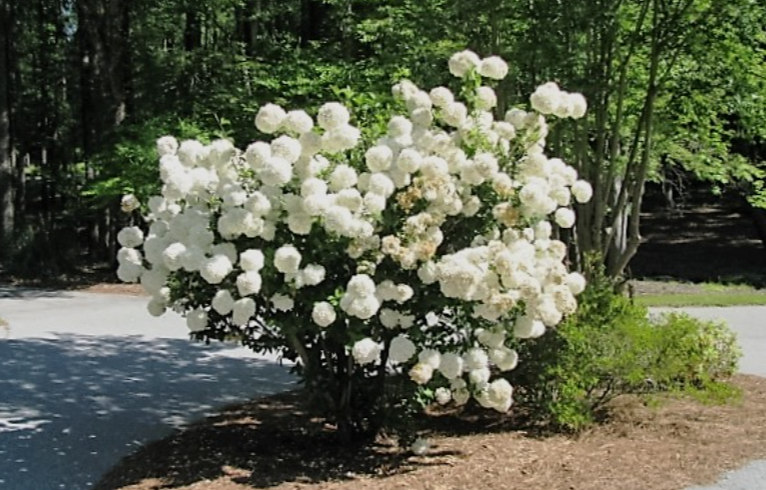
The most common snowball mix-up is between snowball viburnums and snowball hydrangeas, especially the smooth hydrangea and its famous cultivar ‘Annabelle’. Both carry round white flower clusters and are sold as “snowball bush,” so many gardeners buy one expecting the other. Bloom time is the easiest way to tell them apart. Snowball viburnums flower in spring, usually from April to May, while snowball hydrangeas bloom in early to mid summer, from June through July.
The leaves and pruning needs differ just as much. Snowball hydrangea leaves are broad, thin, and somewhat heart-shaped, and the plants are woody shrubs that often die back to the ground or are cut back hard in winter. Snowball viburnums keep a permanent woody framework, grow far larger, and flower on stems formed the previous year. That difference is critical for pruning. Cutting a snowball viburnum hard in winter, as gardeners often do with hydrangeas, removes all of the following spring’s flowers.
Popular Cultivars
The Japanese snowball has the most cultivar choices. ‘Popcorn’ is one of the most popular. It grows 8 to 10 feet tall, with dense, 3-inch round clusters that look like popped corn along the branches, and burgundy-red fall color. ‘Newport’ is a dwarf form that stays about 4 to 5 feet tall. It suits foundation plantings and small gardens where the full-sized shrub would grow too large. ‘Mary Milton’ adds color, with reddish-bronze new foliage and greenish-pink buds that open into soft pink snowballs.
The European snowball is usually sold under its traditional cultivar name, ‘Roseum’. Older gardens may also contain compact forms of the European cranberrybush, though these generally do not produce the full snowball flowers. The Chinese snowball is most often sold simply as the sterile form of its species, with few named cultivars. Because it roots easily from summer cuttings, many southern gardeners share plants passed down from older gardens, keeping heirloom specimens alive for generations.
Landscape Uses
Snowball viburnums are at their best as specimen shrubs. Plant them where their spring display can be seen from the house, the street, or a garden path. The Mississippi State University Extension Service notes that Mississippi gardeners often give the Chinese snowball a prime spot in the middle of the front yard, where it commands attention in bloom. The Japanese and European types also suit shrub borders, cottage gardens, and the corners of a house.
Because they are large shrubs, all snowball viburnums need room. Plant full-sized forms 8 to 12 feet from foundations, walkways, and other shrubs, and give the Chinese snowball even more space. A spot against a dark background, such as evergreen trees, a hedge, or a brick wall, shows off the white flowers. The Chinese snowball’s big blooms also make excellent cut flowers. Florists use them fresh in spring arrangements and dried for long-lasting displays.
Growing Considerations
Choosing the right snowball for your climate is the most important step. Gardeners in the coldest northern regions, in Zones 3 and 4, should choose the European snowball. Those in Zones 5 through 8 can grow the Japanese snowball or the European snowball. In the hot, humid South, the Chinese snowball performs best, while the European snowball often struggles with heat and aphids.
All snowball viburnums grow best in full sun to partial shade. In northern gardens, full sun gives the heaviest flowering, while afternoon shade protects plants in the South. They prefer moist, fertile, well-drained soil rich in organic matter, slightly acidic to neutral. The Japanese and Chinese snowballs are not very drought tolerant and need deep watering during dry periods, especially in their first few years. A 2 to 3 inch layer of mulch over the root zone helps keep the soil cool and evenly moist.
Prune snowball viburnums right after they finish flowering, because they bloom on stems formed the previous summer. Light shaping and removal of dead or crossing branches is usually enough. Overgrown older shrubs can be renewed by cutting a few of the oldest stems to the ground every few years. Very old, neglected Chinese snowballs can even be cut almost to the ground, though they may not flower again for up to 2 years afterward.
Pests and Problems
The European snowball has the most pest trouble of the 3. The snowball aphid hatches in early spring and feeds on the opening leaves, causing them to curl and twist tightly within weeks of bud break. Control works best very early, when new leaves are only about 2 inches long, because the aphids soon become protected inside the curled foliage. The European snowball is also highly susceptible to the viburnum leaf beetle, which can strip the leaves in regions where the beetle is established.
The Japanese and Chinese snowballs are generally more trouble-free. The Japanese snowball resists the snowball aphid but can show browned leaf edges and stem dieback after drought or in poorly drained soil. The Chinese snowball has few serious problems, though spider mites and scale insects occasionally appear in hot, dry conditions. For all types, good air circulation, consistent moisture, and the right climate prevent most issues. Most snowball viburnums will bloom reliably for decades.
Sources
Oregon State University Landscape Plants, “Japanese Snowball Viburnum”
University of Georgia Cooperative Extension, “Georgia Gold Medal Winner Offers Warm ‘Snowballs’”
NC State Extension Gardener Plant Toolbox, “Chinese Snowball Viburnum”