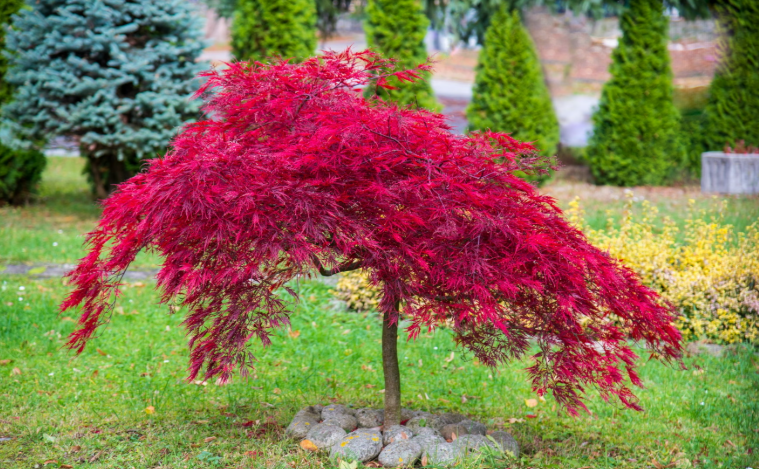
Trees for small gardens have become an increasingly important category in residential landscaping, as the average American lot size has shrunk considerably over the past several decades, with new single-family homes now sitting on lots that are roughly 25 percent smaller than they were in the early 1990s.
This shrinking footprint means many popular shade trees, capable of reaching 60 to 100 feet at maturity with root systems that can extend well beyond the tree’s own canopy, are simply the wrong choice for a modern suburban or urban yard, often leading to costly removals a decade or two after planting once the tree begins interfering with foundations, sidewalks, or utility lines.
Most arborists classify a small ornamental tree as one that tops out under 25 to 30 feet, a size range that still provides meaningful shade, seasonal interest, and wildlife value without the structural risks and long-term maintenance demands of a full-sized forest tree.
Small trees also offer a level of seasonal variety that many larger shade trees cannot match, since breeders and plant collectors have concentrated much of their effort on compact species specifically for their ornamental flowers, fruit, fall color, and bark texture rather than pure shade output.
This list explores 40 trees well suited to small gardens, spanning flowering ornamentals, native wildlife-friendly species, space-saving columnar forms, and compact fruiting trees that allow even a modest yard to support a genuinely productive home orchard.
Eastern Redbud
The Eastern redbud is a small native ornamental tree that produces a striking display of magenta-pink flowers directly along its bare branches each spring before the leaves emerge, typically reaching a mature height of 20 to 30 feet with an equally modest spread. This tree tolerates a wide range of soil conditions and adapts well to both full sun and partial shade, making it flexible for the varied light conditions often found in a small urban or suburban yard.
Eastern redbud features attractive heart-shaped leaves that turn a pleasant yellow color each fall, adding a second season of visual interest beyond its notable spring bloom period. This tree’s relatively fast growth rate and reliable spring color have made it one of the most popular native ornamental trees for small residential landscapes across much of the eastern and central United States.
Forest Pansy Redbud
The Forest Pansy redbud is a popular cultivar selected for its striking reddish-purple foliage, which emerges a deep burgundy in spring and gradually shifts toward a darker purple-green as summer progresses, typically reaching a mature height of 20 to 25 feet. This tree produces the same magenta-pink spring flowers found on standard Eastern redbud, but the display becomes even more dramatic against the tree’s dark, colorful leaves once they fully emerge.
Forest Pansy redbud performs best with some afternoon shade in hotter climates, since intense, direct summer sun can cause the delicate purple foliage to scorch along the leaf edges. This tree’s combination of spring flowers and season-long colorful foliage makes it one of the more visually dynamic small trees available for compact garden spaces.
Flowering Dogwood
The flowering dogwood produces a spectacular display of white or pink bracts each spring, typically reaching a mature height of 15 to 30 feet, making it one of the classic small ornamental trees for partially shaded garden settings. This tree naturally grows as an understory species in the wild, meaning it thrives in the dappled shade found beneath larger canopy trees, an ideal trait for smaller gardens that already include some taller shade trees.
Flowering dogwood produces bright red fall berries that provide an important food source for migrating birds, adding wildlife value alongside its ornamental spring and fall interest. This tree’s attractive layered branching structure adds visual interest even in winter, when the bare horizontal branches create a distinctive silhouette against the sky.
Kousa Dogwood
The Kousa dogwood, a close relative of the native flowering dogwood, blooms several weeks later in early summer and produces star-shaped white bracts that sit more upright atop the branches rather than facing outward, typically reaching a mature height of 15 to 25 feet. This tree is considerably more resistant to the dogwood anthracnose disease that has affected native flowering dogwood populations in parts of the country, making it a popular substitute where disease pressure is a concern.
Kousa dogwood produces unusual raspberry-like pink fruit in late summer that is both ornamentally interesting and edible, though the fruit’s mild flavor and large seeds make it more a curiosity than a significant food crop. This tree’s attractive mottled, exfoliating bark provides additional visual interest through the winter months once the leaves have dropped.
Pagoda Dogwood
The pagoda dogwood is a native small tree known for its distinctive horizontal, tiered branching pattern, which creates a layered, pagoda-like silhouette that gives the species its common name, typically reaching a mature height of 15 to 25 feet. This tree produces flat clusters of small white flowers in late spring, followed by blue-black berries on bright red stems that are highly attractive to birds throughout late summer.
Pagoda dogwood tolerates more shade than many other small ornamental trees, making it a useful option for the shadier corners of a small garden where sun-loving flowering trees would struggle. This tree’s distinctive architectural branching structure provides strong visual interest even when the tree is not in bloom, making it a favorite among garden designers looking for structural variety in a compact space.
Serviceberry
The serviceberry is a versatile small native tree with clusters of white flowers in early spring followed by small, sweet, blueberry-like fruit in early summer, typically reaching a mature height of 15 to 25 feet. This tree is often among the first native species to bloom each spring, providing an early source of nectar for pollinators emerging from winter dormancy.
Serviceberry fruit is highly attractive to birds, and gardeners who get to the fruit first often find it a pleasant, mild addition to pies and preserves. This tree also produces excellent orange to red fall color, giving small gardens three distinct seasons of interest from a single compact, low-maintenance tree.
Downy Serviceberry
The downy serviceberry is a closely related serviceberry species distinguished by the fine, soft hairs found on its young leaves and flower stems, typically reaching a similar mature height of 15 to 25 feet with a slightly more upright, tree-like form than some other serviceberry species.
This tree produces the same early spring flower display and summer fruit crop associated with the broader serviceberry family, making it equally valuable for early-season pollinators and summer birds. Downy serviceberry tolerates a range of soil conditions and adapts well to both full sun and partial shade, offering considerable placement flexibility within a small garden design. This tree’s reliable multi-season interest and manageable size have made it a frequent recommendation among native plant nurseries for small residential landscapes.
Japanese Maple
The Japanese maple is one of the most popular small ornamental trees for compact garden spaces, prized for its delicate, deeply lobed foliage available in shades ranging from bright green to deep burgundy, typically reaching a mature height of 15 to 25 feet, though many cultivars remain considerably smaller.
This tree offers extraordinary variety within a single species, with hundreds of named cultivars available featuring different leaf shapes, colors, and growth habits, from upright forms to cascading, weeping specimens well suited to smaller spaces. Japanese maple generally performs best with some afternoon shade in hotter climates, since intense direct sun can scorch the tree’s fine, delicate foliage during the hottest part of summer. This tree’s elegant, layered branching structure and vibrant fall color have made it a centerpiece specimen tree in small garden design for well over a century.
Paperbark Maple
The paperbark maple is a small ornamental tree valued for its strikingly beautiful cinnamon-colored bark, which peels away in thin, curling strips to reveal a lighter orange-brown layer underneath, typically reaching a mature height of 20 to 30 feet. This tree produces attractive three-part compound leaves that turn a reliable red to orange color each fall, adding to its multi-season appeal within a small garden setting.
Paperbark maple grows relatively slowly, which allows it to remain proportional to a small garden space for many years without requiring aggressive pruning. This tree’s dramatic winter bark display, especially striking when backlit by low winter sun, makes it one of the few small trees that genuinely earns its keep even during the coldest, most dormant months of the year.
Trident Maple
The trident maple is a small, tough ornamental tree named for its distinctive three-lobed leaves, typically reaching a mature height of 20 to 25 feet with a naturally rounded, dense canopy. This tree tolerates urban conditions, including compacted soil, air pollution, and periodic drought, considerably better than many other ornamental maple species, making it a practical choice for small city gardens and street-adjacent planting strips.
Trident maple produces attractive orange to red fall color and develops an interesting flaking, textured bark as the tree matures, providing additional seasonal interest beyond its foliage display. This tree’s compact size and urban resilience have made it an increasingly popular choice for small gardens in more built-up residential and commercial areas.
Amur Maple
The Amur maple is a small, cold-hardy ornamental tree capable of thriving in considerably colder climates than many other ornamental maple species, typically reaching a mature height of 15 to 20 feet with a dense, rounded, multi-stemmed form. This tree produces small, fragrant yellow-white flowers in spring, followed by winged seed pairs that turn an attractive red color in summer before the tree’s foliage develops its own vivid red to orange fall display.
Amur maple tolerates a wide range of soil conditions and requires minimal maintenance once established, making it a low-fuss option for small gardens in colder climate zones. This tree’s exceptional cold hardiness has made it a popular small ornamental choice throughout the northern Great Plains and other regions where many other ornamental trees struggle to survive the winter.
Tatarian Maple
The Tatarian maple is a close relative of the Amur maple, similarly valued for its cold hardiness and compact size, typically reaching a mature height of 15 to 20 feet with a rounded, shrubby form well suited to small garden borders. This tree produces small clusters of fragrant flowers in spring, followed by winged seeds and attractive fall foliage that ranges from yellow to red depending on the specific growing conditions and cultivar.
Tatarian maple tolerates poor soil, wind, and cold exceptionally well, making it a practical, low-maintenance choice for exposed small garden sites where more delicate ornamental trees might struggle. This tree’s dense, twiggy growth habit also makes it useful for small-scale privacy screening in gardens too compact for a larger evergreen hedge.
Vine Maple
The vine maple is a small native tree found naturally in the understory of Pacific Northwest forests, typically reaching a mature height of 15 to 20 feet with a graceful, often multi-stemmed, arching form. This tree produces small red and white flowers in spring, though it is primarily grown for its delicate, star-shaped leaves and outstanding fall color, which can range from yellow through orange to a vivid scarlet red depending on light exposure.
Vine maple tolerates shade considerably better than most other ornamental maples, making it a valuable option for the shadier portions of a small garden, particularly in cooler, moister climates similar to its native range. This tree’s naturally graceful, sculptural branching structure makes it an effective specimen tree even in a garden too small to accommodate a more traditionally shaped shade tree.
Star Magnolia
The star magnolia is a small, early-blooming ornamental tree that produces an abundance of star-shaped white flowers in very early spring, often before the tree’s leaves have emerged, typically reaching a mature height of just 15 to 20 feet. This tree’s compact, naturally rounded form makes it one of the more manageable magnolia species for small garden spaces, considerably smaller than many of its larger flowering magnolia relatives.
Star magnolia flowers are also pleasantly fragrant, adding a sensory dimension to its early spring display that complements the visual impact of the abundant blooms. This tree’s small size and early bloom time have made it a popular choice for small gardens looking for one of the very first floral displays of the growing season.
Saucer Magnolia
The saucer magnolia produces large, cup-shaped flowers in shades of pink, purple, and white each spring, typically reaching a mature height of 20 to 25 feet, making it one of the more compact tree-form magnolia options for small garden spaces. This tree’s dramatic, oversized blooms, which can measure up to 10 inches across, create one of the most eye-catching early spring displays of any small ornamental tree.
Saucer magnolia flowers can occasionally be damaged by a late spring frost, since the tree tends to bloom quite early before the risk of freezing temperatures has fully passed in many climate zones. This tree’s naturally broad, spreading form works best in small gardens with enough open space to appreciate its considerable width relative to its modest height.
Sweetbay Magnolia
The sweetbay magnolia is a smaller, more cold-tolerant magnolia species that produces fragrant, creamy white flowers throughout the summer months, typically reaching a mature height of 15 to 30 feet depending on the specific growing region and climate. This tree’s evergreen to semi-evergreen habit in milder climates provides more year-round structure than many deciduous flowering trees, while still dropping some or all of its leaves in colder regions.
Sweetbay magnolia tolerates wet, poorly drained soil considerably better than most other magnolia species, making it a useful option for small gardens with a naturally damp or low-lying planting area. This tree’s silvery-white leaf undersides create an attractive shimmering effect when the foliage moves in the breeze, adding subtle visual interest beyond its notable summer flower display.
Crape Myrtle
The crape myrtle is an extremely popular small flowering tree valued for its long-lasting summer flower clusters in shades of pink, red, purple, or white, typically reaching a mature height of 15 to 25 feet depending on the specific cultivar selected. This tree blooms for an unusually long period compared to most other flowering trees, often producing color from early summer well into fall, making it one of the more reliable long-season bloomers available for small gardens.
Crape myrtle also displays attractive exfoliating bark and vivid orange to red fall color, providing additional seasonal interest beyond its notable summer bloom period. This tree’s strong heat and drought tolerance, once established, have made it one of the most commonly planted small ornamental trees throughout warmer regions of the country.
Dwarf Crape Myrtle
The dwarf crape myrtle, including compact cultivars bred specifically for smaller spaces, typically reaches a mature height of just 3 to 8 feet, considerably smaller than standard tree-form crape myrtle varieties, making it suitable even for very small garden beds or large containers. This tree produces the same long-lasting, colorful summer flower clusters found on full-sized crape myrtle, simply scaled down to a size appropriate for tight planting spaces.
Dwarf crape myrtle cultivars are often trained into a small, multi-stemmed tree form rather than a shrub, providing the classic crape myrtle silhouette without the eventual size concerns of larger varieties. This tree’s compact size and extended bloom period have made it an increasingly popular choice for foundation plantings and small courtyard gardens throughout warmer climate zones.
Flowering Crabapple
The flowering crabapple is one of the most popular small ornamental trees for adding dramatic spring color, typically reaching a mature height of 15 to 25 feet, with numerous compact and columnar cultivars available for especially tight garden spaces. This tree produces an abundance of spring flowers in shades of white, pink, or deep red, followed by small, colorful fruit that persists into winter and provides an important food source for robins and other birds.
Flowering crabapple varieties differ considerably in disease resistance, so selecting a cultivar bred specifically for resistance to apple scab and other common fungal issues helps ensure attractive foliage throughout the growing season. This tree’s compact size and reliable spring bloom have made it one of the most commonly planted ornamental trees in small residential landscapes across much of the country.
Snow Fountains Weeping Cherry
The Snow Fountains weeping cherry is a compact, cascading ornamental tree that produces abundant white flowers along gracefully drooping branches each spring, typically reaching a mature height of just 8 to 12 feet, making it one of the smallest true weeping cherry varieties available. This tree’s naturally weeping form eliminates the need for the grafting height considerations that affect some other weeping cherry cultivars, since the branches cascade attractively regardless of the tree’s overall size.
Snow Fountains weeping cherry provides a dramatic focal point even in a very small garden, since its cascading branch structure creates significant visual impact without requiring much horizontal growing space. This tree’s compact size and reliable spring display have made it a popular choice for small gardens, courtyards, and even large container plantings.
Kwanzan Cherry
The Kwanzan cherry produces exceptionally showy, deep pink double flowers each spring, typically reaching a mature height of 20 to 30 feet with a distinctive upright, vase-shaped form when young that broadens somewhat with age. This tree’s flowers are notably larger and more densely petaled than many other ornamental cherry varieties, creating an especially dramatic springtime display despite the relatively brief bloom period typical of most flowering cherry trees.
Kwanzan cherry does not produce significant fruit, since its double-flowered blooms are largely sterile, making it a tidier option for gardeners who want ornamental cherry blossoms without dealing with fruit drop and cleanup. This tree’s dramatic spring display and manageable mature size have made it a longtime favorite for small ornamental gardens seeking a classic cherry blossom effect.
Chaste Tree
The chaste tree, sometimes called vitex, is a fast-growing, drought-tolerant small tree valued for its long-lasting spikes of purple, blue, or white flowers that typically bloom from late spring through fall, typically reaching a mature height of 15 to 20 feet. This tree can be trained as either a single or multi-trunk specimen depending on garden preference, offering flexibility for different small garden design styles.
Chaste tree tolerates heat, drought, and poor soil exceptionally well, requiring only moderate supplemental irrigation once its root system is established, making it a low-maintenance choice for small gardens in warmer climates. This tree’s extended bloom period and strong attraction for bees and butterflies have made it an increasingly popular pollinator-friendly small tree choice.
Smoke Tree
The smoke tree is a distinctive small ornamental tree named for the airy, smoke-like puffs of fine hairs that surround its spent flower clusters, typically reaching a mature height of 15 to 20 feet with a naturally rounded, multi-stemmed form. This tree is available in cultivars with either green or deep purple foliage, with the purple-leaved varieties in particular providing striking season-long color contrast against more traditionally green garden plantings.
Smoke tree tolerates poor, dry soil considerably better than many other ornamental trees, making it a practical choice for challenging small garden sites where richer soil is not available. This tree’s unusual textural flower display and colorful foliage options make it a genuinely distinctive choice for small gardens looking for something beyond the more common flowering tree varieties.
Witch Hazel
The witch hazel is a distinctive small native tree known for producing spidery yellow, orange, or red flowers remarkably late or early in the season, with some varieties blooming in late fall and others opening their fragrant flowers in the depths of winter, typically reaching a mature height of 15 to 20 feet. This tree tolerates partial shade well, making it a useful option for the shadier areas of a small garden where many other flowering trees would struggle to bloom reliably.
Witch hazel’s unusual bloom timing means it often provides the only significant floral color in a small garden during the coldest months of the year, an especially valuable trait for gardens designed with four-season interest in mind. This tree’s extract remains a common ingredient in commercial skin care products, adding a practical dimension to its long history of cultivation.
Fringe Tree
The fringe tree produces delicate, fragrant white flowers with unusually narrow, ribbon-like petals that create a soft, feathery appearance each late spring, typically reaching a mature height of 12 to 20 feet with a rounded, often multi-stemmed form. This tree is one of the last native trees to leaf out in spring, so gardeners should not mistake its late start for a sign of poor health, since the tree reliably catches up and blooms beautifully once warmer weather arrives.
Fringe tree produces small, dark blue fruit on female trees that provides food for birds, though a male tree nearby is needed for successful pollination and fruit production. This tree’s fragrant, unusual flower display and manageable size have made it an increasingly popular small native tree choice for gardeners seeking something distinctive.
Chinese Fringe Tree
The Chinese fringe tree is a close relative of the native fringe tree, producing a similarly delicate white flower display but with a somewhat more refined, tree-like growth habit, typically reaching a mature height of 15 to 20 feet. This tree tends to bloom slightly later than the native fringe tree and often develops more attractive, peeling bark as it matures, adding a additional layer of seasonal interest beyond its notable spring flower display.
Chinese fringe tree tolerates urban growing conditions reasonably well, making it a practical choice for small city gardens and street-adjacent plantings. This tree’s fragrant flowers and compact size have made it an increasingly available option at specialty nurseries catering to gardeners looking for something beyond the most commonly planted small ornamental trees.
Carolina Silverbell
The Carolina silverbell is a small native tree that produces delicate, bell-shaped white flowers dangling beneath its branches each spring, typically reaching a mature height of 20 to 30 feet in cultivation, considerably smaller than the height it can reach in its native forest habitat. This tree performs best with some afternoon shade and consistently moist, well-drained soil, reflecting its natural preference for growing in the understory of larger forest trees.
Carolina silverbell produces distinctive four-winged seed pods following its spring flower display, adding an additional point of visual interest through summer and fall. This tree’s graceful, drooping flower clusters provide a softer, more delicate alternative to some of the bolder flowering trees more commonly found in small garden designs.
Sourwood
The sourwood is a smaller native tree known for its drooping clusters of small, fragrant white flowers that bloom in mid to late summer, typically reaching a mature height of 20 to 25 feet in cultivated garden settings. This tree produces some of the most vivid and reliable fall color of any small ornamental tree, with leaves turning brilliant shades of red and burgundy earlier in the season than most other flowering trees.
Sourwood’s summer bloom timing fills a useful gap in many garden designs, since it flowers well after most spring-blooming ornamental trees have finished their display. This tree’s honey, produced by bees that forage heavily on its summer flowers, is prized in regions where the tree grows in sufficient quantity to support commercial honey production.
American Hophornbeam
The American hophornbeam, commonly called ironwood, is a smaller native understory tree valued for its fine texture and distinctive shredded, flaky gray-brown bark, typically reaching a mature height of 25 to 30 feet with a naturally rounded, dense canopy. This tree produces papery, hop-like seed clusters that give the species its common name and provide a valuable food source for birds and small mammals throughout a small garden’s growing season.
American hophornbeam tolerates shade and poor, rocky soil considerably better than many other small trees, making it a practical choice for challenging small garden sites. This tree’s exceptionally hard, dense wood and understated but reliable seasonal interest make it a solid, low-maintenance choice for small gardens seeking a native tree with year-round textural appeal.
Camellia
The camellia, when trained into a small tree form rather than grown as a shrub, produces an abundance of rose-like flowers in shades of white, pink, and red during the cooler months of fall, winter, or early spring depending on the specific variety, typically reaching a mature height of 10 to 20 feet. This tree’s glossy, dark evergreen foliage provides attractive year-round structure even when the plant is not in bloom, a valuable trait for small gardens in milder climates that receive relatively little frost.
Camellia generally performs best with some afternoon shade and well-drained, slightly acidic soil, conditions that closely mimic its native East Asian forest habitat. This tree’s unusual off-season bloom time, often providing color during the coldest, darkest parts of the year, makes it a particularly valuable small tree for gardens in the milder regions where it can be reliably grown.
Rose of Sharon Tree Form
The rose of Sharon, when trained into a small single or multi-trunk tree form rather than allowed to grow as a dense shrub, produces an abundance of hibiscus-like flowers in shades of pink, purple, blue, or white throughout the summer months, typically reaching a mature height of 10 to 15 feet. This tree blooms over an unusually long period, often continuing from early summer well into fall, providing extended color in a small garden long after most spring-flowering trees have finished.
Rose of Sharon tolerates a wide range of soil conditions and urban growing challenges, including pollution and periodic drought, making it a practical, adaptable choice for small city gardens. This tree’s tree-form training requires some early pruning to establish a clear trunk, but the result is a distinctive small flowering tree considerably more space-efficient than the shrub form most people associate with the species.
Columnar Tuliptree
The columnar tuliptree is a narrow cultivar of the otherwise massive native tuliptree, bred specifically to retain the species’ distinctive tulip-shaped spring flowers and reliable yellow fall color while growing in a considerably more compact, upright form, typically reaching 40 to 50 feet in height but spreading only 15 to 20 feet wide. This tree’s narrow profile makes it possible to enjoy a genuinely large-growing native species in a small garden setting where the full-sized straight species, capable of reaching 150 feet, would be entirely impractical.
Columnar tuliptree grows relatively quickly, providing meaningful vertical screening and shade within a shorter timeframe than many other narrow tree cultivars. This tree’s combination of a beloved native species’ ornamental qualities with a space-conscious growth habit makes it a distinctive option for small gardens wanting a taller vertical element without a wide canopy spread.
Slender Silhouette Sweetgum
The Slender Silhouette sweetgum is an extremely narrow columnar cultivar of the classic sweetgum tree, typically reaching 40 to 60 feet in height while spreading only 4 to 6 feet wide, making it one of the narrowest large-growing trees available for small garden spaces. This tree retains the sweetgum’s signature star-shaped leaves and excellent multicolored fall foliage display, offering the ornamental appeal of the species without the wide canopy spread typical of standard sweetgum trees.
Slender Silhouette sweetgum’s narrow form makes it particularly useful for tight side yards, property line plantings, or anywhere a tall vertical element is needed without infringing on neighboring space. This tree’s dramatic, almost architectural silhouette has made it an increasingly popular choice among landscape designers working with especially narrow or constrained small garden sites.
Crescendo Columnar Sugar Maple
The Crescendo columnar sugar maple is a narrow cultivar of the classic sugar maple, bred to retain the species’ outstanding orange and red fall color in a considerably more space-efficient form, typically reaching 45 to 50 feet in height while spreading only 15 to 20 feet wide. This tree provides the same reliable, vivid fall foliage display associated with standard sugar maple, simply delivered in a narrower package better suited to smaller garden spaces and street tree plantings.
Crescendo columnar sugar maple grows at a similar rate to the straight species, meaning it reaches a meaningful mature size within a reasonable timeframe rather than requiring decades of patient waiting. This tree’s narrow profile allows small gardens in colder climates to enjoy one of the most celebrated fall color displays in North American horticulture without sacrificing valuable yard space to a wide-spreading canopy.
Dwarf Apple Tree
The dwarf apple tree, grown on specially selected dwarfing rootstock, typically reaches a mature height of just 8 to 10 feet, making it possible to grow genuinely productive apple trees in even a modest backyard or large container. This tree begins bearing fruit considerably earlier than a standard full-sized apple tree, often within 2 to 3 years of planting rather than the 6 to 10 years a full-sized tree may require.
Dwarf apple trees still require a second compatible variety nearby for successful pollination in most cases, an important consideration when planning even a small home orchard. This tree’s compact size also makes routine tasks like pruning, spraying, and harvesting considerably more manageable than with a full-sized tree, a practical advantage for gardeners without a ladder or extensive orchard experience.
Dwarf Peach Tree
The dwarf peach tree, grown on dwarfing rootstock, typically reaches a mature height of just 6 to 8 feet, allowing gardeners with limited space to grow fresh, homegrown peaches without dedicating a large portion of the yard to a single tree. This tree is generally self-fertile, meaning a single dwarf peach tree can produce a full fruit crop without needing a second variety for pollination, simplifying small garden orchard planning considerably.
Dwarf peach trees begin producing fruit relatively quickly, often within 2 to 3 years of planting, and their compact size makes protecting the crop from birds and applying necessary pest treatments considerably easier than with a full-sized tree. This tree’s manageable size and relatively fast path to fruit production have made it a popular choice for small-space edible landscaping and patio container growing.
Dwarf Cherry Tree
The dwarf cherry tree, including cold-hardy self-fertile varieties bred specifically for small home gardens, typically reaches a mature height of 8 to 10 feet, making it practical to grow fresh cherries even in a yard too small for a standard full-sized cherry tree. This tree’s self-fertile nature means a single specimen can produce fruit without needing a second pollinator variety planted nearby, an important space-saving advantage for small garden orchard planning.
Dwarf cherry trees generally produce tart or pie cherries rather than the sweeter dessert cherry varieties that often require larger, less cold-hardy trees, though the fruit remains excellent for baking, preserves, and fresh eating once fully ripe. This tree’s compact size also makes the netting often required to protect a cherry crop from birds considerably easier to manage than on a full-sized tree.
Fig Tree
The fig tree is a naturally compact, multi-stemmed small tree well suited to small gardens in warmer climates, typically reaching a mature height of 10 to 15 feet, though it can also be grown successfully in a large container and brought indoors for winter protection in colder regions. This tree often produces two fruit crops per year in favorable climates, an early summer crop on the previous year’s growth followed by a larger main crop in late summer or early fall on new growth.
Fig tree tolerates poor soil and drought considerably better than most other fruiting trees, making it a practical, low-maintenance option for small gardens with less than ideal growing conditions. This tree’s broad, attractive leaves also provide an appealingly lush, almost tropical texture to a small garden design, even before considering its valuable fruit production.
Meyer Lemon Tree
The Meyer lemon tree is a compact citrus tree well suited to small garden and patio container growing, typically reaching a mature height of just 6 to 10 feet when grown in the ground in a suitable climate, or considerably smaller when maintained in a container. This tree produces fragrant white flowers throughout much of the year in favorable conditions, followed by sweeter, less acidic fruit than a standard lemon, making it popular for fresh eating in addition to cooking and baking uses.
Meyer lemon tree requires protection from frost, so gardeners in cooler climates typically grow it in a container that can be moved indoors during the winter months. This tree’s manageable size, fragrant flowers, and attractive glossy evergreen foliage have made it one of the most popular small fruiting trees for gardeners without the climate for growing citrus directly in the ground.