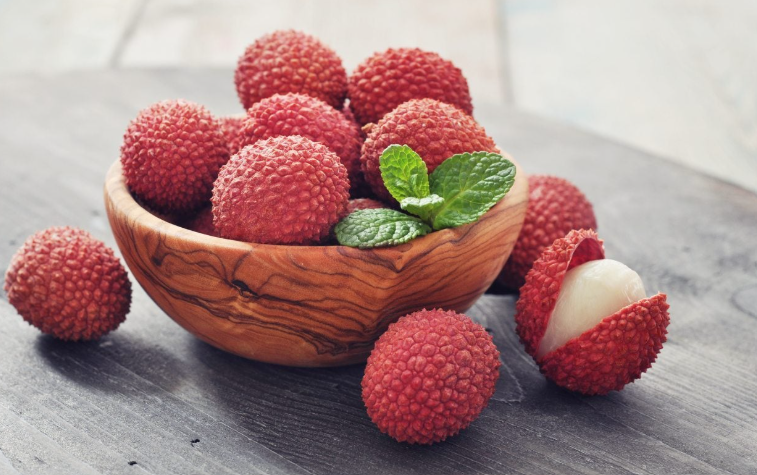
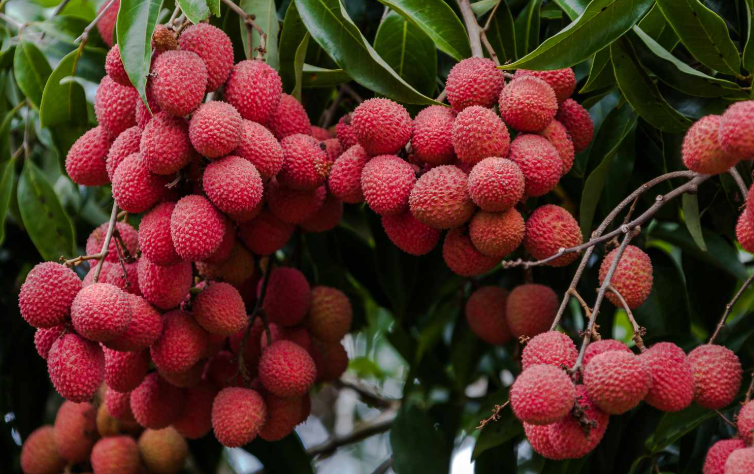
Lychee is a small, round tropical fruit best known for its rough, leathery, reddish-pink skin and sweet, translucent white flesh inside. It grows in clusters on evergreen trees found in warm, humid climates, with the fruit hanging in loose bunches from the branches. Once peeled, lychee reveals a juicy, almost floral-tasting flesh wrapped around a single glossy brown seed at the center.
Lychee trees typically take several years to mature before producing a reliable harvest, but once established, they can bear fruit for decades. The fruit ripens over a fairly short window each year, which is part of why fresh lychee is often considered a seasonal treat rather than a year-round staple. The bumpy, textured skin is not eaten and is simply peeled away by hand before the fruit is enjoyed.
Nutritionally, lychee is a good source of vitamin C and contains a modest amount of fiber, along with natural sugars that give it its distinct sweetness. Its flavor is often described as a blend of grape, pear, and rose, with a light floral fragrance that sets it apart from many other tropical fruits. Lychee is commonly eaten fresh, added to fruit salads, or used in desserts and drinks.
Because of its small size, rough reddish skin, and juicy interior, lychee is often grouped together with other tropical fruits that share a similar appearance, even though many of these come from different plant families entirely. Some are close botanical relatives that grow in the same regions, while others simply share a passing resemblance in color, texture, or size.
Fruits That Look Like Lychee
Rambutan
Rambutan is one of the closest visual relatives to lychee, sharing a similar round shape and sweet, translucent flesh inside. The most obvious difference is the skin, which is covered in long, soft, hair-like spines rather than the smoother bumpy texture of lychee. Its flavor is very similar to lychee, though often described as slightly less sweet and a touch more tart.
Longan
Longan is closely related to lychee and grows in similar clusters, but its skin is smooth and light brown rather than rough and reddish-pink. Once peeled, the flesh is translucent and juicy, wrapped around a dark seed, much like lychee’s interior. Its flavor is milder and less floral than lychee, with a slightly musky sweetness.
Pulasan
Pulasan looks similar to rambutan and, by extension, to lychee, though its spines are shorter, thicker, and less hair-like. Its skin tends to be a deeper red and slightly tougher than lychee’s peel, but the fruit reveals a similar juicy, semi-translucent flesh once opened. Its flavor is sweeter and less acidic than both lychee and rambutan.
Mamoncillo (Spanish Lime)
Mamoncillo, also known as Spanish lime, has smooth green skin rather than the rough red peel of lychee, but its small round shape and single central seed create a similar overall structure. Once cracked open, the flesh is soft, juicy, and clings tightly to the seed, offering a texture reminiscent of lychee. Its flavor is a tangy blend of lime and grape, more tart than the floral sweetness of lychee.
Ackee
Ackee has a firm, reddish outer shell that can bring lychee to mind when unopened, though the fruit itself is quite different once it splits open naturally on the tree. Inside, ackee reveals soft, creamy arils rather than the juicy, translucent flesh found in lychee. It must be properly ripened and prepared before eating, since unripe ackee is toxic.
Litchi Tomato
Litchi tomato, sometimes called sticky nightshade fruit, has a small, round shape and reddish-orange color that echoes lychee’s overall look. Its skin, however, is smooth and hard rather than bumpy, and the fruit is far less commonly eaten fresh due to its seedy, less palatable interior. The name itself points to the passing resemblance to lychee, though the two fruits are not closely related.
Soapberry
Soapberry fruits are small, round, and can appear in shades of amber to reddish-brown, loosely resembling a dried or less vibrant lychee. Unlike lychee, soapberries are not typically eaten due to their soapy, bitter properties, and are more often used for their natural saponin content in traditional cleaning applications. Their smooth, glossy skin is the main visual link to lychee.
Genip
Genip, closely related to mamoncillo, shares the same small, round shape and single-seed structure, with smooth green to yellow-green skin. When cracked open, the pale, juicy pulp clinging to the seed offers a texture similar to lychee’s flesh. Its flavor is tart and slightly sweet, distinct from the floral notes found in ripe lychee.
Chico Sapote (Sapodilla)
Chico sapote, more commonly known as sapodilla, has a round to oval shape with rough, brownish skin that can loosely resemble an unpeeled lychee from a distance. Its flesh, however, is soft, grainy, and much sweeter, with a flavor often compared to brown sugar or caramel. The seeds inside are larger and fewer than the single central seed found in lychee.
Bignay
Bignay fruits grow in small clusters and ripen to a deep red or near-black color, with a smooth, glossy skin that can resemble lychee in certain lighting. The fruit is much smaller and tarter than lychee, often used in jams, wines, and preserves rather than eaten fresh. Its clustered growth pattern is another point of resemblance to lychee bunches.
Kepel Fruit
Kepel fruit has a round shape and brownish skin with a slightly rough texture that can be compared to lychee, especially before it is opened. Inside, the flesh is soft and segmented, with a flavor and aroma quite different from lychee’s floral sweetness. It is less widely known outside parts of Southeast Asia, where it grows natively.
Wax Apple
Wax apple has a smooth, glossy red to pink skin and a rounded, bell-like shape that can bring lychee’s coloring to mind, even though its overall shape is quite different. Its flesh is crisp and watery rather than juicy and translucent, offering a very different bite compared to lychee. The flavor is light and mildly sweet, with a refreshing, watery quality.
Ceylon Olive (Jalpai)
Ceylon olive, also known as jalpai, is a small oval fruit with smooth greenish skin that can share a passing size and shape similarity with lychee, particularly before ripening. Its flesh is firm and sour, requiring cooking or pickling before it becomes palatable, unlike lychee, which is enjoyed raw. The two fruits differ significantly in taste and preparation despite the surface-level resemblance.
Governor’s Plum
Governor’s plum is small and round with smooth, reddish to purplish skin that can echo lychee’s coloring at a glance. Its flesh is tart and slightly astringent, often used in preserves rather than eaten fresh like lychee. The single seed at the center is another structural similarity shared between the two fruits.
Java Plum (Jamun)
Java plum, also known as jamun, has smooth, deep purple to black skin, but its small oval shape and single central seed create a structural resemblance to lychee. Its flesh is juicy with a tart, slightly astringent flavor, quite different from the floral sweetness of ripe lychee. Java plum is often eaten fresh with a pinch of salt to balance its tartness.