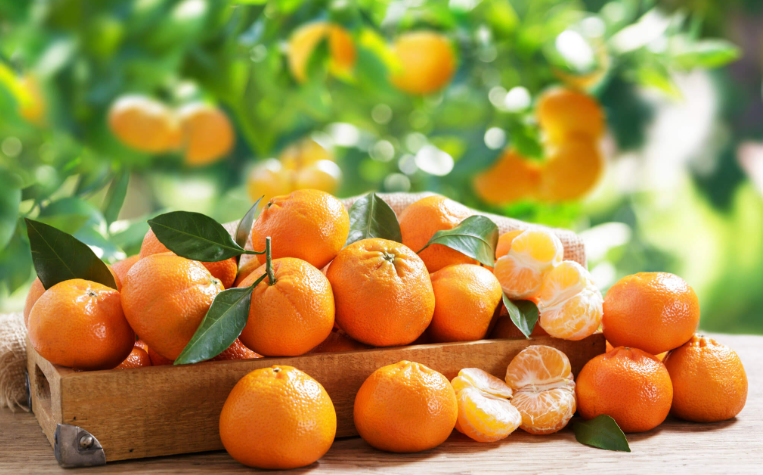
Oranges are one of the most popular citrus fruits in the world, easily recognized by their round shape, bright orange color, and thick, textured peel. They grow on evergreen trees in warm, subtropical and tropical climates, with the fruit developing from fragrant white blossoms that appear before the fruit sets. Inside, oranges are divided into segments filled with juicy pulp, a structure shared by most other citrus fruits.
Orange trees can produce fruit for decades once established, and a single tree may bear hundreds of oranges in a good season. The fruit is typically picked by hand once it reaches full color and sweetness, since oranges do not continue to ripen after being harvested. Different varieties range from tart to very sweet, with some prized mainly for juicing and others favored for eating fresh.
Nutritionally, oranges are best known for their high vitamin C content, along with fiber and a range of antioxidants found in both the flesh and the peel. Their balance of sweetness and acidity makes them popular eaten fresh, juiced, or used as a flavoring in desserts and savory dishes alike. The peel itself is often zested or candied, adding a fragrant citrus note to a wide range of recipes.
Because of their round shape and vibrant orange color, oranges are frequently compared to other fruits that share a similar look, even when those fruits come from entirely different plant families. Some of these lookalikes are close citrus relatives, while others simply resemble oranges because of their size, shape, or coloring.
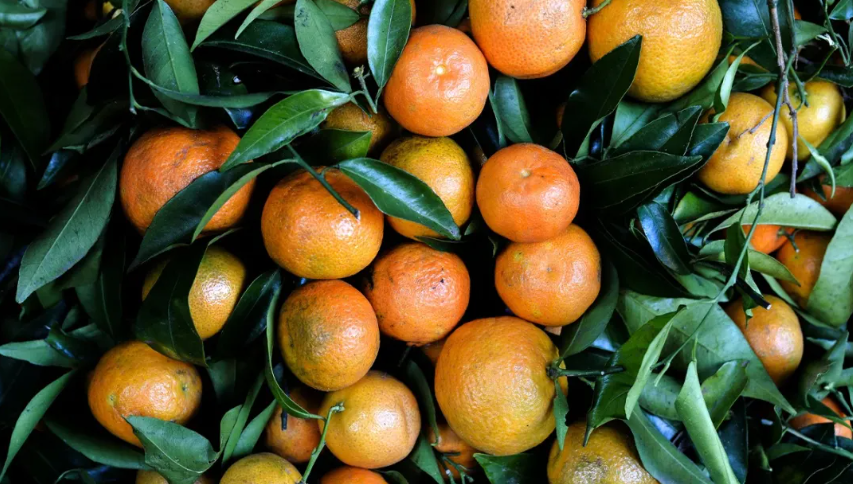
Fruits That Look Like Oranges
Mandarins
Mandarins share the same round shape and orange color as oranges but are typically smaller and slightly flattened at the top and bottom. Their peel is thinner and looser, making them much easier to section by hand compared to a standard orange. Their flavor tends to be sweeter and less acidic, with a softer, less fibrous flesh.
Tangerines
Tangerines closely resemble small oranges, with a similar bright orange-red color and rounded shape. Like mandarins, their peel is thinner and easier to remove, and the segments separate more readily than those of a typical orange. Their flavor is notably sweet with a slight tang, making them a popular snack-sized citrus fruit.
Clementines
Clementines are often mistaken for miniature oranges due to their matching color and round shape, though they are usually seedless and smaller in size. Their skin is smooth and glossy, peeling away easily in large sections rather than requiring the fruit to be cut. Their flavor is notably sweet with very little bitterness compared to a full-sized orange.
Persimmons
Persimmons share a similar round shape and vivid orange color that can easily be confused with oranges, especially in a mixed fruit display. Unlike oranges, persimmons have smooth, non-textured skin and a soft, custard-like flesh once fully ripe. Their flavor is honey-sweet with a mild spiced note, quite different from the tart brightness of an orange.
Kumquats
Kumquats are much smaller than oranges but share the same round to oval shape and bright orange color. The biggest difference is that kumquats are eaten whole, peel and all, since their skin is sweet while the flesh inside is notably tart. Their tiny size makes them easy to distinguish from oranges once placed side by side.
Tomatoes
Certain orange tomato varieties share a similar round shape and matching color with oranges, particularly when viewed from a distance in a market display. The similarities end quickly once tasted, since tomatoes are savory and juicy with a soft, seed-filled interior rather than segmented citrus flesh. Their smooth, glossy skin is the main point of visual overlap with oranges.
Cape Gooseberries
Cape gooseberries, when removed from their papery husks, are small, round, and orange, closely resembling a tiny orange in color and shape. Their smooth skin lacks the textured peel of citrus fruits, and the flesh inside is soft and filled with tiny seeds rather than segmented. Their flavor is tangy and slightly tropical, quite different from the citrus taste of an orange.
Apricots
Apricots share a rounded shape and orange color that can cause them to be mistaken for small oranges at a glance. Their skin is smooth and slightly fuzzy rather than textured like citrus peel, and the flesh inside surrounds a single central pit. Their flavor is sweet with a mild tartness, distinct from the acidic brightness of orange segments.
Nectarines
Nectarines have smooth, rounded skin in shades of orange and red that can resemble an orange from certain angles, particularly in warmer-toned varieties. Their flesh, however, is soft and juicy around a single pit, unlike the segmented structure found inside citrus fruits. Nectarines are typically eaten fresh by biting directly into the fruit rather than peeling and separating segments.
Peaches
Certain orange-hued peach varieties can resemble oranges in color and rounded shape, especially before their characteristic fuzz is noticed up close. Peach flesh is soft and juicy, built around a single pit, offering a completely different eating experience from a segmented orange. Their sweet, fragrant flavor also sets them apart quickly once tasted.
Habanero Peppers
Orange habanero peppers share a similar rounded shape and bright orange color that can create confusion in a mixed produce bin, particularly from a distance. Unlike oranges, habaneros are small, thin-skinned, and intensely spicy rather than sweet or tart. Their smooth, glossy skin is the main visual link to citrus fruits.
Bell Peppers (Orange)
Orange bell peppers share the same vivid color as oranges and a somewhat rounded shape, especially in blockier pepper varieties. Their skin is smooth and glossy like citrus peel, though noticeably thinner and less textured. Inside, bell peppers are hollow with seeds and a crisp, watery flesh, entirely different from the juicy segments of an orange.
Loquats
Loquats are small, oval to round fruits with a smooth, orange-yellow skin that can resemble a miniature orange, particularly when grouped in clusters. Their flesh is soft and juicy, surrounding one or more large seeds rather than being divided into segments. Their flavor is a sweet-tart blend often compared to a mix of peach and citrus.
Physalis (Golden Berries)
Physalis fruits, also known as golden berries, are small and round with a bright orange-yellow color reminiscent of a tiny orange. They grow inside a papery husk that must be peeled back before eating, revealing a smooth, glossy skin underneath. Their flavor is tangy and slightly sweet, with a firmer texture than the juicy segments found in citrus.
Mangoes (Certain Varieties)
Some smaller, rounder mango varieties display a orange-red skin tone that can be mistaken for an orange at a quick glance, especially in a mixed fruit basket. Mango flesh is soft, fibrous, and built around a large flat pit, a significant contrast to the segmented juiciness of an orange. Their tropical sweetness and aroma further distinguish them once cut open.