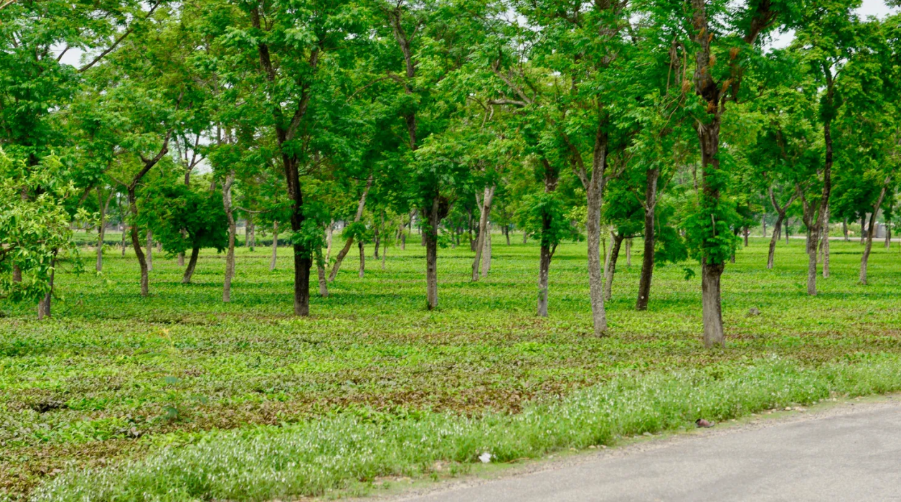
Agroforestry is the intentional integration of trees and shrubs into crop and livestock farming systems, creating diversified, productive, and ecologically resilient landscapes that deliver benefits beyond what either trees or crops can provide alone. It is one of the oldest land management approaches known to humanity, practiced in various forms across every inhabited continent for thousands of years, and is now recognized by the Food and Agriculture Organization of the United Nations as a cornerstone strategy for achieving sustainable food systems, climate adaptation, and rural poverty reduction simultaneously.
An estimated 1.2 billion people worldwide depend on agroforestry systems for some portion of their food, income, or ecosystem services, and agroforestry currently covers an estimated 1 billion hectares of agricultural land globally — approximately 43% of all agricultural land has at least 10% tree cover, according to World Agroforestry Centre data.
The trees at the heart of agroforestry systems perform multiple ecological functions that fundamentally improve the farming environment around them. Deep-rooted trees access water and nutrients from soil layers far below the reach of annual crops, cycling these resources back to the surface through leaf litter, root turnover, and biological decomposition. Nitrogen-fixing trees — particularly legumes — capture atmospheric nitrogen through root symbiosis with Rhizobium bacteria and release it into the surrounding soil as organic matter, reducing or eliminating the need for costly synthetic fertilizers.
Studies from sub-Saharan Africa have documented maize yield increases of 100–400% in fields managed under nitrogen-fixing agroforestry trees compared to unfertilized control plots, a finding that has driven the rapid spread of farmer-managed natural regeneration (FMNR) practices across the Sahel region, where an estimated 5–6 million hectares of farmland in Niger alone have been revegetated with protected and managed trees since the 1980s.
Agroforestry trees deliver economic returns through multiple income streams that diversify farm revenue and reduce the vulnerability of smallholder households to crop failure, price volatility, and climatic shocks. A single mature shade tree in a coffee or cacao agroforestry system can contribute timber, fuelwood, fruit, fodder, or medicinal products worth several hundred dollars annually while simultaneously improving the quality and sustainability of the cash crop grown beneath it.
In Central America, shade-grown coffee under diverse agroforestry canopies commands premium prices of 20–30% above commodity coffee, providing both economic and biodiversity benefits. The global agroforestry market — encompassing timber, non-timber forest products, carbon credits, and specialty crops from tree-based farming systems — is estimated to be worth hundreds of billions of dollars annually, though its full economic value remains difficult to quantify because much of it flows through informal and subsistence channels invisible to national accounting systems.
Climate change has dramatically elevated the strategic importance of agroforestry trees as tools for both mitigation and adaptation. Trees on agricultural land sequester carbon in their biomass and in the soils beneath them at rates that can contribute meaningfully to national climate commitments — the Intergovernmental Panel on Climate Change (IPCC) has identified agroforestry as one of the most cost-effective natural climate solutions available, with the potential to sequester 0.5–2.2 billion tonnes of carbon dioxide equivalent per year globally if adopted at scale.
At the farm level, trees moderate temperature extremes, reduce wind erosion, buffer against drought, and maintain soil moisture — all adaptations of increasing value as weather variability intensifies. The combination of productivity enhancement, income diversification, carbon storage, biodiversity conservation, and climate resilience that well-designed agroforestry systems deliver makes the trees within them among the most ecologically and economically productive plants that farmers can grow.
Faidherbia (Faidherbia albida)
Faidherbia albida, the apple-ring acacia or winter thorn, is arguably the single most important agroforestry tree in sub-Saharan Africa, distinguished from virtually all other trees by its reversed phenology — it produces leaves and pods during the dry season and sheds them when the rains arrive and crops are growing, providing shade-free conditions for crops at precisely the time when light is most critical for plant growth.
This unique behaviour means it contributes nitrogen-rich leaf litter and pods for livestock without competing with crops for light. Trials in Zambia, Mali, and Niger have documented cereal yield increases of 100–200% under Faidherbia canopies compared to open fields. It is the centrepiece of the widely celebrated evergreen agriculture approach championed by farmer-managed natural regeneration movements across the Sahel.
Gliricidia (Gliricidia sepium)
Gliricidia, known as madre de cacao or quick stick, is a fast-growing Central American legume tree that has become one of the most widely used agroforestry trees in the tropics, valued for its ease of establishment from large stem cuttings, its rapid biomass production, and its versatility as a nitrogen source, live fence, shade tree, fodder bank, and fuelwood producer simultaneously.
In alley cropping systems across West Africa, East Africa, and South and Southeast Asia, gliricidia hedgerows are planted between crop rows and regularly cut back, with the prunings incorporated into the soil as a green manure that can supply 100–200 kg of nitrogen per hectare per year. Studies in Nigeria and Malawi have documented maize and cassava yield increases of 50–150% in gliricidia alley cropping systems maintained without synthetic fertilizers.
Leucaena (Leucaena leucocephala)
Leucaena is one of the most productive and extensively researched multipurpose agroforestry trees in the world, capable of fixing up to 500 kg of nitrogen per hectare per year and producing 20–40 tonnes of fresh biomass annually under good management. It is used in alley cropping, silvopastoral systems, live fencing, windbreaks, and as a shade tree in coffee, cacao, and vanilla plantations across the tropics.
In the Philippines and Indonesia it is a key component of integrated crop-livestock systems where its high-protein leaf meal supplements livestock diets while its prunings fertilize associated food crops. Its leaves contain the anti-nutritional compound mimosine, which requires management through mixing with other feeds or inoculation of livestock with the Synergistes jonesii rumen bacterium that detoxifies mimosine products.
Moringa (Moringa oleifera)
Moringa, the miracle tree, is a rapidly growing multipurpose tree from South Asia now cultivated across the tropics and subtropics for its extraordinarily nutrient-dense leaves, edible pods, water-purifying seed extracts, and high-quality cooking oil — alongside its substantial value as a green manure and fodder resource in agroforestry systems.
In homestead and farm boundary agroforestry, moringa is typically managed as a coppiced shrub cut back regularly to produce continuous harvests of tender leaves for household nutrition and livestock feed. Its leaves contain approximately 27% crude protein on a dry matter basis and exceptional concentrations of vitamins and minerals, earning it recognition as a critical nutrition security plant in food-insecure regions of Africa and South Asia. It grows up to 3 metres in its first year and can be harvested within months of planting.
Calliandra (Calliandra calothyrsus)
Calliandra is a Central American legume shrub-tree that has become a cornerstone species in smallholder agroforestry systems across East Africa and Southeast Asia, particularly valued in the highland dairy farming zones of Kenya, Uganda, and Rwanda where it provides a high-protein fodder supplement that improves milk production substantially. Its ability to produce dense, harvestable biomass on poor, acid soils where many other legumes fail makes it especially valuable in degraded highland farming landscapes.
Research from Kenya has documented milk production increases of 0.5–1.5 litres per cow per day when calliandra leaf is fed as a supplement, representing a significant economic return from what is essentially a by-product of farm boundary and soil conservation plantings. It also produces abundant fuelwood and its flowers are important forage for bees.
Grevillea (Grevillea robusta)
Grevillea robusta, silky oak, is an Australian tree that has become one of the most widely adopted boundary and intercropping agroforestry trees in East Africa — particularly Kenya, Ethiopia, and Uganda — where it is planted along field boundaries, terraces, and contour bunds to provide timber, fuelwood, and on-farm income while controlling erosion on steep hillside farms.
Studies in Kenya’s tea-growing highlands have shown that grevillea boundary trees increase household fuelwood availability by 30–50%, reducing pressure on native forests and the time women spend collecting firewood. It is fast-growing, tolerant of moderate frost, and does not fix nitrogen but improves soil through deep root cycling of subsoil nutrients. Its timber is attractive and workable, used for furniture, tool handles, and construction in East African highland communities.
Parkia (Parkia biglobosa)
Parkia biglobosa, the locust bean or African locust bean, is one of the most economically and culturally important agroforestry trees of the West African savannah, deliberately retained and protected by farmers in their fields for the multiple products it provides — nutritious pods, fermented seed condiment (dawadawa or soumbala), fuelwood, fodder, and shade.
Dawadawa is a critical flavouring and protein source in West African diets from Senegal to Sudan, and the locust bean processing industry provides income for millions of women across the region. The tree is a nitrogen-fixing legume that improves soil fertility in the parkland agroforestry systems of the Sahel and Sudan savannah, where individual protected trees can measurably improve crop yields within the area of their canopy and root influence. Trees may live for over 100 years in managed parkland systems.
Vitellaria (Vitellaria paradoxa)
Vitellaria paradoxa, the shea tree, is the economic and nutritional cornerstone of the parkland agroforestry systems of the West African Sahel and Sudan savannah, producing the shea nuts from which shea butter — a high-value fat used in food, cosmetics, and chocolate manufacturing — is extracted by women across a belt of approximately 21 countries from Senegal to Uganda.
The global shea butter market is valued at over USD 2 billion annually and is projected to grow significantly as demand from the cosmetics and confectionery industries increases. Individual shea trees require 15–20 years to begin significant nut production but may continue producing for 200–300 years, making them multigenerational assets in farming landscapes. They are nitrogen-fixing, drought-tolerant, and fire-resistant, making them one of the most resilient parkland trees in a changing climate.
Sesbania (Sesbania sesban)
Sesbania is a fast-growing, short-lived legume tree used extensively in improved fallow agroforestry systems across East and southern Africa, where it is planted on degraded cropland during the off-season to rapidly restore soil fertility before the subsequent food crop. Its ability to grow 3–5 metres in a single season while fixing 100–200 kg of nitrogen per hectare makes it one of the most productive short-term soil restoration tools available to resource-poor smallholder farmers who cannot afford synthetic fertilizers.
Research from Zambia documented maize yield increases of 3–4 times in fields that had been through a one- to two-season sesbania improved fallow, compared to continuously cropped control plots. It also provides dry-season livestock fodder and fuelwood before or after the fallowing phase, enhancing its overall value in mixed farming systems.
Erythrina (Erythrina poeppigiana / E. fusca)
Erythrina trees are widely used across tropical agroforestry systems as shade trees, living fence posts, and green manure sources in coffee, cacao, and banana plantations throughout Central and South America, East Africa, and Southeast Asia. They establish easily and quickly from large stem cuttings, fix nitrogen actively, and produce abundant leaf biomass when pruned regularly, contributing organic matter and nitrogen to associated crop soils.
In Costa Rica, Colombia, and Cameroon, erythrina shade trees in traditional coffee agroforestry systems are regularly pollarded to regulate shade levels while supplying prunings as mulch. Their large, vivid red flowers are important nectar sources for hummingbirds and sunbirds. Some species contain alkaloids that limit their use as livestock fodder, but leaf meal at controlled inclusion rates has been fed successfully to ruminants.
Prosopis (Prosopis cineraria)
Prosopis cineraria, the ghaf tree or khejri, is the sacred and legally protected state tree of Rajasthan, India, and one of the most important multipurpose agroforestry trees of the hot, arid zones of South Asia and the Arabian Peninsula. Unlike the invasive American Prosopis juliflora, P. cineraria is a native, culturally revered species deliberately maintained in cropland and pastoral landscapes for millennia — its pods feed livestock, its leaves provide dry-season browse, its timber is used for tools and fuelwood, its flowers yield honey, and the young pods and leaves are eaten as human food.
It tolerates extreme heat and drought, fixes nitrogen, and improves soil structure on the sandy, saline soils where few other productive trees survive. In the traditional agroforestry landscape of Rajasthan, P. cineraria trees are retained at densities of 20–50 per hectare in cultivated fields.
Ziziphus (Ziziphus mauritiana)
Ziziphus mauritiana, the Indian jujube or ber, is a thorny, drought-tolerant small tree native to South Asia and now cultivated across the semi-arid tropics of Africa, the Middle East, and Southeast Asia for its sweet, apple-like fruits that are consumed fresh, dried, or processed, alongside its value as livestock fodder, fuelwood, and live fence material in agroforestry systems.
The fruit contains high concentrations of vitamin C — reported at 70–90 mg per 100g fresh weight — and is an important source of nutrition for rural communities in arid areas where fruit diversity is limited. Grafted, improved varieties produce large, high-quality fruit that commands premium prices in urban markets, making ber cultivation an increasingly attractive commercial agroforestry enterprise for smallholder farmers in semi-arid India, Senegal, and the Sahel.
Tamarind (Tamarindus indica)
Tamarind is a large, long-lived, drought-tolerant legume tree native to tropical Africa and now cultivated across South and Southeast Asia, the Caribbean, and Latin America, producing highly acidic, nutritious pods that are among the most widely used souring agents and condiments in tropical cuisines worldwide.
In agroforestry systems, tamarind is valued as a shade tree, windbreak, boundary marker, and producer of pods, leaves, seeds, and timber over a lifespan that can exceed 200 years. Individual mature tamarind trees can produce 150–250 kg of pods annually, generating significant household income through fresh pod sales, processed pulp, and value-added products. Its hard, durable heartwood is used for furniture, tool handles, and charcoal, and its leaves and pods provide fodder for livestock during the dry season.
Melia (Melia azedarach)
Melia azedarach, the chinaberry or Persian lilac, is a fast-growing, versatile deciduous tree from South Asia integrated into agroforestry systems across the tropics and subtropics for its rapid timber production, shade, biopesticidal fruit extracts, and soil improvement through abundant leaf litter fall.
In South Asia and East Africa it is commonly planted on farm boundaries and within crop fields to provide fuelwood and lightweight timber on rotations of 5–8 years, making it one of the few trees that can deliver harvestable timber income within a typical smallholder farmer’s planning horizon. Extracts from its fruit and bark contain azadirachtin-related compounds with pesticidal properties used in low-cost pest management. Its fruits are toxic to many animals, requiring careful management around livestock, but the tree’s rapid establishment and easy propagation from seed make it widely adopted.
Casuarina (Casuarina equisetifolia)
Casuarina equisetifolia, the coastal she-oak or ironwood, is a fast-growing, nitrogen-fixing coastal tree from the Indo-Pacific region, widely integrated into agroforestry systems in coastal and semi-arid zones as a windbreak, shelterbelt, sand dune stabilizer, and fuelwood producer. It is one of the few nitrogen-fixing non-legumes, fixing atmospheric nitrogen through symbiosis with the actinomycete Frankia, and it improves soil fertility substantially on the severely nutrient-depleted coastal sandy soils where it most commonly grows.
In South Asia, Southeast Asia, and parts of West and East Africa, casuarina shelterbelts protect coastal agriculture from salt-laden winds, reducing crop damage and creating microclimates that allow food production close to the shoreline. Its timber is dense and hard, used for poles, fuelwood, and charcoal, and its rapid growth — reaching 15–20 metres in 5–7 years — makes it one of the most productive biomass trees in coastal agroforestry.
Acacia Senegal (Senegalia senegal)
Senegalia senegal, the gum arabic tree, is a small, thorny, nitrogen-fixing acacia of the semi-arid Sahel and Sudan savannah zones that is the primary source of gum arabic — a natural emulsifier and stabilizer used in the food, beverage, pharmaceutical, and printing industries globally, with the global gum arabic market valued at approximately USD 700 million annually.
Sudan and Chad together account for over 70% of global gum arabic production, with millions of rural households dependent on tapping the tree’s bark to collect the exudate. In traditional agroforestry systems of the Sahel, gum arabic trees are integrated into fallow cycles, planted in community woodlots, and retained in farmed parkland where they stabilize sandy soils, fix nitrogen, and provide income from gum harvest alongside fuelwood and fodder. It is one of the most economically significant non-timber forest product trees in the world.
Bamboo (Dendrocalamus asper / Bambusa bambos)
Giant tropical bamboos are increasingly recognized as transformative multipurpose agroforestry plants, providing structural timber, food (shoots), fodder, fibre, and exceptional ecosystem services from carbon sequestration to watershed protection within growing cycles of just 3–7 years. In smallholder agroforestry systems across South and Southeast Asia, East Africa, and Latin America, bamboo planted on farm boundaries, riparian zones, and degraded slopes provides a continuous harvest of poles for construction and furniture alongside young shoots for consumption and trade.
Bamboo sequesters carbon in biomass and soils at rates significantly higher per hectare per year than most conventional timber trees. China manages over 6 million hectares of bamboo agroforestry, generating an industry worth tens of billions of dollars annually from poles, flooring, textiles, and food products derived from bamboo integrated into agricultural landscapes.
Paulownia (Paulownia elongata / P. fortunei)
Paulownia is the world’s fastest-growing hardwood tree and is gaining rapid recognition in agroforestry systems in China, Europe, and the Americas for its ability to produce harvestable timber in 5–8 years while simultaneously providing a beneficial microclimate for understorey crops through its large, umbrella-like leaves that moderate temperature and reduce wind speed at crop level. In China, the traditional paulownia-wheat intercropping system — known as the nong-lin jiehe system — has been practiced for over 400 years, with paulownia trees planted at wide spacing allowing wheat and other crops to grow in the filtered light between rows.
Modern adaptations of this system have demonstrated that wheat yields under paulownia canopies can match or exceed yields in open fields due to the temperature-moderating and wind-reducing effects of the tree canopy. Paulownia also accumulates heavy metals from contaminated soils, offering potential in phytoremediation agroforestry.
Mango (Mangifera indica)
Mango is among the most widely cultivated fruit trees in the world and one of the most important trees in tropical and subtropical agroforestry systems, providing shade, fruit income, food security, and ecological benefits simultaneously in homestead gardens, farm boundaries, and orchard-based agroforestry across South and Southeast Asia, West Africa, East Africa, and the Caribbean.
Its deep root system taps subsoil water and nutrients, its dense canopy shades and cools the ground beneath it, and its fallen leaf litter contributes significant organic matter to farm soils over time. The global mango market exceeds USD 50 billion annually, and for millions of smallholder farming households in India, Mali, Burkina Faso, and Tanzania, mango trees represent one of the most significant components of household income and food diversity. Improved varieties on dwarfing rootstocks are enabling more intensive orchard agroforestry designs.
Tithonia (Tithonia diversifolia)
Tithonia diversifolia, the Mexican sunflower or tree marigold, is a large, fast-growing shrub-tree from Central America now widespread across tropical Africa and Asia, where it has become an important green manure and biomass agroforestry plant prized for its rapid growth, high biomass production, and exceptional soil-improving properties.
Its leaves and stems accumulate high concentrations of phosphorus, potassium, and nitrogen — nutrients it mines from deep soil layers and subsoil reserves — and when incorporated as a green manure its biomass releases these nutrients relatively quickly, providing a substantial fertilizer effect for subsequent food crops. Research from Kenya and Uganda has demonstrated that tithonia biomass applied at 5 tonnes per hectare can replace 30–60 kg/ha of phosphorus fertilizer in maize production systems, a finding with profound implications for smallholder farmers unable to afford commercial inputs. It grows 2–3 metres per season and can be cut multiple times per year.
Scleroderma / Indian Rosewood (Dalbergia sissoo)
Dalbergia sissoo, the Indian rosewood or sissoo, is a large, nitrogen-fixing legume tree native to the Indian subcontinent and Afghanistan, one of the most important timber and agroforestry trees of South Asia’s arid and semi-arid farming landscapes. It is planted widely on farm boundaries, irrigation canal banks, roadsides, and within fields in northern India, Pakistan, Bangladesh, and Nepal, where it simultaneously provides valuable cabinet and furniture timber on long rotations, fuelwood, fodder, and nitrogen enrichment of surrounding soils through leaf litter and root decomposition.
Its hard, dark brown timber is one of the finest cabinet woods produced in South Asia, used for furniture, flooring, panelling, and musical instruments. It coppices readily after cutting, regenerating quickly from the stump, and is one of the most important trees in the traditional agroforestry landscapes of the Indo-Gangetic Plain.