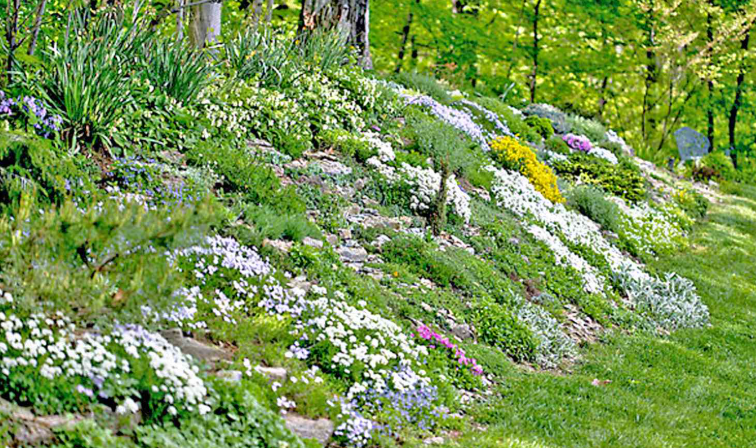
Steep slopes and hillsides represent some of the most challenging situations in landscape design — terrain that combines the constant threat of soil erosion with difficult growing conditions, awkward access for maintenance, and the need for plants that anchor themselves firmly enough to hold the ground against the forces of gravity and water. Yet with the right plant selection, a steep hillside can be transformed from a maintenance problem into one of the most beautiful and ecologically valuable features of the landscape.
Soil erosion on unplanted or inadequately planted slopes is a significant environmental and economic problem. The United States loses an estimated 1.7 billion tons of topsoil annually to erosion, with unprotected hillsides and embankments contributing disproportionately to that total. Research from the United States Department of Agriculture has shown that well-planted slopes with appropriate ground cover plants can reduce soil erosion by up to 90 percent compared to bare or poorly planted slopes — a dramatic reduction that makes slope planting one of the most impactful erosion-control interventions available to land managers and homeowners.
The plants best suited to hillside and steep slope planting share several key qualities. A strong, spreading, or deep root system is paramount — roots that bind the soil physically against both water erosion and surface slippage. A spreading or colonizing habit that covers the ground quickly and completely is equally important, as exposed soil between plants remains vulnerable to erosion until full coverage is achieved. Drought tolerance is critical on slopes where water drains rapidly away from the root zone, and low maintenance requirements are essential on terrain where access is difficult and intensive management is impractical.
The aesthetic possibilities of slope planting are considerable and often underexplored. A hillside planted with a succession of flowering groundcovers, native grasses, flowering shrubs, and ornamental perennials can provide a year-round display of color and texture that flat borders rarely match for sheer visual drama. Some of the most celebrated designed landscapes in the world — from the hillside gardens of Tuscany to the planted embankments of the New York High Line — demonstrate that challenging terrain, properly planted, becomes an opportunity rather than a problem.
1. Creeping Juniper
Creeping juniper is the most widely planted woody ground cover for slopes and hillsides in North America — a low, spreading, evergreen conifer that develops a dense mat of branching stems and fibrous roots that bind the soil with extraordinary effectiveness against both water and wind erosion.
It spreads to six to eight feet in width over time and tolerates extreme cold, poor soils, full exposure, and extended drought with a reliability that defeats almost every other woody ground cover. The blue-green to silver foliage develops warm purple tints in winter, providing year-round color on slopes that might otherwise appear bare and drab.
It is estimated to cover hundreds of millions of square feet of American highway embankments, institutional landscapes, and residential slopes — a dominance that reflects its unmatched combination of erosion control effectiveness and low maintenance requirements.
2. Crown Vetch
Crown vetch is one of the most aggressive and effective erosion-control plants available for large-scale hillside stabilization — a vigorous, spreading legume that covers ground rapidly, fixes atmospheric nitrogen through root nodules, and forms a dense, weed-suppressing mat of finely divided foliage topped with attractive pink to lavender flower clusters through summer.
It spreads by both underground rhizomes and surface runners, covering large areas quickly and binding the soil at multiple depths simultaneously. Studies have shown crown vetch plantings can reduce slope erosion by over 80 percent within two growing seasons of establishment.
It is however considered invasive in many natural areas and should not be planted near woodland or native plant habitats where its aggressive spreading habit can displace native vegetation.
3. Creeping Phlox
Creeping phlox forms a dense, mat-forming carpet of evergreen needle-like foliage and fibrous shallow roots that provides effective slope coverage while delivering one of the most spectacular spring flowering displays of any ground cover — the entire plant hidden beneath vivid flowers of pink, purple, white, or red in April and May.
It spreads steadily to cover two feet or more in spread and roots where stems contact the soil, progressively increasing its ground-binding effectiveness over time. The evergreen foliage provides year-round erosion protection, and the fibrous root mat binds surface soil effectively even on moderately steep gradients.
It is particularly effective on slopes with thin, rocky soils where its shallow-root tolerance of poor conditions gives it a significant advantage over more demanding ground cover plants.
4. Bearberry
Bearberry is a native, low-growing, spreading evergreen shrub of exceptional toughness whose root system combines shallow but dense surface roots with deeper anchoring roots that give it excellent slope stability on the sandy, infertile, and often acidic soils where it grows naturally.
It is native to coastal dunes, rocky hillsides, and open pine woodlands — habitats that have shaped its extraordinary tolerance of poor soils, drought, and exposure, making it one of the most reliable and ecologically appropriate plants for difficult slope situations. Small white flowers in spring are followed by vivid red berries in autumn that provide important wildlife food.
It is one of the top-rated native groundcovers for slope stabilization in New England, the Pacific Northwest, and the northern Great Lakes states, where its performance on difficult terrain is consistently superior to non-native alternatives.
5. Daylilies
Daylilies are among the most practical and widely used slope-planting perennials in American landscaping — their dense, fibrous, spreading root systems creating an effective soil-binding network on slopes while their abundant, colorful flowers provide an ornamental display that few other practical slope plants can approach.
Each clump of daylilies produces an extensive, tangled root mass that binds a significant volume of soil, and the plants increase steadily by division of the crown — eventually forming a continuous ground cover of considerable stability. They tolerate poor soils, drought, and slope exposure with impressive resilience.
Over 80,000 registered daylily varieties exist — the largest number of registered cultivars of any ornamental perennial genus in the world — and among this number are varieties suited to virtually every slope situation from deep shade to full sun and from moist to extremely dry conditions.
6. English Ivy
English ivy is one of the most widely planted and most effective ivy ground covers for slopes — its dense, spreading stems rooting at every node to create a continuous, weed-suppressing carpet of attractive dark green evergreen foliage that provides year-round soil protection on hillsides and embankments.
The rooting stems bind the surface soil with remarkable tenacity, and the dense canopy eliminates weed competition and protects the soil surface from the impact of heavy rain — one of the primary mechanisms of slope erosion. The root system of established ivy plantings can bind the top six inches of soil into a coherent, erosion-resistant mat.
It is however considered invasive in many parts of North America and should not be planted near natural areas. Native alternatives including native ginger, creeping phlox, and bearberry provide equivalent slope coverage without the ecological concerns.
7. Rugosa Rose
The rugosa rose is one of the finest flowering shrubs for slope and hillside planting — its deep, spreading root system and strong suckering habit progressively binding large areas of slope while providing a spectacular and fragrant display of flowers from late spring through autumn and vivid red hips through winter.
The root system extends both deeply and laterally, with suckering stems rooting on contact with the soil to create an expanding colony that stabilizes an increasing area of slope with each passing season. The dense, thorny growth also provides excellent wildlife habitat and effective security planting on difficult-access slopes.
It is particularly valuable on coastal slopes where its exceptional salt tolerance gives it a significant performance advantage over most other flowering shrubs.
8. Native Grasses (Mixed)
Native grass plantings — combining species such as little bluestem, switchgrass, sideoats grama, and prairie dropseed — provide one of the most ecologically valuable and practically effective erosion-control solutions for hillside planting, with root systems that collectively extend from the surface to depths of four to eight feet, binding the soil at every horizon.
The USDA Natural Resources Conservation Service rates native grass mixtures among the top three most effective erosion-control planting strategies for non-irrigated slopes, and research has shown that native grass hillside plantings can reduce runoff velocity by up to 75 percent compared to bare slopes.
They support hundreds of native insect species and provide food and cover for birds throughout the year — ecological contributions that make native grass slope plantings among the most environmentally beneficial landscape investments available.
9. Forsythia
Forsythia is a vigorous, arching, deep-rooting shrub that makes an outstanding slope-planting plant — its long, flexible stems rooting where they contact the ground and progressively colonizing the slope while providing one of the most spectacular early spring flowering displays in the temperate landscape.
The arching stems are particularly effective on slopes — they reach out and down the hillside under their own weight, contacting the soil and rooting to bind progressively lower sections of the slope without human intervention. An established forsythia planting on a steep bank is a self-expanding, self-propagating erosion-control system of considerable effectiveness.
It tolerates poor soils, cold, and exposure with great resilience, and the vivid yellow flowers produced on the bare stems in March are one of the most celebrated and uplifting signs of spring across the temperate world.
10. Cotoneaster
The spreading cotoneaster species — particularly horizontalis and dammeri — are among the most reliable and widely used woody ground covers for slope planting, combining attractive, herringbone-patterned or prostrate branching with dense fibrous roots that provide effective soil binding on gradients too steep for most other woody plants.
The ornamental value is considerable across multiple seasons — white flowers in spring attract pollinators, the small leaves provide attractive summer foliage, and vivid red berries persist through autumn and into winter providing food for birds. The arching stems of some species root where they contact the soil, progressively extending the plant’s ground-binding coverage.
Cotoneaster dammeri in particular is one of the most widely used and most consistently effective prostrate shrubs for slope planting across European and North American professional landscaping.
11. Hypericum (St. John’s Wort)
St. John’s Wort — particularly the shrubby, spreading varieties — provides an effective combination of ornamental quality and practical slope coverage, with dense, fibrous root systems and spreading habits that progressively bind slope soil while delivering a long-lasting summer display of bright yellow flowers.
The low-growing species such as creeping St. John’s Wort spreads by underground rhizomes to form a dense, weed-suppressing mat that tolerates poor, dry soils and exposed conditions remarkably well. The taller shrubby varieties — including Hidcote — provide larger-scale visual interest on wider slopes where a more substantial planting is appropriate.
It is tolerant of partial shade, making it one of the more versatile options for slopes that receive only partial sunlight — a significant advantage over sun-demanding slope plants in situations where tree canopy or aspect limits light availability.
12. Liriope
Liriope — lilyturf — is one of the most widely planted ground covers for slopes and hillsides in warm-climate American landscaping — a tough, adaptable, grass-like perennial that forms dense, fibrous-rooted clumps and spreads steadily to cover large areas of difficult terrain with minimal maintenance.
The combination of shade tolerance, drought resistance, poor soil adaptation, and effectiveness in the dry, root-filled conditions beneath established trees makes liriope practical across a wider range of slope situations than most other herbaceous ground covers. The purple flower spikes in late summer add ornamental value above the year-round foliage.
It is estimated to be the most widely planted slope ground cover in the southeastern United States, where its performance on red clay banks and shaded slopes under pine trees has made it effectively irreplaceable in commercial and residential landscaping.
13. Vinca
Vinca minor and its relatives are among the most widely used and most persistently effective trailing ground covers for slopes and hillsides — the rooting stems creating a dense, weed-suppressing carpet that binds the surface soil at every node while the attractive, glossy evergreen foliage and spring blue flowers provide year-round ornamental value.
The plant’s ability to root at every stem node means that an established vinca planting on a slope becomes progressively more stable over time — each new rooting point adding another anchor to the slope surface. Once established, it requires virtually no maintenance and resists weed encroachment with remarkable tenacity.
It is the most widely planted trailing herbaceous ground cover for slopes in temperate North America and Europe, its dominance reflecting an unmatched combination of establishment speed, year-round effectiveness, and self-sustaining character.
14. Pachysandra
Pachysandra is an excellent slope ground cover for shaded hillsides — situations where the combination of shade and slope drainage creates conditions that defeat most other plants. Its dense, weed-suppressing carpet of evergreen foliage and spreading root system provide effective soil binding in the most challenging shaded slope situations.
It spreads by underground stems to form a uniform, low-maintenance carpet that requires essentially no attention once established, and its tolerance of dry, root-filled, acidic soils beneath established trees makes it one of the most practically useful plants for shaded north-facing slopes and wooded hillsides.
Research from the Arnold Arboretum in Massachusetts found pachysandra to be the most consistently performing ground cover for dry, shaded slopes in competitive planting trials conducted over five years.
15. Ornamental Grasses (Mixed Border)
A carefully composed mix of ornamental grasses — combining different heights, textures, and seasons of interest — can transform a difficult hillside into one of the most beautiful and dynamic landscape features in the garden, while providing exceptional erosion control through the combined root systems of multiple grass species.
The visual rhythm created by the seasonal changes of mixed ornamental grasses on a slope — from the fresh green growth of spring through the flower and seed head displays of summer and autumn to the bleached, structural winter silhouettes — is one of the most sustained and satisfying landscape effects available from any planting category.
The planting designer Piet Oudolf has demonstrated through his internationally celebrated hillside and meadow landscapes that mixed ornamental grass plantings on slopes can achieve artistic and ecological goals simultaneously — a demonstration that has influenced professional landscape design globally.
16. Junipers (Spreading Varieties)
Beyond creeping juniper, the broader family of spreading and prostrate juniper varieties — including Blue Rug, Hughes, and Wiltonii — provides a range of heights, spreads, and foliage colors for slope planting that can be combined to create varied, multi-textured hillside plantings of considerable visual interest.
All spreading junipers share the qualities that make the family so valuable for slope work — dense fibrous roots, tolerance of poor soils, exceptional drought and cold hardiness, and the progressive spread and rooting that provides increasing erosion protection over time. The range of foliage colors — from vivid blue-grey to bright green to gold — allows for design variety within the practical constraints of slope planting.
Juniper species collectively represent the most widely planted group of woody slope-stabilization plants in North American temperate landscaping, with sales exceeding those of any other comparable landscape shrub category.
17. Rosa Banksia (Lady Banks’ Rose)
Lady Banks’ rose is a vigorous, large-growing, nearly thornless climbing and sprawling rose that makes one of the most spectacular flowering ground covers for large-scale warm-climate hillside planting — its long, arching, rooting canes covering enormous areas of slope while producing one of the most prolific spring flower displays of any rose species.
The tiny, double, pale yellow or white flowers are produced in extraordinary abundance in spring — a mature plant in full bloom is one of the most breathtaking flowering sights in the warm-climate landscape. The stems root where they contact the soil, progressively binding an expanding area of slope surface with each season.
In California, Texas, and the American South it is one of the most recommended low-maintenance flowering plants for large slopes where other roses would require too much care on difficult terrain.
18. Salvia (Landscape Varieties)
Landscape salvias — particularly the California native species and their cultivated varieties — provide outstanding slope planting performance in Mediterranean climates, combining deep, woody root systems with spreading habits, exceptional drought tolerance, and a long flowering season of considerable ornamental merit.
Salvia leucantha, Cleveland sage, and black sage all develop extensive root systems that anchor effectively on steep, dry, sunny slopes without supplemental irrigation. The aromatic foliage of most sage species provides additional deer resistance — an important quality on hillside plantings where deer browsing can devastate less resistant plants.
California native salvias are estimated to reduce irrigation requirements on dry hillside plantings by 70 to 90 percent compared to non-native alternatives in comparable situations — a water saving of enormous practical and environmental significance in drought-prone regions.
19. Rockrose (Cistus)
Rockrose is a Mediterranean shrub of exceptional drought tolerance and slope-planting performance — its deep, spreading root system, mounding to spreading habit, and extraordinary tolerance of thin, rocky, infertile soils making it one of the most practical and ornamentally rewarding plants available for Mediterranean-climate hillsides.
The large, tissue-paper-thin flowers — in white, pink, and purple, often with darker basal spots — are produced in remarkable abundance in spring, and established plants can flower so profusely that the foliage is entirely concealed beneath bloom. The plants are fast-growing and establish quickly on difficult terrain.
They are fire-adapted — resprouting from deep root systems after fire in their native Mediterranean habitat — which gives them a significant advantage over more fire-sensitive plants on the dry hillsides of California and similar fire-prone landscapes.
20. Mahonia
Mahonia provides an outstanding combination of deep root system, spreading habit, and ornamental quality for shaded hillside planting — its architectural, spiny evergreen foliage providing year-round structural interest while the deep roots bind slope soil and the spreading by suckering progressively increases ground coverage.
The fragrant yellow winter flowers are produced at the tips of the architectural stems from November through February — providing one of the most welcome flowering displays of the year at a time when the hillside landscape is otherwise at its most austere. The blue-black berries that follow attract birds through the spring.
It tolerates the dry, root-filled soil of shaded slopes beneath established trees better than most architectural shrubs, making it one of the most valuable plants for the challenging combination of shade and slope.
21. Ground Cover Roses
Modern ground cover roses — low-growing, spreading varieties bred specifically for landscape rather than garden use — combine the ornamental qualities of the rose genus with the practical requirements of slope planting, their spreading habit, fibrous root system, and self-rooting stems providing effective coverage and soil binding on gentle to moderate slopes.
The continuous flowering performance of the best modern ground cover roses — varieties such as Flower Carpet and Knock Out — from late spring through first frost is unmatched by most other woody slope-planting plants, and their disease resistance and minimal maintenance requirements make them practical for terrain where regular attention is difficult.
Ground cover rose varieties collectively represent one of the fastest-growing categories in the nursery trade, with sales increasing by over 200 percent in the past decade as their practical slope-planting value has been more widely recognized.
22. Bearberry Cotoneaster
Bearberry cotoneaster — cotoneaster dammeri — is a prostrate, ground-hugging shrub with flexible, rooting stems that press flat against the slope surface and root at every node, creating one of the most effectively soil-binding woody ground covers available for steep slope situations.
The plant’s stems follow the slope contours exactly, rooting progressively and binding the soil in a continuous carpet that is virtually impervious to water erosion once established. The small, dark green, glossy leaves are attractive year-round, and the vivid red berries produced in autumn and winter provide important wildlife food while adding seasonal ornamental interest.
It tolerates partial shade, poor soils, and the root competition of established trees, extending its slope-planting usefulness to a wider range of difficult hillside conditions than most prostrate shrubs.
23. Switchgrass
Switchgrass is a North American native prairie grass of outstanding slope-planting performance — its deep root system extending four to six feet into slope soils and binding them with exceptional effectiveness, while the attractive above-ground structure of upright stems, cloud-like flower heads, and vivid autumn color provides a year-round ornamental contribution that conventional erosion-control plants rarely approach.
The root system’s effectiveness as a slope stabilizer improves progressively with each growing season as the roots extend deeper and the above-ground clump widens. Studies have shown switchgrass plantings reducing slope erosion by over 70 percent within three years of establishment.
It supports over 200 native insect species — making its use on hillside plantings an ecological investment as well as a practical erosion-control decision.
24. Wild Ginger
Wild ginger is an invaluable native ground cover for shaded slopes — its spreading rhizomes creating a dense, low, attractive carpet of large, heart-shaped leaves that provides effective soil binding and weed suppression on the dry, shaded hillside conditions beneath established deciduous trees.
The root system extends both horizontally — through the spreading rhizomes that increase coverage each season — and vertically into the slope soil through fibrous anchoring roots. The resulting combined root architecture provides erosion protection at both the surface and subsoil levels.
It is one of the consistently top-rated native ground covers for difficult dry-shade slope situations in the northeastern United States and Pacific Northwest, where its performance in challenging conditions exceeds that of most non-native alternatives.
25. Ice Plant (Delosperma)
The hardy ice plants are among the most visually spectacular slope-planting plants for sunny, dry hillside situations — their dense, succulent mat of fleshy leaves and fibrous roots providing effective surface soil binding while the vivid, glistening daisy flowers in pink, orange, yellow, and white create a floral display of extraordinary brilliance on difficult terrain.
Some cold-hardy delosperma species tolerate temperatures as low as -10°F (-23°C) — far colder than the tropical ice plants most commonly associated with California and Mediterranean landscapes — extending the geographic range of ice plant slope planting well into the cooler temperate world.
They are particularly effective on steep, rocky, south-facing slopes where the thin, fast-draining soil and full sun create conditions that defeat most other ornamental ground covers but suit ice plants perfectly.
26. Lantana
Lantana is one of the most spectacular and persistent flowering ground covers for warm-climate hillside planting — its spreading, mounding habit and fibrous root system providing effective slope coverage while its extraordinary long-season flower display in vivid combinations of orange, yellow, red, pink, and white provides months of brilliant color on difficult terrain.
It spreads aggressively in warm, frost-free climates and forms dense, weed-suppressing mounds that resist erosion effectively on sunny slopes. The constant flower production makes it one of the most important butterfly nectar plants in warm-climate landscapes.
In frost-free regions it is classified as invasive in several states including Florida and Hawaii, and sterile non-seeding varieties should be selected wherever available for slope planting.
27. Sargent Crabapple
Sargent crabapple is a low, wide-spreading, dwarf crabapple tree that provides one of the finest flowering hillside displays of any woody landscape plant — its dense, horizontal branching spreading six to eight feet in diameter while reaching only eight to ten feet in height, and producing masses of white flowers in spring and vivid, persistent red fruits through autumn and winter.
The wide, spreading root system develops beneath the extensive canopy and provides effective soil binding on gentle to moderate slopes, while the horizontal branching creates a dense shade beneath which weed germination is suppressed. It tolerates poor soils and exposed hillside conditions with good resilience.
It is one of the most ornamentally complete woody plants for hillside situations in cool-temperate climates — providing spring flowers, summer foliage, autumn fruit color, and winter structure from a single, low-maintenance plant.
28. Sumac
Sumac species — particularly staghorn, smooth, and fragrant sumac — are among the most effective and visually dramatic native shrubs for large-scale hillside stabilization, their spreading by root suckers progressively colonizing the slope while the deep root system binds soil and the extraordinary autumn foliage color provides one of the finest seasonal displays of any slope-planting plant.
Research has shown sumac colonies on highway embankments reducing soil erosion by over 80 percent compared to unplanted slopes — one of the most dramatic erosion-reduction statistics recorded for any native shrub in transportation department studies.
The fiery orange, red, and scarlet autumn foliage — among the most brilliant of any native shrub — transforms hillside plantings into a spectacular seasonal display that is one of the most powerful visual effects the temperate landscape can produce.
29. Rosemary
Rosemary is an outstanding slope-planting shrub for Mediterranean and warm-temperate hillsides — its deep, woody root system anchoring effectively in thin, rocky, well-drained slope soils while the aromatic, evergreen foliage provides year-round coverage and the blue to purple flowers of winter and spring attract early pollinators.
The spreading and prostrate varieties — particularly the trailing forms — are particularly effective on slopes, their stems extending down the hillside and hugging the terrain to provide close-contact soil coverage of the slope surface. Established rosemary is one of the most fire-resistant of all aromatic shrubs.
In California and the American Southwest, rosemary is one of the most widely recommended plants for dry hillside planting in low-water landscape designs, reducing irrigation requirements by 60 to 70 percent compared to conventional landscape alternatives.
30. California Poppy
California poppy is a native wildflower that naturalizes on dry, sunny slopes with remarkable ease — its deep tap root anchoring effectively in thin soils and accessing subsoil moisture through dry summer conditions, while its self-seeding habit maintains a persistent population on hillsides without replanting.
The vivid orange to gold flowers cover the plant from spring through summer in a display that requires no irrigation, no fertilization, and no maintenance — making it one of the most cost-effective and visually rewarding plants for large-scale sunny hillside naturalization. It is the state flower of California.
Studies have shown that California poppy hillside seedings establish at success rates of over 80 percent in appropriate climates — one of the highest establishment rates of any wildflower seed mix component used in slope planting programs.
31. Heather and Heaths
Heather and heaths are low-growing, spreading, evergreen shrubs whose fibrous, mat-forming root systems and dense, weed-suppressing growth habit make them among the most effective and ornamentally rewarding plants for hillside planting on acidic, well-drained soils in cool, humid climates.
Their combined flowering season spans virtually the entire year — winter heaths in flower from November through March, spring heathers from March through May, and summer and autumn heathers from June through November — making a well-planned heather hillside planting the most continuously flowering slope planting available in cool-climate landscapes.
Over 500 heather and heath varieties are commercially available in the United Kingdom, and heather hillside gardens at locations such as the Valley Gardens at Windsor Great Park attract hundreds of thousands of visitors annually.
32. Ceanothus (California Lilac)
California lilac is one of the most spectacular and ecologically valuable shrubs for hillside planting in Mediterranean and warm-temperate climates — its deep, nitrogen-fixing root system anchoring effectively in poor, rocky slope soils while the extraordinary spring flower display of vivid blue, purple, and white provides one of the most dramatic hillside flowering spectacles available from any shrub.
The nitrogen fixed by ceanothus root nodules improves slope soil fertility over time, creating progressively better growing conditions for companion plants and contributing to the long-term ecological development of the hillside planting. After fire it resprouts vigorously from deep root crowns.
Some ceanothus species in their native California chaparral habitat have been documented living for over 100 years — a longevity directly attributable to the deep, resilient root system that survives drought, fire, and the challenging conditions of rocky hillside soils.
33. Witch Hazel
Witch hazel is a large, spreading, woodland-edge shrub that provides outstanding slope stabilization through its deep, wide-spreading root system and suckering habit — progressively binding hillside soil while delivering one of the most extraordinary and unexpected flowering displays in the landscape, its spidery, fragrant flowers appearing on bare stems in the depths of winter.
It is particularly valuable on shaded, north-facing slopes where its tolerance of low light, moist soils, and woodland conditions makes it one of the most capable large shrubs for difficult terrain that receives insufficient sun for most other flowering shrubs. The brilliant yellow, orange, and red autumn leaf color adds a further seasonal dimension.
The fragrance of witch hazel in flower on a mild winter day — intensely sweet and spicy, detectable from several metres away — is one of the most evocative and surprising sensory experiences the winter landscape offers.
34. Lespedeza
Lespedeza — bush clover — is a vigorous, arching, nitrogen-fixing shrub of exceptional slope-planting value in North American landscapes, its deep root system and spreading habit providing effective hillside stabilization while the cascading stems covered in vivid pink-purple flowers in late summer and autumn produce one of the finest and most unusual flowering displays of the season.
The nitrogen-fixing capacity of the root nodules progressively enriches the poor, thin soils where lespedeza typically establishes, improving growing conditions for neighboring plants. The arching stems bend gracefully under the weight of their flower clusters, creating a flowing, waterfall-like effect on slopes that is particularly beautiful.
It tolerates poor, dry soils, slopes, and exposure with considerable resilience and is one of the few large-flowered flowering shrubs that performs reliably in the difficult combination of steep slope and infertile soil.
35. Buffalo Grass
Buffalo grass provides outstanding slope stabilization across the semi-arid American West and Great Plains through its extraordinary root system — extending five to eight feet into slope soils and binding them with a tenacity that allows it to survive on dry hillsides entirely on natural rainfall without supplemental irrigation.
The water savings compared to conventional turf grass on slopes are enormous — studies at Kansas State University found that buffalo grass hillside plantings required 75 to 80 percent less irrigation than Kentucky bluegrass slopes of equivalent gradient and exposure.
Its natural, fine-textured, blue-green appearance and modest growth height — self-maintaining at six to eight inches without mowing — make it one of the most practical and visually appropriate choices for low-maintenance hillside naturalization in appropriate climates.
36. Fragrant Sumac
Fragrant sumac is a compact, spreading native shrub of particular value for smaller hillside situations — reaching only three to five feet in height with a spread of six to eight feet — whose root system combines deep tap roots with widely spreading lateral roots and suckering stems that progressively bind slope soil in an expanding colony.
The combination of ornamental qualities is exceptional — fragrant, lemon-scented foliage when crushed, small yellow flowers in early spring before the leaves, brilliant red and orange autumn color, and small red fruits through winter. Few slope-planting shrubs provide as complete a year-round ornamental contribution from as difficult terrain as fragrant sumac.
It tolerates poor soils, drought, and exposure with great resilience and is one of the most recommended native shrubs for small-scale residential hillside planting across the American Midwest and East.
37. Epimedium
Epimedium is the premier ground cover for the most difficult of all slope situations — dry, shaded hillsides beneath established trees where the combination of tree root competition, limited light, and rapid drainage creates conditions that defeat almost every other ground cover plant.
Its roots penetrate two to four inches into compacted, root-filled soils and form a dense fibrous mat that binds the surface effectively while the spreading rhizomes progressively increase slope coverage. The semi-evergreen foliage provides year-round interest and the delicate spring flowers add seasonal color.
It is consistently rated as the number one plant for dry shaded slopes in competitive trials conducted by the Royal Horticultural Society and multiple North American botanical institutions — a consensus assessment of outstanding performance in the most challenging slope condition.
38. Sea Oats
Sea oats is a tall, warm-season native grass of coastal dunes and sandy slopes whose deep, extensive root system extending four to six feet provides one of the most effective sand and soil-binding systems available in any plant — a capacity so significant that sea oats is a protected species in several southeastern US states because its removal for landscaping can destabilize coastal dunes.
The bold, arching foliage and attractive, drooping seed heads provide considerable ornamental value through summer and autumn, and the plant tolerates salt spray, sandy soils, and the exposure of coastal hillsides better than most other ornamental grasses.
It spreads by rhizomes to form progressively larger stabilizing colonies, making it one of the most self-improving erosion-control plants available for appropriate coastal and sandy hillside situations.
39. Creeping Oregon Grape
Creeping Oregon grape is a low-growing, spreading, evergreen shrub with roots extending two to three feet that provides an excellent combination of ornamental quality and practical slope coverage for shaded and partially shaded hillsides in Pacific Northwest and similar cool, moist climates.
The spiny, holly-like, evergreen leaves flush with red and orange in cold weather, providing vivid winter color on hillsides that are otherwise dull and grey. Yellow flowers in spring are followed by attractive blue-black berries that attract birds. It spreads by rhizomes to form a progressively denser and more stable slope covering.
It is one of the most recommended native plants for shaded slope planting in the Pacific Northwest, where its tolerance of the region’s characteristic conditions — moist, acidic soils, moderate shade, and mild winters — gives it a significant performance advantage over non-native alternatives.
40. Yarrow
Yarrow is a tough, spreading perennial of exceptional practical and ornamental value for sunny hillside planting — its deep, rhizomatous root system binding slope soil effectively while the flat-topped flower heads in white, yellow, pink, and red provide a long summer flowering season of considerable ornamental merit on terrain where more demanding perennials would fail.
The roots extend three to four feet into slope soils, and the spreading rhizomes progressively increase ground coverage with each season. Yarrow is one of the most drought-tolerant of all herbaceous perennials — its deep root system accessing subsoil moisture that allows it to bloom through the hottest, driest weeks of summer without irrigation.
Studies have shown yarrow hillside plantings attracting over 40 beneficial insect species — including specialist predatory wasps and beetles that prey on garden pest species — making it one of the most ecologically beneficial as well as practically effective plants for hillside situations.