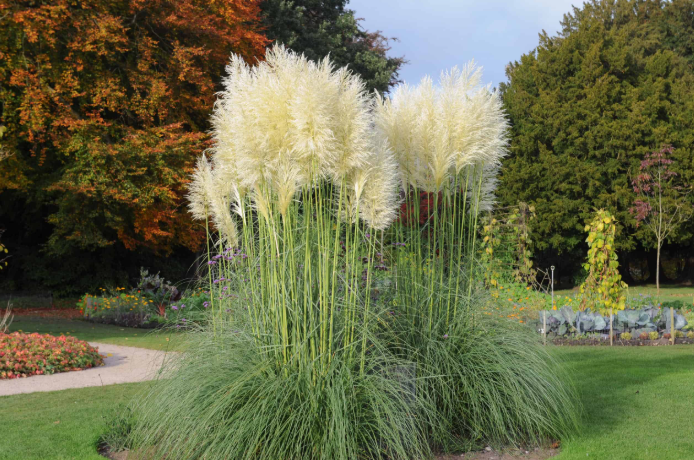
Tall ornamental grasses have become one of the defining elements of contemporary landscape design — plants that bring a scale, movement, and seasonal drama to outdoor spaces that very few other plant groups can replicate. From the sweeping, fountain-like mounds of maiden grass to the towering, architectural columns of giant reed, tall grasses command attention, define space, and animate the garden with every breath of wind in a way that static, non-moving plants simply cannot match.
The rise of tall ornamental grasses in professional and home landscaping has been dramatic. In the 1970s, ornamental grasses were barely mentioned in mainstream garden design. By the 1990s, following the pioneering work of designers such as Wolfgang Oehme and James van Sweden — whose naturalistic, grass-driven landscapes transformed the face of American garden design — tall grasses had become central to a new design movement. Today, ornamental grasses feature in an estimated 60 percent of professionally designed residential landscapes in the United States, and their use continues to grow globally.
Tall grasses serve multiple functions in the landscape simultaneously. As specimens, a single well-placed large grass creates an immediate focal point of year-round interest. As screens and privacy plantings, they provide a natural, living alternative to fences and walls that softens the garden boundary while still providing effective visual separation. As mass plantings and drifts, they create the sweeping, meadow-like effects that characterize the most naturalistic and ecologically inspired contemporary landscapes.
One of the most practical advantages of tall ornamental grasses is their exceptional value for the space they occupy across multiple seasons. Most reach their full height by midsummer, maintain their architectural presence through autumn and winter, and provide the additional interest of flower plumes, seed heads, and changing foliage color across four distinct seasons. Even after cutting back in late winter, the dry, bleached stems provide months of structural interest in the dormant garden that few other plants can match.
1. Maiden Grass
Maiden grass is the most widely planted tall ornamental grass in American landscaping — a large, graceful, fountain-forming miscanthus that produces arching, silver-green leaves reaching five to seven feet in height and an even taller display of silky, copper to silver flower plumes in late summer and autumn.
It is one of the most versatile large grasses in the landscape, performing effectively as a specimen, screen, accent plant, or massed planting. The autumn leaf color — warm copper, orange, and gold — and the persistent silver-white plumes provide outstanding late-season interest that extends the visual contribution of the plant well into winter.
More than 40 named varieties of maiden grass are commercially available, offering a range of heights, foliage colors, variegation patterns, and flowering times to suit different landscape situations and design intentions.
2. Pampas Grass
Pampas grass is one of the most instantly recognizable plants in the landscape world — a large, bold, clump-forming grass from South America that produces towering, creamy-white to pink flower plumes of extraordinary size and presence from late summer through winter.
The flower plumes can reach ten to thirteen feet in height on established plants, making them visible from considerable distances and creating one of the most dramatic and theatrical large-scale plant features available to the landscape designer. Established clumps can measure six to eight feet across and become permanent, commanding focal points in the landscape over time.
It is drought-tolerant once established and thrives in full sun with good drainage. In some regions of the world — particularly California, New Zealand, and parts of Australia — it has become invasive and its planting is restricted or discouraged in favor of non-invasive native alternatives.
3. Karl Foerster Feather Reed Grass
Karl Foerster is arguably the most important and widely planted tall ornamental grass in contemporary landscape design — a narrow, upright, cool-season grass that produces clean, vertical columns of feathery, pink-tinged flower plumes in early summer, maturing to warm buff and wheat-gold by autumn.
It was named the Perennial Plant of the Year in 2001 — the first grass ever to receive that distinction — and its selection reflects the extraordinary landscape value of a plant that combines strong vertical form, early summer flowering, excellent cold hardiness, and virtually year-round structural interest in a package requiring minimal maintenance.
It reaches five to six feet in flower, spreads very slowly, and maintains its upright form without staking — qualities that make it particularly valuable in formal and semi-formal landscape settings where clean, precise structure is important.
4. Switchgrass
Switchgrass is a native North American prairie grass of outstanding ecological and landscape value — a robust, upright species that produces airy, cloud-like flower and seed head displays of great delicacy and beauty from midsummer through winter, supporting over 200 species of native insects in its natural range.
Tall landscape varieties reach four to six feet and the fine, branching flower heads create a translucent, hazy effect in the landscape that is particularly beautiful when backlit by low autumn or winter sun. The foliage turns vivid shades of red, burgundy, and gold in autumn — among the best fall colors of any ornamental grass — before the bleached seed heads provide winter interest.
The variety Shenandoah is particularly celebrated for its early, intense autumn red coloration, while Northwind produces exceptionally stiff, upright, blue-green foliage reaching five to six feet with outstanding weather resistance.
5. Giant Miscanthus
Giant miscanthus — sometimes called elephant grass — is one of the largest and most dramatic ornamental grasses in cultivation, reaching ten to fourteen feet in height in a single growing season from an established root system and creating one of the most commanding large-scale landscape statements of any non-woody plant.
It is grown primarily as a specimen or screen plant in the landscape, where its extraordinary height creates an immediate impression of scale and drama. The large, corn-like leaves are broadly striped with a distinctive white midrib, and in warm climates it produces impressive, feathery flower plumes in late summer.
It has attracted considerable interest as a biomass energy crop — capable of producing fifteen to twenty tonnes of dry matter per hectare annually — and research plots of giant miscanthus are a common sight on agricultural land across Europe and the United States.
6. Ravenna Grass
Ravenna grass is one of the tallest hardy ornamental grasses available for landscaping — a massive, clump-forming species from the Mediterranean that develops stout, upright stems reaching ten to fourteen feet, topped with large, feathery, silvery-white to pale pink plumes of extraordinary presence and scale.
The plumes appear in late summer and persist through winter, providing months of dramatic interest at heights that very few other ornamental plants can match. Each clump grows to five to eight feet across at the base, creating a substantial and permanent landscape feature that requires considerable space but rewards generously with a year-round display of impressive scale.
It is more cold-hardy than pampas grass — surviving temperatures down to about -10°F (-23°C) — which extends the geographical range in which this class of large, plumed grass can be successfully grown.
7. Big Bluestem
Big bluestem is the iconic grass of the American tallgrass prairie — a warm-season native that once covered an estimated 140 million acres of the central United States in a vast, unbroken sea of grass that extended from Texas to Manitoba and was one of the most extensive and ecologically rich ecosystems the continent has ever produced.
In the landscape, it reaches four to eight feet in height and produces the distinctive three-parted seed heads — resembling a turkey’s foot, giving it the alternative common name of turkeyfoot grass — that are one of the most characteristic and recognizable seed head forms of any ornamental grass. The autumn foliage color is extraordinary — deep red, copper, and burgundy tones that rival the finest autumn-coloring shrubs.
It is an outstanding choice for naturalistic, prairie-inspired landscape plantings and provides exceptional ecological value for native wildlife.
8. Indiangrass
Indiangrass is a tall, graceful North American native prairie grass that produces one of the finest flower and seed head displays of any ornamental grass — the golden-yellow plumes, dusted with orange and red anthers when in flower, catching the autumn light with a warmth and richness that is deeply evocative of the prairie landscape from which it comes.
It reaches four to six feet in height and the foliage turns vivid shades of orange, copper, and purple in autumn before fading to warm buff through winter. It is an important component of the classic tallgrass prairie plant community and is frequently combined with big bluestem and switchgrass in naturalistic prairie-inspired planting schemes.
Studies have shown that native prairie grass plantings including indiangrass support up to five times more native insect species than equivalent areas of conventional ornamental grass plantings.
9. Zebra Grass
Zebra grass is one of the most visually distinctive of all the tall ornamental grasses — a miscanthus variety with the characteristic broad, arching foliage of the genus but with a striking and unique variegation pattern of irregular, horizontal yellow-gold bands across each leaf blade, creating an effect quite unlike the vertical stripes of most variegated grasses.
It reaches six to seven feet in height and produces reddish-copper flower plumes in late summer that age to silver-white through autumn. The horizontal banding creates a visual texture that is particularly effective when the grass is viewed from a distance, and the warm gold tones of the bands intensify as the season progresses and the foliage develops its full summer coloring.
It is slightly less invasive in its spreading habit than some other miscanthus varieties and maintains a reasonably compact and well-defined clump over time.
10. Purple Fountain Grass
Purple fountain grass is one of the most widely used tall ornamental grasses in warm-climate landscaping — a warm-season species producing arching, burgundy-purple foliage and distinctive, bottlebrush-like flower plumes of deep burgundy to rose-pink that collectively create one of the most vivid and striking color combinations available from any large ornamental grass.
It grows to three to five feet in height and spreads to a similar width, and in warm, frost-free climates it is evergreen and effectively perennial, maintaining its rich purple foliage color year-round. In cooler climates it is used as an annual or overwintered indoors, still providing exceptional seasonal color from spring through autumn.
Purple fountain grass has become naturalized and invasive in Hawaii and parts of California and Australia, and non-invasive sterile varieties should be selected wherever available.
11. Bluestem ‘Blackhawks’
Blackhawks is a tall, dramatic cultivar of big bluestem selected specifically for its exceptionally intense, near-black to deep burgundy-purple foliage color — the darkest and richest of any tall native grass variety — that maintains its vivid coloration from midsummer through autumn.
It reaches five to seven feet in height with an upright, strongly vertical habit, and the dark foliage provides a bold contrast to the golden and silver tones of neighboring grasses and late-season perennials. The distinctive turkeyfoot seed heads appear in autumn, and the combination of dark foliage and ornamental seed structure makes this one of the most complete and visually impactful of all tall ornamental grass cultivars.
It is a vigorous, drought-tolerant, ecologically valuable plant with all the prairie credentials of the parent species combined with ornamental qualities significantly superior to the wild form.
12. Silver Grass ‘Morning Light’
Morning Light is one of the most refined and graceful of all the miscanthus family — a tall, elegant variety with very finely striped leaves carrying a narrow white margin on each blade that creates a silvery, luminous overall effect, giving the entire plant a misty, backlighting quality that is quite unique among large ornamental grasses.
It grows to four to five feet — slightly smaller than most miscanthus varieties — and forms a neat, rounded, vase-shaped mound of exceptional elegance. The fine variegation creates a pale, shimmering, silver-green effect that is particularly beautiful in the low light of morning and evening, which is the likely origin of its evocative name.
Morning Light is consistently rated among the top five ornamental grasses in professional landscape designer surveys across the United States and the United Kingdom for its refined, year-round ornamental quality.
13. Giant Feather Grass
Giant feather grass is one of the most spectacularly beautiful of all tall ornamental grasses — a clump-forming, cool-season grass that produces in early summer extraordinarily long, feathery, silky awns — the hair-like bristles extending from each seed — that catch the wind and shimmer in the sunlight with a breathtaking, translucent, golden-silver beauty.
The awns can reach two feet in length, and when an established clump produces its full display of hundreds of these shimmering, feather-like structures in June and July, the effect is one of the most visually extraordinary produced by any plant in the garden. It reaches four to six feet in flower and is best placed where the low morning or evening light can backlight the extraordinary plumes.
It has been used in ornamental garden design since the 19th century and remains one of the most admired and sought-after tall grasses in cultivation.
14. Variegated Silver Grass ‘Cosmopolitan’
Cosmopolitan is a bold, large-scale variegated miscanthus with impressively wide leaves broadly and clearly striped in white and green — the most generously variegated of all the large miscanthus varieties — producing a dramatic, bold-textured, large-scale foliage display of considerable presence throughout the summer and autumn.
It reaches six to eight feet in height with broad, arching leaves that create a fountain-like, tropical-looking mound of strong visual impact. The white stripes are wide and clean, providing vivid contrast without the subtlety of finer-striped varieties — a bold, statement-making grass for situations where scale and impact are priorities.
The large size and bold variegation make Cosmopolitan one of the most effective screen and specimen grasses for large landscape situations where a dramatic, immediate presence is required.
15. Prairie Dropseed
Prairie dropseed is a fine-textured, graceful native North American grass that produces one of the most delightfully fragrant flower displays of any ornamental grass — the open, airy panicles of tiny flowers releasing a distinctive, cilantro-like fragrance in late summer that is unlike anything else in the grass world.
It reaches two to three feet in height — smaller than most grasses in this guide — with extraordinarily fine, hair-like leaves that form perfectly rounded, fountain-shaped mounds of exceptional elegance and refinement. The autumn color is consistently excellent — warm gold and orange — and the fine seed heads persist through winter, catching frost and low light beautifully.
Prairie dropseed is long-lived and slow to establish — taking two to three years to reach its full ornamental potential — but once settled it is one of the most beautiful, well-mannered, and ecologically valuable ornamental grasses available to the landscape.
16. Chilean Needle Grass
Chilean needle grass is a dramatic, fine-leaved, clump-forming grass with long, silky, arching leaves that produce a graceful, flowing mound of warm green to gold, and in summer extraordinarily long, needle-like awns on the seed heads that catch the light and give the plant a shimmering, animated quality in any breeze.
It grows to three to five feet in height and thrives in hot, dry conditions with excellent drainage — performing particularly well in Mediterranean-style landscape planting. The delicate combination of fine leaf texture, graceful arching habit, and shimmering seed head display gives this grass a romantic, naturalistic quality that suits informal and naturalistic landscape styles beautifully.
However, it is important to note that Chilean needle grass has been declared an invasive weed in parts of Australia and New Zealand, and local regulations regarding its planting should always be checked before use.
17. Giant Reed
Giant reed is the tallest hardy grass commonly used in landscaping — a massive, bamboo-like species that can reach fifteen to twenty feet in a single growing season from an established root system, creating a screen, windbreak, or specimen of extraordinary speed and scale.
The bold, corn-like leaves are arranged along the tall, hollow canes in a distinctive, architectural pattern that gives the plant a strong structural character quite different from the soft, flowing forms of most ornamental grasses. In late summer it produces large, feathery plumes of creamy-silver that add flowering interest above the impressive foliage.
It spreads aggressively by rhizomes and is classified as an invasive species in many parts of the United States and elsewhere — its use in landscaping requires careful site selection and containment measures to prevent its escape into natural waterways and riparian habitats where it can cause significant ecological damage.
18. Blue Oat Grass
Blue oat grass is a cool-season ornamental grass prized primarily for its striking metallic blue-grey foliage — one of the most intense and sustained blue foliage colors available from any ornamental grass — that provides vivid color contrast in the landscape from early spring through the summer months.
It reaches eighteen to twenty-four inches in height with strongly upright, narrow leaves of a blue so intense it is sometimes described as steel-blue or powder-blue, and it produces straw-colored, oat-like flower heads in early summer that age gracefully through the season. The blue foliage is most intense in spring and early summer, fading slightly as temperatures rise through the season.
Blue oat grass is a cool-season plant that performs best in climates with mild summers, going semi-dormant in hot weather before reviving in the cooler conditions of autumn.
19. Little Bluestem
Little bluestem is one of the finest ornamental grasses for year-round landscape interest — a native North American prairie grass that is relatively modest in summer but transforms in autumn into one of the most brilliantly colored of all ornamental grasses, with foliage that turns vivid shades of orange, copper, burgundy, and red, remaining attractive through winter as the fluffy, white seed heads contrast beautifully with the warm-toned stems.
It grows to two to four feet in height — smaller than many grasses in this guide but tall enough to provide significant landscape presence — and maintains its upright, well-structured form through all four seasons. A mass planting of little bluestem in full autumn color is one of the most spectacular landscape effects available from native plantings.
It supports over 30 species of specialist native birds and insects and is considered one of the most ecologically valuable ornamental grasses for wildlife-friendly landscaping.
20. Tufted Hair Grass ‘Karl Foerster’
Not to be confused with the feather reed grass that carries the same honorific name, the tufted hair grass variety named in honor of Karl Foerster is a tall, clump-forming cool-season grass that produces some of the most extraordinarily delicate and beautiful flower heads of any large ornamental grass — loose, open panicles of tiny, sparkling spikelets that shimmer and dance in the slightest movement of air throughout summer and well into autumn.
It reaches three to four feet in flower and performs well in both sun and partial shade — valuable versatility for a large grass. The flower heads start green and gradually fade through golden-brown to pale straw, maintaining their delicate, trembling beauty through multiple seasons.
It thrives in moist, fertile soils and is one of the most effective large ornamental grasses for planting beside water, where the reflection of its shimmering, translucent flower heads doubles the visual impact of its already outstanding display.
21. Lemongrass (Ornamental)
Ornamental lemongrass is a bold, tropical-looking, clump-forming grass with broad, arching, blue-green to grey-green leaves that produce a dramatic, fountain-like mound of impressive scale and strong tropical character in warm-climate landscaping — while also providing, as a bonus, the aromatic culinary lemongrass of Southeast Asian cooking.
It grows rapidly to three to five feet in height and spread in a single season, creating an immediate impact in the landscape as a specimen, accent plant, or massed groundcover. The strongly lemony fragrance released when the leaves are touched or brushed adds a sensory dimension that few other landscape grasses can provide.
In warm, frost-free climates it is perennial and can develop into very large, impressive clumps over successive seasons. In cooler climates it is grown as an annual or overwintered in a frost-free space, where the harvested stems provide a culinary bonus alongside the ornamental landscape contribution.