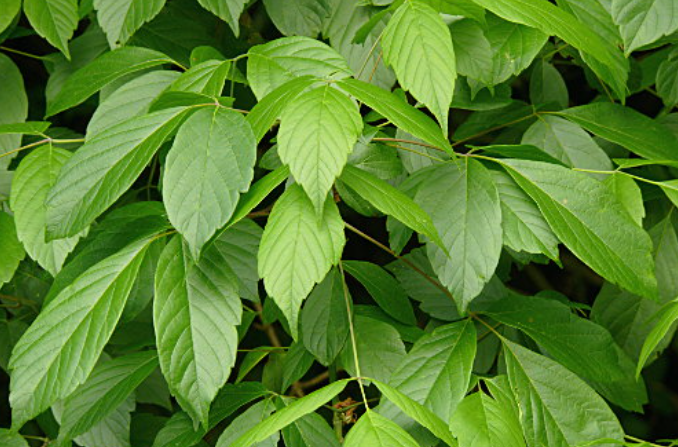
Boxelder trees (Acer negundo), also known as Manitoba maple or ash-leaved maple, are fast-growing, deciduous trees native to North America. They belong to the maple family but are distinct from sugar or red maples, often considered less “refined” due to their weedy nature. Boxelders thrive in a variety of environments, from riverbanks to urban lots, tolerating poor soils, drought, and flooding. Their adaptability makes them a common sight, though they’re often viewed as undesirable due to their brittle wood and short lifespan, typically 60-75 years.
The tree’s appearance is unremarkable but functional. Boxelders have compound leaves with three to seven leaflets, resembling poison ivy, which can cause confusion. Their bark is grayish-brown, becoming furrowed with age, and their branches are often weak, prone to breaking in storms. They produce winged seeds called samaras, which spin as they fall, aiding dispersal. These seeds are prolific, contributing to the tree’s invasive tendencies in some areas.
Boxelders are dioecious, meaning individual trees are either male or female. Female trees produce seeds, while males produce pollen, which can be a significant allergen. Flowering occurs in early spring, with small, yellowish-green flowers that are wind-pollinated. The trees’ rapid growth—often 2-3 feet per year—makes them appealing for quick shade but problematic for long-term landscaping due to their messiness and structural weaknesses.
Ecologically, boxelders play a mixed role. They provide habitat and food for birds, squirrels, and insects, with seeds serving as a winter food source. However, their aggressive growth can crowd out native species, particularly in disturbed areas. Boxelder bugs, small red-and-black insects, are closely associated with the tree, feeding on its seeds and occasionally becoming a nuisance when they invade homes in large numbers.
In urban settings, boxelders are a double-edged sword. Their tolerance for harsh conditions, like compacted soil or pollution, makes them a go-to for city planting, but their weak wood and tendency to drop branches pose risks. They’re often removed in favor of sturdier species. Still, their ability to grow almost anywhere ensures they remain a common sight in neglected lots or along fence lines.
Historically, boxelders had practical uses. Native Americans used the wood for tools and the sap for a sweet syrup, though it’s less palatable than sugar maple sap. Today, the wood is rarely used commercially due to its low quality, though it’s occasionally burned as firewood. The tree’s fast growth and low maintenance make it a candidate for biomass production in some regions.
Despite their flaws, boxelders have a certain resilience that commands respect. They’re survivors, thriving where other trees might fail, and their ecological niche—filling gaps in disturbed landscapes—ensures their persistence. While not a favorite in manicured gardens, they serve as a reminder of nature’s ability to adapt and endure in less-than-ideal conditions.
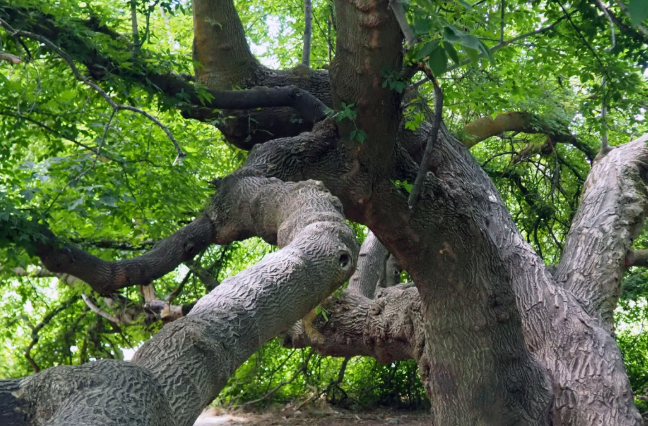
Species of Boxelder Trees (Acer negundo)
Common Boxelder
The standard wild form of the species and the benchmark against which all other types are measured, the Common Boxelder is a fast-growing, short-lived deciduous tree reaching 35 to 50 feet in height with a broad, irregular crown. Its compound leaves of three to five leaflets turn a soft yellow-green in autumn before dropping early in the season. Hugely adaptable, it thrives in moist bottomlands, along stream banks, and in disturbed soils across a range stretching from the Atlantic coast to the Rocky Mountains. While rarely planted intentionally today, it remains ecologically vital as food for birds, shelter for nesting species, and a stabiliser of erosion-prone river margins.
Variegated Boxelder (Flamingo)
Perhaps the most celebrated ornamental selection of the species, ‘Flamingo’ is a compact cultivar prized for its flamboyant spring foliage, which emerges in vivid shades of coral-pink, cream, and soft white before maturing to a green-and-white variegated pattern through summer. Reaching only 15 to 20 feet at maturity, it is well-suited to smaller gardens where it functions as a focal specimen or a striking accent in mixed borders. The pink tones are most intense in cooler spring temperatures and in plants given full sun. It is a male-only selection, meaning it produces no messy seed clusters — a significant practical advantage in managed landscapes where self-seeding would otherwise be a nuisance.
Sensation Boxelder
Sensation’ was introduced specifically to address one of the primary criticisms of the wild tree — its unremarkable autumn colour. This male cultivar breaks decisively from the species norm by producing reliably vivid red and purple autumn foliage, rivalling the visual spectacle of sugar maples or red maples in a good season. Growing to around 30 to 40 feet, it retains the species’ natural vigour and tolerance for difficult conditions — including poor soils, drought, and air pollution — while delivering a genuine ornamental payoff in October and November. It is widely planted along streets and in parks across the central and eastern United States, where dependable fall colour is a valued landscape asset.
Baron Boxelder
Developed and released by the North Dakota State University Agricultural Experiment Station, ‘Baron’ was one of the earliest named male-only selections bred for urban and prairie landscapes. It forms a rounded, symmetrical crown and grows to approximately 40 to 45 feet — somewhat more restrained than wild specimens — and tolerates the brutal cycles of freeze and thaw, drought and flood that define Great Plains growing conditions. Because it is strictly male, it produces staminate flowers in spring but no seed-bearing samara clusters, eliminating the prolific self-seeding that made the wild tree persona non grata in suburban settings. ‘Baron’ remains a staple of municipal planting programmes across the American Midwest and the Canadian Prairies.
Interior Boxelder
Naturally occurring across the arid interior West — from Arizona and New Mexico north through Utah and Colorado — the Interior Boxelder is a distinct botanical variety adapted to lower elevations, desert canyons, and the dry washes of the Colorado Plateau. Compared to the eastern species, it typically produces smaller leaflets with more prominent teeth, and its bark tends toward a grayer, more furrowed appearance. Thriving at elevations up to 7,000 feet, it often grows as the only woody riparian tree in otherwise treeless landscapes, providing essential shade and shelter along seasonal watercourses in regions where the summers are intensely hot and winters frequently severe. Ecologically irreplaceable in its native range, it is increasingly appreciated by xeriscape practitioners in low-water gardening.
California Boxelder
The California Boxelder is a Pacific Coast botanical variety found primarily in riparian corridors from southern British Columbia through California into Baja, growing along stream banks, in canyon bottoms, and in moist gulches within otherwise dry chaparral and oak woodland landscapes. It tends toward a somewhat smaller stature than its eastern counterpart, often maturing at 25 to 35 feet, and characteristically bears fewer leaflets — frequently just three per leaf — with shallower lobing and a slightly glossier upper leaf surface. Its range overlaps with Oregon ash and willows in streamside communities, where it contributes to the layered canopy that supports diverse wildlife including migratory songbirds and native pollinators during its early spring flowering period.
Manitoba Maple (Northern Boxelder)
In Canada and the northern tier of the United States, the Boxelder is so commonly known as Manitoba Maple that many Canadians are unaware it is the same species as the American Boxelder. This northern form demonstrates exceptional cold hardiness — rated to USDA Zone 2, meaning it withstands temperatures as low as -50°F — and has naturalized extensively across the Canadian Prairies, where it was historically planted as a farmyard windbreak and shelterbelt tree. Growing vigorously to 40 feet or more, it leafs out early in spring, providing welcome green after long Prairie winters. Despite its value as a hardy pioneer species, it is also considered invasive in parts of central Canada, where it has spread aggressively along urban watercourses and disturbed riparian corridors.
Violaceum (Purple-Bloom Boxelder)
The Violaceum form is distinguished by its young twigs and branches, which are coated in a striking bluish-violet to purple waxy bloom — a feature particularly visible in winter and early spring when the tree is leafless. This powdery bloom, known botanically as a glaucous coating, gives branches a cool, dusty-purple hue that catches winter light beautifully. The leaves on emerging shoots also sometimes carry a purplish flush in early spring before maturing to normal green. Though not widely available through mainstream nurseries, Violaceum is valued by collectors and specialist growers for its unusual winter interest, and it performs best in open settings where its distinctive branch colouration can be fully appreciated against a contrasting background.
Autumn Blaze Boxelder
While the trademarked ‘Autumn Blaze’ name is more widely associated with a Freeman maple hybrid, Boxelder cultivars marketed under similar names have been developed to emphasise the species’ potential for autumn colour in challenging sites. These selections focus on amplifying the orange and scarlet tones that occasionally appear in wild Boxelders growing in well-drained soils and cool autumn climates, combining them with the species’ inherent toughness — heavy clay tolerance, wind resistance, and adaptability to alkaline soils — to produce a working landscape tree that delivers reliable visual appeal in the fall. These cultivars are particularly popular in the upper Midwest, where soil alkalinity limits the range of maples that can be planted successfully.
Kelly’s Gold Boxelder
Kelly’s Gold’ is a compact ornamental selection noted for its bright golden-yellow foliage, which it retains throughout the growing season rather than reverting to green as some yellow-leafed trees do. The leaves emerge in spring with a warm lemon-yellow tone and hold their colour well into late summer, creating a radiant focal point in the garden. At maturity it reaches approximately 15 to 20 feet — significantly more compact than the wild species — making it well-suited to smaller residential gardens and urban courtyard plantings where a bold splash of year-round colour is desired. Like most ornamental Boxelder cultivars, it benefits from a sheltered position with protection from harsh afternoon sun, which can cause leaf scorch on golden-leafed forms during peak summer heat.
Aureovariegatum (Gold-Variegated Boxelder)
Aureovariegatum is a yellow-variegated form in which the leaflets display bold irregular streaks, splashes, and margins of golden-yellow against a green background — a pattern that creates an almost hand-painted effect when the light catches the foliage in mid-summer. It is one of the older named variegated forms of the species, having been cultivated in European gardens since at least the late nineteenth century, and it remains popular in heritage gardens and arboretum collections. Growing to 25 to 30 feet, it retains more vigour than the pink-variegated forms while still offering considerable ornamental interest. The variegation pattern can vary even within individual trees, with some branches producing more heavily marked leaves than others.
Texanum (Texas Boxelder)
Native to the Edwards Plateau, the Hill Country rivers, and the limestone canyons of central and west Texas, the Texas Boxelder is a southern botanical variety adapted to thin, rocky, highly alkaline soils where few other trees can establish. It tends to grow somewhat smaller and more shrubby in appearance than the standard species — often reaching only 20 to 30 feet — and it typically produces slightly smaller, more leathery leaflets that are better adapted to the intense heat and periodic drought of the Texas interior. Along permanent streams and spring-fed rivers, it can grow considerably larger. It is a key tree of riparian gallery forests in the semi-arid zones of the Chihuahuan Desert’s eastern margin and is of significant value to migratory birds navigating the otherwise sparse landscape of the central flyway.
Pendulum (Weeping Boxelder)
The weeping form of Boxelder is a rare but striking cultivar in which the branches arch dramatically downward, creating a cascading, fountain-like silhouette quite unlike the typical irregular spreading crown of the wild tree. Often grafted onto a standard rootstock at a fixed height to achieve the desired arching effect, Pendulum makes an eye-catching specimen for large lawns, parkland settings, and formal garden designs where a dramatic, sculptural tree form is called for. It retains all the toughness and adaptability of the base species, tolerating both wet and dry soil extremes, and its unusual form provides year-round architectural interest — particularly in winter, when the hanging branch structure is fully visible against a clear sky.
Odessanum (Golden Boxelder)
‘Odessanum’ is a historic golden-leafed cultivar that produces consistently bright, uniform yellow-green foliage across the entire canopy — a cleaner, more saturated yellow than the irregular streaking of Aureovariegatum. Originating in European horticulture and named for its presumed Ukrainian provenance, it has been grown in botanical gardens across Europe and North America for well over a century. In full sun the leaves are a rich butter-yellow, while in partial shade they take on a softer lime-green tone. Growing to around 20 to 30 feet, it is compact enough for average garden use and pairs beautifully with dark-leafed shrubs or conifer backdrops that throw its golden canopy into relief. Like most golden-leafed trees, it performs best in cooler climates where summer heat stress is less likely to cause leaf scorch.
Leucoderme (White-Bark Boxelder)
The most unusual of all Boxelder forms from a horticultural standpoint, Leucoderme — meaning “white skin” — is a distinctive cultivar or botanical form noted for conspicuously pale, near-white bark on young branches and stems. The ghostly branch colouration creates a remarkable visual effect, particularly in winter and early spring before leaves emerge, and it positions this tree as one of the few species that can rival white birch or ghost gum as a bark-feature specimen in temperate gardens. Relatively uncommon in commerce, it is primarily encountered in specialist collections and botanical garden plantings, where it serves as a talking point for visitors and an object of curiosity for tree enthusiasts. Its cultural requirements are identical to the common species — full sun to partial shade, moist to moderately dry well-drained soils — making it as tough as it is beautiful.