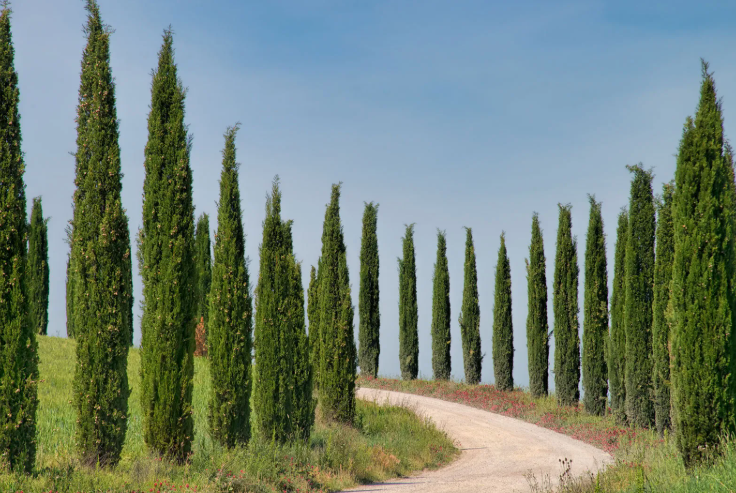
Cypress trees are easy to recognize once you have spent enough time around them, but identifying the different species is another matter entirely. I have always found it interesting how two cypress trees can share that familiar evergreen appearance while looking remarkably different up close. One may have a tall, narrow crown that seems almost perfectly shaped, while another spreads more broadly, develops a rugged trunk, or has foliage that feels softer and more fern-like when you brush against it.
What makes Cypress Trees particularly interesting is the sheer range of forms found within the cypress family. Some are enormous landscape trees that become defining features of parks and old gardens, while others remain relatively compact and work beautifully as screening plants, specimens, or windbreaks. The name “cypress” is also used for several related genera, so a tree commonly called a cypress is not necessarily a member of the same genus as another tree carrying the same common name. That distinction becomes especially useful when trying to identify trees in the landscape.
In this guide, we will explore a wide selection of cypress species and commonly cultivated cypress trees, looking beyond their names to the characteristics that actually make them recognizable. We will consider their foliage, bark, shape, mature size, natural range, growing preferences, and landscape value. Some of the differences are subtle at first, but once you know what to look for, identifying these distinctive evergreens becomes much easier.
Cypress Trees
1. Italian Cypress (Cupressus sempervirens)

The Italian Cypress, also known as Mediterranean Cypress, is one of the most recognizable cypress species, synonymous with the picturesque landscapes of Tuscany and Greece. Native to the eastern Mediterranean, this fast-growing, evergreen conifer reaches heights of 30–80 feet with a narrow, columnar form, making it ideal for formal gardens, privacy screens, and windbreaks.
Its dense, dark green foliage and drought tolerance suit hot, dry climates (USDA Zones 7–10). The tree’s small, round cones and aromatic wood add to its appeal. Italian Cypresses require full sun and well-drained soil, with minimal pruning needed to maintain their elegant shape. Their cultural significance, often planted in cemeteries, ties them to themes of mourning and eternity.
2. Monterey Cypress (Cupressus macrocarpa)

Native to California’s central coast, the Monterey Cypress is a medium-sized conifer growing 70–90 feet tall, known for its irregular, windswept growth habit shaped by coastal breezes. Its scale-like, vivid green foliage emits a lemony scent when crushed, and its fibrous, grayish bark peels in strips. Thriving in USDA Zones 7–9, this species prefers full sun, well-drained soil, and tolerates salt spray, making it perfect for coastal gardens.
The cultivar ‘Goldcrest’ (Lemon Cypress) is a popular dwarf variety with golden-yellow foliage, ideal for hedges or container planting. Monterey Cypress is susceptible to cypress canker but remains a striking ornamental choice.
3. Bald Cypress (Taxodium distichum)

Unlike most cypresses, the Bald Cypress is a deciduous conifer, shedding its needle-like leaves in fall, which turn a stunning russet-red or orange. Native to the southeastern United States, particularly wetlands and swamps, it grows 50–150 feet tall and thrives in USDA Zones 4–11. Its distinctive “knees” (pneumatophores) protrude from the ground, aiding root aeration in waterlogged soils.
Bald Cypresses are flood-tolerant, drought-resistant, and support diverse wildlife, from birds to amphibians. Their wood, historically used for construction, is highly durable. Plant in full sun with moist, acidic soil for best results.
4. Pond Cypress (Taxodium ascendens)

A close relative of the Bald Cypress, the Pond Cypress is a smaller, columnar false cypress, reaching 50–60 feet in height. Native to the southeastern U.S., it grows in standing water, marshes, or drier landscapes (USDA Zones 5–9). Its soft, green foliage turns golden-brown in fall, and its trunk often has a swollen base when grown in wet conditions.
Pond Cypresses are low-maintenance, drought-tolerant, and rarely produce knees, making them suitable for home gardens. They prefer full sun and loamy, well-draining soil, requiring minimal pruning.
5. Arizona Cypress (Hesperocyparis arizonica)

The Arizona Cypress, native to the southwestern U.S. and northern Mexico, is a drought-tolerant evergreen growing 40–50 feet tall in USDA Zones 7–9. Its blue-green, scale-like foliage and conical shape make it a favorite for xeriscaping, privacy screens, and windbreaks. The cultivar ‘Blue Ice’ features striking silvery-gray-blue leaves.
Arizona Cypresses thrive in full sun and well-drained soil, tolerating poor, rocky conditions. Their aromatic wood and resistance to cypress canker enhance their landscaping value.
6. Leyland Cypress (Cuprocyparis leylandii)

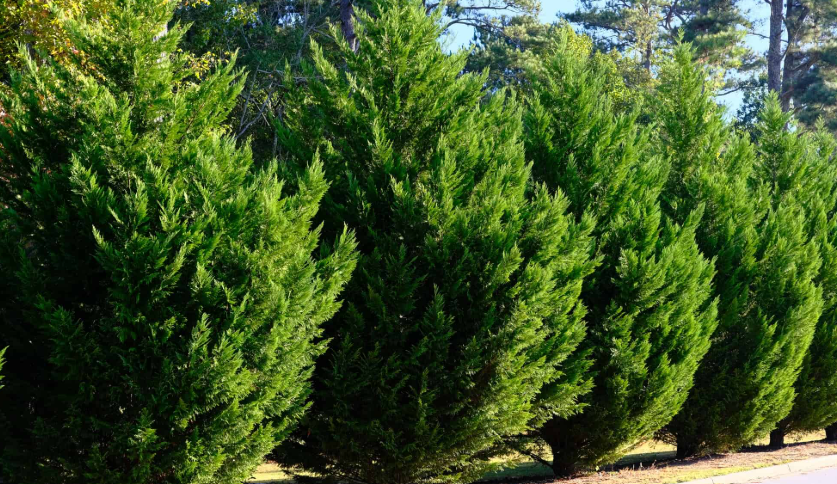
A fast-growing hybrid of Monterey and Nootka Cypress, the Leyland Cypress is a popular choice for privacy hedges, growing 3–5 feet annually to reach 60–70 feet (USDA Zones 5–10). Its soft, feathery, green foliage forms dense screens, and it tolerates a range of soils, preferring full sun and moist, well-drained conditions.
Regular pruning maintains its shape, but overwatering can lead to root rot. Leyland Cypresses are versatile but susceptible to pests like aphids and diseases like canker.
7. Nootka Cypress (Callitropsis nootkatensis)

Also known as Alaska Cedar, the Nootka Cypress is a hardy evergreen native to the Pacific Northwest, growing 20–90 feet in USDA Zones 4–8. Its weeping, blue-gray-green foliage and narrow form make it a dramatic specimen tree. The cultivar ‘Green Arrow’ is particularly striking with its curtain-like branches.
Nootka Cypresses prefer full sun to partial shade and moist, well-drained soil. They are frost-tolerant and resistant to many pests, ideal for small gardens or coastal areas.
8. Hinoki Cypress (Chamaecyparis obtusa)

A false cypress from Japan, the Hinoki Cypress is prized for its soft, dark green, fern-like foliage and compact, pyramidal shape, growing 50–75 feet in the wild but often smaller in cultivation (USDA Zones 4–8). Dwarf cultivars like ‘Nana Gracilis’ are popular for rock gardens or containers.
Hinoki Cypresses thrive in full sun to partial shade with moist, well-drained, slightly acidic soil. Their aromatic wood is used in Japanese architecture, and they require minimal pruning.
9. Lawson Cypress (Chamaecyparis lawsoniana)

Native to Oregon and northwestern California, the Lawson Cypress (or Port Orford Cedar) grows 40–60 feet tall with soft, blue-green foliage in flattened sprays (USDA Zones 5–7). Cultivars like ‘Ellwoodii’ offer golden or blue hues. It prefers full sun, well-drained soil, and moderate moisture, tolerating coastal conditions.
Lawson Cypresses are susceptible to root rot in poorly drained soils but are stunning as hedges or specimen trees.
10. Chinese Weeping Cypress (Cupressus funebris)

Also called Mourning Cypress, this medium-sized conifer (20–35 feet) is native to China and features light green, weeping foliage that creates an ornamental, drooping effect (USDA Zones 7–10). Its scale-like leaves and small, bumpy cones add texture. Chinese Weeping Cypresses thrive in full sun and well-drained soil, often planted in parks or large gardens. They tolerate drought but need protection from harsh winds.
11. Gowen Cypress (Hesperocyparis goveniana)
A rare, endangered species native to California, the Gowen Cypress is a small tree or shrub (10–30 feet) found in swampy or boggy forests (USDA Zones 8–10). Its green, scale-like foliage and grayish-brown bark are distinctive, and its seed cones have flat umbos. Gowen Cypresses prefer full sun and well-drained soil but are sensitive to environmental changes. Conservation efforts focus on protecting their limited wild populations.
12. Kashmir Cypress (Cupressus cashmeriana)

Native to Bhutan, not Kashmir, the Kashmir Cypress is a stunning evergreen with graceful, weeping branchlets and soft, blue-green foliage. Growing 40–60 feet in USDA Zones 7–9, it’s a favorite for ornamental planting in mild climates. It thrives in full sun and well-drained, fertile soil but may struggle in harsh conditions. Its elegant form makes it a focal point in large gardens or parks.
13. MacNab Cypress (Hesperocyparis macnabiana)

A compact native of the U.S., the MacNab Cypress grows 10–40 feet with flat, lacy branches and dark green foliage (USDA Zones 7–9). Its gray-black bark and small, round cones are distinctive. This species prefers full sun and well-drained soil, tolerating drought and poor conditions. MacNab Cypresses are ideal for small landscapes or as low-maintenance hedges.
14. Cuyamaca Cypress (Hesperocyparis stephensonii)
A rare, endangered species native to San Diego, the Cuyamaca Cypress grows 30–50 feet with silver-gray-green foliage and red bark (USDA Zones 7–9). It thrives in full sun and adapts to various soils, preferring well-drained conditions. Its limited wild population makes it a conservation priority, but it’s a striking choice for arid landscapes.
15. Guadalupe Cypress (Hesperocyparis guadalupensis)
Another endangered species, the Guadalupe Cypress is native to Mexico’s Guadalupe Island, growing 40–60 feet with bluish foliage and smooth, chocolatey-cherry bark (USDA Zones 9–11). Frost-sensitive, it thrives in full sun and well-drained soil, resisting cypress canker. Its drought tolerance suits xeriscaping or coastal gardens.
16. Mexican Cypress (Hesperocyparis lusitanica)
Native to Mexico and Central America, the Mexican Cypress grows 30–40 feet with soft, green foliage and a conical shape (USDA Zones 8–10). It prefers full sun and well-drained soil, tolerating drought and poor conditions. Often used for timber or ornamental planting, it’s a versatile species for warm climates.
17. Bhutan Cypress (Cupressus torulosa)

The Bhutan Cypress, native to the Himalayas, grows 50–80 feet with blue-green foliage and a pyramidal form (USDA Zones 7–9). Its durable wood is valued for construction, and its drought tolerance suits arid regions. Plant in full sun with well-drained soil for best growth. Bhutan Cypresses are striking as specimen trees or windbreaks.
18. Moroccan Cypress (Cupressus atlantica)

Endemic to Morocco’s Atlas Mountains, the Moroccan Cypress grows 30–50 feet with blue-green foliage and a conical shape (USDA Zones 6–9). It’s drought- and cold-tolerant but overexploited for its wood, making logging illegal. Plant in full sun with well-drained soil for a resilient, low-maintenance tree.
19. Saharan Cypress (Cupressus dupreziana)

One of the most drought-resistant cypresses, the Saharan Cypress is native to Algeria’s Tassili n’Ajjer plateau, growing 50–100 feet in USDA Zones 7–9. Its green foliage and sturdy form withstand extreme conditions. Rare in cultivation, it’s a conservation priority due to its limited wild population.
20. Siberian Cypress (Microbiota decussata)
A low-growing false cypress, the Siberian Cypress is a shrub (1–2 feet tall, 6–8 feet wide) native to Russia’s Sikhote-Alin mountains (USDA Zones 3–7). Its soft, green, scale-like foliage turns bronze in winter. Ideal for ground cover or rock gardens, it thrives in full sun to partial shade with well-drained soil.
21. Sawara Cypress (Chamaecyparis pisifera)
Native to Japan, the Sawara Cypress grows 50–70 feet with soft, green foliage flecked with silver-blue (USDA Zones 4–8). Dwarf cultivars like ‘Soft Serve’ are popular for small gardens. It prefers full sun, moist, well-drained soil, and tolerates pruning for hedges. Its fern-like texture adds elegance to landscapes.
22. Taiwanese Cypress (Chamaecyparis formosensis)
Endemic to Taiwan’s highlands, this rare cypress grows 50–100 feet with soft, green foliage and a pyramidal shape (USDA Zones 7–9). Threatened by logging, it’s valued for its lumber and ornamental beauty. Plant in full sun with moist, well-drained soil, ensuring protection from harsh winds.
23. Montezuma Cypress (Taxodium mucronatum)

Mexico’s national tree, the Montezuma Cypress is a semi-evergreen or deciduous conifer growing 50–130 feet (USDA Zones 8–11). Native to Mexico and Central America, it thrives in wet or dry conditions, with soft, green foliage turning bronze in fall. Its massive trunks and flood tolerance make it ideal for wetland restoration.
24. Patagonian Cypress (Fitzroya cupressoides)
Native to southern Chile and Argentina, the Patagonian Cypress is a long-lived conifer (some specimens exceed 3,600 years) growing 30–150 feet (USDA Zones 8–10). Its scale-like, green foliage and reddish bark are distinctive. It prefers cool, moist climates and well-drained soil, suitable for large landscapes.
25. Japanese Cypress (Chamaecyparis obtusa)
A variant of Hinoki Cypress, the Japanese Cypress grows 50–75 feet with dense, dark green foliage (USDA Zones 4–8). Its compact cultivars, like ‘Blue Feathers’, are popular for ornamental planting. It thrives in full sun to partial shade with moist, acidic soil, offering texture and fragrance to gardens.
26. Fujian Cypress (Fokienia Hodginsii)
Native to southeastern China, the Fujian Cypress grows 50–80 feet with soft, green foliage and aromatic wood (USDA Zones 8–10). Its essential oil, pemou oil, is used in cosmetics. Plant in full sun with well-drained soil, ensuring protection from drought. It’s a rare but striking ornamental choice.
27. Guaitecas Cypress (Pilgerodendron uviferum)
Found in western Patagonia and Tierra del Fuego, the Guaitecas Cypress grows 20–50 feet with scale-like, green foliage (USDA Zones 8–10). It thrives in cool, wet climates and well-drained soil, tolerating harsh conditions. Its rarity and slow growth make it a unique addition to specialized gardens.
28. Dwarf Cypress (Taxodium distichum var. imbricarium)
A smaller cultivar of Bald Cypress, the Dwarf Cypress grows 20–30 feet with delicate, needle-like foliage turning orange in fall (USDA Zones 4–9). Native to the southeastern U.S., it’s ideal for wet or dry landscapes, thriving in full sun and loamy soil. Its compact size suits small gardens.
Cultivation Tips for Cypress Trees
Most cypress species prefer full sun (6+ hours daily) and well-drained soil, though some, like Bald and Pond Cypresses, tolerate wet conditions. Plant in late fall or early spring to encourage root establishment. Water young trees weekly for the first year, reducing frequency as they mature, as many cypresses are drought-tolerant.
Mulch around the base to retain moisture and deter weeds, keeping it away from the trunk. Prune sparingly to remove dead branches or maintain shape, using sharp shears in late winter. Monitor for pests like aphids, scale, or cypress bark moths, treating with neem oil if needed. Diseases like cypress canker can be mitigated with proper spacing and drainage.
Ecological and Cultural Significance
Cypress trees play critical ecological roles, stabilizing soil in wetlands, filtering water, and providing habitats for birds, mammals, and amphibians. Their deep roots prevent erosion, particularly in floodplains, while their dense foliage offers shelter.
Culturally, cypresses symbolize mourning in Western traditions, rooted in Greek mythology where Cyparissus was transformed into a cypress tree. In other cultures, they represent longevity and resilience. Their wood, used for everything from mummy cases in ancient Egypt to modern construction, underscores their historical importance.
Choosing the Right Cypress for Your Landscape
Selecting a cypress depends on your climate, space, and purpose. For privacy screens, consider fast-growing Leyland or Italian Cypresses. For wet areas, Bald or Pond Cypresses excel. Dwarf varieties like Lemon or Siberian Cypresses suit small gardens or containers. Check your USDA Zone, soil type, and sun exposure before planting. Consult local nurseries for species suited to your region, as some cypresses are rare or protected.
Final Thoughts
After spending time observing cypress trees in different landscapes, I have found that their differences become much more obvious when you stop looking at them simply as “evergreen trees.” The texture of the foliage, the way the branches are arranged, the shape of the crown, and even the appearance of the trunk can tell you a great deal. A young tree can also be deceptive because its shape may change considerably as it matures, so I prefer to consider several characteristics rather than relying on one feature.
Another thing that stands out is how versatile cypress trees can be. Some create a strong vertical accent, others make excellent screens, and a few have such distinctive silhouettes that they deserve to be treated as specimen trees. Their adaptability has also helped make different cypress species popular well beyond their native ranges, although choosing a species suited to the local climate and available space is important.
Ultimately, learning about the different cypress species makes it easier to appreciate just how diverse this group of trees really is. Once you begin noticing the differences in foliage, bark, branching, and overall form, a walk through a garden, park, or roadside planting can become an opportunity to identify trees rather than simply admire them. That is what makes exploring these cypress species worthwhile: each one has its own character, and many become more impressive with age.
Further References
- North Carolina Extension Gardener Plant Toolbox — Bald Cypress (Taxodium distichum)
A useful university reference for identifying bald cypress, including its foliage, distinctive knees, mature size, habitat, hardiness, and landscape characteristics. - University of Florida IFAS Extension — Leyland Cypress
Provides reliable information about Leyland cypress, including its hybrid origin, growth characteristics, landscape uses, and common problems. - Oregon State University Landscape Plants — Monterey Cypress (Cupressus macrocarpa)
Useful for information on Monterey cypress, including its natural range, mature dimensions, foliage, growth habit, and suitability for different landscapes. - University of California Agriculture and Natural Resources — California Native Plant Database
A valuable reference for researching California cypress species and related native trees, with information on natural distribution, appearance, habitat, and growing conditions. - Missouri Botanical Garden — Plant Finder
Useful for checking botanical names, plant characteristics, mature sizes, hardiness, cultivation requirements, and landscape uses of numerous cypress and related conifer species. - Royal Horticultural Society — Cupressus
A respected horticultural reference for cypress species and cultivars, providing information on their characteristics, cultivation, and garden performance.