Every January, millions of brown, needle-shedding Christmas trees end up on curbs across the country, a few weeks after they were the center of the holidays. Christmas tree alternative plants offer a different kind of tradition, a living tree you can decorate in December and keep growing all year long. Some live happily indoors as houseplants, others move to the porch or patio, and a few can be planted in the yard after the holidays. Many are small enough for apartments, dorm rooms, and tabletops.
The best alternatives share a few useful traits. Many have a natural cone or pyramid shape that looks festive with just a string of lights. Others have sturdy branches that can hold a handful of light ornaments, or a fresh scent that fills the room the way a fir or pine does. Fruiting plants, like citrus and kumquats, come with their own built-in decorations.
These plants also suit different climates. In the northern United States, evergreen conifers like spruce and arborvitae can be planted outdoors after the holidays. In the South and West, rosemary, olive, and bay laurel can move straight into the garden. Tropical houseplants work anywhere, as long as they have bright light and stay away from cold drafts.
Living trees need a little extra care during the holidays. Use LED lights, which stay cool and won’t scorch leaves or needles, and keep plants away from heat vents and fireplaces. Water carefully, since warm, dry indoor air dries out soil fast. After the holidays, take decorations off promptly so the plant can recover.
1. Norfolk Island Pine
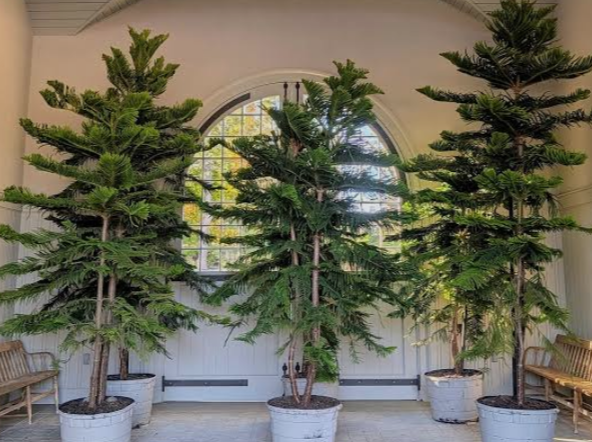
The Norfolk Island pine is the most popular living Christmas tree alternative in the United States. Its soft, tiered branches and perfectly symmetrical shape look like a classic Christmas tree in miniature. Despite its name, it isn’t a true pine. Garden centers sell it in sizes from tiny tabletop plants to floor-sized trees, often already decorated with bows and ornaments.
The Norfolk Island pine is native to a tiny island in the South Pacific between Australia and New Zealand, where wild trees can reach 200 feet tall. As a houseplant it grows slowly, often just 3 to 6 inches a year, and usually tops out at 6 to 8 feet indoors. It needs bright light and should be turned occasionally so it grows straight. With consistent care, a holiday Norfolk Island pine can last for decades.
2. Dwarf Alberta Spruce
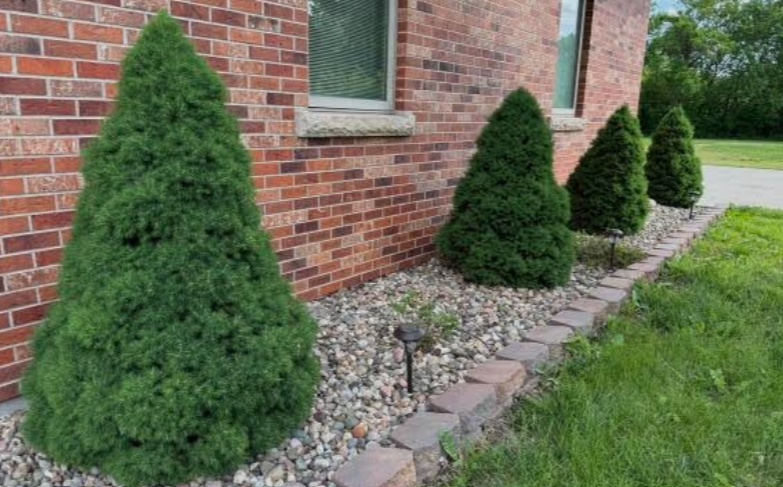
The dwarf Alberta spruce is a compact evergreen with a naturally dense, cone-shaped form. Its short, soft, bright green needles make it look like a perfectly sheared Christmas tree without any trimming. It grows very slowly, often just a few inches a year. Potted plants 2 to 4 feet tall are widely sold at garden centers during the holidays.
The dwarf Alberta spruce is a natural dwarf form of white spruce, which grows across Canada and the northern United States. It is very cold-hardy and grows outdoors in zones 3 through 8. After the holidays, it can be planted in the garden or kept in a container on a porch or entryway. Keep it indoors only briefly, and protect it from hot afternoon sun outdoors.
3. Living Spruce or Pine
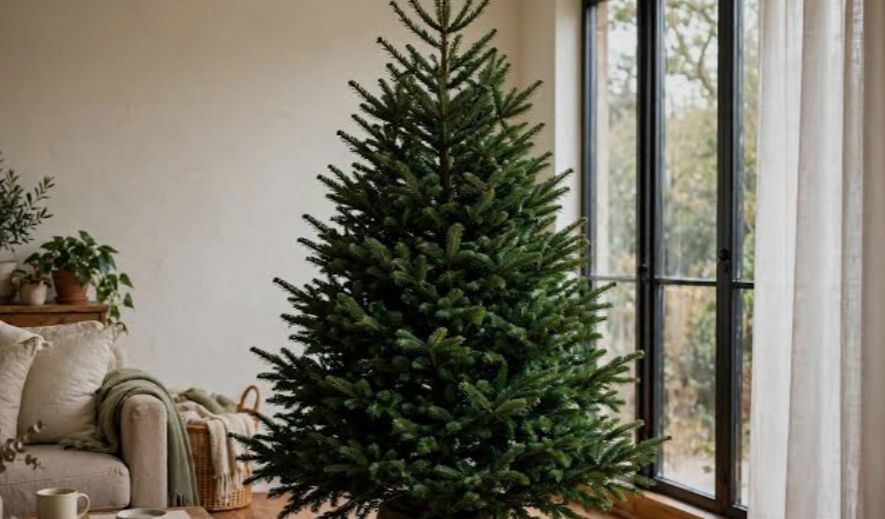
A balled-and-burlapped or container-grown spruce or pine lets you enjoy a full-sized Christmas tree and plant it in the yard afterward. Colorado blue spruce, Norway spruce, and white pine are common choices. Each tree can become a living memory of the holiday that grows in the landscape for decades. Many families make planting the tree a New Year’s tradition.
Living trees can only stay indoors for a short time, because warm, dry air breaks their winter dormancy. Most extension services recommend no more than 7 to 10 days inside, and some suggest as few as 3 to 5. Move the tree gradually from outdoors to a garage and then into the house, and reverse the process afterward. Dig the planting hole in fall before the ground freezes.
4. Lemon Cypress
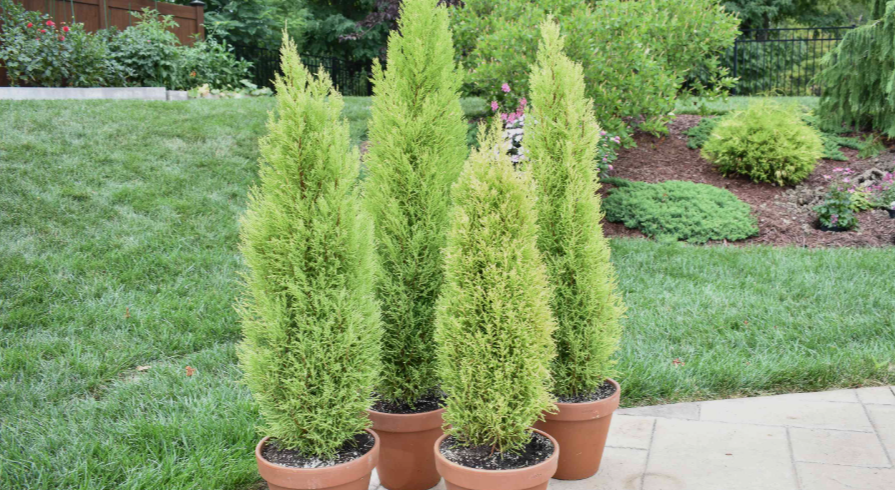
The lemon cypress has bright chartreuse to golden-green foliage that glows under holiday lights. When you brush its soft branches, they release a fresh, lemony scent. It grows in a naturally narrow, upright cone shape. Small potted plants are sold in many grocery stores and garden centers in December.
The lemon cypress is a golden form of the Monterey cypress, which is native to the central California coast. It grows outdoors in zones 7 through 10 and can reach 15 to 20 feet in the ground. Indoors, it needs bright light and evenly moist soil, and it struggles in warm, dry rooms. After the holidays, many gardeners move it outside to a sunny patio.
5. Dwarf Hinoki Cypress
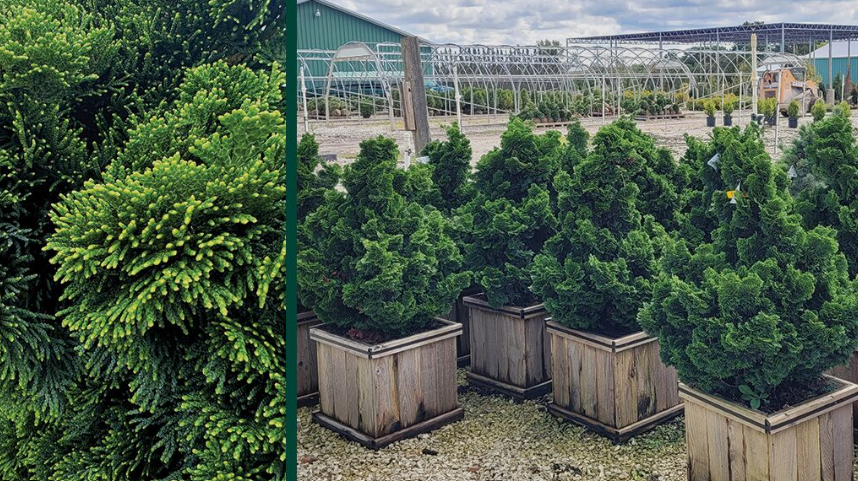
The dwarf Hinoki cypress has rich green, fan-shaped sprays of foliage that form graceful, layered tiers. Its soft texture and elegant form make it an unusual and sophisticated holiday tree. It grows slowly, usually just a few inches a year. Compact varieties stay small enough for containers for many years.
The Hinoki cypress is native to Japan, where its wood is prized for temple buildings and bathtubs. Dwarf varieties grow outdoors in zones 4 through 8 across much of the United States. Keep it indoors only for the holidays, then move it to a porch or plant it in the garden. It prefers moist, well-drained soil and partial shade.
6. Emerald Green Arborvitae
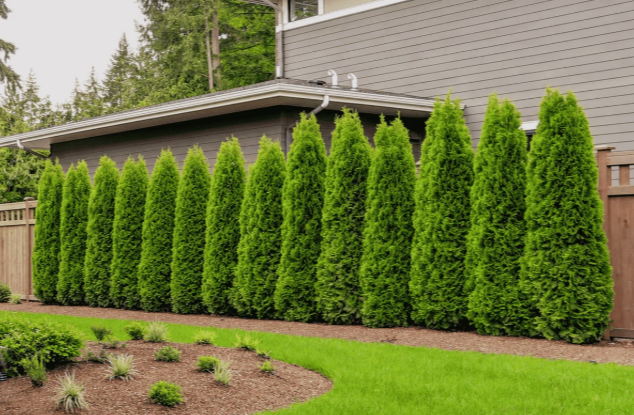
The Emerald Green arborvitae is a narrow, upright evergreen with dense, glossy green foliage. Its tall, slender, cone shape fits easily in tight corners and doorways. The flat sprays of foliage hold small ornaments and lights well. It stays bright green through winter instead of browning like some arborvitae.
The Emerald Green arborvitae is a cultivated form of American arborvitae, which is native to the northeastern United States and southeastern Canada. It grows outdoors in zones 3 through 8 and can reach 12 to 15 feet tall. After the holidays, it can be planted as a privacy screen or hedge. Deer love to browse it, so protect it in areas with heavy deer pressure.
7. Eastern Red Cedar
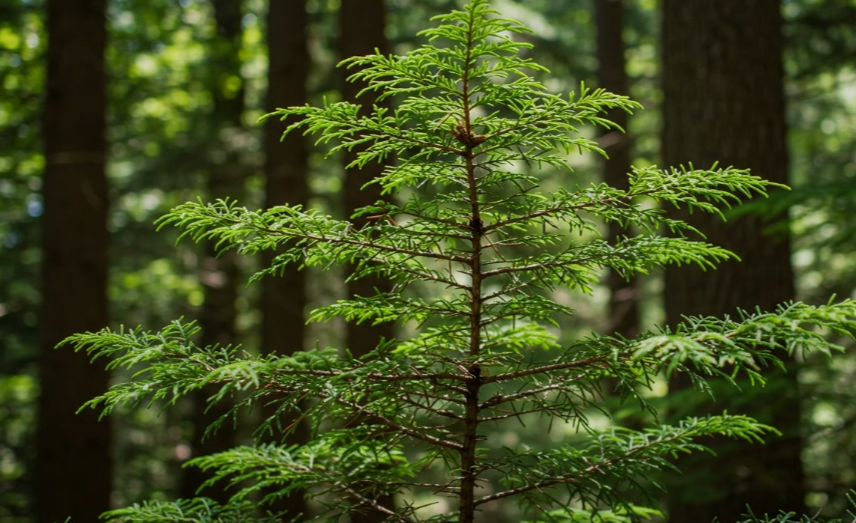
The Eastern red cedar was a traditional Christmas tree for generations of families in the South and Midwest. Its dense, aromatic foliage has a classic evergreen scent. Young trees naturally grow in a tidy pyramid shape. Female trees produce blue, berry-like cones that birds love.
The Eastern red cedar is native across most of the eastern and central United States. It is extremely tough and grows in zones 2 through 9, tolerating drought, poor soil, wind, and cold. Small potted trees can be decorated outdoors on a porch or brought inside briefly. After the holidays, it makes an excellent windbreak or wildlife tree.
8. Italian Stone Pine
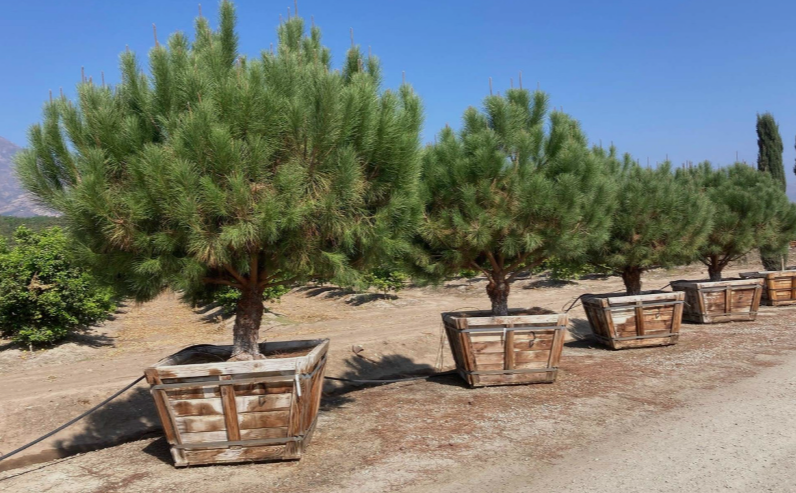
The Italian stone pine is often sold during the holidays as small, potted tabletop trees. Young plants have soft, silvery blue-green needles and a neat, round-to-conical form. As they mature, they develop a broad, umbrella-shaped crown. Mature trees produce large cones filled with edible pine nuts.
The Italian stone pine is native to the Mediterranean region of southern Europe. It grows outdoors in zones 7 through 10, especially in California and the Southwest. Indoors, it needs bright light and should be kept cool. After the holidays, move it to a sunny patio or plant it in a warm, dry garden.
9. Rosemary
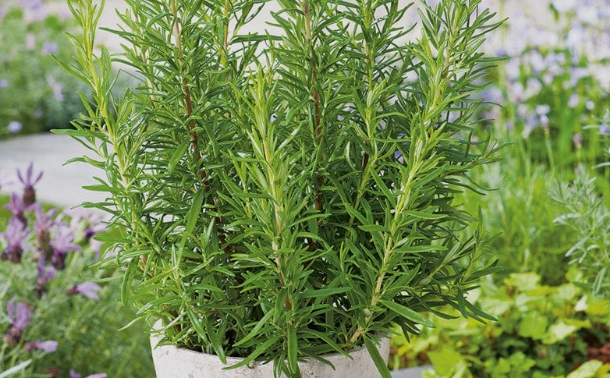
Rosemary is often sold during the holidays trimmed into small cone-shaped trees. Its needle-like, aromatic leaves look and smell festive, and they can be snipped for cooking. Tiny ornaments and ribbons fit well on its stiff branches. It is a charming choice for kitchens and tabletops.
Rosemary is native to the Mediterranean region. It grows outdoors in zones 7 or 8 through 10, especially in California, the Southwest, and the South. Indoors, it needs very bright light and soil that dries slightly between waterings, since soggy soil quickly causes root rot. After the holidays, it can be planted outdoors in mild climates.
10. Bay Laurel
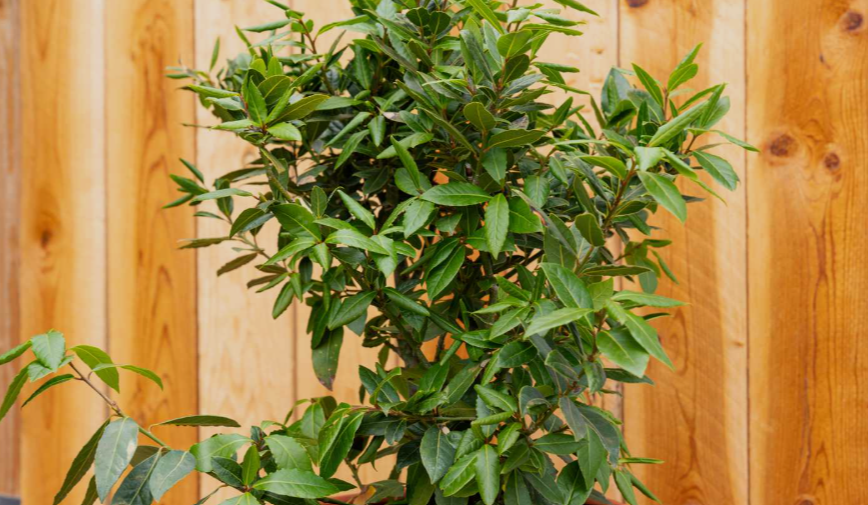
Bay laurel is a slow-growing evergreen with glossy, dark green, aromatic leaves. It is often sold trained into cones, pyramids, or lollipop-shaped standards. Its leaves can be harvested year-round for soups, stews, and sauces. Its neat, formal shape makes it an elegant holiday accent.
Bay laurel is native to the Mediterranean region. It grows outdoors in zones 8 through 10 and thrives in containers elsewhere. Indoors, give it bright light and let the soil dry slightly between waterings. After the holidays, it can live on a sunny patio for most of the year.
11. Boxwood Topiary
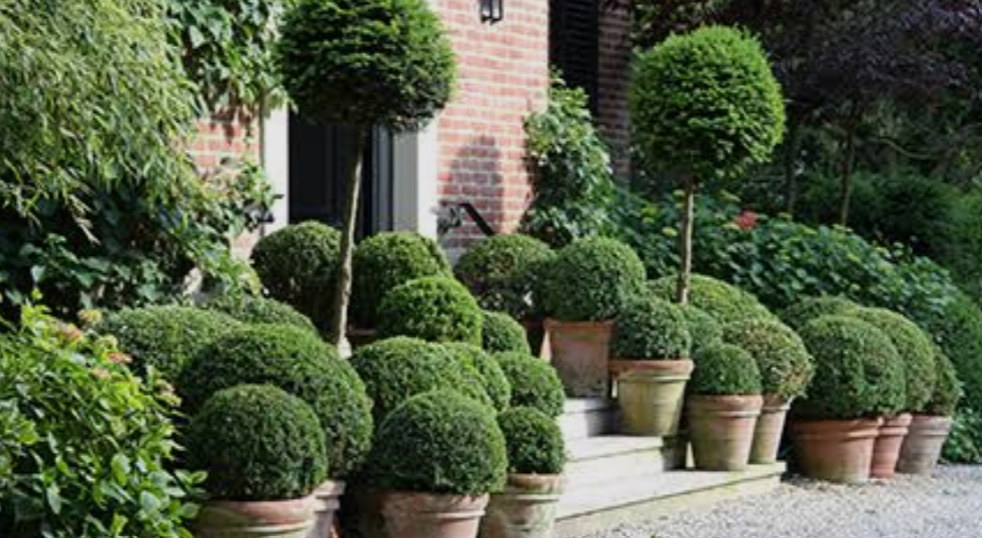
Boxwood is a classic evergreen shrub that is easily shaped into cones and spirals. Its small, glossy leaves form dense, tidy surfaces that look festive with lights and ribbon. Pairs of boxwood cones flanking a door make a popular outdoor holiday display. It also fits on tables and mantels.
Boxwood grows outdoors in zones 5 through 9, depending on the variety. It does best outdoors and should be kept inside only briefly. Its leaves are toxic to pets, so keep it out of reach of dogs and cats. After the holidays, it can be planted in the garden or kept in a container.
12. American Holly
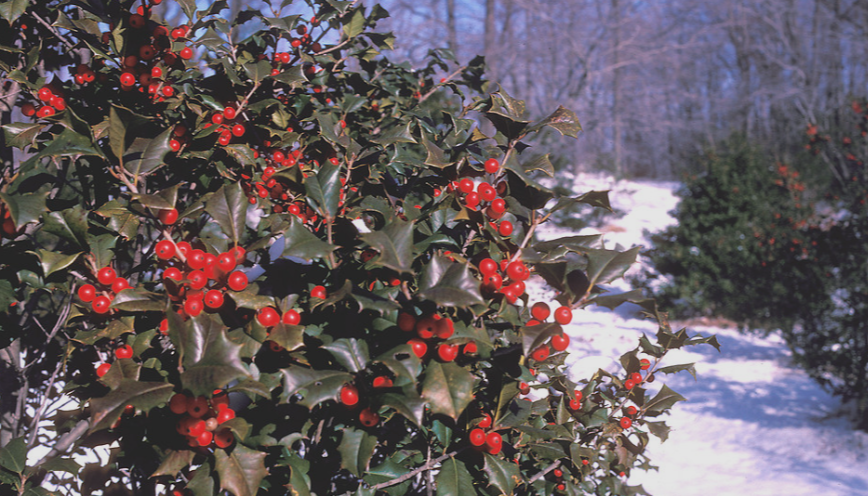
The American holly is a native evergreen with glossy, spiny leaves and bright red winter berries. Young plants grow in a natural pyramid shape that looks like a ready-made Christmas tree. Its berries add color without any ornaments. Holly has been used in holiday decorations for centuries.
The American holly is native to the eastern United States, from Massachusetts to Florida and west to Texas. It grows in zones 5 through 9 and can reach 40 to 50 feet tall over time. Only female plants produce berries, and they need a male plant nearby. Its berries are toxic to people and pets, so keep it away from children.
13. Olive Tree
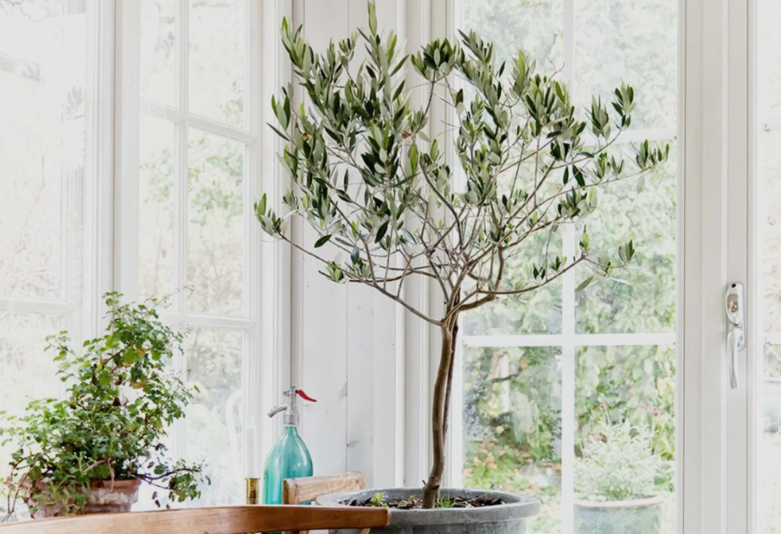
A potted olive tree brings a relaxed, Mediterranean look to the holidays. Its silvery gray-green leaves and twisting branches look beautiful with simple white lights. Small olive trees are increasingly sold as indoor plants. Its sturdy branches can hold light ornaments.
The olive tree is native to the Mediterranean region and has been cultivated for thousands of years. It grows outdoors in zones 8 through 11, especially in California, Arizona, and Texas. Indoors, it needs the brightest spot available, ideally a south-facing window. After the holidays, move it outside to a sunny patio when temperatures allow.
14. Meyer Lemon
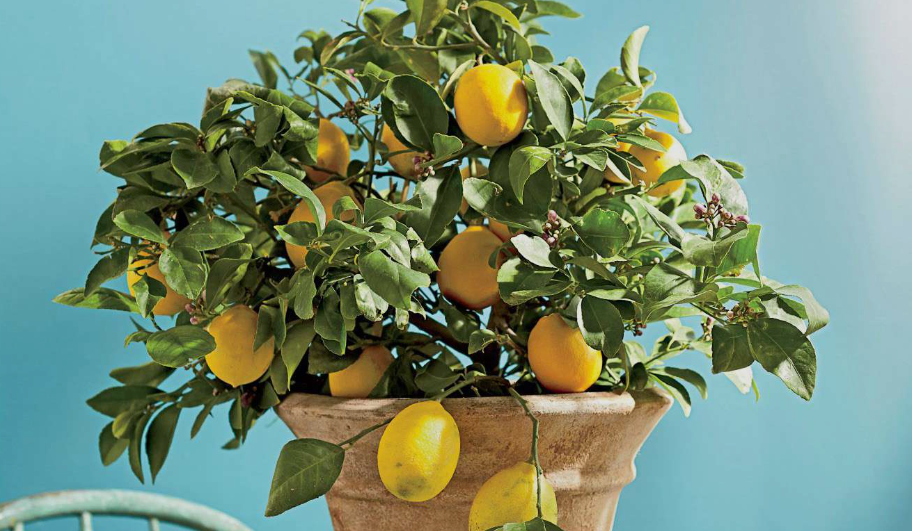
A potted Meyer lemon tree comes with its own decorations: fragrant white flowers and bright yellow fruit. Its glossy, dark green leaves make a lush backdrop for lights and ornaments. The lemons are sweeter and less acidic than standard lemons. Fruit often ripens in winter, right in time for the holidays.
The Meyer lemon is believed to be a cross between a lemon and a mandarin orange from China. It grows outdoors in zones 9 through 11 and in containers elsewhere. Indoors, it needs bright light, moist soil, and good humidity. After the holidays, move it outdoors in spring once frosts have passed.
15. Kumquat
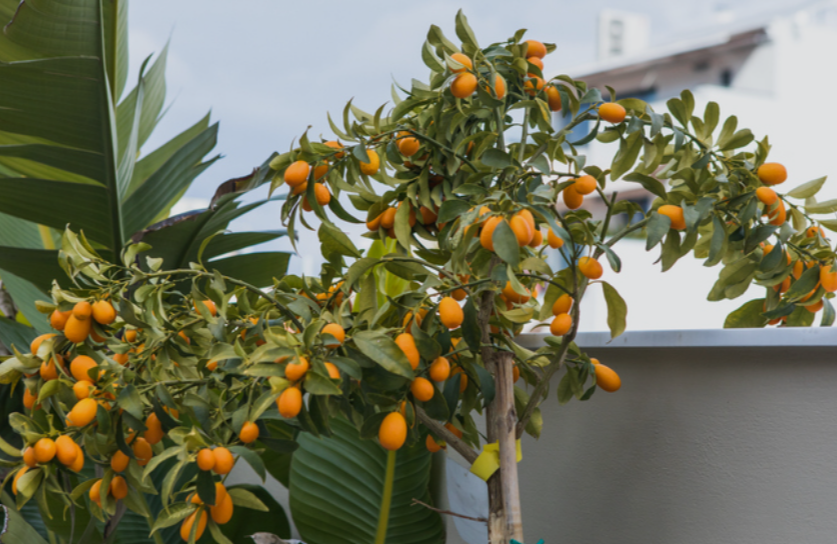
The kumquat is a small citrus tree with bright orange, olive-sized fruit. The whole fruit can be eaten, sweet peel and tart flesh together. Its fruit ripens in winter, so the tree looks naturally decorated during the holidays. In many Asian cultures, kumquats are a symbol of good luck and prosperity.
The kumquat is native to southern China. It is one of the most cold-hardy citrus plants and grows outdoors in zones 8 through 11. In containers, it needs bright light and regular feeding. After the holidays, it can move outdoors to a sunny patio.
16. Weeping Fig
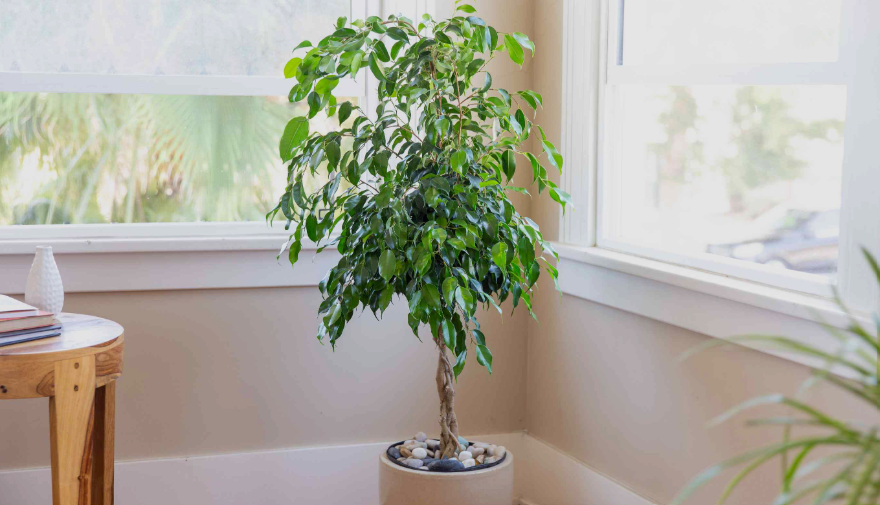
The weeping fig has slender, arching branches covered in small, glossy leaves. Its tree-like form looks beautiful wrapped in tiny lights. It is one of the most common indoor trees in homes and offices. Some plants are sold with braided trunks.
The weeping fig is native to Southeast Asia and northern Australia. It grows outdoors only in South Florida and Hawaii. Indoors, it often drops leaves when moved, so keep it in one bright spot. Its sap can irritate skin and is toxic to pets.
17. Fiddle-Leaf Fig
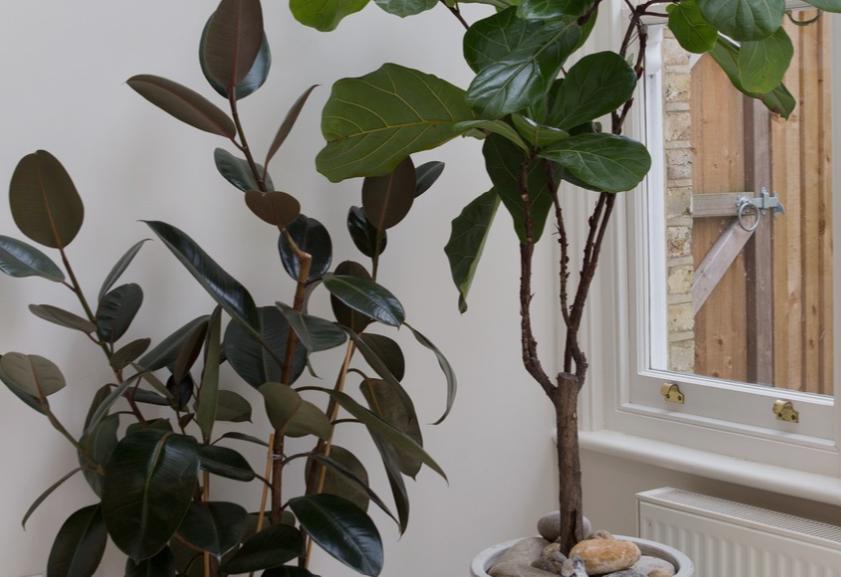
The fiddle-leaf fig has large, glossy, violin-shaped leaves on an upright trunk. Its bold form makes a modern, minimalist holiday tree. Simple lights and a few large ornaments suit it well. Many people already have one in the living room.
The fiddle-leaf fig is native to tropical West Africa. It grows outdoors only in South Florida and Hawaii. Indoors, it needs bright, indirect light and dislikes drafts and moving. Like other figs, its sap is toxic to pets.
18. Money Tree
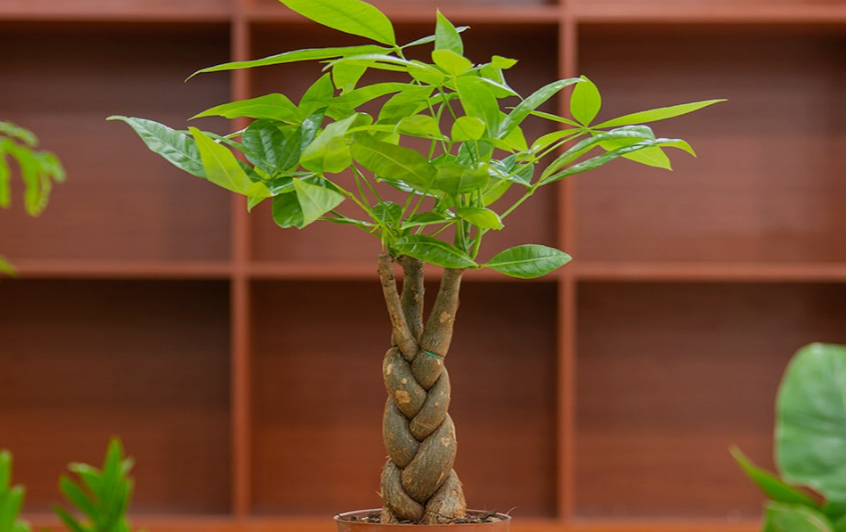
The money tree has glossy, hand-shaped leaves and often a braided trunk. In many Asian traditions, it is believed to bring good luck and prosperity. Its compact size makes it a good tabletop tree. Small ornaments and ribbons fit well on its branches.
The money tree is native to wetlands of Central and South America. It grows outdoors only in South Florida and Hawaii. It is generally considered safe for pets. Indoors, it needs bright, indirect light and moderate watering.
19. Kentia Palm
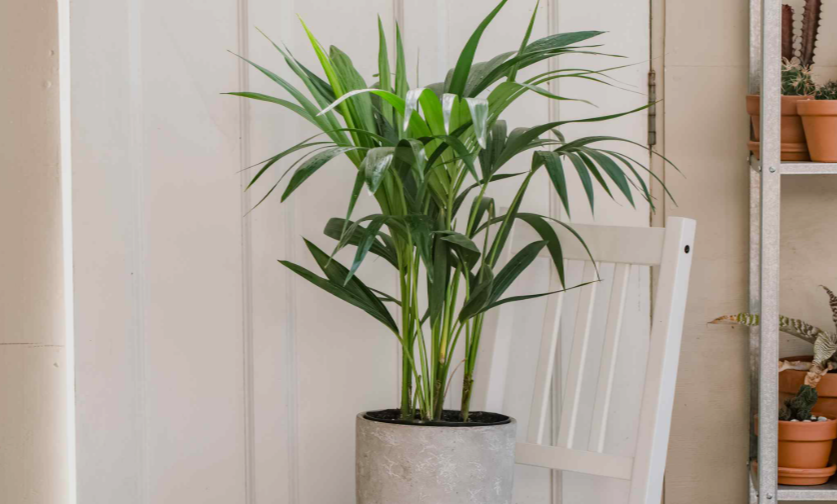
The kentia palm brings a tropical twist to the holidays. Its long, graceful fronds can hold lights and lightweight ornaments. It tolerates low indoor light better than most palms. It is generally considered safe for cats and dogs.
The kentia palm is native to Lord Howe Island off the coast of Australia. It grows outdoors in coastal Southern California and Hawaii. Indoors, it needs moderate light and evenly moist soil. It can live for decades as a houseplant.
20. Poinsettia Tree
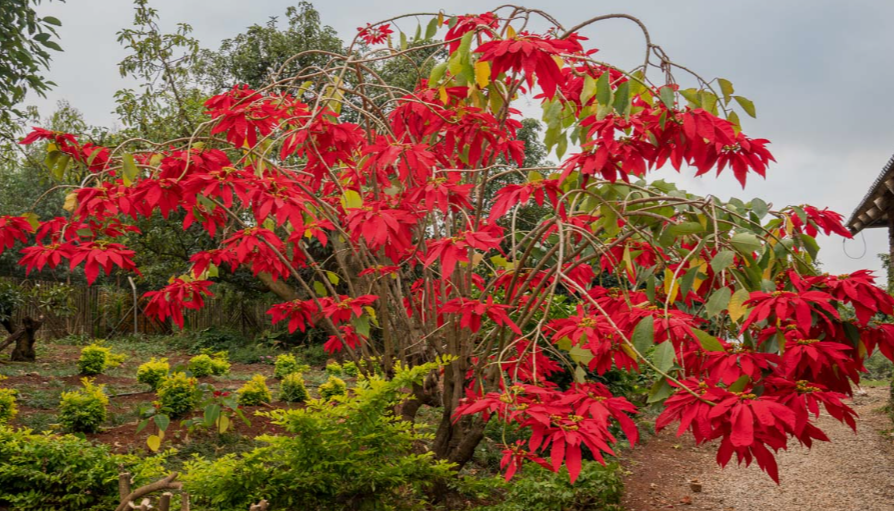
A poinsettia tree is a poinsettia trained on a single stem with a rounded head of colorful bracts. It combines the classic holiday flower with a tree shape. Red, white, pink, and marbled varieties are available. It makes a festive centerpiece without any decorations.
The poinsettia is native to Mexico and Central America. Its milky sap can mildly irritate skin and stomachs, but it is far less toxic than once believed. Indoors, give it bright light and keep it away from drafts. It grows outdoors only in frost-free areas.
21. Blue Point Juniper
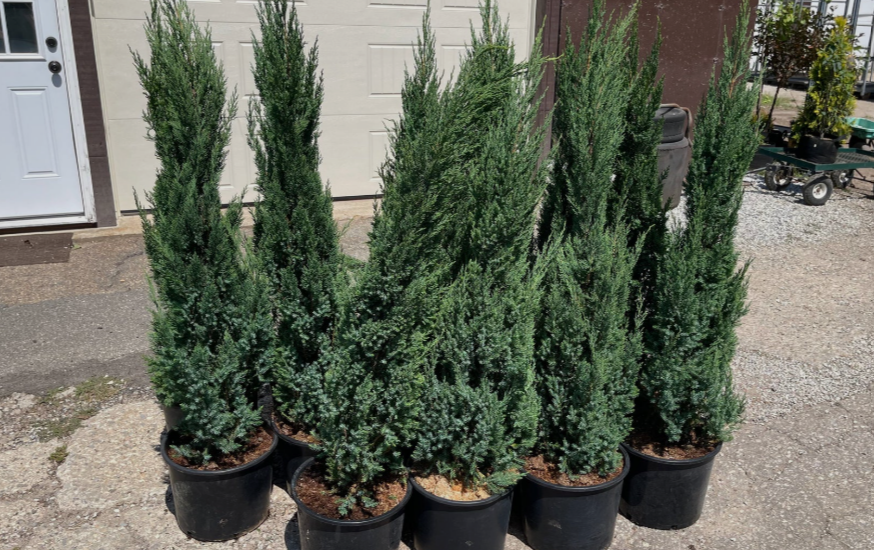
The Blue Point juniper is a dense, pyramidal evergreen with blue-green foliage. It holds a tidy Christmas tree shape without much pruning. Potted plants make striking porch and entryway trees. Its foliage has a fresh, woodsy scent.
The Blue Point juniper is a cultivated form of the Chinese juniper. It grows outdoors in zones 4 through 9 and tolerates drought, heat, and cold. It should stay outdoors most of the time and come inside only briefly. After the holidays, plant it in a sunny spot in the garden.
Sources
- University of Missouri Extension, “A Christmas Tree from the South Pacific”
- University of Illinois Extension, “Grow a Living Christmas Tree with Norfolk Island Pine”
- University of New Hampshire Extension, “Living Christmas Trees”
- Clemson Cooperative Extension, “Living Christmas Trees”
- NC State Extension, “Selection and Care of Living Christmas Trees”