People have been eating palm fruit for at least 7,000 years, long before most of today’s fruit crops were domesticated. Dates fed desert caravans, coconuts sustained island voyagers, and the peach palm was a staple food for ancient Central Americans long before Europeans arrived. Today, palm trees with edible fruits still feed millions of people. They supply sweet snacks, cooking oils, refreshing drinks, and some of the most unusual flavors in the plant world.
Palm fruits are surprisingly varied. Some are sweet and sticky like dates, while others are starchy and savory and have to be cooked like potatoes. A few have scaly skins that look like snakeskin, and others hold clear jelly or crunchy white meat inside a hard shell. Their colors range from bright yellow and orange to deep purple and glossy black.
Most edible palms come from the tropics, so many of them grow outdoors in the United States only in South Florida, Hawaii, and the warmest parts of California and Arizona. A few cold-hardy kinds, like the pindo palm, bear fruit as far north as the Carolinas. Fruits from tropical palms are also widely sold in American grocery stores, either fresh, frozen, canned, or dried.
Not every palm fruit is safe, so never eat one unless you are certain of what it is. The fruits of some ornamental palms, such as the fishtail palm, contain needle-like crystals that burn the mouth and skin. Others are edible only after cooking. When in doubt, admire the fruit and leave it on the tree.
1. Coconut Palm
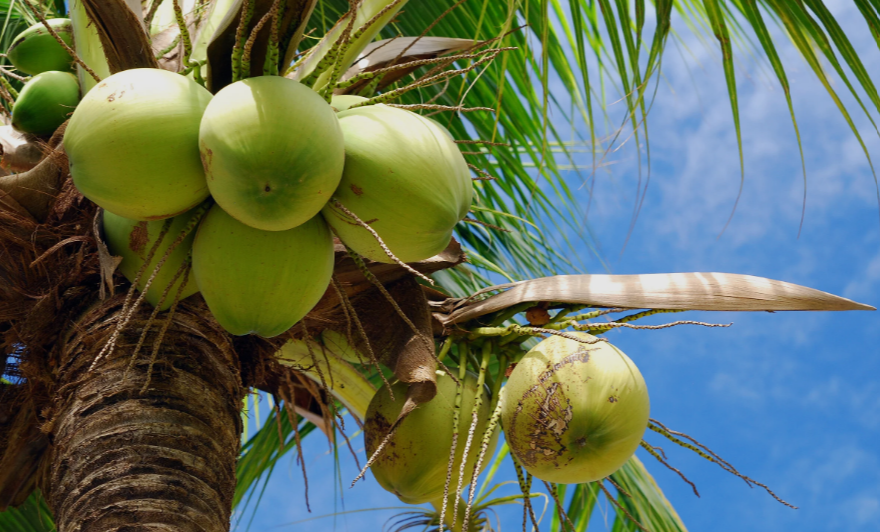
The coconut palm is the most useful palm in the world, supplying water, meat, milk, oil, and fiber from a single fruit. Young green coconuts hold sweet, refreshing water and soft, jelly-like meat that can be scooped out with a spoon. As the nut matures over about a year, the water decreases and the meat turns firm, white, and rich. That mature meat is grated for coconut milk, dried into flakes, or pressed for oil.
The coconut palm grows along tropical coastlines around the world and probably originated in the Indo-Pacific region. In the United States it grows outdoors mainly in South Florida, the Florida Keys, Hawaii, and Puerto Rico, in zones 10b and 11. Tall varieties can reach 80 to 100 feet, while dwarf varieties stay much shorter and start bearing sooner. In Florida, gardeners often choose varieties with some resistance to lethal yellowing, a deadly palm disease.
2. Date Palm
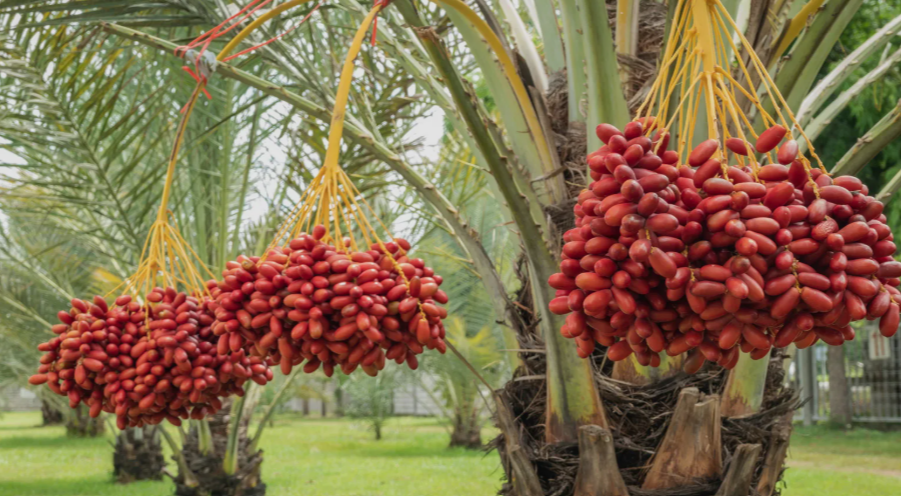
The date palm produces one of the sweetest and oldest cultivated fruits on Earth. Dates grow in heavy hanging clusters below the fronds and ripen in stages, from crisp and yellow or red to soft, sticky, and brown. Each fruit holds a single long seed and is packed with natural sugar. Dates can be eaten fresh, dried, stuffed, or blended into shakes and desserts.
The date palm originated along the rivers and desert oases of North Africa and the Middle East. In the United States, California produces more than half of the nation’s dates, mostly in the hot, dry Coachella Valley, and Arizona grows most of the rest near Yuma. Much of California’s crop traces back to thousands of Deglet Noor offshoots imported from Algeria in the early 1900s. Growers pollinate the female flowers by hand each spring to guarantee a full harvest.
Also Read: Palm Trees with Coconuts
3. Pindo Palm
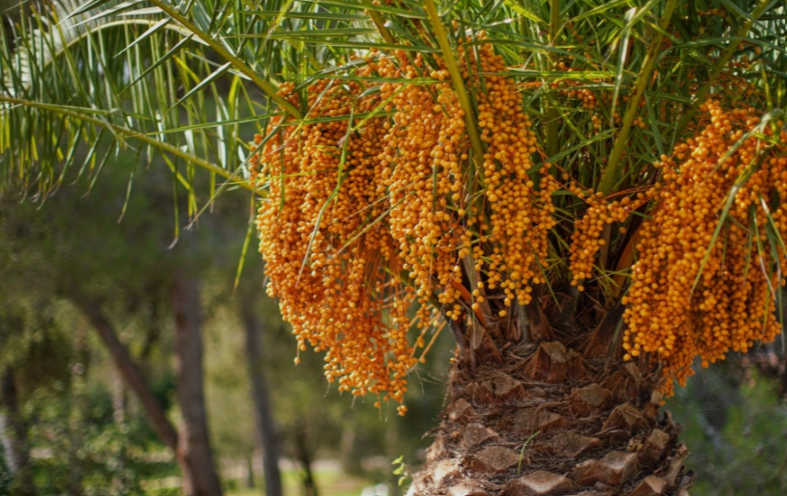
The pindo palm, also called the jelly palm, bears clusters of round yellow to orange fruits about half an inch to an inch across. The fruit tastes like a tart apricot with hints of pineapple and banana. It can be eaten fresh, made into jelly and syrup, or fermented into homemade wine. A single flower stalk can produce 50 pounds of fruit or more.
The pindo palm is native to southern Brazil, Uruguay, and Argentina. It is one of the most cold-hardy feather palms, surviving down to about 10°F. In the United States it grows from coastal South Carolina and Georgia through North and Central Florida, the Gulf Coast, Texas, and California. It actually grows better in cooler, less humid areas than in South Florida.
4. Açaí Palm
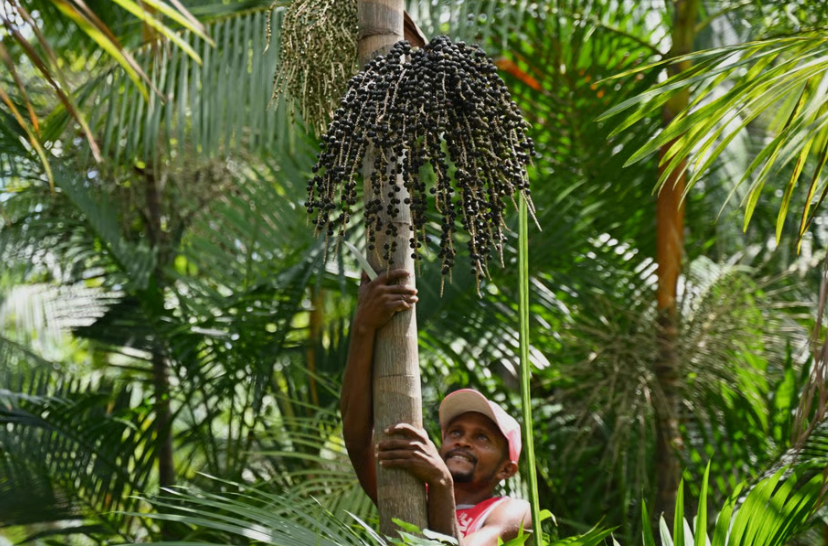
The açaí palm produces small, round, dark purple berries about half an inch across. Each fruit is mostly seed, with only a thin layer of purple pulp that tastes earthy, slightly tart, and faintly chocolatey. The fruit spoils very quickly after picking, so it is almost always frozen as pulp or dried into powder. In the United States it is best known in smoothie bowls topped with granola and fresh fruit.
The açaí palm is native to the floodplains and swamps of the Amazon basin in Brazil, where it has been a daily food for centuries. It grows in clumps of tall, slender stems that can reach 60 feet or more. In the United States it grows outdoors only in the warmest parts of South Florida and Hawaii. It needs constant warmth, abundant water, and rich, moist soil.
5. Peach Palm
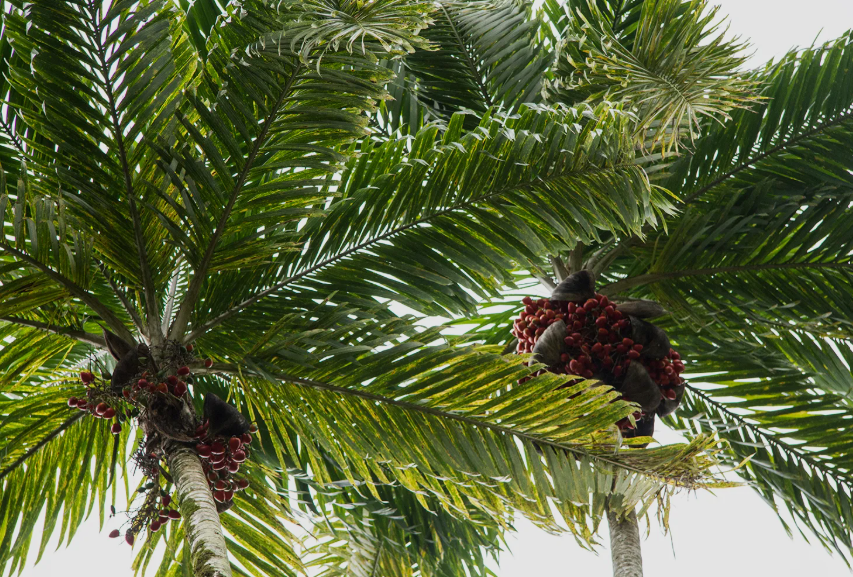
The peach palm, known in Latin America as pejibaye, is named for its colorful fruits, not their flavor. The fruits are yellow, orange, or scarlet and hang in heavy clusters, and the flesh is dry, mealy, and slightly sweet. Raw fruit contains a substance that interferes with digestion, so it is always boiled, often for hours in salted water. Once cooked, it tastes something like chestnuts, sweet potatoes, or squash and is often eaten with a pinch of salt or mayonnaise.
The peach palm is native to the Amazon region and northern South America and has been cultivated for thousands of years. It is a clumping palm with multiple stems that can reach 65 to 100 feet tall. In the United States it has been grown in Hawaii since the early 1990s, mostly for its tender hearts of palm. It also grows in South Florida home landscapes, where fruit ripens about 8 to 9 months after flowering.
6. Salak Palm
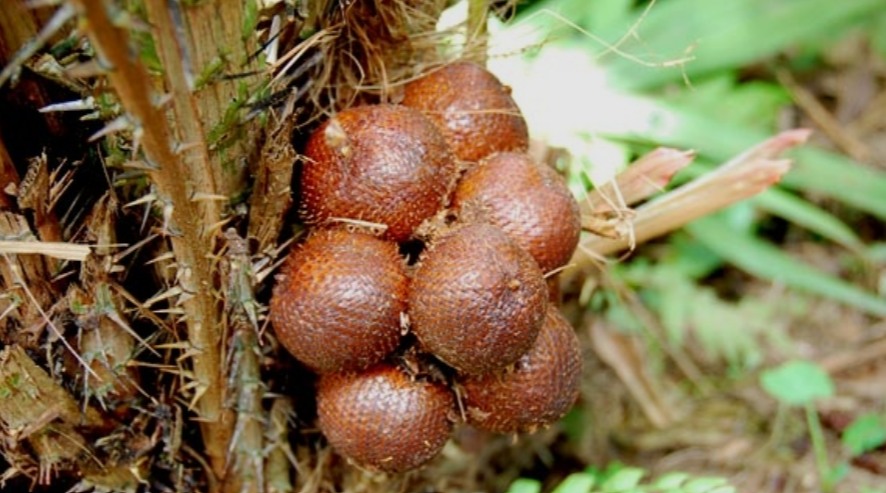
The salak palm produces one of the most striking fruits in the world, commonly called snake fruit. Each fruit is covered in shiny, reddish-brown scales that look just like snakeskin. Under the thin, brittle skin are crisp, creamy white lobes with a sweet-tart flavor often compared to apple, pineapple, and banana. The fruit grows in tight clusters at the base of the plant, nestled among very spiny leaf stalks.
The salak palm is native to Java and Sumatra in Indonesia, where it is a common market fruit. It grows as a low, nearly trunkless clump of tall, spiny fronds that can reach about 20 feet. Male and female flowers usually grow on separate plants, so growers often pollinate by hand. In the United States it is grown only by tropical fruit collectors in South Florida and Hawaii.
Also Read: Palm Trees with Berries
7. Palmyra Palm
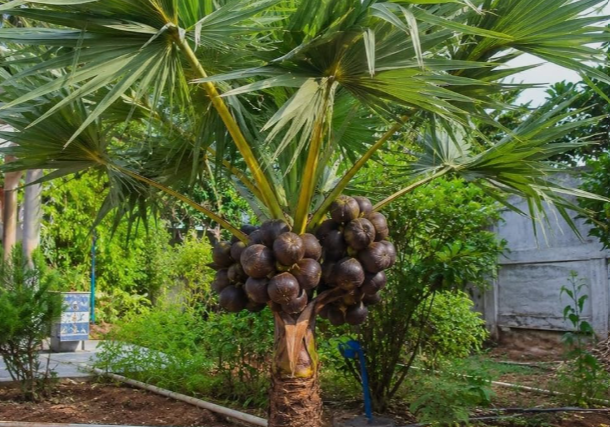
The palmyra palm, also called the toddy palm, produces large, round, dark purple to black fruits up to 7 inches across. Young fruits hold translucent, jelly-like seed sacs often called ice apples, which are cool, sweet, and refreshing on hot days. Ripe fruits have a fibrous, orange pulp that smells sweet and is used in cakes and sweets. Its sap is also tapped to make palm sugar and a drink called toddy.
The palmyra palm is native to South and Southeast Asia, including India, Sri Lanka, Myanmar, and Cambodia. It is the state tree of Tamil Nadu in southern India, where nearly every part of the plant is used. The palm grows 60 to 100 feet tall with a crown of huge, stiff fan leaves. In the United States it is grown only in a few botanical gardens and collections in South Florida and Hawaii.
8. Nipa Palm
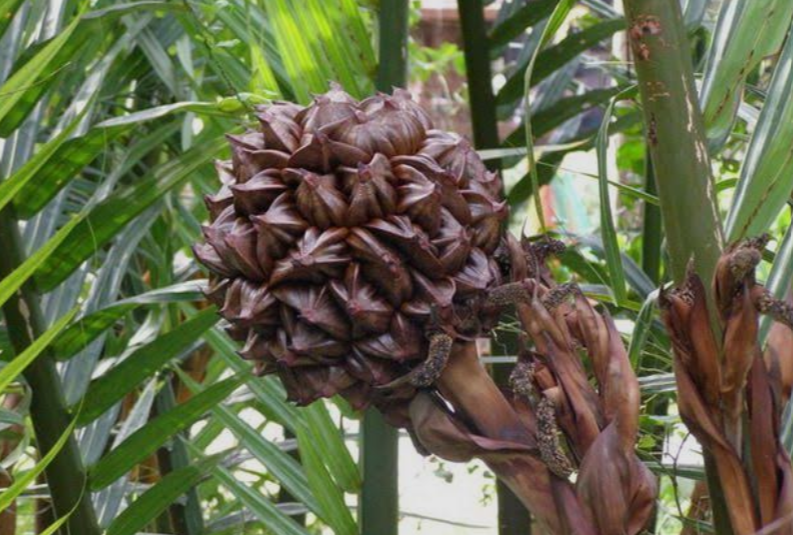
The nipa palm is unusual because its trunk grows underground, so only its long, upright fronds show above the mud. Its fruit forms a large, round head up to a foot across, made of dozens of woody, tightly packed segments. Inside each young segment is a translucent, jelly-like seed that tastes mild and slightly sweet. In Southeast Asia these seeds are eaten in desserts like halo-halo and ais kacang.
The nipa palm grows in mangrove swamps and tidal riverbanks along the coasts of the Indian and Pacific Oceans. Its fronds can reach 30 feet long and are used for thatching roofs. Its sap is tapped to make vinegar, sugar, and fermented drinks. The palm is rarely grown in the United States, but canned nipa seeds are sold in many Asian grocery stores.
9. Moriche Palm
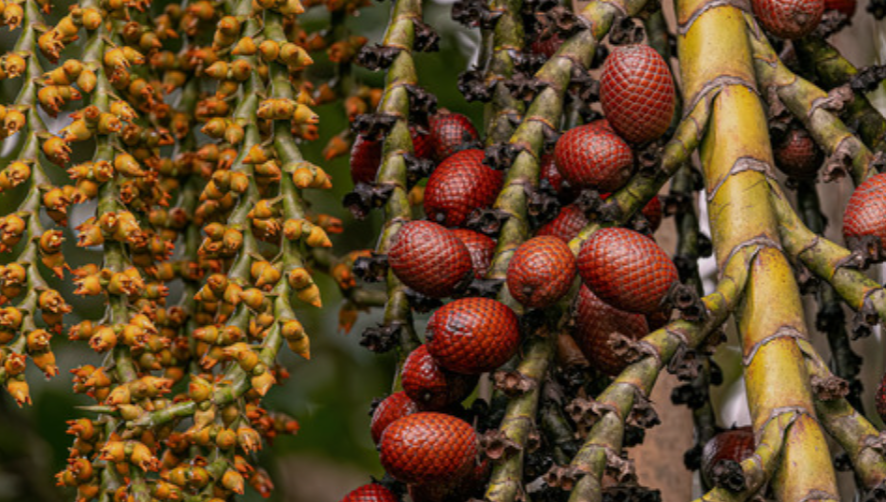
The moriche palm, also called the buriti palm, produces oval fruits covered with shiny reddish-brown scales, much like snake fruit. Inside is a thin layer of oily, bright orange pulp that is extremely rich in vitamin A. The pulp is eaten fresh or made into juice, ice cream, jams, and sweets. Its oil is also used in cooking and skin-care products.
The moriche palm is native to the swamps and river valleys of the Amazon basin and northern South America. It is one of the tallest palms in the region, reaching 60 to more than 100 feet. Some Indigenous peoples call it the “tree of life” because they use almost every part of it. In the United States it is grown only in a few botanical collections in South Florida.
10. Oil Palm
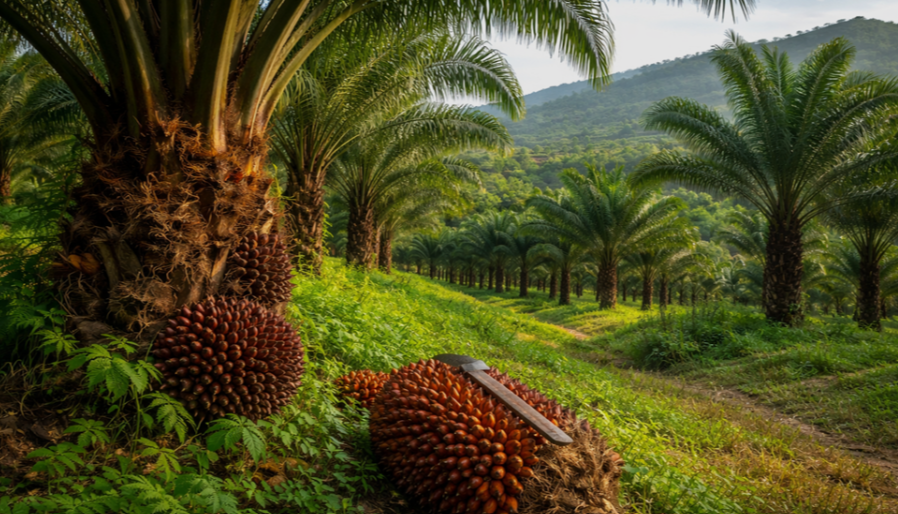
The oil palm produces heavy bunches holding hundreds of small, red-orange to black fruits. The fleshy pulp is pressed to make red palm oil, while the seeds yield a lighter oil called palm kernel oil. Together, they make palm oil the most widely produced vegetable oil in the world. In West Africa, fresh palm fruits are cooked into rich, flavorful soups and stews.
The oil palm is native to West and Central Africa and is now grown on huge plantations across Southeast Asia and Latin America. It grows 60 to 65 feet tall with a crown of long, arching fronds. Its rapid expansion has raised serious concerns about tropical deforestation. In the United States it is grown mainly in botanical gardens in South Florida and Hawaii.
11. Doum Palm
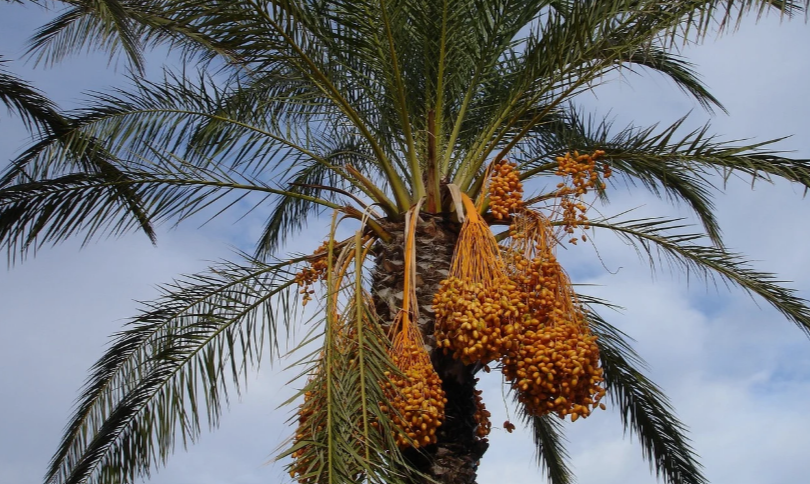
The doum palm is one of the few palms with a branching trunk, which splits into Y-shaped forks as it grows. Its glossy, orange-brown fruits are about the size of a small apple and have a hard, fibrous flesh. The flesh tastes surprisingly like gingerbread or dates, so the tree is often called the gingerbread palm. In Egypt, the dried fruit is soaked to make a sweet drink.
The doum palm is native to the Nile Valley, East Africa, and the Arabian Peninsula. Its fruits have been found in ancient Egyptian tombs, including the tomb of Tutankhamun. It tolerates intense heat and drought and grows about 30 to 50 feet tall. In the United States it is grown occasionally in desert gardens in Arizona and Southern California, as well as in South Florida.
12. California Fan Palm
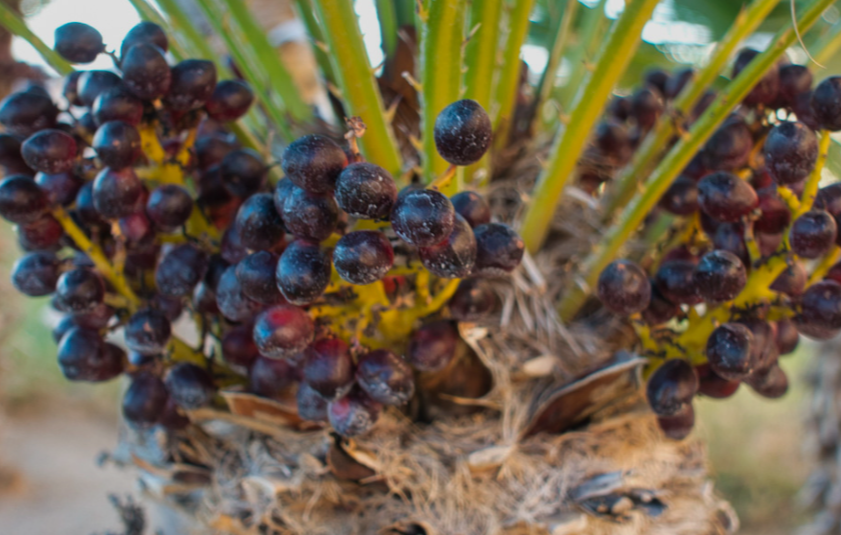
The California fan palm produces long, hanging clusters of small black berries about a third of an inch across. The fruit has a thin, sweet pulp, often compared to dates or raisins, around a hard seed. The Cahuilla people of Southern California ate the berries fresh and dried and ground the seeds into flour. Coyotes, foxes, and birds also feed on the fruit.
The California fan palm is the only palm native to the western United States. It grows naturally in desert oases and canyons of southeastern California, western Arizona, and northern Baja California. It reaches 50 to 60 feet tall, often with a thick skirt of dead fronds around the trunk. It handles heat, drought, and cold down to about 15°F.
Sources
- University of Florida IFAS Extension, “Pejibaye (Peach Palm) Growing in the Florida Home Landscape”
- University of Florida IFAS Extension, “Pindo Palm”
- University of Florida IFAS Extension, “Coconut Palm Growing in the Florida Home Landscape”
- University of California Agriculture and Natural Resources, “Growers Refine Date Palm Irrigation with UC ANR Research”
- Mississippi State University Extension, “Hardy Palms and Cycads for Mississippi”