Few sounds say “tropics” like a coconut thudding onto the sand. A single coconut palm can drop dozens of nuts a year. Each one carries its own supply of water, food, and a sprouting embryo, packed in a waterproof husk that can float across oceans. Palm trees with coconuts have shaped island cultures for thousands of years, supplying food, drink, oil, fiber, and building material.
Strictly speaking, all true coconuts come from just one species, the coconut palm. Over centuries of cultivation, though, growers have developed many distinct varieties. They differ in height, trunk shape, nut color, flavor, and disease resistance. A towering tall variety on a beach and a compact dwarf in a backyard can look like completely different trees.
Coconut varieties fall into two main groups, talls and dwarfs. Tall types can reach 80 to 100 feet and usually have curved trunks that are swollen at the base. Dwarf types grow more slowly, start bearing at a younger age, and often have narrower, straighter trunks. Hybrids combine traits of both.
In the United States, coconut palms grow outdoors only in the warmest areas, mainly South Florida, the Florida Keys, Hawaii, and Puerto Rico. They need zones 10b and 11, plenty of sun, and warm temperatures year-round. In Florida, choosing the right variety matters because of lethal yellowing, a deadly disease that has killed huge numbers of coconut palms since the 1970s.
1. Jamaica Tall Palm Tree
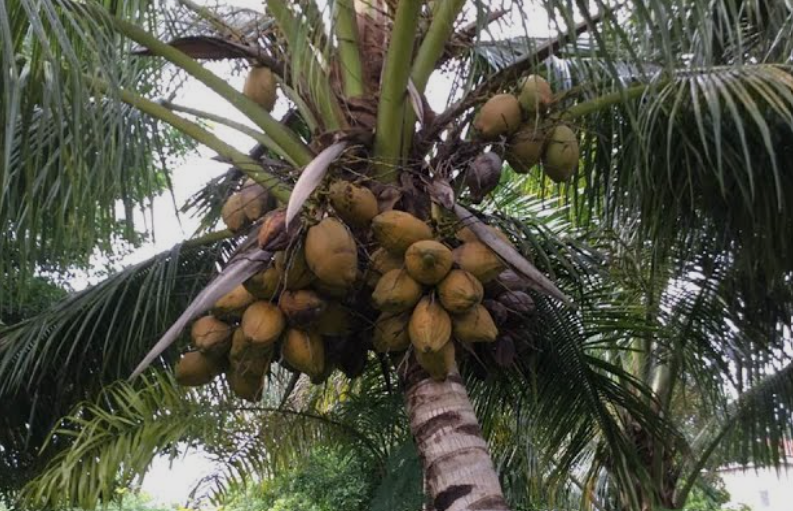
The Jamaica Tall, also called the Atlantic Tall, is the classic coconut palm of Caribbean beaches and old Florida postcards. It grows fast, has a swollen base and a gracefully curved trunk, and can eventually reach 80 to 100 feet tall. Its coconuts are large and green or bronze. The crown is broad and full, with long, sweeping fronds.
For decades it was the most common coconut palm in South Florida and is well adapted to the local climate. However, it has very low resistance to lethal yellowing. Most of Florida’s old Jamaica Tall palms died during outbreaks in the 1970s and later. Today it is rarely planted in areas where the disease is active.
2. Panama Tall Palm
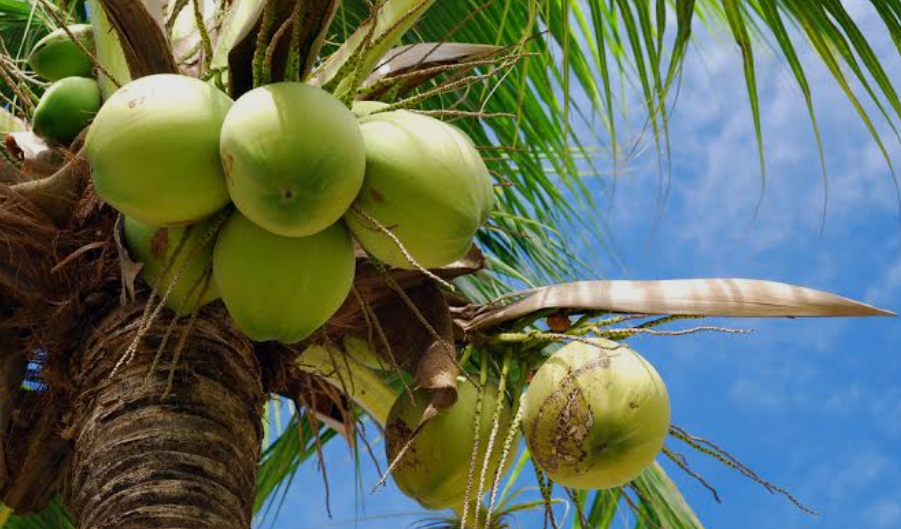
The Panama Tall, also called the Pacific Tall, is a large, robust coconut palm with a thick trunk that is often crooked and swollen at the base. Its nuts are big and green or bronze, with plenty of meat inside. It grows quickly and develops a large, heavy crown. Its strong build and large fruit made it popular for commercial copra production.
The Panama Tall comes from the Pacific coast of Central America. It became popular in the Caribbean in the 1980s after early studies suggested it tolerated lethal yellowing better than the Jamaica Tall. Florida trials later showed it has only low resistance. It is still grown in parts of Florida and Hawaii for its size and productive nuts.
Also Read: Palm Trees with Berries
3. Malayan Yellow Dwarf
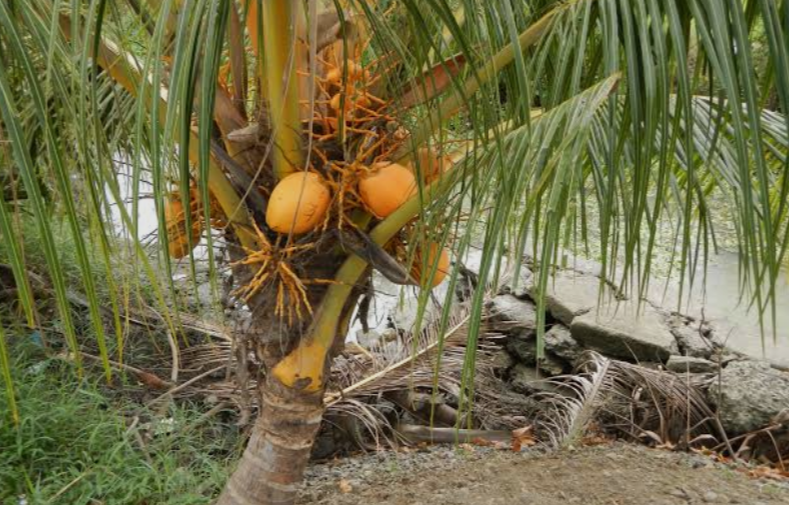
The Malayan Yellow Dwarf is one of the most widely planted coconut palms in Florida. Its young coconuts and leaf stalks are bright yellow, which makes clusters of fruit stand out against the green fronds. Its trunk is narrower and straighter than the trunks of tall varieties, and it doesn’t swell at the base. It grows slowly and usually begins producing coconuts within a few years of planting.
The Malayan Dwarf was planted heavily in Florida from the 1970s onward because it was believed to resist lethal yellowing. Long-term trials later found that it is only slightly less susceptible than the Jamaica Tall. Even so, it remains popular for home landscapes because of its manageable size and colorful nuts. Its sweet young coconuts are prized for drinking.
4. Malayan Golden Dwarf
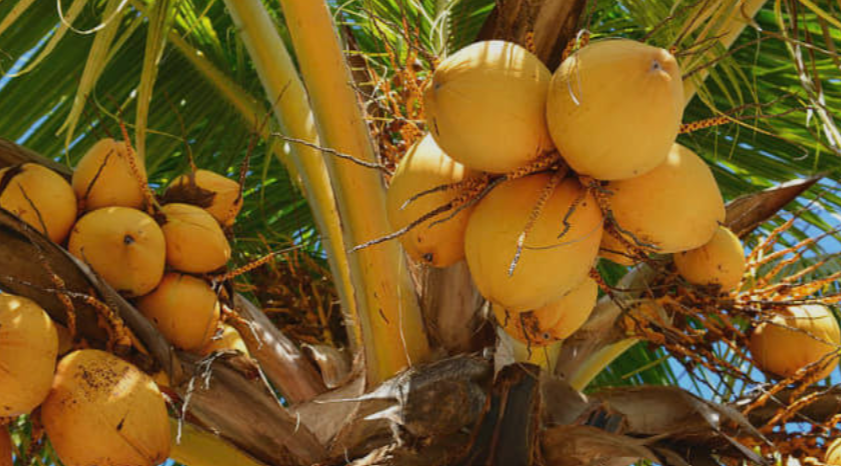
The Malayan Golden Dwarf, sometimes called the Red Malayan Dwarf, is a color form of the Malayan Dwarf. Its young coconuts and leaf stalks are a warm golden orange to reddish color. Like the yellow form, it has a narrow, straight trunk and grows more slowly than tall varieties. It is often considered the most rugged of the Malayan color forms, though its foliage isn’t as lush.
The Malayan Golden Dwarf is planted in South Florida, Hawaii, and Puerto Rico for its colorful fruit and compact size. Its nuts are popular for fresh coconut water. Most Malayan Dwarfs pollinate themselves, so seedlings usually grow true to type. To make sure you get the right variety, buy palms from nurseries that sell certified Malayan seed.
5. Maypan Palm
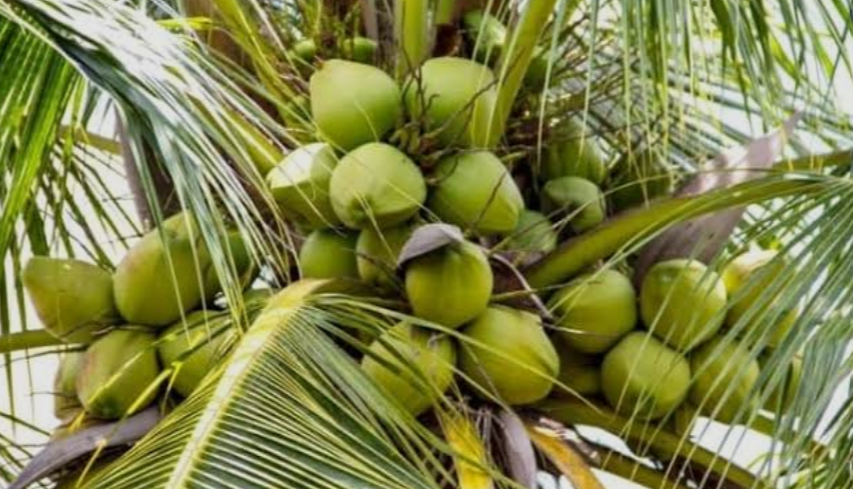
The Maypan is a hybrid coconut created in Jamaica in 1974 by crossing the Malayan Dwarf with the Panama Tall. It looks much like the Jamaica Tall, with a tall, curved trunk and green or bronze nuts. It grows vigorously and produces abundant coconuts. Its name combines the first letters of its two parent varieties.
The Maypan was developed to replace coconut palms lost to lethal yellowing in Jamaica, and it was widely planted in Florida as well. Like the Malayan Dwarf, it later proved more susceptible to the disease in Florida than early reports suggested. It is still grown in South Florida and throughout the Caribbean. It is valued for its classic tall form and heavy yields.
6. Fiji Dwarf Palm
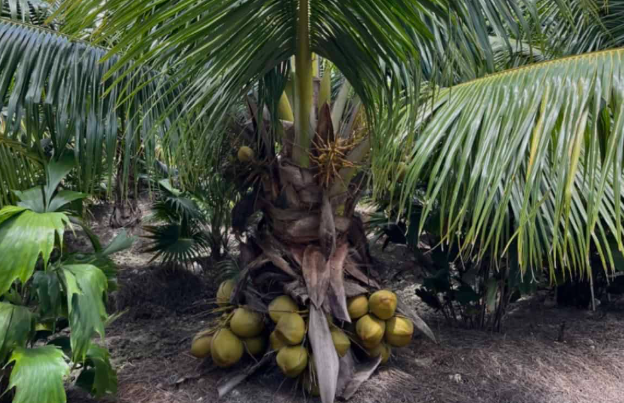
The Fiji Dwarf, also called Niu Leka, is a compact, slow-growing coconut palm with a thick trunk and short, broad fronds. Its crown is dense and full, so even young palms look lush. Its coconuts are green or bronze and medium-sized. It usually stays much shorter than other varieties for many years.
The Fiji Dwarf comes from the Pacific islands of Fiji. In South Florida it is popular because it appears to have high resistance to lethal yellowing. Seedlings don’t always grow true to type, and some turn into tall palms. Buying from a reputable nursery helps ensure you get a true Fiji Dwarf.
7. King Coconut Palm
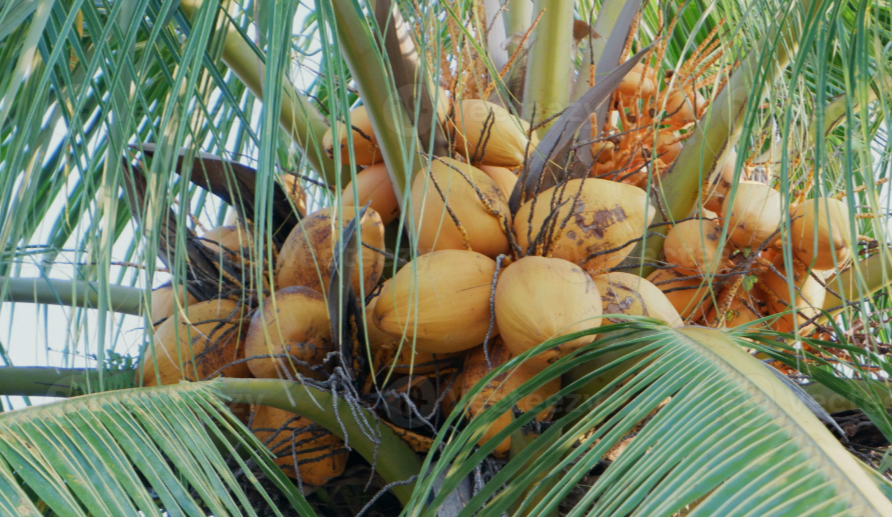
The King coconut is famous for its bright orange husks and unusually sweet coconut water. It grows as a medium-sized palm with a slender trunk and graceful fronds. Its clusters of orange nuts make it one of the most colorful coconut palms. The water from young nuts is often considered sweeter and more refreshing than that of other varieties.
The King coconut is native to Sri Lanka, where its young nuts are sold on almost every street corner for drinking. In the United States it is grown mainly by collectors and fruit growers in South Florida and Hawaii. It needs full sun, warmth, and well-drained soil. Bottled King coconut water is also sold in many American stores.
Aslo Read: Most Common Palm Tree Problems
8. Makapuno Palm
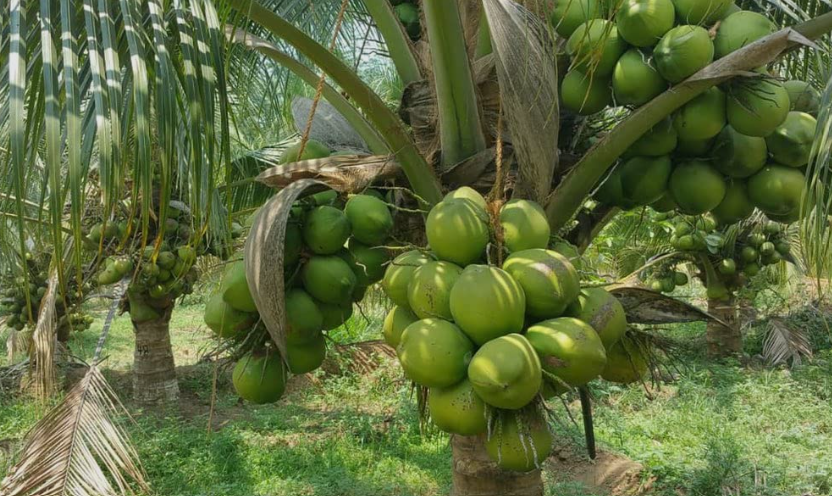
The Makapuno is a rare natural mutation of the coconut palm with unusual nuts. Instead of firm white meat and clear water, its coconuts are filled with soft, jelly-like flesh. In the Philippines, this sweet flesh is a prized ingredient in desserts, ice cream, and preserves. Outwardly, the palm and its nuts look like ordinary coconuts.
The Makapuno originated in the Philippines. Its seeds usually can’t sprout on their own, so growers raise new plants from embryos in laboratories. In the United States it is grown only by a handful of collectors and research gardens in South Florida and Hawaii. Its fruit is far more often found as jarred makapuno strings in Asian grocery stores.
9. Double Coconut Palm
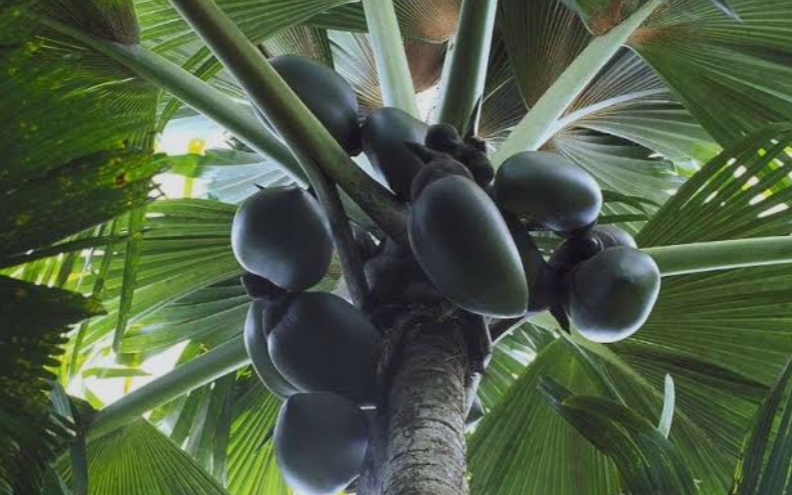
The double coconut, also called coco de mer, isn’t a true coconut, but it produces the largest seed of any plant on Earth. Its huge, two-lobed nut can weigh more than 40 pounds and takes about six to seven years to mature. The palm itself grows slowly to about 80 to 100 feet tall and carries huge fan-shaped leaves. Male and female flowers grow on separate trees.
The double coconut is native only to two islands in the Seychelles in the Indian Ocean, where it is protected. Its nuts once washed up on distant shores and became the subject of many legends. In the United States, it grows only in a few botanical gardens in South Florida and Hawaii. It is extremely sensitive to cold and needs constant warmth and humidity.
10. Chilean Wine Palm
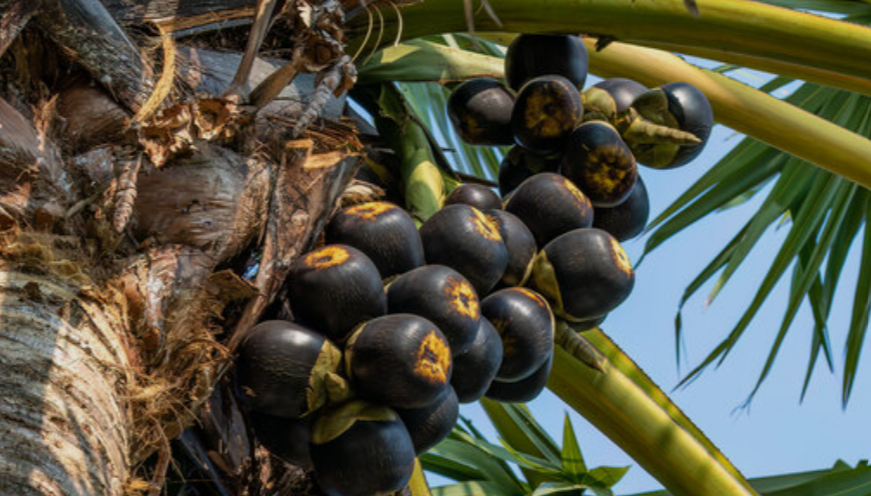
The Chilean wine palm produces small fruits called coquitos, which look like miniature coconuts about an inch across. Each one has a hard shell surrounding firm white meat that tastes much like coconut. In Chile, coquitos are eaten as a snack and used in desserts. The palm itself has a massive, smooth gray trunk and a dense crown of feathery fronds.
The Chilean wine palm is native to central Chile. It is one of the most cold-hardy feather palms and survives temperatures down to about 15°F. In the United States it grows mainly in California, especially around the San Francisco Bay Area. It grows slowly but can eventually reach 50 to 80 feet tall.
Sources
- University of Florida IFAS Extension, “Coconut Palm Cultivars in Florida”
- University of Florida IFAS Extension, “Coconut Palm Growing in the Florida Home Landscape”
- University of Florida IFAS Extension, “Lethal Yellowing of Palm”
- University of Florida, “Malayan Dwarf Coconut Palm”
- Cayman Islands Department of Agriculture, “All About Coconuts”