Every summer, the pindo palms in Southern gardens hang heavy with clusters of golden fruit that smell like pineapple and apricot. Birds, raccoons, and neighborhood children often get to them before the gardener does. Many palm trees with berries are just as generous, producing big hanging clusters of red, orange, purple, or glossy black fruit. Some of those fruits are delicious, some feed wildlife, and a few are harvested by the ton.
Botanically speaking, most palm “berries” are drupes, small fleshy fruits with a single hard seed in the center. The date is an exception, since botanists classify it as a true berry. Gardeners and cooks call almost all small round palm fruits berries anyway. Most of them grow on long, branched stalks that emerge from among or below the fronds.
Palm fruits are important food for wildlife. Black bears, deer, foxes, raccoons, mockingbirds, and many other animals depend on them in fall and winter. Several native palms in the Southeast are among the most valuable wildlife plants in their habitats. Some of these palms also spread their seeds widely, so they can pop up as volunteers across a yard.
Not every palm fruit is safe to eat, so never taste one unless you know exactly what it is. Some contain irritating crystals, and others are simply bitter or fibrous. The palms below grow across the United States, from the deserts of California and Arizona to the coastal Carolinas, Florida, and the Pacific Northwest.
1. Pindo Palm
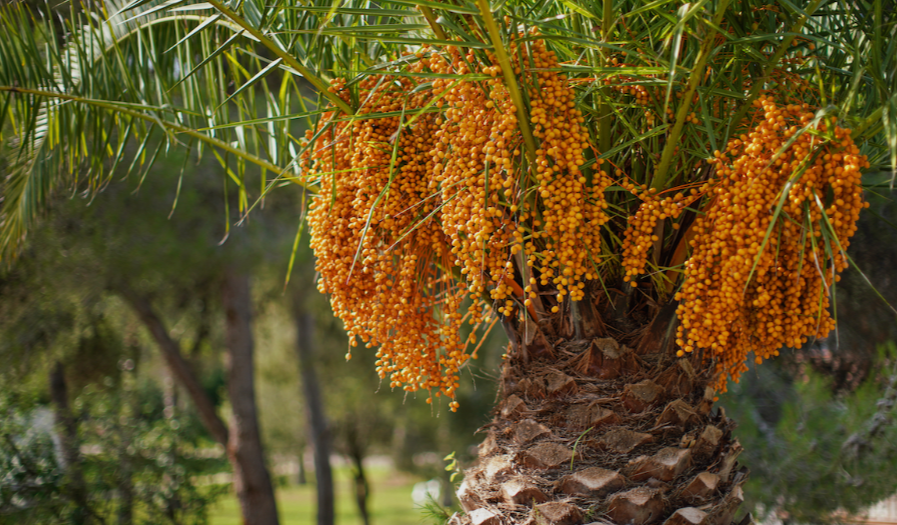
The pindo palm, also called the jelly palm, produces some of the tastiest fruit of any palm grown in the United States. In summer it bears heavy clusters of round yellow to orange fruits about an inch across, with a sweet-tart flavor often compared to pineapple, banana, and apricot. The fruit has been used for generations to make jelly, jam, and homemade wine. The palm itself grows 15 to 20 feet tall, with a stout trunk and gracefully arching, blue-gray fronds.
The pindo palm is native to southern Brazil, Uruguay, and northeastern Argentina. It is one of the most cold-hardy feather palms, surviving brief dips to about 10°F. In the United States it grows from coastal South Carolina and Georgia through Florida, the Gulf Coast, Texas, and California. Fallen fruit can be messy, so it is best planted away from patios and driveways.
2. Date Palm
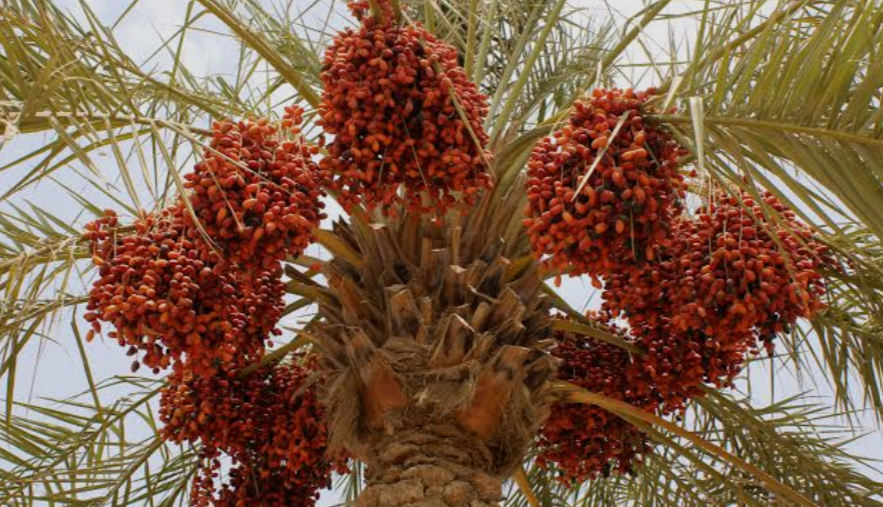
The date palm produces one of the oldest cultivated fruits in the world. Dates grow in large hanging clusters below the fronds, starting green and ripening to amber, red, or dark brown. Each sweet, sticky fruit holds a single long seed. Date palms are either male or female, and only female trees produce fruit.
The date palm is native to the deserts of the Middle East and North Africa. In the United States, almost all commercial dates are grown in California’s Coachella Valley and near Yuma, Arizona. Growers hand-pollinate the female flowers each spring to make sure the trees bear a full crop. In landscapes it reaches 50 to 80 feet tall and grows best in hot, dry climates in zones 9 through 11.
3. Açaí Palm
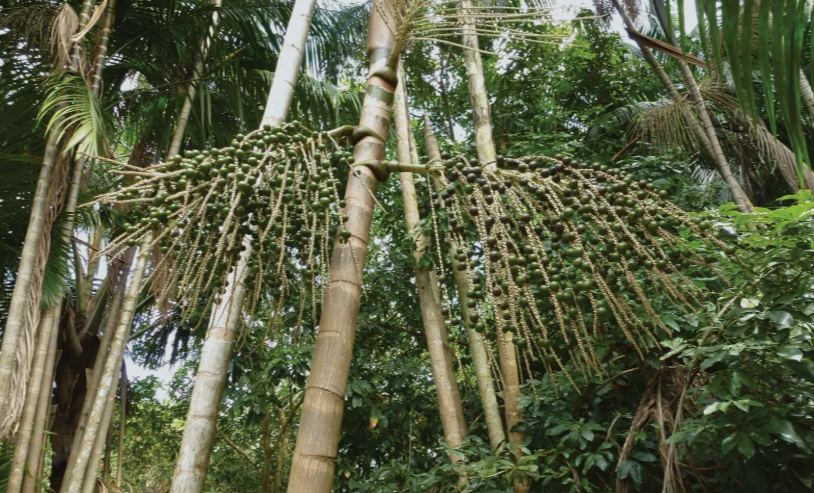
The açaí palm is famous for its small, dark purple berries, which have become a popular health food in the United States. The round fruits are about half an inch across and grow by the hundreds on branched clusters below the crown. Their thin layer of purple pulp tastes earthy and slightly chocolatey. The palm grows in clumps of tall, slender, ringed stems that can reach 60 feet or more.
The açaí palm is native to the swampy floodplains of the Amazon basin in Brazil. Most açaí sold in the United States arrives as frozen pulp from Brazil, where the berries are harvested by hand from wild and farmed palms. It grows outdoors in the United States only in the warmest parts of South Florida and Hawaii. It needs constant warmth, abundant water, and rich, moist soil.
4. Cabbage Palm
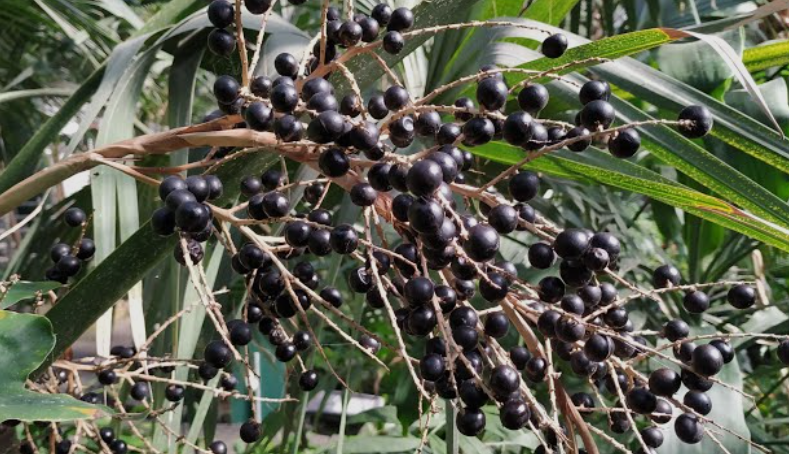
The cabbage palm, also called the sabal palm, is the state tree of both Florida and South Carolina. In late summer and fall it produces huge, branched clusters of small, shiny black berries about a third of an inch across. These berries are an important food for wildlife, including birds, raccoons, deer, and black bears. The palm grows 40 to 50 feet tall and has a round crown of large, fan-shaped leaves.
The cabbage palm is native to the coastal plain of the southeastern United States, from North Carolina to Florida and west along the Gulf Coast. It also grows in the Bahamas and Cuba. It handles salt spray, drought, flooding, and hurricanes better than most palms. It grows in zones 8 through 11 and is one of the most widely planted palms in Florida.
5. Dwarf Palmetto
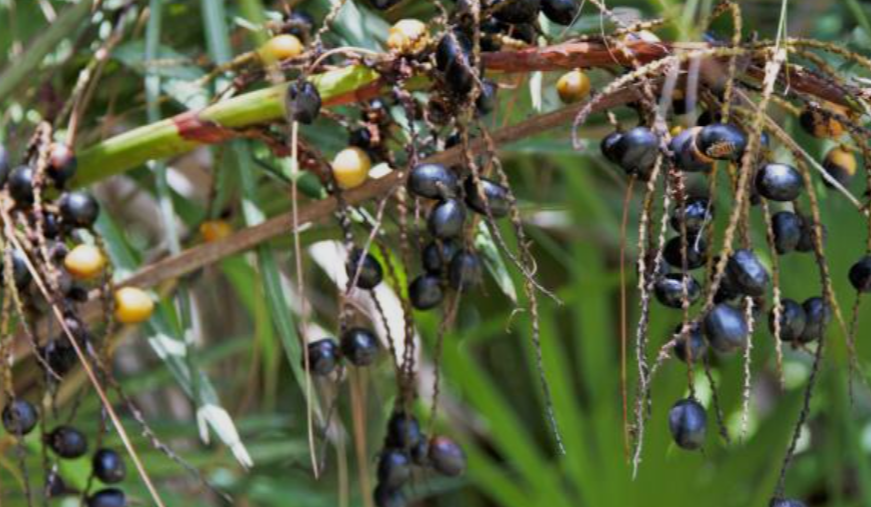
The dwarf palmetto is a small, usually trunkless palm with stiff, blue-green fan leaves. In summer it sends up tall, branched flower stalks that rise above the foliage. These stalks later carry clusters of glossy black berries about a third of an inch across. Birds and small mammals feed on the fruit through fall and winter.
The dwarf palmetto is native to the southeastern United States, from North Carolina to Florida and west to Texas, Arkansas, and Oklahoma. It grows naturally in river floodplains and moist woods, and it handles both wet soil and shade. It is one of the hardiest palms, surviving temperatures near 0°F. It usually grows 4 to 6 feet tall and wide, so it works well in shady gardens.
Also Read: Most Common Palm Tree Problems
6. Saw Palmetto
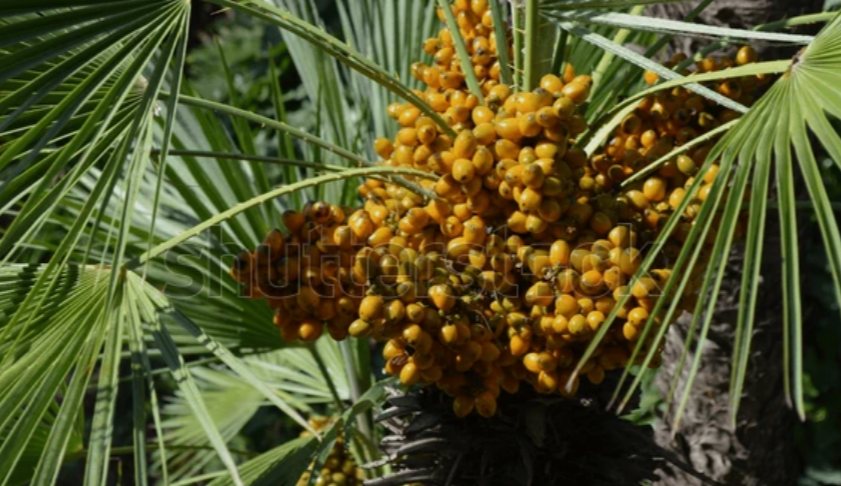
Saw palmetto is a low, clumping native palm best known for its berries. Its fruits are oval, about half an inch to an inch long, and ripen from yellow to glossy black in late summer and fall. The berries are harvested for herbal supplements, and Florida now regulates commercial collection to protect wild plants. Bears, deer, raccoons, turkeys, and many birds also rely on the fruit.
Saw palmetto grows wild from South Carolina through Florida and west to Texas, especially in pine forests and coastal scrub. It typically grows 5 to 10 feet tall, with stems that creep along the ground. Its spring flowers produce a prized honey. It grows in zones 8a through 11 and thrives in sandy, salty soil.
7. Chinese Fan Palm
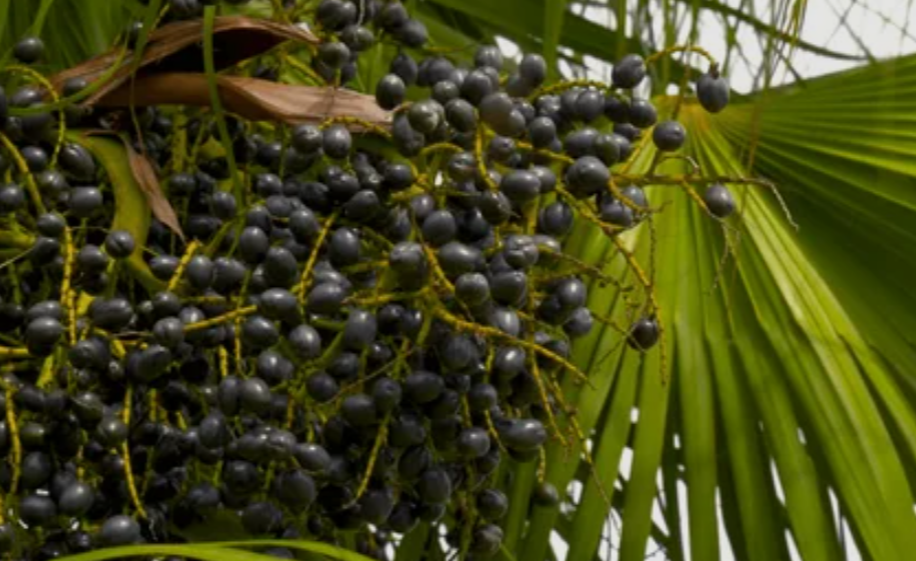
The Chinese fan palm, also called the fountain palm, has large fan leaves whose long, drooping tips hang like a waterfall. In summer and fall it produces clusters of olive-shaped fruits about an inch long. They start blue-green and ripen to dark blue-black. Birds and other wildlife spread the seeds widely.
The Chinese fan palm is native to southern Japan, Taiwan, and southern China. In the United States it grows outdoors in Florida, the Gulf Coast, Southern California, and southern Texas, and it usually reaches about 30 feet tall. It seeds itself freely and is considered invasive in parts of Florida. Removing the fruit clusters before they ripen helps prevent unwanted seedlings.
8. Windmill Palm
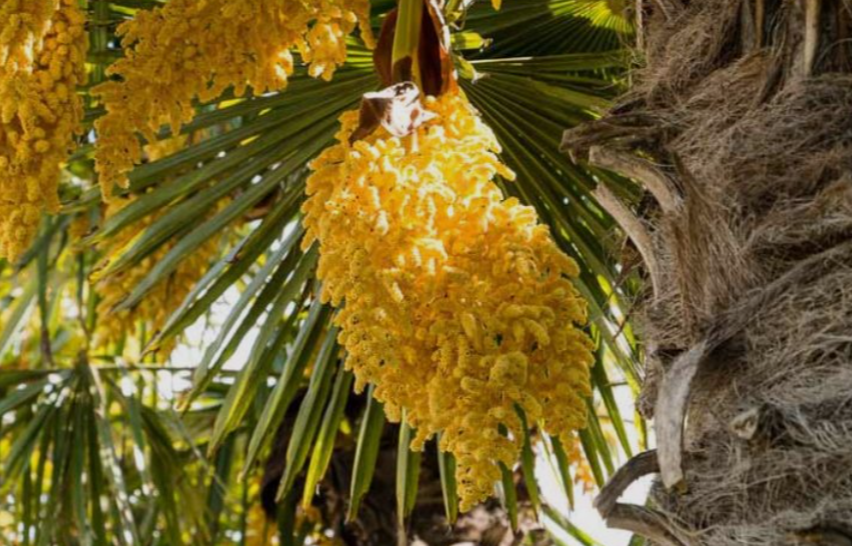
The windmill palm is one of the most popular cold-hardy palms in the United States. Its trunk is covered with a thick mat of brown, hairy fibers, and its fan leaves look like windmill blades. Female trees produce clusters of small, kidney-shaped fruits that ripen to blue-black with a waxy coating. They look a little like small grapes.
The windmill palm is native to central and eastern China. It survives temperatures down to about 5 to 10°F, so it grows farther north than almost any other trunked palm. In the United States it grows in the Pacific Northwest, the mid-Atlantic states, Tennessee, and throughout the Southeast. It usually reaches 20 to 40 feet tall and does well in partial shade.
Also Read: Palm Trees With Smooth Trunks
9. California Fan Palm
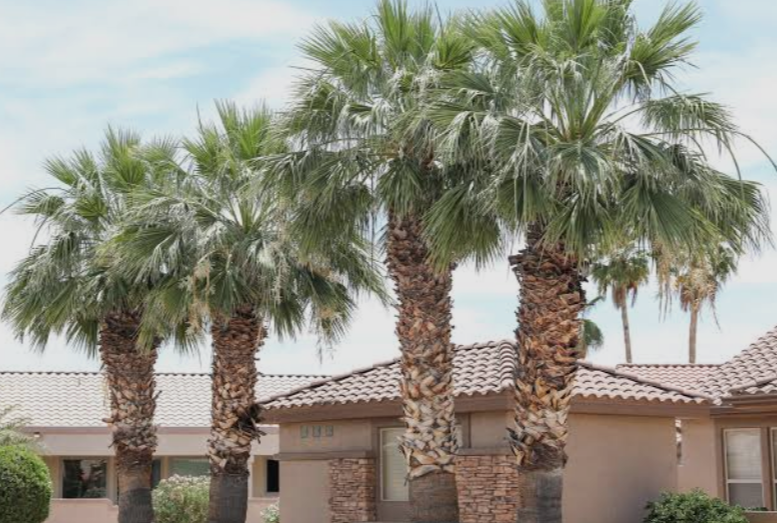
The California fan palm is the only palm native to the western United States. In late summer it produces long, hanging clusters of small black berries about a third of an inch across. The fruit has a thin, sweet pulp around a hard seed. The Cahuilla people ate the berries fresh and dried and ground the seeds into flour.
The California fan palm grows naturally in desert oases and canyons of southeastern California, western Arizona, and northern Baja California. It grows 50 to 60 feet tall and has a thick trunk often covered by a skirt of dead fronds. Coyotes, foxes, and birds eat the fruit and spread the seeds through the desert. It handles heat, drought, and cold down to about 15°F.
10. Montgomery Palm
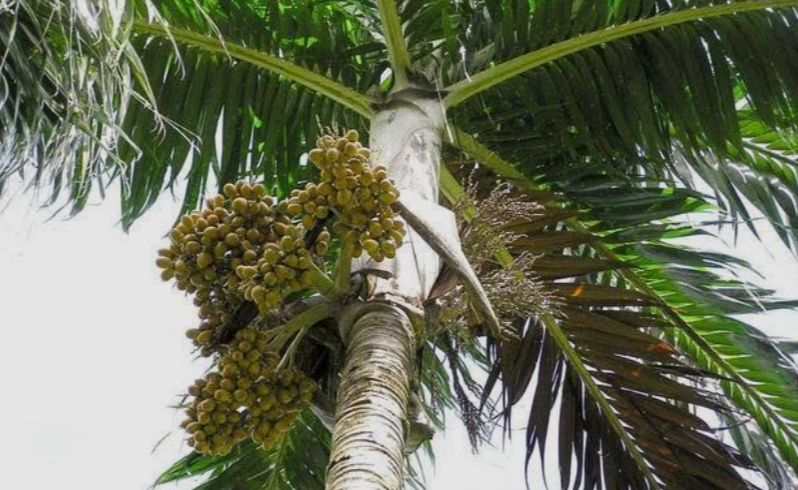
The Montgomery palm is grown for its tidy shape and its showy clusters of bright red fruits. The oval fruits are about an inch long and hang in large bunches below a smooth green crownshaft. They are especially eye-catching against the palm’s gray trunk. The palm grows 30 to 50 feet tall and has gracefully arching fronds.
The Montgomery palm is native to the South Pacific islands of Vanuatu. In the United States it grows outdoors mostly in South Florida and Hawaii. It is sensitive to cold and grows reliably only in zones 10b and 11. It is often planted along streets and around homes for its fruit and neat, upright form.
Sources
- University of Florida IFAS Gardening Solutions, “Saw Palmetto”
- University of Florida IFAS Extension, “Sabal Palm”
- University of Florida IFAS Extension, “Cabbage Palm”
- University of Florida IFAS Extension, “Palms for Central Florida”
- Mississippi State University Extension, “Hardy Palms and Cycads for Mississippi”