Silver Birch Tree Identification: How to Spot the Weeping White Birch
Silver birch tree identification is mostly about three things: the black diamond marks on its pale trunk, its drooping branch tips, and its small, sharply pointed leaves. Silver birch is native to Europe and parts of Asia. In North America it is one of the most widely planted landscape birches, and nurseries often sell it as European white birch or weeping birch. It has escaped cultivation in parts of the northern United States and Canada, so you may also find it growing wild along roadsides and forest edges, near the native birches it is often confused with.
In its native range, silver birch can reach about 80 feet. In North American yards and parks it usually grows 40 to 50 feet tall and 20 to 30 feet wide. Young trees have a narrow, pyramid-like shape, and as they age the crown becomes oval and more open. Many trees have several trunks, and older specimens take on the graceful, drooping outline that gives the tree its other common name.
Bark
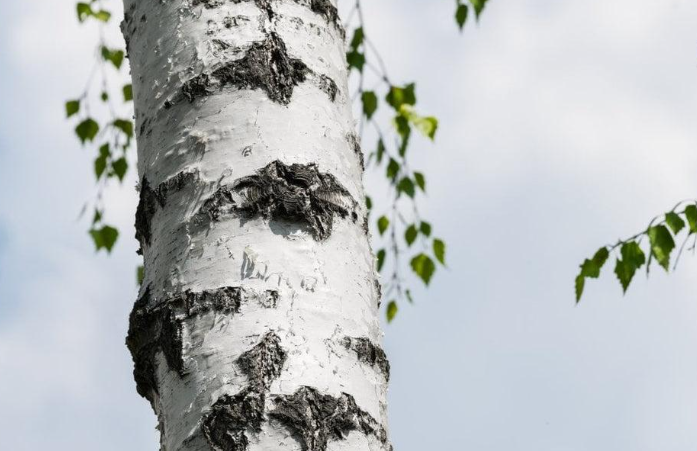
On young trees the bark is shiny reddish-brown. Over several years it turns pinkish-white and then creamy to silvery white, marked with pale gray horizontal lenticels. The bark is thin and peels in long, narrow strips, not the broad sheets of paper birch. On many trees, it hardly peels at all.
The black markings are the best bark clue. Silver birch develops dark, diamond-shaped patches on the trunk, mostly where old branches have fallen away. As the tree matures, the lower trunk turns black, rugged, and deeply fissured, until the base looks dark and heavily cracked with only patches of white bark left. This strong contrast, black and furrowed at the base with silver-white bark above, is very characteristic.
Leaves
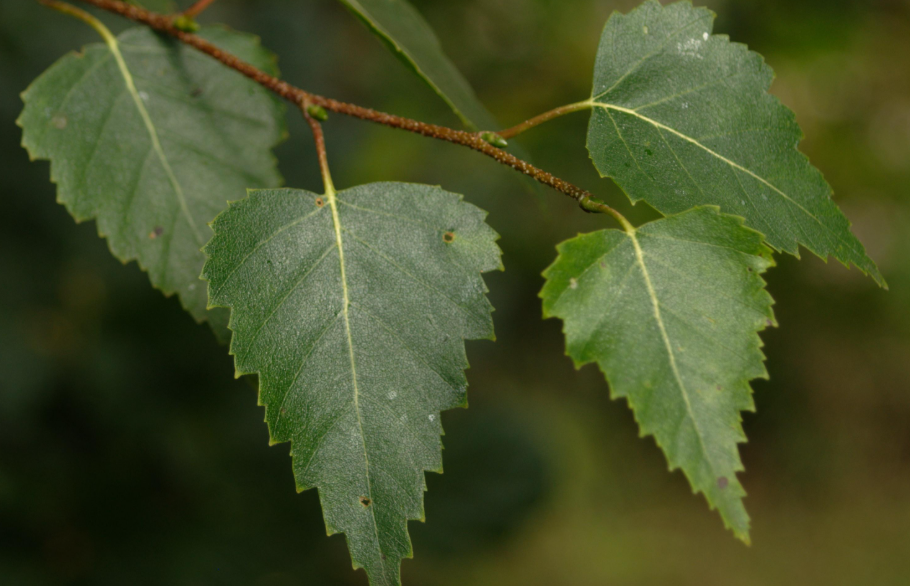
Silver birch leaves are simple, alternate, and fairly small, usually 1.25 to 3 inches long. They are roughly triangular or diamond-shaped, with a nearly straight or wedge-shaped base and a long, tapering point. The edges are doubly serrate, with larger teeth standing out clearly from the smaller ones between them. The leaves are smooth and hairless on both sides, and they hang on slender stalks that let them flutter in the wind.
Leaf shape varies a lot in cultivated trees. Cutleaf cultivars, which are common in older neighborhoods, have deeply lobed leaves that look lacy and almost fern-like, and they are easy to recognize. In autumn silver birch leaves turn a pale to golden yellow. They tend to stay on the tree later into the fall than the leaves of native North American birches, so a still-leafy pale birch in late October is often a silver birch.
Twigs and Branches
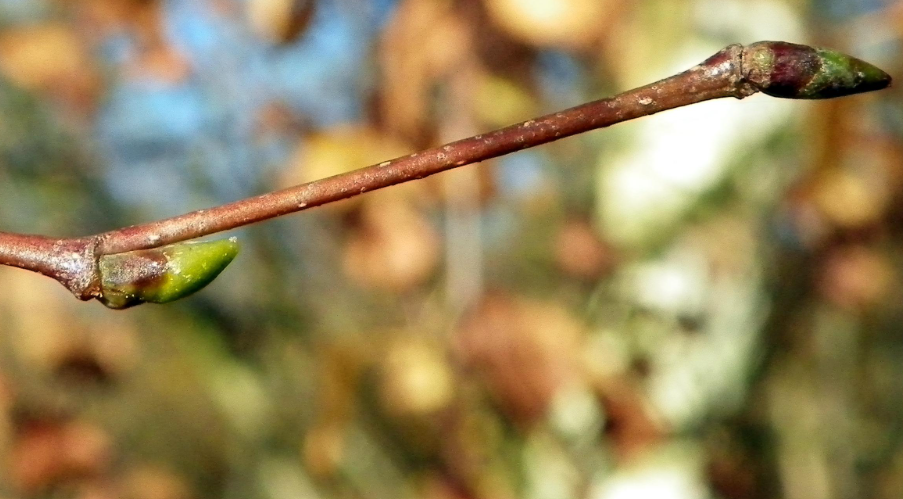
The weeping habit comes from the youngest twigs, which are thin and flexible and hang straight down from the ends of arching branches. Even trees that are not true weeping cultivars usually show some drooping at the branch tips. The twigs are smooth and brown, and if you look closely or run a finger along them, you can feel tiny raised resin glands. These warty bumps are a reliable clue and gave the tree an old name meaning “warty birch.”
Also Read: Different Types of Birch Trees For Landscaping
Catkins and Seeds
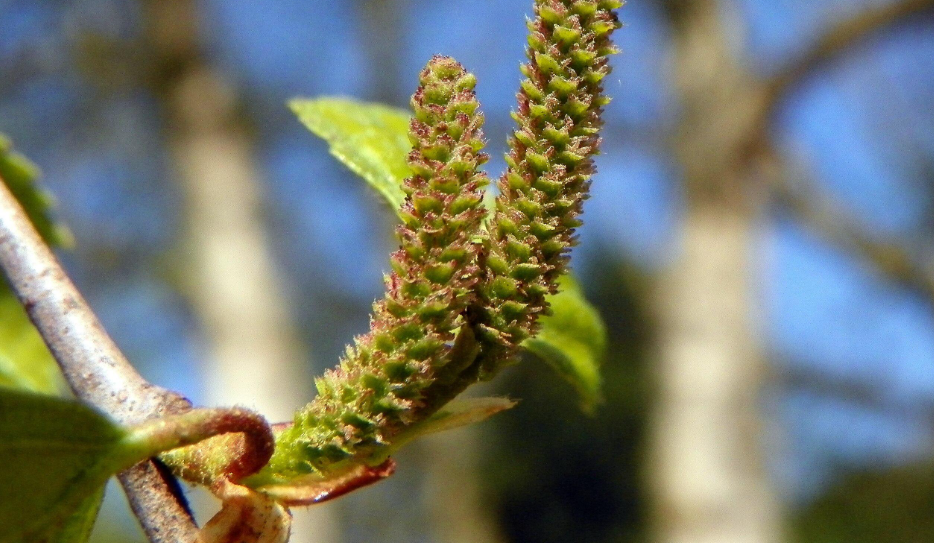
Silver birch carries male and female flowers in separate catkins on the same tree. The male catkins form in late summer and stay on the branch tips through winter as small, tight, brownish clusters. In spring they lengthen, droop, and turn yellowish as they release pollen, at about the same time the new leaves open.
The female catkins are shorter, greenish, and less noticeable, and they ripen into slender, cylindrical seed clusters that hang from the twigs. By late summer and autumn these clusters break apart into tiny winged seeds that drift on the wind, often scattering in large numbers across lawns and pavement below the tree. This heavy seed production is how silver birch spreads outside gardens.
Look-Alikes
Native paper birch is the tree most often confused with silver birch. Paper birch has bright white bark that peels freely in wide sheets, larger egg-shaped leaves with a rounded base, and an upright crown without weeping branch tips. Gray birch has similar triangular leaves, but its dull white bark doesn’t peel, it has dark triangular chevrons under the branches instead of scattered diamonds, and its twigs aren’t warty.
Downy birch, a related European tree that is also planted occasionally, has fuzzy twigs without resin warts, more rounded and evenly toothed leaves, and branches that don’t droop. Pest damage can also point to silver birch in landscapes. It is among the birches most vulnerable to the bronze birch borer, so a pale-barked birch with a thinning, dying crown is often a silver birch. Check the black diamond trunk markings, the warty drooping twigs, and the small pointed leaves together, and you can identify silver birch reliably.
Common Places Where Silver Birch Is Found in North America
Silver Birch is not native to North America but has been introduced and planted in various parts of the United States and Canada. It is commonly grown in northern states, including New York, Massachusetts, Pennsylvania, Michigan, Wisconsin, and Minnesota. In Canada, it can be found in gardens, parks, and landscapes across Ontario, Quebec, and parts of the Prairie provinces.
It grows well in cool climates and is often planted in residential landscapes, woodland gardens, and public parks. Silver Birch is particularly valued for its white bark, attractive foliage, and graceful growth habit.
Silver Birch Identification: Key Characteristics
The following features are useful when identifying Silver Birch:
- Bark: Silvery-white bark with dark horizontal markings and diamond-shaped patches.
- Leaves: Triangular or diamond-shaped leaves with pointed tips and sharply serrated edges.
- Height: Commonly grows between 40 and 70 feet tall.
- Growth habit: Slender trunk, open crown, and gracefully drooping branches.
- Twigs: Thin, reddish-brown or dark brown twigs with small pointed buds.
- Catkins: Hanging male and female flower clusters that appear in spring.
- Seeds: Small, lightweight, winged seeds released from cylindrical fruiting structures.
Silver Birch is particularly recognizable because of its white bark, dark trunk markings, and drooping branch tips. These features help distinguish it from Paper Birch, River Birch, Yellow Birch, and other birch species commonly encountered in North American landscapes.
Sources
- NC State Extension, “North Carolina Extension Gardener Plant Toolbox: European White Birch”
- University of Alaska Fairbanks Cooperative Extension, “European White Birch (Weeping Birch)”
- Colorado State University, “European White Birch – Identification Characteristics”
- University of Connecticut Plant Database, “European White Birch”
- Arizona State University SEINet Portal, “European Weeping Birch”