Desert King Fig Tree: The Breba Fig That Brought Figs to the Pacific Northwest
The Desert King fig is the fig of cool summers. Most figs need long, hot seasons to ripen their fruit. The Desert King produces a big crop of sweet, green-skinned figs with strawberry-red flesh in climates where most other figs struggle, from Seattle and Portland to coastal British Columbia, Northern California, and high-elevation gardens. Gardeners in the Pacific Northwest consider it the standard against which other figs are measured.
The secret to its success is an unusual fruiting habit. The Desert King belongs to a small group called San Pedro figs. These figs bear a heavy early crop, called the breba crop, on the previous year’s branches without any pollination. That early-summer harvest ripens before the cool weather of fall arrives. It makes the Desert King one of the most dependable fruiting figs for short-season and mild-summer climates.
Botanical Classification
The Desert King is a cultivar of the common edible fig, a member of the mulberry family native to western Asia and the Mediterranean. Fig experts divide edible figs into several horticultural types based on how they set fruit. The largest group, the common figs, includes Brown Turkey, Black Mission, and Kadota. Common figs bear fruit without pollination.
The Desert King belongs to the much smaller San Pedro group. Of the hundreds of fig varieties described by the University of California fig scientist Ira Condit, fewer than 4% are San Pedro types. These figs set a reliable breba crop without pollination. Their second, or main, crop develops only if the flowers inside are pollinated by the tiny fig wasp. That wasp lives only in a few warm regions where its host, the wild caprifig, grows. Elsewhere, the main crop usually drops off before it ripens, which is why the Desert King is grown almost entirely for its breba figs.
Brief History
The Desert King was discovered in California’s San Joaquin Valley in the 1920s, near the town of Madera. It was propagated by grower Sisto Pedrini and distributed by the King Fig Plantation Company of San Francisco. It was originally named simply King, after the company. The name Desert King came later, and it is also sometimes sold as Charlie or White King.
In California’s hot interior valleys, where fig wasps live, the King fig produced both its breba crop and a pollinated main crop. Its biggest impact, though, came far to the north. Gardeners in the Pacific Northwest discovered that the Desert King’s heavy breba crop ripened reliably in their cool, short summers. Over the decades it became the region’s most popular fig. Today it is the top recommendation of nurseries throughout Washington, Oregon, and British Columbia.
Identifying Characteristics
Desert King fig trees are vigorous, spreading, and fairly large. They usually reach about 15 to 25 feet tall if left unpruned, though they can be kept much smaller as a multi-stemmed bush. The bark is smooth and gray. The large leaves are deeply lobed and rough-textured, giving the tree a bold, tropical look even in northern gardens.
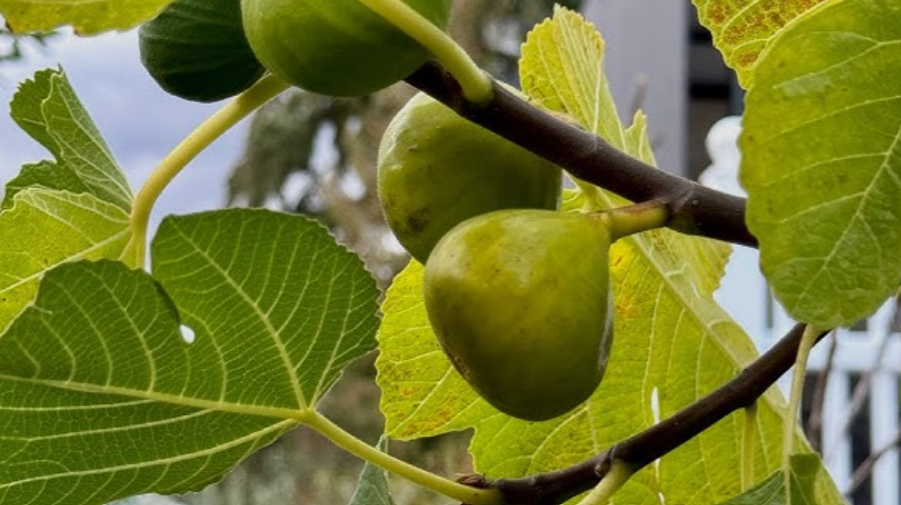
The breba figs are large, often weighing around 50 grams or more each. They are rounded to pear-shaped, with deep green to yellowish-green skin, sometimes finely flecked with tiny white dots. Inside, the flesh ranges from amber to bright strawberry red. The flavor is rich, sweet, and juicy, with honey and berry notes, which has earned it the nickname “Dessert King.” Like all figs, the tree produces a milky white sap that can irritate the skin.
The Breba Crop
The Desert King’s breba crop is the reason to grow it. Breba figs form at the tips of the previous year’s branches in late summer and fall. They overwinter as tiny buds and resume growing in spring, then ripen in early to midsummer. In the Pacific Northwest, the harvest usually comes in July and early August. That is weeks before most common figs begin to ripen.
The Desert King’s breba crop is also notably tough. Nurseries in the Pacific Northwest report that it withstands late spring frosts better than most other figs. Cold snaps after bud break often destroy the early crops of other varieties. That frost tolerance, combined with its early ripening, makes the Desert King one of the few figs that produces a reliable harvest year after year in cool-summer climates.
The Main Crop
Like other San Pedro figs, the Desert King also sets a second crop on the current year’s new growth in summer. Where fig wasps are present, such as parts of California’s Central Valley, this main crop can be pollinated and ripen in late summer and fall. In most of North America, including the Pacific Northwest, the main crop usually drops off or fails to ripen.
Some gardeners report that a few main-crop figs ripen even without pollination, especially in unusually long, warm summers. These are typically smaller and less flavorful than the brebas. For most gardeners, the main crop is a small bonus at best. The breba crop is the real harvest.
Also Read: Different Types of Fig Trees for Landscaping
Climate and Cold Hardiness
The Desert King is suited to a wide range of climates, but it truly shines where summers are mild. It is the go-to fig for the Pacific Northwest, coastal Northern California, coastal British Columbia, and high-elevation gardens where heat is limited. Nurseries generally rate it for USDA zones 7 through 10. Gardeners in Seattle report growing it outdoors without winter protection.
The tree itself is reasonably cold-hardy. Severe winters can kill back branches, though, and if the branches that carry breba buds are killed, that year’s breba crop is lost. A tree killed to the ground will usually resprout from its roots, but it may not fruit until the following year. In cold areas, plant it against a warm, sunny wall, or protect young trees in winter.
Pruning to Protect the Breba Crop
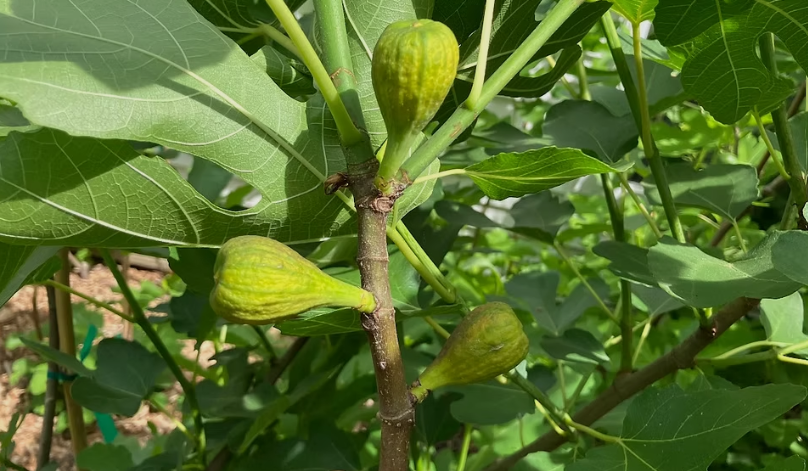
Pruning matters more for the Desert King than for most figs. The breba crop grows on the previous year’s wood, so heavy winter pruning removes the buds that would have become this summer’s figs. Gardeners who cut back their Desert King hard in late winter, as they might a common fig, often get few or no figs that year.
The best approach is light, careful pruning. In late winter, remove only dead, damaged, and crossing branches, and thin crowded growth to let in light. Do any heavier shaping or size reduction in summer, right after the breba harvest. That gives the tree time to grow new shoots that will carry next year’s crop. Pruning to open the canopy also helps the breba figs get the sun and warmth they need to ripen fully.
Growing in Containers
The Desert King can be grown in large containers, which makes it possible to enjoy breba figs on patios, decks, and in colder regions. Use a pot of at least 15 to 20 gallons, with a well-drained potting mix and drainage holes. Place it in the sunniest, warmest spot available during the growing season, and water regularly.
In very cold climates, move the container into an unheated garage or shed for the winter, where temperatures stay above about 20 degrees Fahrenheit. Protecting the branches from hard freezes is especially important for the Desert King, since those branches carry the next summer’s breba crop.
Planting and Care
Plant the Desert King in full sun, in the warmest location available. A spot against a south- or west-facing wall gives extra heat that helps the fruit ripen and protects branches in winter. Figs grow in a wide range of soils but need good drainage. They do poorly in heavy, waterlogged ground, which is common in parts of the Pacific Northwest. Raised beds or slopes help where drainage is poor.
Water young trees regularly during their first growing season. Established trees tolerate moderate dry spells, but steady watering in late spring and early summer helps the breba crop size up. Fertilize lightly, if at all. Too much nitrogen produces lush, leafy growth at the expense of fruit. Avoid late-summer feeding, which encourages tender growth that frost can damage.
Harvesting
Desert King figs are ready to pick when they have turned from deep green to a softer yellowish green. They should feel soft when gently squeezed and droop on their stems. Small cracks in the skin and a drop of nectar at the eye are signs of full ripeness. Because the skin stays green, softness is the most reliable indicator.
Figs don’t ripen further after picking, so wait until they are fully ripe. Check the tree every day or 2 during the breba season, since ripe figs spoil quickly and attract birds and wasps. Wear gloves and long sleeves to protect your skin from the milky sap. Fresh figs keep only a few days in the refrigerator.
Pests and Problems
The Desert King is generally easy to grow. Birds are the most common nuisance, especially robins, jays, and crows, which quickly find ripe green figs. Netting the tree as the breba crop ripens can help. Squirrels, raccoons, and yellowjackets may also feed on ripe fruit.
In the cool, damp climates where the Desert King is popular, wet spring weather can sometimes cause fruit to split or develop mold. Good air circulation and full sun help reduce these problems. Fig mosaic virus may cause mottled leaves but usually doesn’t seriously affect production. In sandy soils, root-knot nematodes can occasionally stunt growth.
In the Kitchen
Desert King figs are superb fresh, with their honey-sweet flavor and strawberry-red interior. Eat them straight from the tree, slice them into salads, or pair them with soft cheeses, prosciutto, walnuts, and honey. They can also be roasted, grilled, or baked into tarts, galettes, and cakes.
Breba crops come all at once, so many gardeners preserve the surplus. Desert King figs make beautiful jams and preserves with a rosy color. They can also be dried or frozen for later use. For Pacific Northwest gardeners, a summer harvest of fresh Desert King figs is one of the great rewards of growing fruit in a cool climate.
Sources
University of California, Davis, “Fig: Overview of an Ancient Fruit”
University of California, Davis, “Fig Varieties: A Monograph”
University of Florida IFAS Extension, “The Fig”
USDA Agricultural Research Service, “Germplasm Resources Information Network: San Pedro Fig”