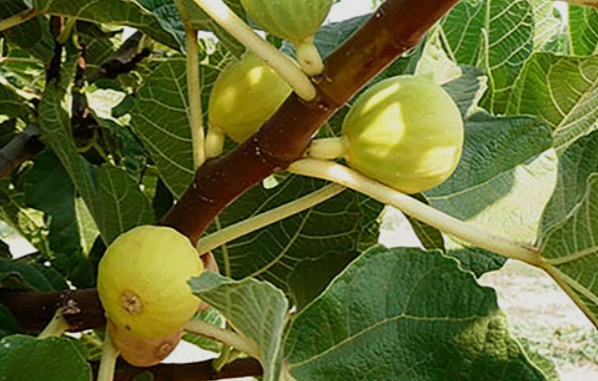
Kadota Fig Tree: Italy’s “Golden Fig” and America’s Classic Canning Fig
The Kadota fig is one of the oldest fig varieties still grown today, though its American name is barely a century old. In Italy it is known as Dottato. It has been grown there since ancient times, and for generations it was the country’s leading commercial fig. In parts of southern Italy it earned the nickname “golden fig.” When California growers took it up in the late 1800s, they gave it a new name, Kadota. They turned it into one of the cornerstones of the state’s fig industry.
The Kadota stands out from most figs people know. Its thick skin ripens to a yellowish green, its flesh is a creamy amber color, and it is nearly seedless. It is less sugary than many dark figs, with a mild, honeyed flavor. It is excellent fresh, but where it really shines is in canning, preserves, and drying, the uses that made it famous.
Botanical Classification
The Kadota is a cultivar of the common fig, a member of the mulberry family. The fig is native to western Asia and the Mediterranean and is one of the oldest cultivated fruit trees in the world. The Kadota is closely related to the Italian Dottato, and many sources treat the 2 as the same fig. California accounts from the early 1900s describe the Kadota as a selection, or “sport,” found in a Dottato orchard and propagated under a new name.
The Kadota belongs to the “common” group of figs, which set fruit without pollination by the tiny fig wasp. That means a single tree produces fruit on its own, almost anywhere it can grow. Because the flowers inside unpollinated common figs don’t form true seeds, Kadota fruit is practically seedless. That quality made it ideal for canning and preserves.
Brief History
The Dottato fig has been grown in Italy for many centuries. In a 1920s study for the University of California’s Agricultural Experiment Station, the fig scientist Ira Condit described it as the leading commercial variety of Italy. He noted that its commercial culture for export was concentrated in the districts south of Naples, around Cosenza in Calabria. In Puglia, in southeastern Italy, the main crop of figs has long been based on Dottato. It is dried, eaten fresh, and made into jams and marmalades.
In California, the Kadota story begins in the 1890s. According to early California fig literature, grower Stephen H. Taft propagated the variety around 1895 from Dottato trees. The new name, Kadota, was coined in the early 20th century. Promoters such as W. Sam Clark and the Beckwith Company of Reedley, California, published booklets praising the Kadota for shipping fresh, canning, preserving, and making candied and spiced figs. By the mid-20th century, the Kadota had become one of the 5 cultivars on which the California fig industry was built. The others were Calimyrna, Adriatic, Mission, and Brown Turkey.
Identifying Characteristics
Kadota fig trees are vigorous, spreading, and fairly large. In home gardens they usually reach about 12 to 20 feet tall and 12 to 18 feet wide, and they can grow larger in warm climates if left unpruned. The bark is smooth and gray. The large leaves are rough-textured and lobed, giving the tree a lush, tropical look.
The fruit is medium in size, rounded to slightly pear-shaped, with a short neck. When ripe, the thick, tough skin turns yellowish green to pale greenish yellow. It sometimes has a faint golden blush in hot climates. Inside, the flesh is creamy amber to light strawberry, with a smooth, jam-like texture and very few noticeable seeds. The flavor is mild and honey-sweet, and less intense than dark figs such as the Black Mission. The eye at the base of the fruit is small, often sealed with a drop of syrupy nectar, which helps protect the fig from spoilage.
Also Read: Different Types of Fig Trees
Breba and Main Crops
Kadota fig trees usually produce a light first crop, called the breba crop, on the previous year’s branches in early summer. Most of the harvest comes from the main crop, which grows on the current year’s new shoots. It ripens from mid to late summer into fall. In Florida, the University of Florida reports that Kadota fruit ripens in July.
Because the main crop grows on new wood, the Kadota tolerates heavier pruning than many figs without losing much of its harvest. Early California growers routinely pruned Kadota trees hard each winter. They did this to keep the trees low, encourage vigorous new shoots, and produce large, uniform fruit for canning.
Climate and Cold Hardiness
The Kadota needs a long, hot summer to ripen fully and develop its best flavor. It thrives in hot, dry climates such as California’s Central Valley, the low deserts of the Southwest, and parts of Texas. In cooler or cloudier climates, Kadota figs may stay green and bland, or fail to ripen before fall frost.
The Kadota is generally rated for USDA zones 7 through 10. In zone 7 and the colder part of zone 8, hard winters can kill the tree back to the ground. It often resprouts from the roots, and because the main crop grows on new wood, it can still produce fruit the same year. In very humid climates, such as parts of the Southeast, fruit can be prone to splitting and souring after heavy rain.
Growing in Containers
The Kadota can be grown in large containers, which lets gardeners in colder regions enjoy it. Use a pot of at least 15 to 20 gallons, with good drainage and a well-drained potting mix. Place the container in the sunniest, warmest spot available. Kadota figs need heat to ripen, so a location against a south-facing wall or on a hot patio is ideal.
When the leaves drop in fall, move the container to an unheated garage, shed, or basement that stays above about 20 degrees Fahrenheit. Water lightly once a month during dormancy. Bring the plant outdoors again in spring after the danger of hard frost has passed. Because container plants have a shorter growing season in cold climates, choose the warmest site possible to help the fruit ripen.
Planting and Care
Plant Kadota figs in full sun, in the hottest location available, with at least 8 hours of direct sun a day. Figs grow in many kinds of soil but need good drainage. They do poorly in waterlogged ground. Water young trees regularly during their first year or 2 to help them establish.
Established Kadota trees tolerate drought fairly well, but steady watering while the fruit develops produces larger, juicier figs and helps prevent fruit drop. Avoid heavy watering as the fruit ripens, which can dilute flavor and cause splitting. Mulch helps hold soil moisture. Fertilize lightly if needed in spring, and avoid late-summer feeding that encourages frost-sensitive new growth.
Pruning
The Kadota responds well to pruning, which makes it easy to keep at a manageable size. Prune during the dormant season, in late winter before new growth begins. Remove dead, broken, and crossing branches, and thin crowded growth to open the tree to light and air. Shorten long branches to keep the fruit within easy reach.
Because most of the harvest grows on new wood, Kadota trees can be pruned fairly hard without sacrificing the main crop. Hard pruning does remove most of the small breba crop. Early California orchardists often cut Kadota trees back heavily each year to produce vigorous new shoots and large, uniform figs. Home gardeners can follow a similar approach, or prune more lightly for a larger, more natural tree.
Harvesting
Kadota figs are ready to harvest when they have turned from bright green to yellowish green or pale yellow, feel slightly soft, and droop on their stems. A drop of honey-like nectar often appears at the eye of a fully ripe fig. Because the skin stays relatively light in color, ripeness can be harder to judge than with dark figs. Softness and drooping are the best signs.
Figs do not ripen further after picking, so harvest them fully ripe. Pick every day or 2 during peak season. Wear gloves and long sleeves, since the milky sap from the stems and leaves can irritate the skin. The Kadota’s thick skin makes it more durable than many figs, which is why it was once shipped fresh from California to markets in the East. Fresh figs still keep only a few days in the refrigerator.
The Canning and Preserving Fig
The Kadota built its reputation as a canning fig. Its thick skin holds up during cooking. Its amber flesh keeps an attractive color, and its almost seedless interior gives preserves a smooth, jam-like texture. The University of Florida notes that although Kadota figs can be eaten fresh, they are better suited for canning and preserves. For much of the 20th century, canned whole Kadota figs in syrup were a familiar product on American grocery shelves.
At home, Kadota figs make excellent fig preserves, jams, chutneys, and whole figs canned in light syrup. They can also be candied, spiced, or pickled. The Kadota is a good drying fig as well. Dried Kadotas are pale golden and mild, and their flavor is lighter than that of dark dried figs.
Pests and Problems
The Kadota is generally easy to grow in hot climates, but a few problems are common. Birds, squirrels, and other animals eat ripe figs, so netting may be needed. Fig souring, caused by yeasts and bacteria carried into the fruit by insects such as dried fruit beetles, can make figs ferment on the tree. The Kadota’s small, often sealed eye helps reduce souring. Splitting can occur in humid weather or after heavy rain.
Root-knot nematodes, microscopic soil worms, can stunt fig trees in sandy soils. Fig rust, a fungal disease, causes yellow-brown leaf spots and early leaf drop in humid climates. Fig mosaic virus can cause mottled leaves but usually doesn’t seriously affect production.
In the Kitchen
Fresh Kadota figs have a mild, honeyed sweetness that pairs well with both sweet and savory foods. They are delicious with soft cheeses, cured meats, walnuts, and honey. They can also be roasted, grilled, poached in wine, or baked into tarts and cakes. Their lighter sweetness makes them especially good for cooking, where they balance well with other flavors.
Preserved Kadota figs are a classic addition to cheese boards, breakfast toast, yogurt, and desserts. Fig preserves made from Kadota figs have a beautiful golden color and a smooth texture. That’s why many home canners consider the Kadota the finest preserving fig they can grow.
Sources
University of California Agricultural Experiment Station, “The Kadota Fig”
University of Florida IFAS Extension, “The Fig”
University of California, Davis, “Fig: Overview of an Ancient Fruit”