Black Mission Fig Tree: California’s Original Fig and the Classic Dark Drying Fig
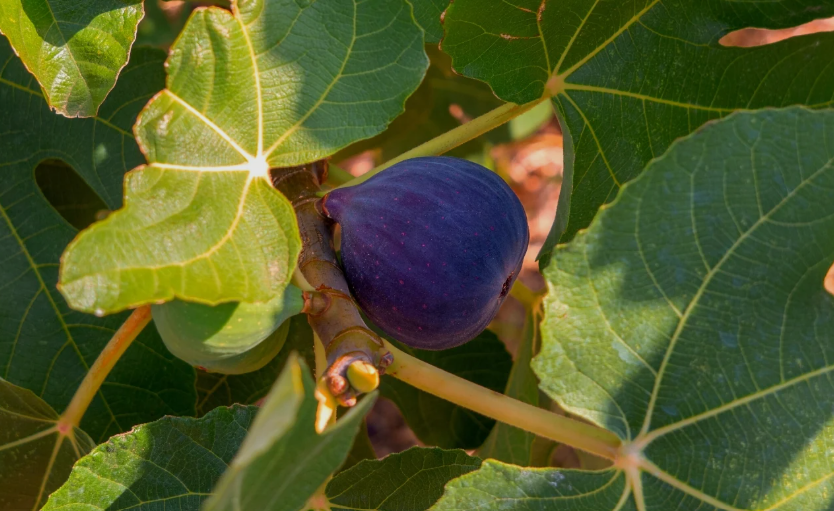
The Black Mission fig is the fig that built California’s fig industry. Spanish Franciscan missionaries brought it north from Mexico in the late 1700s and planted it at the missions they founded along the California coast, starting in San Diego. For more than a century it was practically the only fig grown in the state. Its dark, purplish-black fruit with strawberry-pink flesh is still one of the most recognizable figs in American markets, fresh or dried.
The Black Mission is prized for its rich, sweet, berry-like flavor and its heavy crops. In warm climates it often produces 2 harvests a year: an early-summer crop of large figs, then a bigger main crop that can continue well into fall. It is less cold-hardy than Brown Turkey and some other backyard figs. In the right climate, though, especially California, the Southwest, and other mild-winter regions, it is one of the most rewarding figs a gardener can grow.
Botanical Classification
The Black Mission is a cultivar of the common fig, a member of the mulberry family. The fig is native to western Asia and the Mediterranean and is one of the oldest cultivated fruit trees in the world. The Black Mission is also known simply as Mission fig, and by its older Spanish name, Franciscana, after the Franciscan friars who spread it.
It belongs to the “common” group of figs, which produce fruit without pollination by the tiny fig wasp. Many commercial figs, including the famous Calimyrna, need that wasp to set fruit. The Black Mission does not, so a single tree will bear on its own almost anywhere it can grow.
Brief History
The Black Mission’s history is tied to the Spanish settlement of California. In 1769, Father Junípero Serra and a Spanish expedition founded Mission San Diego de Alcalá, the first of 21 missions that would eventually stretch about 600 miles from San Diego to Sonoma. Along with grapes, olives, citrus, and other Mediterranean crops, the Franciscans planted figs at the missions. Some accounts date the first planting to 1768. That year falls before the San Diego mission existed, so most historians place it at or soon after the mission’s founding in 1769.
The friars planted the same fig at each new mission, and it became known as the Mission fig. Gustav Eisen, a 19th-century California horticulturist and fig expert, wrote that the early padres grew no other variety. As California’s population grew in the 1800s, the Mission fig became the state’s main commercial fig. It was planted in orchards throughout the Central Valley for fresh fruit and drying. Over the 20th century, the Calimyrna eventually overtook it as California’s leading commercial variety. The Black Mission is still widely grown, especially for dried figs.
Identifying Characteristics
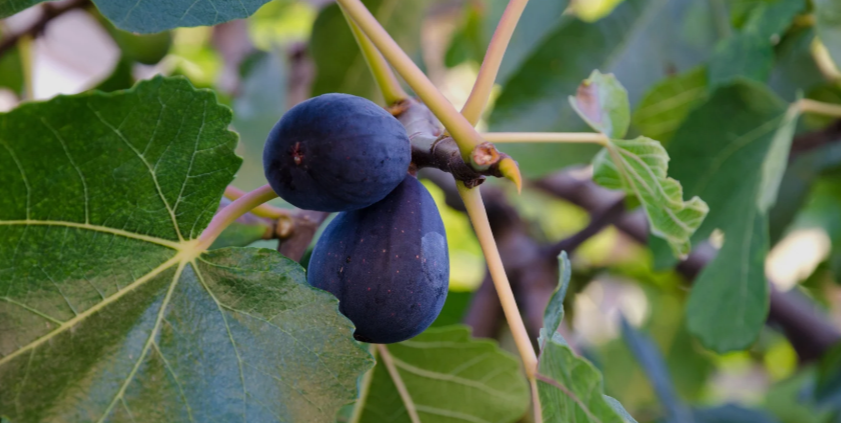
Black Mission fig trees are large, vigorous, and spreading. In mild climates they can reach 30 feet or more if left unpruned, though most backyard trees are kept around 10 to 20 feet tall. The bark is smooth and gray. The large leaves are rough-textured and deeply lobed, usually with 3 to 5 fingers. Black Mission trees are almost always infected with fig mosaic virus, which can cause mottled, yellowish patterns on the leaves. The virus usually doesn’t affect fruit production.
The fruit is medium to large and pear-shaped. It ripens to a deep purplish black, often with a slightly lighter, greenish-purple neck. Inside, the flesh is a rich strawberry to watermelon pink, packed with tiny seeds. The flavor is intensely sweet, with notes often compared to berries and honey. The eye at the base of the fruit is small, which helps protect it from spoilage. Like all figs, the tree produces a milky white sap that can irritate the skin.
Breba and Main Crops
The Black Mission is known for producing 2 crops a year in warm climates. The first, called the breba crop, grows from buds formed on the previous year’s branches. In California it usually ripens in late spring to early summer. University of California researchers note that Black Mission usually sets a good breba crop of large, high-quality fruit. In California, brebas are often harvested from orchards grown mainly for drying.
The second, or main, crop grows on the current year’s new growth. It ripens from late summer into fall, and in mild climates it sometimes continues into early winter. In California and Florida, the Black Mission is often described as an “everbearing” fig because of that long season. In cooler climates, spring frosts may kill the breba crop, and early fall cold may cut the main crop short.
Also Read: Different Types of Fig Trees
Climate and Cold Hardiness
The Black Mission thrives in warm, dry climates with long summers and mild winters, like those of California and the Mediterranean. It does best roughly in USDA zones 8 through 10. It grows well in coastal and inland California, the low deserts of Arizona, and other mild-winter regions of the West. Dry summer heat helps the fruit ripen and limits fungal problems.
It is less cold-hardy than many backyard figs. Penn State Extension describes it as not cold-hardy and recommends growing it in containers in northern climates. The University of Florida reports that it is not cold-hardy enough for much of the southeastern United States. Gardeners in the humid Southeast and colder regions usually do better with Brown Turkey, Celeste, or Chicago Hardy. Gardeners willing to protect it can still try the Black Mission in a container or against a warm, sheltered wall.
Growing in Containers
Container growing is the best option for Black Mission figs in cold climates. Choose a large pot of at least 15 to 20 gallons, with drainage holes and a well-drained potting mix. Place it in full sun during the growing season. Water regularly, since potted figs dry out quickly in summer heat, and feed lightly with a balanced fertilizer in spring and early summer.
After the leaves drop in fall, move the container into an unheated garage, basement, or shed. Choose a spot that stays cool but above about 20 degrees Fahrenheit. Water lightly about once a month during dormancy. In spring, once the danger of hard frost has passed, bring the plant back outdoors. Container growing also keeps the tree smaller and easier to harvest.
Planting and Care
Plant the Black Mission in the warmest, sunniest spot available, with at least 8 hours of direct sun a day. In cooler areas, a site against a south- or west-facing wall provides extra heat and winter protection. Fig trees grow in many types of soil but need good drainage. They do poorly in soggy soil, which can cause root problems.
Water young trees regularly during their first year or 2. Established Black Mission figs are fairly drought-tolerant, especially in California’s dry summers. Steady, deep watering while the fruit is developing helps prevent fruit drop and splitting. Mulch around the tree helps hold soil moisture. Avoid heavy fertilizing, which produces leafy growth at the expense of fruit. Also avoid late-summer feeding, which encourages tender growth that frost can damage.
Pruning
Black Mission fig trees are vigorous and can become very large, so regular pruning helps keep them a manageable size. Prune during the dormant season, in late winter before new growth begins. Remove dead, broken, and crossing branches, and thin crowded growth to let light and air into the canopy. To keep the tree low enough to harvest easily, cut back tall branches to outward-facing side branches.
The breba crop grows on the previous year’s wood, so heavy winter pruning reduces the early crop. Pruning has much less effect on the main crop, which grows on new wood. Many gardeners prune lightly to keep both crops. Others cut harder to control size, accepting a smaller breba harvest.
Harvesting
Figs don’t continue to ripen after picking, so harvest Black Mission figs when they are fully ripe. A ripe fig has turned deep purplish black and feels soft when gently squeezed. It also droops on its stem. The skin may show small cracks, and a drop of syrupy nectar may appear at the eye. Pick every day or 2 during peak season.
To pick, gently lift and twist the fig, or cut the stem with pruners. Wear gloves and long sleeves to protect your skin from the milky sap. Fresh figs are highly perishable and keep only a few days in the refrigerator. Eat them soon, or dry, freeze, or preserve them.
Drying Black Mission Figs
The Black Mission is one of the best figs for drying. Its rich flavor becomes even more intense, and dried Black Mission figs are a staple in grocery stores and baking. In commercial orchards in California’s Central Valley, figs are often allowed to partially dry on the tree. They then drop to the ground, where they are collected and dried further in the sun or in dehydrators.
At home, dry fully ripe figs whole or sliced in half in a food dehydrator, a low oven, or a sunny, well-ventilated spot covered with netting to keep insects away. They are done when they feel leathery but still slightly pliable. Store dried figs in an airtight container in a cool, dry place, or freeze them for longer storage.
Pests and Problems
The Black Mission is generally easy to grow in suitable climates, but a few problems are common. Birds, squirrels, raccoons, and other animals love ripe figs, so netting can help protect the crop. Fig souring, caused by yeasts and bacteria carried into the fruit by insects, can make ripe figs ferment and spoil on the tree. The Black Mission’s small eye helps reduce souring. Fruit splitting may follow heavy rain or uneven watering.
Root-knot nematodes, microscopic soil worms, can weaken fig trees in sandy soils. Fig rust can cause yellow-brown spots and early leaf drop in humid climates. Fig mosaic virus is nearly universal in Black Mission trees and causes mottled leaves, but it usually doesn’t seriously reduce yields. Gophers can damage roots in some Western gardens, so wire baskets around the roots can help at planting time.
In the Kitchen
Fresh Black Mission figs have a deep, rich sweetness that makes them a favorite for eating straight from the tree. They pair beautifully with soft cheeses such as goat cheese, blue cheese, and burrata. They are also good with prosciutto, nuts, and honey. They can be roasted, grilled, poached in wine, or baked into tarts, cakes, and breads.
Dried Black Mission figs are excellent in trail mixes, granola, salads, stuffings, and baked goods. They can also be simmered into jams, chutneys, and sauces for pork, chicken, and lamb. With roots reaching back to California’s earliest missions, the Black Mission is both a delicious fruit and a living piece of American history.
Sources
University of California Agriculture and Natural Resources, “Fig Cultivars”
University of Florida IFAS Extension, “The Fig”
Penn State Extension, “Figs in the Home Garden”