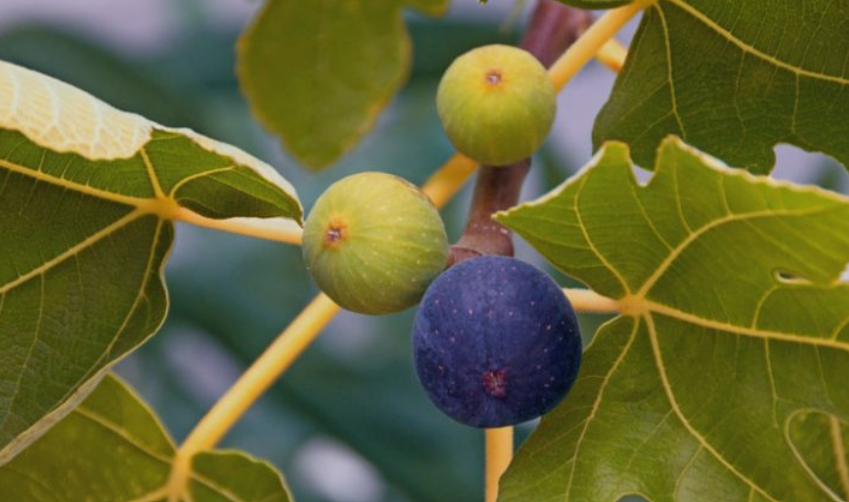
Brown Turkey Fig: America’s Most Popular Backyard Fig and Its Tangled Identity
The Brown Turkey fig is the most widely planted fig in American home gardens. It grows in backyards from the Gulf Coast and the Carolinas to Texas, California, and, with a little winter protection, as far north as New Jersey and the Pacific Northwest. It is popular for good reason. It tolerates heat and humidity, survives colder winters than many figs, produces fruit without needing a pollinating wasp, and often bears 2 crops a year of sweet, mahogany-brown figs with amber to pinkish flesh.
The Brown Turkey has a secret, though: there isn’t just one. The name is used for at least 2 and possibly several different figs. In the Southeast and Texas, “Brown Turkey” usually means the fig also sold as Texas Everbearing. In California, it often refers to a different, larger fig sometimes called California Brown Turkey. That confusion explains why descriptions of the fruit, tree size, and cold hardiness vary so much from one source to the next.
Botanical Classification
The Brown Turkey is a cultivar of the common fig, a member of the mulberry family. The fig is native to western Asia and the Mediterranean region and has been cultivated for thousands of years. It is closely related to the mulberry and to tropical figs such as the rubber plant and the weeping fig.
Brown Turkey belongs to the “common” group of figs, which develop fruit without pollination. That matters because many fig varieties need a tiny wasp to pollinate them, and that wasp lives only in warm Mediterranean-type climates such as parts of California. Common figs like Brown Turkey set fruit on their own. That makes them suitable for gardens across the United States. Each tree is self-fertile, so a single plant will bear fruit.
Brief History
Figs are among the oldest cultivated fruits in the world. They were grown in the ancient Middle East and Mediterranean long before apples or grapes were widely domesticated. Spanish missionaries and settlers brought figs to the Americas, and English and French colonists planted them in the Southeast. By the 1800s, figs had become a fixture of Southern dooryard gardens, often planted near the house where walls offered winter protection.
The Brown Turkey name is generally traced to England, where a fig of that name has been grown for centuries in walled gardens. Over time, several different figs came to be sold under the same label in the United States. Along the Gulf Coast and in the Southeast, the fig called Brown Turkey is the same variety known as Texas Everbearing, Harrison, Ramsey, and Lee’s Perpetual. The University of Florida calls it probably the most popular fig in the southeastern United States.
One Name, Several Figs
The most important thing to know about the Brown Turkey is that the label on a nursery pot doesn’t always describe the same plant. In the Southeast and Texas, Brown Turkey is generally the fig also sold as Texas Everbearing. It is a medium to large fig with bronze to brown skin and amber pulp, producing a small early crop followed by a heavier main crop.
In California, nurseries often sell a different fig called California Brown Turkey. It is a larger, more vigorous tree with larger fruit. It produces a light early crop and a heavier crop from late summer until frost. Some extension guides in the Northeast describe yet another Brown Turkey, a small, pear-shaped fig that rarely sets an early crop. Gardeners who want a specific fig should buy from a reputable local nursery that can tell them which Brown Turkey they are selling. If possible, they should also ask what grows well in their area.
Identifying Characteristics
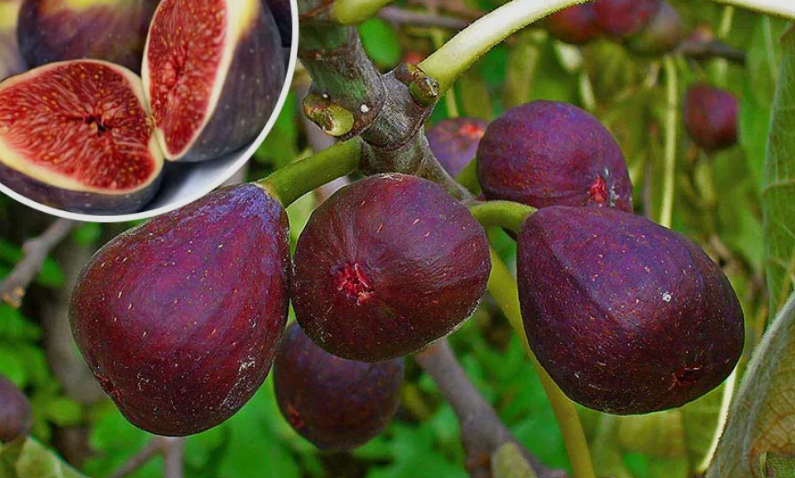
Brown Turkey fig trees are deciduous and usually grow as large shrubs or small, multi-trunked trees. In the Southeast they usually stay 10 to 25 feet tall, in part because hard winters periodically freeze them back. California Brown Turkey can reach about 20 feet or more. The trees have smooth, gray bark and thick, spreading branches. Their large, rough, deeply lobed leaves give them a tropical look.
The fruit is medium to large and pear-shaped to rounded. It ripens to a copper-brown, bronze, or mahogany-purple color, often with a lighter neck. The flesh ranges from amber to strawberry pink, with a sweet, mild flavor. The fruit has a small, fairly closed “eye,” the opening at the bottom of the fig. That helps keep out rain and insects that can cause spoilage. Like all figs, the tree contains a milky white sap that can irritate the skin.
Breba and Main Crops
Many Brown Turkey trees produce 2 crops a year. The first, called the breba crop, grows from buds formed on the previous year’s wood. It ripens in early to mid-summer. Brebas are usually fewer in number and larger in size, but they are often less sweet than main-crop figs. In the Southeast, the breba crop of Brown Turkey typically ripens in July.
The second, or main, crop grows on the current season’s new growth and is usually much heavier. In the Southeast it begins ripening about a month after the brebas, in August, and continues into early fall. In cooler climates, spring frosts often kill the breba crop, so the main crop may be the only one. In regions with short summers, the opposite can happen. Early fall cold may cut off the main crop, and the breba crop may be the only one that ripens.
Climate and Cold Hardiness
Brown Turkey is one of the more cold-tolerant figs commonly grown in the United States, but its hardiness has limits. Fully dormant fig trees are generally hardy to about 15 to 20 degrees Fahrenheit. Brown Turkey can resprout from its roots after colder winters if the top is killed back. In the Southeast, trees are sometimes frozen to the ground and regrow as bushes. It generally does best in USDA zones 7 through 10. In zone 6 and colder, it needs winter protection or container growing.
Texas A&M AgriLife Extension rates Texas Everbearing (Brown Turkey) as less cold-hardy than Celeste, a small fig considered among the hardiest grown in Texas. For gardeners in very cold regions, varieties such as Chicago Hardy may be more reliable. In the right climate, though, Brown Turkey is a dependable and productive choice. Its early-ripening main crop is especially valuable where summers are short.
Also Read: Different Types of Fig Trees
Growing in Containers
Brown Turkey is well suited to growing in large containers, which lets gardeners in cold climates enjoy figs. Use a container of at least 15 to 20 gallons, with drainage holes and a well-drained potting mix. Place the pot in full sun during the growing season. Water regularly, since container figs dry out quickly in hot weather.
In fall, after the leaves drop, move the container into an unheated garage, shed, or basement where temperatures stay above about 20 degrees Fahrenheit. Water lightly once a month during dormancy. Return the plant outdoors in spring after the danger of hard frost has passed. Container growing also keeps the tree smaller and easier to harvest.
Planting and Care
Plant Brown Turkey figs in a sunny, sheltered spot with at least 6 to 8 hours of direct sun a day. In cooler climates, a south- or west-facing wall offers extra warmth and winter protection. Figs grow in a wide range of soils but need good drainage. They do poorly in soggy, waterlogged ground. Water new trees regularly through their first growing season.
Established fig trees tolerate moderate drought, but regular watering during dry spells keeps fruit from dropping or splitting. Mulch around the tree helps hold moisture and protects shallow roots. Fertilize lightly in early spring if needed. Avoid heavy fertilizing and late-summer feeding, which encourage soft growth that is easily damaged by early frost. In colder areas, a thick layer of mulch over the roots, plus wrapping or covering the tree, can help it survive winter.
Pruning
Brown Turkey figs need little pruning beyond shaping and removing damaged wood. Prune during the dormant season, in late winter before new growth begins. Remove dead, broken, or crossing branches, and thin crowded branches to open the canopy to light and air. Remember that breba figs grow on the ends of the previous year’s shoots. Heavy pruning removes much of the breba crop, though it may encourage vigorous new growth and a good main crop.
Where winter cold kills the tops of fig trees, cut away the dead wood in spring once new growth shows which branches survived. Because main-crop figs grow on new wood, trees that are frozen back often still produce a main crop that same year. Texas A&M notes that heavy pruning of mature trees reduces the crop, so moderate pruning is usually best.
Harvesting
Figs do not continue ripening after they are picked, so harvest them when they are fully ripe. A ripe Brown Turkey fig is soft to the touch, has deepened to its full brown or purplish color, and droops on its stem. The skin may show small cracks, and a drop of nectar may appear at the eye. Pick figs every day or 2 during the main harvest, since ripe figs spoil quickly on the tree.
Wear gloves and long sleeves when picking. The milky sap from the stems and leaves can irritate the skin. Fresh figs keep only a few days in the refrigerator, so eat, cook, dry, or freeze them promptly.
Pests and Problems
Brown Turkey is generally easy to grow, but a few problems are common. Birds, squirrels, and raccoons love ripe figs. Netting can help protect the crop. Fig souring, caused by yeasts and bacteria carried into the fruit by insects such as dried fruit beetles, can make ripe figs ferment on the tree. Brown Turkey’s fairly closed eye helps reduce souring. Fruit splitting can happen after heavy rain or uneven watering.
Root-knot nematodes, microscopic soil worms, can stunt fig trees in sandy Southern soils. Mulching and planting near a building or walkway where roots can spread under pavement can help. Fig rust, a fungal disease, causes yellow-brown spots on the leaves and early leaf drop in humid summers. Fig mosaic virus causes mottled, yellowish patterns on leaves but usually doesn’t seriously harm production.
In the Kitchen
Brown Turkey figs have a mild, sweet, honey-like flavor that makes them good for eating fresh, straight from the tree. They are delicious sliced into salads, paired with cheese, wrapped in prosciutto, or grilled with a drizzle of honey. They also work well in jams, preserves, baked goods, and sauces for pork and chicken.
Brown Turkey figs can also be dried or frozen for later use. To freeze, wash and dry the figs, then freeze them whole or sliced on a tray before packing them into freezer bags. In many Southern families, fig preserves made from backyard Brown Turkey trees are a cherished summer tradition passed down through generations.
Sources
University of Florida IFAS Extension, “The Fig”
Texas A&M AgriLife Extension, “Figs”
Penn State Extension, “Figs in the Home Garden”
University of California Agriculture and Natural Resources, “Fig Cultivars”