Lavender Trumpet Tree: The Purple-Pink Trumpet Tree Known as Pau d’Arco
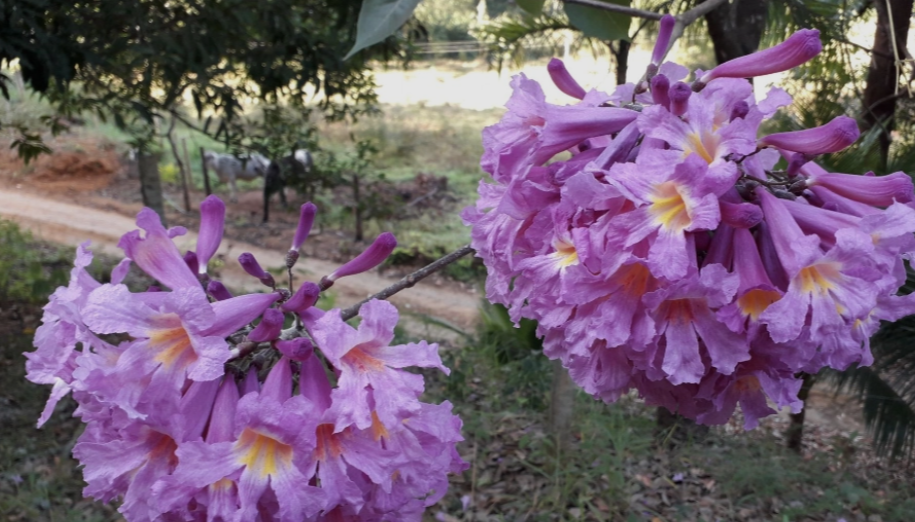
The lavender trumpet tree is the nursery name for one of the most celebrated flowering trees in the warm Americas. In late winter its bare branches burst into clusters of lavender, rose-pink, and magenta trumpet flowers, each with a bright golden-yellow throat. In South Florida the bloom often peaks around Valentine’s Day, painting streets and backyards in soft purple-pink. University of Florida horticulturists have called it one of the most beautiful flowering trees in the world.
The tree goes by an unusual number of names. Nurseries sell it as lavender trumpet tree, purple trumpet tree, pink trumpet tree, and purple tabebuia. In South America it is known as ipê roxo, lapacho, and pau d’arco. Its dense timber, sold as ipe or Brazilian walnut, is one of the hardest woods used for decks and boardwalks. Few ornamental trees have such a varied reputation, admired at once for its flowers, its wood, and its bark.
Botanical Classification
The lavender trumpet tree belongs to the bignonia family, which includes jacaranda, catalpa, trumpet creeper, and all the trumpet trees. In 2007, a DNA study split the trumpet trees into separate genera. This species moved into the group known for extremely hard, dense wood, along with the golden trumpet tree and most other yellow and purple-pink trumpet trees.
Its many names cause real confusion. “Pink trumpet tree” is also used for at least 3 other species, including a Caribbean tree and a Brazilian tree with similar flowers. “Lavender trumpet tree” and “purple trumpet tree” are more specific, because this species tends to bloom in cooler, purplish shades of pink. Gardeners shopping for one should check the plant tag carefully, or ask the nursery which species they are selling.
Brief History
The lavender trumpet tree has one of the largest native ranges of any trumpet tree. It grows wild from Mexico through Central America and across much of South America to northern Argentina. It occurs in dry forests, savannas, and woodlands. For centuries, people across this range have used its hard, rot-resistant wood for construction, tools, and bows. The Portuguese name pau d’arco means “bow stick.”
Its inner bark also has a long history in traditional South American medicine. Since the late 20th century it has been sold in North America and Europe as pau d’arco or taheebo tea and supplements. As an ornamental, the tree was introduced to Florida in the 20th century. It has since become one of the most popular flowering trees in Central and South Florida, prized for its winter bloom.
Identifying Characteristics
The lavender trumpet tree is a small to medium tree. In Florida landscapes it usually reaches about 15 to 30 feet tall and 10 to 20 feet wide, depending on growing conditions. It often has spreading branches that droop toward the ground, forming a rounded, irregular crown. The bark is gray and fairly smooth on young trees, becoming rougher and more fissured with age.
The leaves are palmately compound, with about 5 leaflets that have finely toothed edges. They are glossy olive green and nearly hairless, which helps separate this tree from the fuzzy-leaved golden trumpet tree. The flowers are trumpet-shaped, about 2 inches long, and grow in dense clusters at the branch tips. They range from pale pink to lavender, rose, and deep magenta, usually with a yellow throat. Long, slender seed pods follow, up to about 1 foot long. They often hang on the tree into the next winter.
Also Read: Different Types of Trumpet Trees
Bloom Season
The lavender trumpet tree blooms in late winter to early spring. In South Florida the peak usually comes in February. Most trees drop all or most of their leaves just before flowering, so the blooms open on bare branches and the entire crown turns color. The display lasts a few weeks, and fallen flowers form a colorful carpet beneath the tree.
Flower color and timing vary a great deal from tree to tree, especially among trees grown from seed. One tree may bloom pale pink and another deep purple on the same street. Older trees tend to produce larger, more abundant flowers, and warm winters bring the heaviest bloom. Bees, butterflies, and hummingbirds visit the flowers.
How Long Until It Blooms
Patience is the biggest challenge with the lavender trumpet tree. Trees grown from seed can take many years to flower. Some bloom in as little as 3 years, while others take more than a decade. Some reports put the wait at more than 20 years. This variability is one reason some gardeners are disappointed when a young tree fails to flower.
For faster results, buy trees propagated by grafting, cuttings, or air-layering from mature flowering trees. These usually bloom within a few years of planting. They also let you pick a known flower color. Buying a tree in bloom, or from a nursery that can confirm its source, is the surest way to get the shade of lavender or pink you want.
Lavender Trumpet Tree Versus Other Pink Trumpet Trees
Several trumpet trees with pink or purple flowers are sold in Florida, and they can be hard to tell apart. The lavender trumpet tree usually blooms earlier, in late winter, and in deeper, cooler shades of lavender and magenta. Its leaves have finely toothed edges and are nearly smooth.
The Caribbean pink trumpet tree, native to Puerto Rico and the West Indies, has smooth-edged leaves and pale pink to white flowers. It can bloom throughout spring and summer. The rosy trumpet tree of Central America grows larger, with small scales rather than hairs on its leaves and flowers. The Brazilian pink trumpet tree is similar in color, but it has larger leaflets and is usually listed under its own name in University of Florida references.
Where It Grows in the United States
The lavender trumpet tree is a subtropical tree with moderate cold tolerance. The University of Florida rates it for USDA zones 9B through 11, though it is most reliable in zones 10 and 11. It grows well in Central and South Florida, the Florida Keys, southern Texas, Southern California, and Hawaii.
In cooler parts of its range, frost can damage young trees and reduce flowering. Some nurseries report that established trees tolerate brief dips into the upper 20s Fahrenheit, but repeated freezes can injure branches and flower buds. Gardeners in North Florida and other borderline areas should plant in warm, sheltered sites and check with their county extension office first.
Landscape Uses
The lavender trumpet tree is an excellent small flowering tree for home landscapes. Its modest size suits front yards, patios, courtyards, and small gardens, where it serves as a colorful focal point in late winter. It also works well as a street tree, including along streets without sidewalks and in tree lawns as narrow as 3 to 4 feet.
University of Florida extension agents describe it as an exceptional urban tree in South Florida because of its drought tolerance and compact size. It pairs beautifully with golden trumpet trees, which bloom in bright yellow at about the same time. Plant a few of each for a striking late-winter display. Its roots generally don’t cause problems, so it can be planted near sidewalks and driveways.
Growing Considerations
The lavender trumpet tree grows best in full sun. More sun means more flowers, and trees in heavy shade bloom poorly. It tolerates a wide range of well-drained soils, including sandy and alkaline soils, but it does not tolerate wet or poorly drained sites.
Water newly planted trees regularly through their first year to help them establish. Once established, the lavender trumpet tree is highly drought-tolerant and rarely needs supplemental watering in most of Florida. A light application of a slow-release fertilizer in spring supports healthy growth. Heavy fertilizing, especially with nitrogen, encourages leafy growth and can reduce flowering.
Pruning and Training
Young lavender trumpet trees often grow with several competing trunks and an irregular, spreading form. The University of Florida recommends training young trees to develop a strong central trunk. Shorten or remove competing branches until the tree is about 6 to 8 feet tall, then let it grow more naturally. For street and patio trees, gradually remove low branches to provide clearance.
Mature trees need little pruning beyond removing dead, damaged, or crossing branches. Do major pruning soon after flowering to avoid removing the next year’s flower buds. Many gardeners like to keep the tree’s natural drooping branches, which give it a graceful, informal look.
Pests and Problems
The lavender trumpet tree is a tough tree with few serious pest problems. Scale insects, mites, and caterpillars occasionally feed on the leaves, but they rarely cause significant damage to established trees. Healthy, well-sited trees usually tolerate minor pest damage without treatment.
The most common complaint is a lack of flowers. That usually comes from a tree grown from seed that is not yet mature, too much shade, too much fertilizer, or cold damage to flower buds. Poorly drained sites can lead to root problems.
Invasive Status and Other Uses
The University of Florida’s assessment of non-native plants lists the lavender trumpet tree as not a problem species. It has not been documented in undisturbed natural areas in Florida and may be recommended for planting. It is considered a Florida-Friendly choice, though it is scheduled for reassessment.
The bark is widely sold as pau d’arco tea and supplements, but it contains naturally occurring compounds that can be harmful in large amounts. Anyone considering pau d’arco products should talk with a doctor first, especially people who are pregnant, nursing, or taking blood thinners. In the garden, the lavender trumpet tree is valued above all for its flowers.
Sources
University of Florida IFAS Extension, “Purple Tabebuia”
University of Florida IFAS Gardening Solutions, “Trumpet Trees”
University of Florida Environmental Horticulture, “Pink Trumpet Tree”
University of Florida IFAS, “Trees and Power Lines: Golden Trumpet Tree”