Linden Viburnum: The Showiest Red-Fruited Viburnum and Why It Now Comes with a Warning
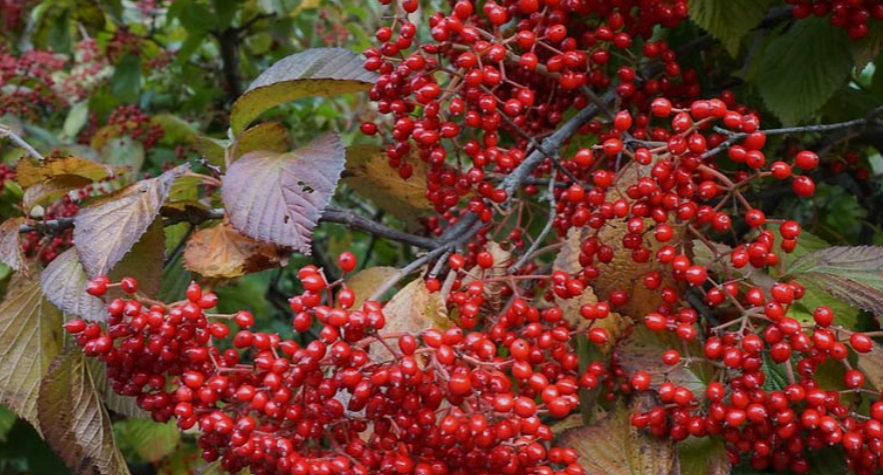
Linden viburnum has long been considered one of the most spectacular fruiting shrubs in temperate gardens. Every autumn its branches are weighed down by heavy clusters of glossy, bright red berries that can persist into December. The fruit is set against rounded leaves that turn russet, burgundy, and orange in fall. In late spring the shrub carries broad, flat clusters of creamy white flowers. For decades, nursery catalogs and landscape designers praised it as one of the best viburnums for fall color and fruit.
The story of linden viburnum has changed in recent years. The same heavy fruit crop that makes it so ornamental has allowed it to escape from gardens and invade forests across parts of the eastern United States. It now appears on invasive plant lists in several states. This guide covers the shrub’s history and identification, its popular cultivars, how to tell it apart from native arrowwoods, and what gardeners should know before planting or removing it.
Botanical Classification
Linden viburnum is a deciduous, multi-stemmed shrub in the viburnum genus, a group of roughly 150 to 175 species of shrubs and small trees found mostly in the Northern Hemisphere. Like other viburnums, it has been placed in several plant families over the years. Older references list the honeysuckle family, others the moschatel family, and current systems give viburnums their own family. Its botanical name means “spread out” or “expanded,” a reference to its broad leaves and spreading flower clusters.
The common name comes from its leaves, which resemble those of linden trees, also known as basswood. In invasive plant literature it is also called linden arrowwood, because its leaves and flowers look much like those of native North American arrowwoods. It belongs to a group of Asian viburnums with red fruit, together with tea viburnum and Siebold viburnum. Several of these are now raising similar concerns about spreading into natural areas.
Brief History
Linden viburnum is native to Japan, Korea, and eastern China, where it grows in forests, thickets, and along woodland edges in hilly and mountainous regions. Western botanists described it in the late 18th century from Japanese specimens. Living plants reached Western gardens in the 19th century, and the shrub gradually entered the American nursery trade, valued for its hardiness and its exceptional fruit display.
Interest in linden viburnum grew significantly in the second half of the 20th century. The U.S. National Arboretum began breeding and selecting improved forms, including ‘Erie’, ‘Iroquois’, and ‘Catskill’, named after places and peoples of New York State. Those cultivars made linden viburnum a common sight in parks, campuses, and home landscapes across the Northeast and Midwest. As plantings multiplied, however, so did the number of birds spreading its seeds into nearby woodlands.
Identifying Characteristics
The leaves are rounded to broadly oval, typically 2 to 5 inches long, with coarse, sharp teeth along the edges and a short, pointed tip. Both sides are covered with short hairs, giving the leaves a slightly rough, fuzzy texture. In summer they are medium to dark green. In autumn they often turn russet-red, burgundy, orange, or bronze, though fall color varies from year to year and from plant to plant.
The flowers open in late May and June, usually after the leaves are fully expanded. They form flat-topped clusters about 3 to 6 inches across, made up of many tiny creamy-white flowers with prominent stamens. The clusters are numerous and showy, often covering the shrub. They have a musty odor that many people find mildly unpleasant up close.
The fruit ripens in September and October into dense clusters of small, oval, glossy, bright red berries about ¼ to ⅓ inch long. They often persist on the branches into December, sometimes softening and changing color slightly after frost. Mature plants typically reach 8 to 10 feet tall and 6 to 8 feet wide in gardens. Wild plants in favorable sites can grow considerably larger, forming dense thickets.
Popular Cultivars
‘Erie’ is one of the most widely planted linden viburnum cultivars. It was developed at the U.S. National Arboretum and is known for its rounded, spreading habit, heavy crops of red fruit, and good fall color. It typically grows about 7 feet tall and 10 feet wide. ‘Iroquois’ is another National Arboretum selection, a cross between 2 linden viburnum selections. It has large, thick, glossy leaves, abundant flowers, deep red fruit, and excellent fall color, and it is often considered one of the best forms available.
‘Catskill’ is a more compact selection, typically 5 to 6 feet tall and somewhat wider, with good fall color and deep red fruit. Cardinal Candy, sold under the cultivar name ‘Henneke’, is a hardy, compact form with bright red fruit, often promoted for colder gardens. Gardeners looking for unusual fruit colors can find yellow-fruited forms such as ‘Michael Dodge’ and ‘Xanthocarpum’, as well as Tandoori Orange, the first orange-fruited linden viburnum.
Also Read: Different Types of Viburnum Shrubs
Why Linden Viburnum Is Considered Invasive
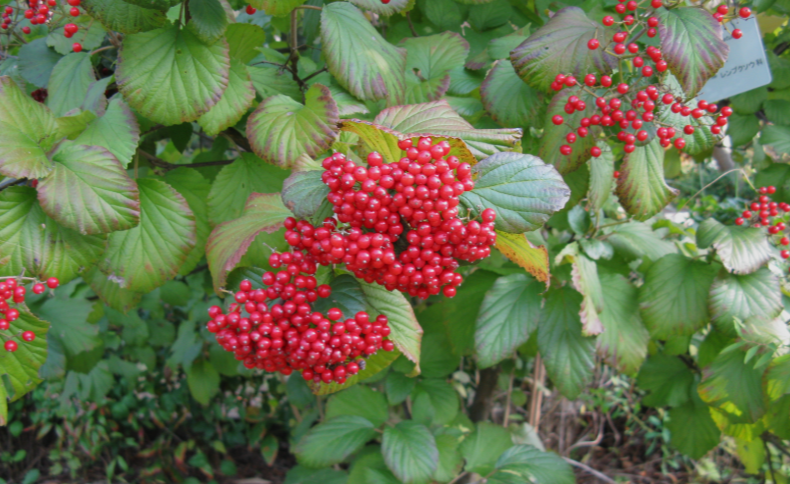
Linden viburnum’s heavy fruit crops are eaten by birds, which carry the seeds into woodlands, hedgerows, and stream corridors. There, the seeds germinate and grow into new shrubs that compete with native plants. Rutgers Cooperative Extension notes that linden viburnum invades the understory of forests and thrives in the shade. It grows quickly to as much as 20 feet tall, shading out the native plants wildlife need for food and habitat.
The problem is made worse by deer, which tend to avoid linden viburnum and browse native shrubs instead. In heavily infested areas, linden viburnum seedlings can carpet the forest floor, and mature shrubs form dense thickets that crowd out native understory plants. The shrub is now considered invasive in several eastern states, including parts of the mid-Atlantic and Northeast. Gardeners in those regions are increasingly encouraged to choose native viburnums instead.
Linden Viburnum vs. Native Arrowwoods
Telling linden viburnum apart from native arrowwoods is important for anyone managing natural areas or choosing shrubs for a native garden. Linden viburnum looks very similar to native southern arrowwood and downy arrowwood. All 3 have toothed, roughly oval leaves and flat clusters of white flowers. The leaves of linden viburnum are typically fuzzier on both surfaces and somewhat more rounded.
The most reliable difference appears in fall. Linden viburnum produces bright red fruit, while the native arrowwoods produce dark blue to blue-black fruit. Anyone seeing an arrowwood-like shrub covered in red berries in a woodland in autumn is likely looking at linden viburnum or another non-native species. Checking the fruit color in September and October makes identification much easier for gardeners, volunteers, and land managers.
Native Alternatives
Gardeners who love linden viburnum’s look can choose native viburnums that offer similar beauty without the invasive risk. Southern arrowwood provides creamy white flower clusters, glossy leaves, and red to purple fall color, with blue-black fruit that birds eat. Downy arrowwood offers a smaller, more drought-tolerant option for dry, rocky sites. Blackhaw viburnum offers dogwood-like spring flowers, sweet edible fruit, and excellent red fall color.
For gardeners who specifically want red fruit, American cranberrybush viburnum is a strong native choice. Its bright red, translucent fruit often persists into winter. Native winterberry holly offers an even more dramatic red berry display on female plants, with a male pollinator nearby. These shrubs support far more native insects and birds than linden viburnum and pose no invasive threat.
Growing Considerations
For gardeners outside areas where linden viburnum is invasive, or who already have established plants, it is generally easy to grow. It is hardy from Zone 5 through Zone 7, and in some sites into Zone 8. It grows best in full sun to partial shade. Plants in full sun produce the heaviest flowering, fruiting, and fall color. It prefers moist, fertile, well-drained, slightly acidic soil but adapts to a wide range of soils.
Water regularly during the first growing season, and mulch 2 to 3 inches deep to conserve moisture. Once established, it tolerates moderate drought. For the heaviest fruit, plant 2 or more genetically different plants nearby. A different clone acting as a pollinator greatly improves fruit set. Prune right after flowering to remove dead or crossing branches and to thin older stems. In areas where invasiveness is a concern, some gardeners remove spent flower clusters before fruit forms, though this eliminates the shrub’s main ornamental feature.
Removing Linden Viburnum
In regions where linden viburnum is invasive, land managers and many extension services recommend removing it, especially near forests, parks, and stream corridors. Small seedlings can be pulled by hand when the soil is moist, ideally before they establish deep roots. Pull the entire root, since remaining root pieces can resprout. Larger shrubs can be dug out with a shovel or mattock, or removed with a weed wrench.
Cutting mature shrubs to the ground usually leads to vigorous resprouting from the roots. Persistent shrubs often need repeated cutting, or the cut stumps may need treatment following local extension guidance. After removal, replant the area with native shrubs to fill the space and discourage new invasive seedlings. Follow local guidelines and regulations, and contact your county extension office for recommended control methods in your area.
Pests and Problems
Linden viburnum is generally considered a relatively trouble-free shrub in the garden. Stem borers can occasionally attack stressed or older plants, causing dieback of individual branches. Aphids may cluster on new spring growth, and leaf spots or powdery mildew can appear in humid, crowded sites, though these rarely cause serious damage.
The viburnum leaf beetle can feed on linden viburnum where the beetle is established, though it is not among the most heavily damaged species. Overall, its lack of serious pest problems, combined with deer avoiding it, helps explain why linden viburnum spreads so successfully in the wild. For gardeners, its toughness is an advantage. For natural areas, it is part of what makes the shrub such a concern.
Sources
Rutgers Cooperative Extension, “Invasive Species of the Month: Linden Viburnum”
NC State Extension Gardener Plant Toolbox, “Linden Viburnum”
Oregon State University Landscape Plants, “Linden Viburnum”