Tea Viburnum: The Chinese Shrub with the Heaviest Red Berry Crop in the Viburnum Family
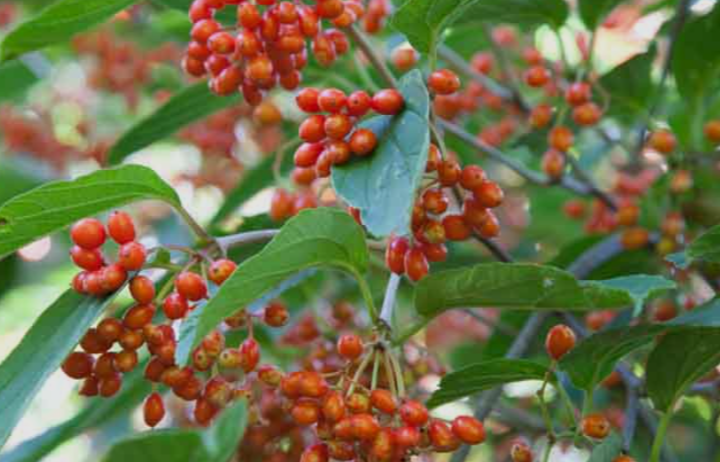
Tea viburnum is grown for one reason above all: its spectacular autumn fruit. From late summer into fall, its arching branches bend under heavy clusters of glossy, bright red, oval berries. Few other shrubs make such a striking show. Many horticulturists consider it the heaviest-fruiting viburnum in cultivation. The display usually lasts for weeks and often well into early winter, giving the shrub much of its seasonal value at a time when most gardens are fading.
Its name comes from an old tradition in its native China, where its leaves were once brewed into a tea. Today tea viburnum is valued mainly as an ornamental for its fruit, its tall vase shape, and its blue-green summer leaves. It also comes with some notable cautions, including its tendency to spread into natural areas in parts of the eastern United States. This guide covers its history, how to identify it, how to grow it for the best fruit, and whether it belongs in your landscape.
Botanical Classification
Tea viburnum is a deciduous, multi-stemmed shrub in the viburnum genus, a group of roughly 150 to 175 species of shrubs and small trees found mostly in the Northern Hemisphere. Like other viburnums, it has been placed in several plant families over the years. Older references list the honeysuckle family, others the moschatel family, and current classifications give viburnums their own family. Its botanical name refers to the small bristly hairs found on parts of the plant.
Botanists once described the species under a separate name that means “tea-bearing,” a direct reference to the traditional use of its leaves. That name is now treated as a synonym, but it survives in the common names tea viburnum and tea-leaf viburnum. The species is closely related to other Asian viburnums with red fruit, such as linden viburnum and Siebold viburnum. Its narrow leaves, smaller flower clusters, and drooping fruit set it apart.
Brief History and the Origin of the Name
Tea viburnum is native to the mountains of central and western China, where it grows in forests, thickets, and along streams and hillsides. Western botanists described it in the late 19th century. Living plants reached Western gardens in the early 20th century through plant collectors exploring China, including the English plant hunter Ernest Wilson, who sent material to Britain and to the Arnold Arboretum in Boston. From there it gradually entered the American nursery trade.
The common name comes from the plant’s use in China. Its leaves were traditionally gathered and brewed into a sweetish tea, and some accounts link the practice to monks on the sacred mountain of Emei Shan in Sichuan. The Purdue University Arboretum notes that tea viburnum gained its common name because its leaves were once used to make tea. Today, gardeners grow it for its ornamental fruit, and the leaves should not be harvested for drinking without expert guidance.
Identifying Characteristics
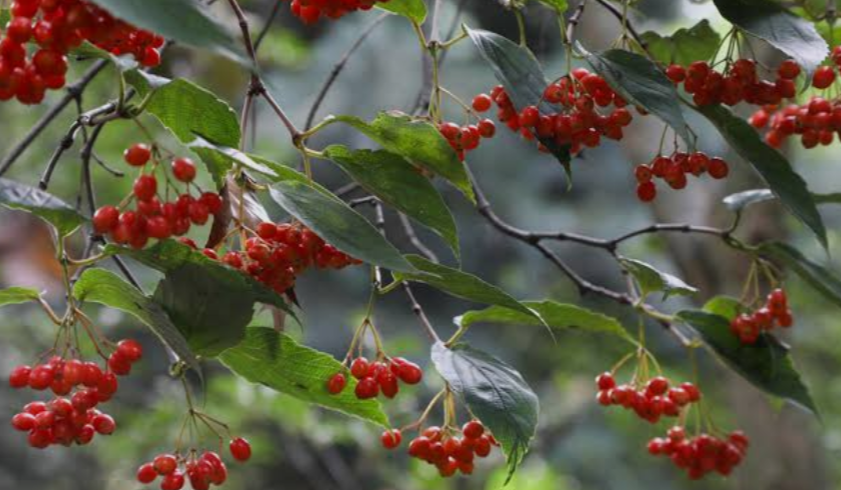
The leaves are opposite, narrowly oval to lance-shaped, and pointed. They are typically 3 to 6 inches long and 1¼ to 2½ inches wide, with slightly toothed edges. In summer they have a distinctive dull blue-green color that sets the shrub apart from most other viburnums, which have brighter or glossier green foliage. New spring growth is often tinged bronze or reddish-purple, adding early color. Fall color is variable. Some plants turn reddish-purple, while others simply fade before dropping.
The flowers open in May in small, flat clusters only about 1 to 2 inches across. Each cluster holds many tiny white flowers. They are borne on short side shoots along the branches and are only mildly ornamental compared with those of most viburnums. They have little fragrance. The shrub’s real show begins after the flowers fade.
The fruit ripens in September and October. It is oval, bright, glossy red, and about ⅓ inch long, borne in heavy drooping clusters that weigh the branches down. The berries often persist into November or later, though birds eventually eat them. Mature plants typically reach 8 to 12 feet tall and 5 to 8 feet wide, with a narrow, upright, vase-shaped habit. The lower stems often become bare, which gives older shrubs a leggy look.
Also Read: Different Types of Viburnum Shrubs
The Orange-Fruited Form
The only widely recognized cultivar of tea viburnum is ‘Aurantiacum’, which bears orange fruit instead of red. The berries ripen to a warm, glowing orange, and the clusters are just as heavy as those of the species. This form adds a different color to fall gardens. It looks especially striking when planted near the red-fruited species or near shrubs with yellow or purple fall foliage.
Because tea viburnum fruits best when cross-pollinated, planting the red and orange forms together can improve fruit set on both. Both forms share the same growing needs, size, and leggy habit, so they can be used interchangeably in the landscape.
Getting a Heavy Fruit Crop
Tea viburnum fruits most heavily when 2 or more genetically different plants grow near each other. A single plant, or several plants propagated from the same parent by cuttings, often produce only a light crop. For the best display, plant tea viburnum in groups of 3 or more, ideally from different nursery sources or as seed-grown plants, so they can cross-pollinate.
Light also matters. Plants in full sun to light shade produce the heaviest crop, while those in deep shade flower and fruit poorly. Consistent moisture during flowering and fruit development helps the berries form and ripen well. Avoid heavy pruning, which removes the branches that would have carried flowers and fruit the following year.
Landscape Uses
Tea viburnum is best used where its fall fruit display can be seen and enjoyed, such as the back of a large shrub border, along the edge of a lawn, or near a patio or path. Because the lower stems often become bare, plant shorter shrubs or perennials in front to hide the base, such as hydrangeas, spireas, ornamental grasses, or asters. Its upright, vase-shaped form also suits narrow spaces where wider shrubs won’t fit.
The shrub grows well in moist sites, including the edges of streams, ponds, and rain gardens, where it tolerates occasionally soggy soil. In groups it makes an effective informal screen during the growing season, though it is bare in winter. The fruit-laden branches are also popular for cutting and using in fall flower arrangements.
A Caution: Spreading into Natural Areas
Tea viburnum’s heavy fruit crop has a downside. Birds eat the berries and spread the seeds into woodlands, fields, and stream corridors far from where the shrub was planted. In parts of the mid-Atlantic and eastern United States, it has escaped cultivation and become established in the wild. The National Park Service includes it among invasive viburnums affecting natural areas around Washington, D.C.
Gardeners in regions where tea viburnum is known to spread should check local invasive-plant lists before planting, especially near forests, parks, or streams. Native shrubs with heavy red fruit, such as American cranberrybush or winterberry holly, offer similar fall color with far greater benefits for native wildlife. Gardeners who already grow tea viburnum can reduce its spread by removing seedlings that appear nearby.
Growing Considerations
Tea viburnum is generally hardy from Zone 5 through Zone 7, and in some sites into Zone 8. It grows best in full sun to partial shade. Plants in full sun produce the most fruit, while afternoon shade helps in hotter regions. It prefers moist, fertile, slightly acidic soil but adapts to a wide range of soils, including clay and slightly boggy ground. It struggles in very dry, poor soils.
Plant tea viburnum in spring or fall, and water it regularly through its first growing season. Mulch spread 2 to 3 inches deep conserves moisture and keeps the roots cool. Established plants need watering only during extended droughts, especially in late summer while the fruit is ripening. Light fertilizing in spring is usually enough. Too much fertilizer can produce lush leaves at the expense of fruit.
Prune tea viburnum sparingly, right after flowering in late spring. Remove dead or damaged branches, and cut a few of the oldest stems to the ground every few years to encourage new growth from the base. This helps reduce the leggy look of older plants. Avoid shearing, which ruins the graceful vase shape and removes much of the next year’s fruit.
Pests and Problems
Tea viburnum is generally easy to grow, but it is among the viburnums attacked by the viburnum leaf beetle, which has spread through much of the Northeast and Great Lakes region. Larvae chew the young leaves in spring, and adults feed again in summer, leaving the leaves full of holes or skeletonized. Repeated heavy damage can weaken and eventually kill shrubs. Check twigs in winter for rows of small, capped egg sites, and prune out infested twigs before spring.
Other problems are usually minor. Aphids may cluster on new growth in spring, and leaf spots or powdery mildew can appear in humid, crowded sites. Good air circulation, consistent moisture, and moderate fertilizing help keep plants healthy. Like other viburnums, the berries are ornamental and should not be eaten by people.
Sources
Purdue University Arboretum, “Tea Viburnum”
NC State Extension Gardener Plant Toolbox, “Tea Viburnum”
University of Connecticut Plant Database, “Tea Viburnum”