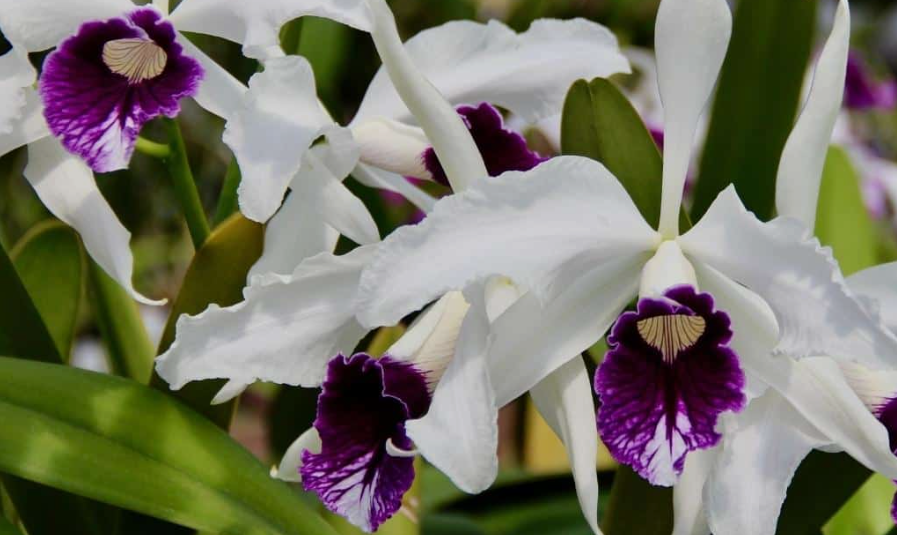
White orchids are some of the most elegant flowers in the plant world. Their pure, glowing blooms appear at weddings, in hotel lobbies and on windowsills, and many are also strongly fragrant. In the wild, white color often signals a flower that blooms or releases its scent at night to attract moths.
They belong to one of the largest plant families on Earth. The orchid family contains roughly 28,000 species in about 760 genera, about twice as many species as there are birds. Orchids grow on every continent except Antarctica, from tropical rainforests and cloud forests to northern bogs and prairies.
Most orchids sold as houseplants are epiphytes that grow on trees in the wild, clinging to bark with thick aerial roots. Others are terrestrial and grow in soil, including many hardy native orchids of North America, Europe and Asia. Several white orchids are national flowers, including those of Guatemala, Indonesia and Panama.
The white moth orchid is by far the most familiar. Iowa State University horticulturists consider it the easiest orchid to grow indoors and note that it blooms for three or four months or longer. The 28 white orchids below include houseplants, cut flowers, rare wild species and hardy garden orchids, along with where each one comes from or is grown today.
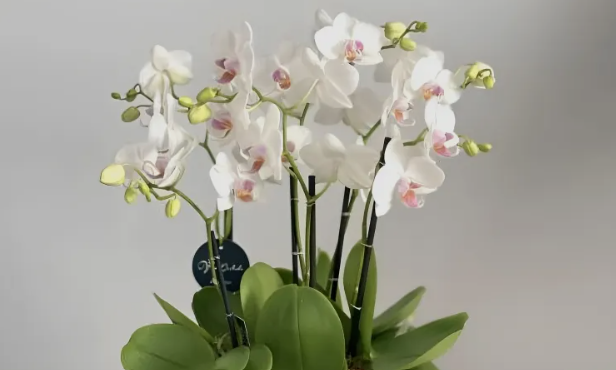
1. White Moth Orchid
The white moth orchid is the most popular orchid in the world. Its flowers are flat, rounded and pure white. They bloom in long, arching sprays. Each flower looks like a moth in flight. Its leaves are broad, thick and glossy. A single spike can carry 10 or more flowers.
North Carolina State University notes that blue or pink moth orchids sold in stores are usually white flowers that have been dyed, and they rebloom white. It prefers low light, warm temperatures and high humidity. It is sold in supermarkets, florists and garden centers. It can rebloom year after year with simple care. It is grown in bark or moss instead of soil. Its wild ancestors are native to Southeast Asia, and hybrids are produced in Taiwan, the Netherlands and the United States.
2. Moon Orchid
The moon orchid is the wild species behind many white moth orchids. Its flowers are large, flat and pure white. The lip has touches of yellow and red. Its flowers can reach 4 inches across. A spike can carry 20 or more blooms. They last for weeks.
It is one of the national flowers of Indonesia, where it is called the charming flower. It grows on tree trunks and branches in humid lowland forests. It is a parent of most modern white moth orchid hybrids. It needs warmth, shade and humidity. It is grown by collectors worldwide. It is native from the Philippines and Indonesia to New Guinea and northern Australia.
3. Ghost Orchid
The ghost orchid is one of the rarest and most famous orchids in North America. It has no leaves. Its green roots cling to tree bark and make food from sunlight. Its white flowers seem to float in midair. Each flower has long, curling side petals like frog legs. It blooms in summer.
Its flowers have a nectar spur 5 to 6 inches long. University of Florida researchers showed in 2019 that more than one kind of moth can pollinate it, overturning a long-held belief. Only about 2,000 plants are known in Florida. It is protected as an endangered species in the state. Poaching was made famous by the book The Orchid Thief. It is native to the swamps of southwestern Florida, Cuba and the Bahamas.
4. Lady of the Night
The lady of the night is a fragrant white orchid. Its flowers are white to pale green with a large, heart-shaped white lip. Its petals are long and narrow. Its leaves are thick, fleshy and pencil-like. It blooms several times a year. Its flowers last about a month.
It releases a strong, sweet fragrance after dark. Its scent attracts night-flying moths. It is one of the easiest fragrant orchids to grow. It tolerates bright light and some drought. It is often grown mounted on wood. It is native from Mexico through Central America and the Caribbean to northern South America.
5. White Cattleya
The white cattleya is the classic corsage orchid. Its flowers are large, ruffled and pure white. Many have a yellow throat. They can reach 6 inches across or more. Many are fragrant. They bloom once or twice a year.
It was the most fashionable orchid of the early 1900s. It is still used in bridal bouquets and corsages. It needs bright light to bloom. It grows from thick pseudobulbs that store water. It is grown in greenhouses and bright windows. Its wild relatives are native to Central and South America, especially Brazil, Colombia and Venezuela.
6. White Dendrobium
The white dendrobium is a popular cut-flower orchid. Its flowers are flat, pure white and long-lasting. They bloom in long sprays on cane-like stems. Each spray can carry a dozen or more flowers. Its leaves are narrow and leathery. It blooms several times a year.
It is one of the most common orchids in floral arrangements and leis. It needs bright light and warmth. It grows easily in tropical climates. It is grown commercially for cut flowers. It is also sold as a houseplant. Its wild relatives are native to Southeast Asia and Australia, and it is grown commercially in Thailand, Singapore and Hawaii.
7. Angel Orchid
The angel orchid is a cool-growing white orchid. Its flowers are snow-white and crinkled. The lip is marked with golden-yellow ridges. They hang in drooping sprays. It blooms in winter. Its flowers are lightly fragrant.
It needs cool temperatures to bloom. It grows from round, shiny pseudobulbs. It forms large clumps over time. It is popular in cool greenhouses in Britain and Europe. It needs a dry rest in winter. It is native to the Himalayas of Nepal, northern India and Bhutan.
8. Darwin’s Orchid
Darwin’s orchid is one of the most famous orchids in science. Its flowers are large, waxy and star-shaped. They are ivory white. Each flower has a nectar spur about a foot long. It blooms in winter. Its flowers are fragrant at night.
When Charles Darwin saw it, he predicted that a moth with a foot-long tongue must pollinate it. The University of Kansas notes that such a moth was identified in Madagascar in 1903 and finally documented pollinating the orchid in 1997. It is also called the comet orchid and star of Bethlehem orchid. It needs warmth and humidity. It is grown by collectors and botanical gardens. It is native to the eastern coast of Madagascar.
9. White Cymbidium
The white cymbidium is a long-lasting cut-flower orchid. Its flowers are waxy and pure white. Many have a lip marked with red or yellow. They bloom on tall, upright spikes. Its leaves are long and grass-like. Its flowers can last two months or more.
It is one of the most popular orchids for winter and spring cut flowers. It needs cool nights in fall to set flower buds. It can grow outdoors in mild climates such as coastal California. It is also called the boat orchid. It forms large clumps. Its wild relatives are native to the Himalayas, China, Southeast Asia and Australia.
10. White Nun Orchid
The white nun orchid is the national flower of Guatemala. Its flowers are pure white and waxy. The center looks like a nun in a white habit. Its flowers are about 5 inches across. They bloom in winter. They last for weeks.
It is a rare white form of a pink-flowered species. It was declared Guatemala’s national flower in 1934. It is protected by law in the wild. It grows in cool, misty cloud forests. It needs cool nights and steady moisture. It is native to the mountains of Guatemala, especially Alta Verapaz.
11. Small White Lady’s Slipper
The small white lady’s slipper is a rare native North American orchid. Its lip forms a white, pouch-shaped slipper. Its side petals are twisted and greenish-brown. The flower is about an inch long. It blooms in late spring. It grows from underground roots.
It grows in wet prairies, fens and meadows. It has declined sharply because of drainage and plowing. It is listed as threatened or endangered in several states. It should never be dug from the wild. It is protected in many nature preserves. It is native to the Midwest and Great Lakes region of the United States and southern Ontario.
12. Snow-White Slipper Orchid
The snow-white slipper orchid is a small, elegant slipper orchid. Its flowers are round and pure white. They are finely dotted with purple. The lip forms a small, rounded pouch. Its leaves are mottled dark green and gray. It blooms in spring and summer.
It grows in crevices of limestone cliffs. It is one of the most admired slipper orchids. It needs shade and calcium-rich potting mix. It is protected by international trade law. It is grown by collectors. It is native to limestone islands and coasts on the border of Thailand and Malaysia.
13. Egret Orchid
The egret orchid has flowers that look like flying white birds. Its lip is deeply fringed on both sides. The fringes resemble the outstretched wings of an egret. The flowers are pure white. It blooms in late summer. It grows from small underground tubers.
It is a terrestrial orchid that grows in wet grasslands. It is a beloved flower in Japanese culture. It has become rare in the wild because of habitat loss. It is grown in pots and goes dormant in winter. It needs constantly moist soil in summer. It is native to Japan, Korea and eastern China.
14. White Laelia
The white laelia is a winter-blooming orchid. Its flowers are large and pure white. Some forms have a yellow throat. They bloom on tall, arching stems. It blooms around the winter holidays. Its flowers last several weeks.
It is the white form of a species famous for tolerating cooler temperatures. It needs bright light and good air movement. It grows from flattened pseudobulbs. It is often grown mounted on wood. It is popular with orchid collectors. It is native to Mexico and Honduras.
15. White Fringed Orchid
The white fringed orchid is a native wildflower of bogs. Its flowers are pure white. Each lip is edged with a delicate fringe. They grow in a dense, upright spike. The spike is about 1 to 2 feet tall. It blooms in midsummer.
It grows in sunny bogs, wet meadows and pine savannas. It is pollinated by butterflies and moths. It is uncommon and declining in many areas. It should never be dug from the wild. It is protected in several states. It is native to eastern North America, from Newfoundland to Florida and Texas.
16. Nodding Ladies’ Tresses
Nodding ladies’ tresses is a small native orchid. Its tiny white flowers spiral up a slender stalk. The spiral looks like a braid of hair. The flowers nod slightly downward. It grows about 6 to 18 inches tall. It blooms in late summer and fall.
Its flowers are often fragrant. It grows in wet meadows, roadside ditches and fields. It is one of the easier native orchids to grow in gardens. It is pollinated by bees. It is one of the last orchids to bloom each year. It is native to eastern and central North America.
17. Wind Orchid
The wind orchid is a small, fragrant orchid. Its flowers are pure white with long, curved spurs. They bloom in small clusters. Its leaves are stiff, curved and fan-shaped. It stays only a few inches tall. Its flowers are fragrant at night.
It has been grown in Japan for centuries. It was prized by samurai and nobility during the Edo period. Collectors still grow hundreds of named forms. It tolerates cool winters. It is often grown in small pots on moss. It is native to Japan, Korea and southern China.
18. Christmas Orchid
The Christmas orchid is a terrestrial white orchid. Its flowers are pure white and grow in a dense cluster. The lip is deeply divided into four lobes. They bloom on tall, upright stems. Its leaves are broad and pleated. It grows from the forest floor.
It is one of the most widespread orchids in the world. It is called the Christmas orchid in Australia because it blooms in December there. It grows in shady, moist forests. It is grown in shade gardens in warm climates. Its flowers bruise blue-black when damaged. It is native from Madagascar through tropical Asia to Australia and the Pacific islands.
19. White Hyacinth Orchid
The white hyacinth orchid is a hardy garden orchid. Its flowers are white with a faint pink blush on the lip. They bloom on slender spikes in late spring. Its leaves are pleated and grass-like. It grows from small underground corms. It forms clumps over time.
It is one of the easiest orchids to grow outdoors. It survives winters to about zone 6 with mulch. It grows in partial shade and moist soil. It is sold as dormant corms in spring. It suits woodland and shade gardens. It is native to China, Japan and Korea.
20. Dove Orchid
The dove orchid has a tiny white dove hidden in each flower. Its flowers are round, waxy and pure white. Inside, the column and lip form the shape of a dove. The flowers are fragrant. They bloom on tall spikes. It grows from large pseudobulbs.
The Indian Institute of Science notes that its genus name comes from the Greek word for dove and that it is the national flower of Panama. It is also called the Holy Ghost orchid. It is protected in the wild because of over-collection. It needs warmth and humidity. It grows on the ground or on rocks. It is native from Costa Rica and Panama to Colombia and Venezuela.
21. White Bamboo Orchid
The white bamboo orchid is a tall, reed-like orchid. Its stems look like bamboo. Its flowers are large, white and trumpet-shaped. Many have a yellow throat. Each flower lasts only a day or two. New flowers keep opening for weeks.
It grows on the ground rather than on trees. It can reach 3 to 6 feet tall. It suits tropical gardens and large containers. It needs bright light and plenty of water. Its flowers resemble those of cattleyas. It is native to Central and South America, including Costa Rica and Panama.
22. White Vanda
The white vanda is a showy tropical orchid. Its flowers are flat, round and white. They bloom in large clusters. Its leaves grow in two rows along a single stem. Its thick aerial roots hang freely. It blooms several times a year.
It is usually grown in a hanging basket with no potting mix. Its roots need daily watering in warm weather. It needs bright light and high humidity. It is popular in tropical gardens. White forms are less common than blue and purple ones. Its wild relatives are native to Southeast Asia, and it is grown commercially in Thailand and Florida.
23. Tovar’s Masdevallia
Tovar’s masdevallia is a small white orchid from cool mountains. Its flowers are pure white and triangular. Two of its sepals join into a long tail. The flowers bloom in small groups. It blooms around Christmas. It stays only a few inches tall.
It reblooms from the same flower stems year after year. It needs cool, moist conditions. It grows in cloud forests in the wild. It suits terrariums and cool greenhouses. It is popular with collectors of small orchids. It is native to the coastal mountains of Venezuela.
24. White Pleione
The white pleione is a small windowsill orchid. Its flowers are large and white. The lip is fringed and marked with yellow. Each flower rises from a small, round pseudobulb. It blooms in spring before its leaves appear. It stays only about 6 inches tall.
It is a cool-growing orchid that tolerates near-freezing temperatures. It goes dormant in winter. It is grown in shallow pots. It is popular in Britain and Europe. It can be grown outdoors in mild climates. It is native to the mountains of Taiwan and southern China.
25. White Epidendrum
The white epidendrum is a reed-stemmed orchid. Its small white flowers bloom in round clusters at the top of tall stems. Each flower has a frilly lip shaped like a tiny cross. It blooms almost year-round. It grows 2 to 4 feet tall. It forms dense clumps.
It is also called the crucifix orchid. It is one of the toughest orchids to grow outdoors in warm climates. It tolerates full sun. It produces baby plants on its stems. It is used in tropical landscapes. Its wild relatives are native from Mexico to South America.
26. Night-Scented Aerangis
Night-scented aerangis is a small, fragrant white orchid. Its flowers are star-shaped and pure white. Each has a long, slender spur. They bloom in arching sprays. Its leaves are glossy and dark green. It blooms in fall and winter.
Its flowers release a sweet fragrance at night. Its long spurs are suited to moths with long tongues. It is grown mounted on wood or in small baskets. It needs warmth, shade and humidity. It is popular with collectors of fragrant orchids. It is native to tropical Africa and Madagascar.
27. Bog Candles
Bog candles is a fragrant native orchid. Its small white flowers crowd along a tall spike. The spike looks like a white candle. Its flowers smell strongly of cloves. It grows 1 to 3 feet tall. It blooms in summer.
It grows in wet meadows, bogs and along mountain streams. Its scent attracts moths and butterflies. It is one of the most widespread native orchids in North America. It is rarely grown in gardens. It should not be dug from the wild. It is native to Canada, Alaska, the northern United States and the western mountains.
28. European Ghost Orchid
The European ghost orchid is one of Europe’s rarest orchids. It has no leaves and no green color. Its pale white to pinkish flowers rise on a translucent stem. It grows only a few inches tall. It blooms in late summer. It may stay underground for years without flowering.
It gets all its food from fungi in the soil. It grows in deep, shady beech and conifer forests. In Britain it was declared extinct in 2005 and then rediscovered in 2009. It is one of the hardest orchids to find in the wild. It cannot be grown in gardens. It is native to the forests of Europe and northern Asia.
Sources:
- Iowa State University (via Newton Daily News): Grow a moth orchid
- North Carolina State University: Phalaenopsis
- University of Kansas Spencer Museum of Art: Ghost Orchid I
- Indian Institute of Science: Dove orchid
- Scientific Reports: Pollination ecology of the ghost orchid
- The Kid Should See This: Florida’s super ghost orchid
- The Mixed Culture: The Monja Blanca
- University of Florida: Moth Orchid