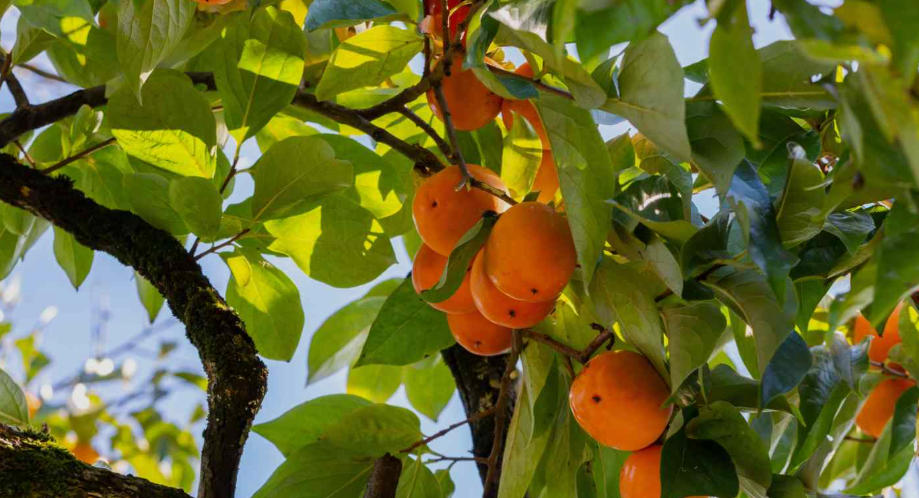
Persimmons are sweet, honey-flavored fruits that ripen in fall, usually after most other tree fruits are finished. They range from small, wild American fruits the size of a cherry tomato to large Asian fruits as big as a softball. Botanically they are berries, and most have glossy orange skin and a leafy green cap called a calyx.
The persimmon most people buy is the Asian or Japanese persimmon. It is native to China, where it has been grown for more than 2,000 years, and it reached Japan around the 7th century and Korea in the 14th century. In 2019 the world produced about 4.3 million tonnes of persimmons, and China grew about 75% of the total, followed by South Korea and Japan.
North America has its own native species, the American persimmon, which grows wild across the central and eastern United States. North Carolina State University notes that the word persimmon comes from “putchamin,” the name used by the Algonquin people for the fruit. American persimmons are smaller than Asian ones but far more cold hardy.
Persimmons fall into two main groups. Astringent types are full of puckery tannins until they turn soft and jelly-like, while non-astringent types can be eaten crisp like an apple. Some cultivars also change flavor and flesh color depending on whether their flowers were pollinated. The 28 persimmons below include Asian cultivars, American types, cold-hardy hybrids and close relatives, along with where each one comes from or is grown today.
1. Fuyu
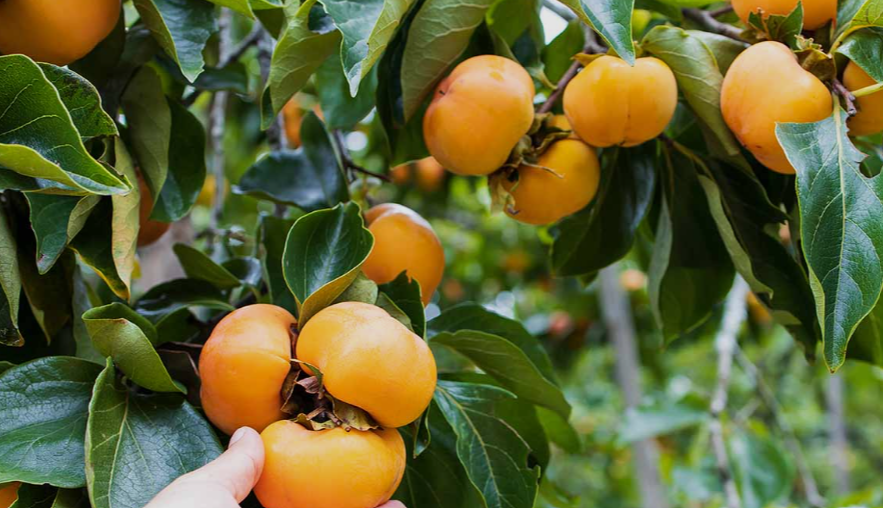
Fuyu is the most widely grown persimmon in the world. Its fruit is large, round and flattened, like a tomato. Its skin turns reddish-orange when ripe. It is non-astringent, so it can be eaten while still firm and crisp. It has few or no seeds. It ripens late in the season.
The University of Florida notes that the name Fuyu means “winter” in Japanese and considers it the best commercial non-astringent cultivar in Florida. It stores well and ships well. Its flesh is sweet and mild. It is the persimmon most often found in supermarkets. It can also be eaten soft. It originated in Japan and is grown in Japan, Korea, California, Florida, Spain, Israel, Australia and New Zealand.
2. Jiro
Jiro is a popular non-astringent persimmon from Japan. Its fruit is large, flat and square-shouldered. Its skin is bright orange. Its flesh is sweet and crisp when firm. It ripens mid-season. It is often confused with Fuyu.
Mississippi State University notes that it can crop erratically when young but produces quality crops once mature. Some fruit splits at the bottom end. Its tree has a wide-spreading shape. It is a major commercial cultivar in Japan. It can be eaten firm or soft. It originated in Japan and is grown in Japan, the southern United States and Australia.
3. Ichi Ki Kei Jiro
Ichi Ki Kei Jiro is a small-growing form of Jiro. Its fruit is flat and orange. It is non-astringent and sweet when firm. The tree grows slowly and stays compact. It is well suited to small gardens. It ripens early to mid-season.
Its name roughly means “number one tree of the Jiro line” in Japanese. Researchers have suggested it to help fill the gap between early and late harvests. It is often grown in containers. It produces fruit at a young age. It needs a long, warm season. It originated in Japan and is grown in home gardens in the United States, Australia and Europe.
4. Hana Fuyu
Hana Fuyu is a large-fruited relative of Fuyu. It is also called Giant Fuyu. Its fruit is slightly larger than most persimmons. Its skin is deep orange. It is non-astringent and sweet. Its fruit is usually free of blemishes.
Mississippi State University notes that it regulates its crop load well and has medium vigor. Its fruit may be slow to lose its green color. Its name means “flower of Fuyu” in Japanese. It needs a pollinator to produce seeded fruit. It is popular with home gardeners. It originated in Japan and is grown in the southern United States and California.
5. Izu
Izu is the earliest non-astringent persimmon. Its fruit is medium-sized and flattened. Its skin is orange-red. Its flesh is very sweet. The tree is small and compact. It ripens in early fall.
It is a seedling of Fuyu crossed with Oku Gosho. It is recommended in Florida for the early season. It is well suited to small gardens. Its yield is lower than many other cultivars. It suits regions with short growing seasons. It was bred in Japan and is grown in Japan, Florida, the southern United States and Australia.
6. Matsumoto Wase Fuyu
Matsumoto Wase Fuyu is an early-ripening form of Fuyu. Its fruit looks like Fuyu but ripens several weeks earlier. Its skin is orange. Its flesh is sweet and crisp. It is non-astringent. Its name includes “wase,” meaning “early.”
The University of Florida notes that it produces heavy, clustered crops. It is recommended in Florida for mid-season harvest. It helps extend the persimmon season. It arose as a natural variation of Fuyu. It is popular with commercial growers. It originated in Japan and is grown in Japan, Florida and Australia.
7. Suruga
Suruga is a late-season non-astringent persimmon. Its fruit is large and round to flattened. Its skin turns a deep reddish-orange. Its flesh is very sweet. It ripens after Fuyu. It needs a long, warm season.
Mississippi State University describes it as the sweetest of the non-astringent types. Its mature fruit has strong red coloring. It has few skin blemishes. It helps extend the harvest into late fall. It does best in warm climates. It was bred in Japan and is grown in Japan, Australia and the southern United States.
8. Oku Gosho
Oku Gosho is a non-astringent persimmon with deep color. Its fruit is medium-sized and round. Its skin is reddish-orange. Its flesh is sweet. It ripens between Izu and Fuyu. Its name refers to the imperial palace in Japanese.
Australian trials found its fruit averaged about 6 ounces with acceptable sweetness and color. Its yields were low in those trials. It is a parent of the early cultivar Izu. It is grown mainly by collectors today. It needs a pollinator for best fruit set. It originated in Japan and is grown in Japan and collector orchards elsewhere.
9. Nishimura Wase
Nishimura Wase is an early persimmon that changes with pollination. When its fruit has seeds, its flesh turns brown, sweet and crisp. When seedless, the fruit stays astringent until soft. Its skin is orange. Its fruit is medium-sized. It ripens early.
It is often called a “coffee cake” persimmon because of its brown, speckled flesh. The University of Florida groups it with astringent types because it is often grown without pollinators. Planting a pollinator nearby improves its flavor. It is one of the earliest persimmons to ripen. It is popular with home gardeners. It originated in Japan and is grown in Japan and the southern United States.
10. Hyakume
Hyakume is a large persimmon with brown-speckled flesh. Its fruit is round to slightly flattened. Its skin is orange to buff. When pollinated, its flesh turns cinnamon-brown and sweet. When seedless, it stays astringent until soft. Its name means “hundred eyes” or “100 momme,” an old Japanese weight.
It is sometimes called a cinnamon persimmon because of its spiced flavor and color. Its fruit can be very large. It can be eaten crisp when seeded. It needs a pollinator for its best flavor. It is valued by home gardeners. It originated in Japan and is grown in Japan, California and the southern United States.
11. Chocolate
Chocolate is a persimmon with brown flesh. Its skin is reddish-orange. When pollinated, its flesh turns dark brown and very sweet. The flesh looks streaked with chocolate. It is medium-sized and oblong. It ripens late.
Its brown flesh appears only when the fruit contains seeds. Seedless fruit stays astringent until fully soft. It is one of the most popular pollination-variant types. Its tree is vigorous and productive. It often produces male flowers that help pollinate other trees. It is grown in California, the southern United States and home orchards in Europe.
12. Hachiya
Hachiya is the most familiar astringent persimmon. Its fruit is large and acorn-shaped. Its skin is deep orange. It must ripen until it is soft and jelly-like before eating. When ripe, it is very sweet. It is popular for baking and drying.
Mississippi State University calls it a common commercial cultivar with high-quality fruit. It is often used for persimmon pudding, bread and jam. It is dried in Japan to make a delicacy called hoshigaki. It is vigorous and productive. It is fairly cold tolerant when grafted onto American persimmon. It originated in Japan and is grown in Japan, California and the southern United States.
13. Tanenashi
Tanenashi is a seedless astringent persimmon. Its fruit is large and cone-shaped. Its skin is light orange to yellow-orange. It must soften before eating. Its flesh is sweet and smooth when ripe. Its name means “without seed” in Japanese.
Mississippi State University describes it as the most popular astringent cultivar and notes that it matures heavy crops without pollination. It rarely sets seed even with a pollinator. The University of Florida reports its sugar content averages about 16%. It is a reliable choice for home gardens. It is popular in the American South. It originated in Japan and is grown in the southeastern United States, especially Florida and Georgia.
14. Hiratanenashi
Hiratanenashi is a major astringent persimmon in Japan. Its fruit is flat and square-shaped. Its skin is orange. It is seedless. It is astringent until treated or softened. Its flesh is sweet and smooth when ripe.
It is often treated with alcohol or carbon dioxide to remove astringency before sale. The University of Florida uses it as a standard example of an astringent cultivar. It is widely used for dried persimmons in Japan. It produces well without pollination. It is one of Japan’s leading commercial cultivars. It originated in Japan and is grown mainly in Japan.
15. Saijo
Saijo is a small, very sweet astringent persimmon. Its fruit is small and elongated. Its skin is yellow-orange. Its flesh becomes extremely sweet when soft. Its name means “best” in Japanese. It ripens mid-season.
It is one of the most cold-hardy Asian persimmons. It can survive winters down to about -10°F. It is popular in the mid-Atlantic and upper South. It is self-fruitful. It is excellent for drying. It originated in Japan and is grown in Virginia, Pennsylvania, the Pacific Northwest and other cooler regions.
16. Sheng
Sheng is a Chinese astringent persimmon. Its fruit is large and flattened. It has four shallow grooves that divide it into lobes. Its skin is deep orange. It must soften before eating. Its flesh is sweet and rich when ripe.
The University of Florida lists it among astringent cultivars grown in Florida. It is fairly cold hardy. It produces good crops. It is popular with home gardeners in the South. Its unusual shape makes it easy to identify. It originated in China and is grown in China and the southeastern United States.
17. Gailey
Gailey is a small astringent persimmon often used as a pollinator. Its fruit is small and four-sided. Its skin is dark red-orange. Its flesh is dry and sweet when soft. The tree is strong and upright. It produces many male flowers.
Mississippi State University describes its flesh as dry but of excellent quality. Its main value is pollinating other cultivars. Planting it near pollination-variant types improves their flavor. It is fairly cold hardy. It is a reliable bloomer. It is grown in the southern United States and California.
18. Date Plum
The date plum is a small-fruited persimmon species. Its fruit is the size of a cherry. Its skin turns yellow, then purple-black, when ripe. Its flesh is sweet with a date-like flavor. It is very astringent until soft. The tree is hardy and vigorous.
It is widely used as a rootstock for Asian persimmons. Its name comes from the flavor of its dried fruit. It has been grown in Asia and Europe for centuries. It tolerates cold better than Asian persimmons. Its fruit is mostly eaten dried. It is native from southwestern Asia to China and is grown in the Caucasus, Turkey and parts of Europe.
19. Tamopan
Tamopan is a Chinese astringent persimmon with an unusual shape. Its fruit is large and flattened. A ring-shaped groove circles the fruit, making it look like it wears a hat. Its skin is orange-red. It must soften before eating. Its flesh is sweet when ripe.
It is also called the mango persimmon or hat persimmon. A larger form called Giant Tamopan was bred in Florida using a chemical that doubles chromosomes. It is fairly cold hardy. It is popular as a curiosity in home gardens. It produces well. It originated in China and is grown in China and the southern United States.
20. Black Sapote
The black sapote is a tropical persimmon relative. Its fruit is round and green. When ripe, its flesh turns dark brown and soft. The flesh looks and tastes like chocolate pudding. It is sweet and mild. The tree is evergreen.
It is often called the chocolate pudding fruit. It needs frost-free conditions. Its fruit is eaten fresh or blended into desserts and smoothies. It ripens off the tree. It is popular in Florida and Hawaii. It is native to Mexico and Central America and is grown in Florida, Hawaii, the Philippines and Australia.
21. Velvet Apple
The velvet apple is a tropical persimmon relative. Its fruit is round and covered in velvety red-brown fuzz. Its flesh is pale, soft and sweet. Its skin has a strong cheese-like smell. The tree is evergreen. It is also called mabolo.
Its smell fades when the skin is peeled. Its flesh tastes like a mix of banana and apple. It needs tropical warmth. Its wood is a valuable ebony. It is grown as a shade tree. It is native to the Philippines and Taiwan and is grown across Southeast Asia and in Florida.
22. American Persimmon
The American persimmon is the native persimmon of the United States. Its fruit is small, 1 to 2 inches across. Its skin is orange to reddish-orange when ripe. It is very astringent until soft. When fully ripe, its flesh is rich and sweet. The tree can reach 30 to 80 feet.
Purdue University notes that each tree produces only male or female flowers, so both are usually needed for a crop. Seedling trees begin bearing in four to nine years. Its fruit is famous in Indiana for persimmon pudding. It is an important food for deer, opossums and birds. Its bark is thick and blocky. It is native to the central and eastern United States, from Texas to Connecticut and west to Kansas.
23. Prok
Prok is one of the most popular American persimmon cultivars. Its fruit is large for an American persimmon. Its skin is peach to light orange. Its flesh is mild and very sweet when soft. It ripens early. It is self-fruitful.
It is a pure American persimmon, though its size leads some people to mistake it for a hybrid. It ripens before hard freezes in northern regions. It is a common first choice for American persimmon growers. It is cold hardy to about zone 5. It produces seedless fruit without a male tree. It is grown in the Midwest, Mid-Atlantic and Northeast.
24. Meader
Meader is a very hardy American persimmon cultivar. Its fruit is small to medium and round. Its skin is orange. Its flesh is sweet when soft. It is self-fruitful. It ripens in fall.
It was selected in New Hampshire. It is one of the most cold-hardy persimmons, surviving in zone 4. It does not need a male tree. Its fruit is popular for pulp and baking. Its fruit often contains seeds. It is grown in the Northeast, Upper Midwest and other cold regions.
25. Early Golden
Early Golden is an old American persimmon cultivar. Its fruit is small to medium. Its skin is golden-orange. Its flesh is sweet and flavorful. It ripens early. It is one of the best-known American cultivars.
It was discovered in Illinois in the 1880s. It is a parent of many newer American cultivars. It ripens before frost in northern areas. Its flavor is highly regarded. It produces some male flowers, so its fruit may have seeds. It is grown in the Midwest, Mid-Atlantic and Northeast.
26. Yates
Yates is a large-fruited American persimmon. Its fruit is round and orange. It is one of the largest American persimmons. Its flesh is very sweet when soft. It ripens early. It is also sold as Juhl.
It was discovered in Indiana. It is self-fruitful and often seedless. It ripens before frost in most areas. Its flavor is highly rated by growers. It is cold hardy to about zone 5. It is grown in the Midwest, Mid-Atlantic and Pacific Northwest.
27. Rosseyanka
Rosseyanka is a cold-hardy hybrid persimmon. It is a cross between the Asian and American persimmons. Its fruit is medium-sized and orange. It is larger and sweeter than most American persimmons. It is astringent until soft. It ripens in fall.
It was bred at the Nikita Botanical Garden on the Black Sea. It is hardy to about -15°F. It is self-fruitful. It grows like an American persimmon with some extra vigor. It brings Asian-style fruit to colder regions. It is grown in Ukraine, Russia and specialist orchards in the United States.
28. Nikita’s Gift
Nikita’s Gift is a popular hybrid persimmon. It is a cross between the Asian and American persimmons. Its fruit is large, flattened and orange-red. Its flesh is sweet when soft. It can lose much of its astringency before fully softening. It ripens in fall.
It was bred at the Nikita Botanical Garden on the Black Sea. It is hardy to about -10°F. It is self-fruitful. It is often grown where Asian persimmons are not hardy. Its fruit resembles Hachiya in size and flavor. It is grown in Ukraine and in home orchards in the United States and Europe.
Sources:
- North Carolina State University: American Persimmon
- University of Florida: Japanese Persimmon Cultivars in Florida
- Mississippi State University: Persimmons
- Purdue University: Persimmons
- University of Florida: Persimmon slides
- ISHS: Persimmon cultivars in the subtropics
- Wikipedia: Persimmon
- Rare Fruit Council of Australia: Oriental Persimmon