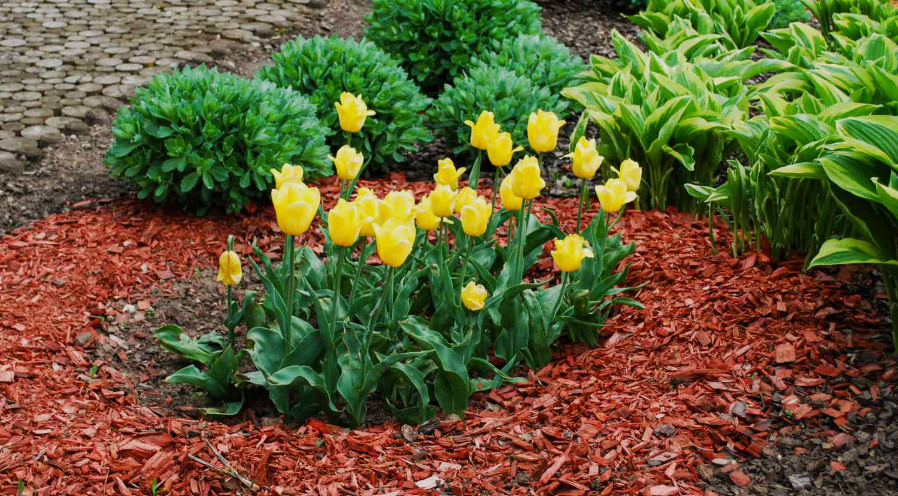
The best mulch for flower beds keeps soil moist, holds down weeds, protects roots from heat and cold, and gives beds a neat, finished look. Mulch is any material spread over the soil surface, from shredded bark and pine straw to compost, leaves and stone. Organic mulches also break down over time and feed the soil with organic matter.
University researchers have studied mulch closely. A review by horticulturist Linda Chalker-Scott of Washington State University, summarized by the University of California, found that organic mulches are the best overall choice, with coarse woody materials providing most or all of mulch’s benefits. Those benefits include better moisture retention, steadier soil temperatures, fewer weeds and less erosion.
How the mulch is applied matters as much as what it is. Most extension services recommend a layer 2 to 4 inches deep, with finer materials at the lower end and coarse chips at the upper end. Mulch should be kept about an inch away from the stems of flowers and several inches from shrub and tree trunks, because mulch piled against stems traps moisture and invites rot.
Some mulches are best avoided. Cypress mulch is not recommended by the University of Florida and the University of Georgia because harvesting it can damage wetland forests, and rubber mulch adds no nutrients and burns readily. The 21 mulches below are among the best choices for flower beds, along with where each one is produced or works best.
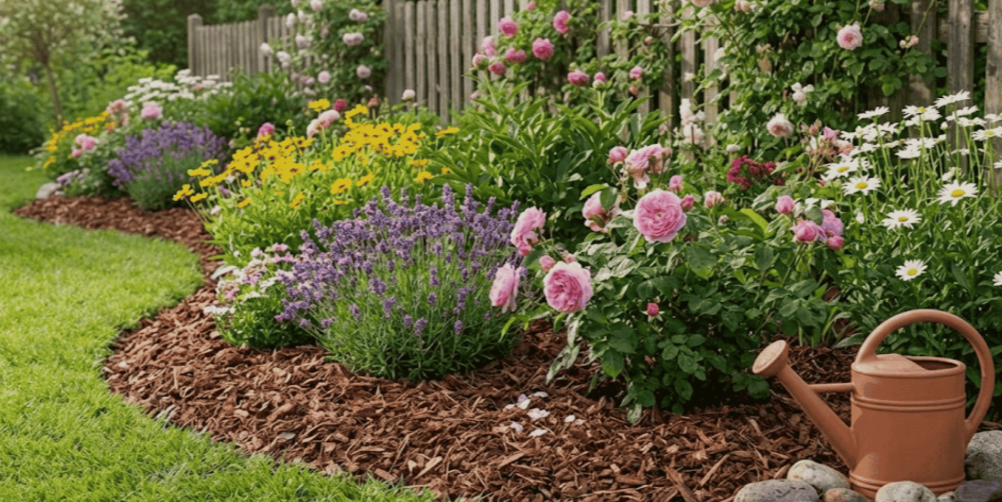
1. Shredded Hardwood Mulch
Shredded hardwood mulch is the most common bagged mulch in North America. It is made from the bark and wood of oak, maple, ash and other hardwood trees. Its fibers knit together into a mat that stays in place on slopes. It has a natural brown color that darkens when wet. It breaks down at a moderate rate. It usually lasts one to two years.
As it decays, it adds organic matter to the soil. Double- and triple-shredded forms have a finer texture that suits small flower beds. It suppresses weeds well when applied 2 to 3 inches deep. It can form a crust if it is very fine, so it should be fluffed occasionally. It is widely available and affordable. It is produced mainly from sawmills and tree services in the eastern and central United States.
2. Arborist Wood Chips
Arborist wood chips are the chipped branches, bark and leaves left by tree-care crews. They are coarse and varied in size and color. They are often available free from local tree services. They break down slowly and feed soil life. They allow air and water to move freely into the soil. They suit perennial beds and shrub borders.
Washington State University notes that studies have found arborist wood chips to be one of the best performers for moisture retention, temperature moderation, weed control and sustainability. Research has also shown that they do not rob nitrogen from established plants when used on the surface. They may look rough in formal beds. They work best around perennials and shrubs rather than tiny seedlings. They fade to gray over time. They are available wherever tree services operate, across North America, Europe and Australia.
3. Pine Bark Nuggets
Pine bark nuggets are chunks of bark from pine trees. They come in large, medium and mini sizes. They have a rich reddish-brown color. They break down slowly and last longer than most wood mulches. They let water and air pass easily. They give beds a tidy, natural look.
Larger nuggets last longest but can float and wash away in heavy rain. Mini nuggets suit small flower beds and containers. Pine bark is slightly acidic, which suits azaleas, camellias and other acid-loving plants. It is recommended by the University of Florida’s Florida-Friendly Landscaping program. It suppresses weeds well at 2 to 3 inches deep. It is produced from pine timber operations in the southeastern United States.
4. Pine Straw
Pine straw is made of the fallen needles of pine trees. It is light, airy and reddish-brown. Its needles interlock, so it stays put on slopes. It lets water reach the soil easily. It breaks down fairly quickly. It is a traditional mulch in the American South.
It is ideal for acid-loving plants such as azaleas, camellias and gardenias. It is sold in compressed bales that cover large areas. It needs to be refreshed every six months to a year because it settles and decays quickly. It is lightweight and easy to spread. It is a renewable by-product of pine forests. It is harvested mainly from longleaf, slash and loblolly pine forests in Georgia, the Carolinas, Florida and Alabama.
5. Cedar Mulch
Cedar mulch is made from the bark and wood of cedar trees. It has a pleasant, woody scent. Its color ranges from reddish to golden brown. It breaks down slowly. It holds its color longer than many wood mulches. It is popular in decorative flower beds.
Its natural oils resist decay, so it lasts longer than most mulches. Some gardeners believe its oils repel insects, though evidence is limited. It is lightweight and easy to spread. It suits perennial beds and pathways. It can be more expensive than other wood mulches. It is produced mainly from western red cedar in the Pacific Northwest and eastern red cedar in the central and southern United States.
6. Eucalyptus Mulch
Eucalyptus mulch is made from fast-growing eucalyptus trees. It has a light reddish-brown color. It settles less than many wood mulches. It breaks down slowly. It has a faint, fresh scent when new. It suits flower beds and shrub borders.
It is recommended by the University of Florida as a sustainable alternative to cypress. It is produced from trees grown on plantations instead of natural forests. It suppresses weeds well at 2 to 3 inches deep. It resists washing away. It is moderately priced in the Southeast. It is produced mainly from plantation-grown eucalyptus in Florida.
7. Melaleuca Mulch
Melaleuca mulch is made from an invasive tree. It is light golden brown. It breaks down very slowly. It settles less than almost any other wood mulch. It resists termites. It suits flower beds in warm climates.
The University of Florida lists melaleuca among its recommended mulches, along with pine bark, pine straw, fallen leaves, mixed hardwood and eucalyptus. Using it helps remove an invasive tree from Florida’s wetlands. It is cured at high temperatures to kill seeds before it is sold. A University of Florida study found that it held its depth better than other common mulches over two years. It is long-lasting and low-maintenance. It is produced in Florida from trees removed from the Everglades region.
8. Shredded Leaves
Shredded leaves are one of the best free mulches. They are made by running fallen leaves through a mower or shredder. They form a light, natural layer. They break down quickly and feed the soil. They attract earthworms. They mimic the natural leaf litter of a forest floor.
Shredding prevents leaves from matting into a soggy layer. Oak leaves break down slowly and make an especially good mulch. A layer of 2 to 3 inches suits most flower beds. They need to be replaced every year. They are ideal for woodland and native plant gardens. They are available in any region with deciduous trees, especially the eastern United States, Canada and Europe.
9. Leaf Mold
Leaf mold is partly decomposed leaves. It is dark, crumbly and earthy. It holds a great deal of water. It improves soil structure as it breaks down. It has a natural, forest-floor look. It suits shade gardens.
It is made by piling leaves and letting them rot for one to two years. It is rich in beneficial fungi. It is gentle enough to use around delicate perennials and bulbs. It does not add many nutrients but improves soil texture. It is free to make at home. It is used most in regions with abundant fallen leaves, such as the eastern United States, Canada and Northern Europe.
10. Compost
Compost is decomposed plant and food waste. It is dark, crumbly and rich in nutrients. It feeds plants as it breaks down. It improves both sandy and clay soils. It encourages earthworms and soil microbes. It suits annual and perennial flower beds.
It is best applied in a thin layer of 1 to 2 inches. Weed seeds can blow onto it and sprout, so it is often topped with a coarser mulch. It breaks down quickly and needs replacing each year. It is excellent for heavy-feeding flowers such as roses and dahlias. It can be made at home or bought in bulk. It is produced wherever yard and food waste is composted, including municipal programs across North America and Europe.
11. Straw
Straw is the dried stalks of grain crops such as wheat, oats and rice. It is light, golden and airy. It insulates soil well. It breaks down within a season. It is inexpensive. It suits annual flower beds and cutting gardens.
It should not be confused with hay, which contains weed seeds. Straw itself may contain a few grain seeds that sprout. A layer of 3 to 4 inches suits most beds. It is often used to protect perennials over winter. It can attract mice in cold weather. It is produced from grain farms across the American Midwest and Great Plains, Canada and Europe.
12. Grass Clippings
Grass clippings are a free mulch from mowing the lawn. They are green when fresh and turn tan as they dry. They are rich in nitrogen. They break down quickly. They feed the soil as they decay. They suit annual flower and vegetable beds.
They should be applied in thin layers of an inch or less. Thick layers mat down, heat up and smell. They should be dried before use. Clippings from lawns treated with herbicides should not be used on flower beds. They need to be replenished often. They are available anywhere lawns are grown.
13. Cocoa Hulls
Cocoa hulls are the shells of cocoa beans. They are dark brown and fine-textured. They smell faintly of chocolate when new. They give flower beds a rich, dark look. They break down at a moderate rate. They add nutrients as they decay.
Michigan State University notes that cocoa mulch contains theobromine, the same compound that makes chocolate toxic to dogs. The ASPCA has recorded dogs showing tremors and vomiting after eating it. It should not be used where dogs can eat it unobserved. It can grow harmless surface mold in wet weather. It is more expensive than wood mulches. It is a by-product of chocolate processing, sourced mainly from cocoa grown in West Africa and processed in the United States and Europe.
14. Pecan Shells
Pecan shells are a by-product of pecan processing. They are small, dark brown and crunchy. They break down slowly. They last several years. They give beds a neat, textured look. They suit flower beds and pathways.
They add a little organic matter as they decay. They allow water to pass through easily. They can be sharp underfoot. Other nut shells, such as hazelnut and walnut, are sometimes used the same way, though walnut can harm sensitive plants. They are available mainly near processing plants. They are produced in Georgia, Texas, New Mexico and other pecan-growing regions.
15. Buckwheat Hulls
Buckwheat hulls are the outer husks of buckwheat seeds. They are small, light and dark brown. They give beds a fine, uniform look. They break down slowly. They let water pass through easily. They suit small flower beds and rock gardens.
They are lightweight and easy to spread. They can blow away in strong wind until they settle. They do not mat down. They are popular for perennial and rose gardens. They can be hard to find. They are produced in the northern United States and Canada, where buckwheat is grown.
16. Hemlock Bark Mulch
Hemlock bark mulch is made from the bark of hemlock trees. It has a rich reddish-brown color. It is fine-textured and attractive. It breaks down slowly. It holds its color well. It suits formal flower beds.
It is valued in the Northeast for its deep color without dyes. It suppresses weeds well. It is slightly acidic. It can be more expensive than other bark mulches. It is lightweight and easy to spread. It is produced from hemlock forests in the northeastern United States, eastern Canada and the Pacific Northwest.
17. Colored Mulch
Colored mulch is wood mulch that has been dyed red, black or brown. It holds its color for a season or longer. It gives flower beds a bold, uniform look. It is widely sold in bags. It breaks down slowly. It suits decorative and commercial plantings.
It is often made from scrap lumber, old pallets and other recycled wood. It adds few nutrients to the soil. Most dyes are considered safe, but the wood source can vary in quality. It should be bought from reputable suppliers. It fades over time. It is produced across North America from recycled wood.
18. Mushroom Compost
Mushroom compost is the used growing material from mushroom farms. It is dark, crumbly and rich. It contains straw, manure and other organic materials. It improves soil structure. It adds nutrients. It suits flower beds with poor soil.
It can be high in salts, so it should be used in thin layers. It is best for established plants rather than seedlings or salt-sensitive flowers. It often contains lime, which raises soil pH. It should not be used around acid-loving plants. It is inexpensive near mushroom farms. It is produced mainly in Pennsylvania, the leading mushroom-growing state, and other mushroom-farming regions.
19. Pea Gravel
Pea gravel is small, rounded stone. It comes in tan, gray, white and mixed colors. It never breaks down. It does not blow or wash away easily. It needs little maintenance. It suits succulent beds, rock gardens and dry gardens.
The University of Georgia includes rock among the main types of landscape mulch. Stone does not improve soil or add nutrients. It absorbs and reflects heat, so it suits heat-loving plants but can stress others. It is hard to remove once spread. It works well with drought-tolerant flowers. It is quarried throughout North America and is popular in the Southwest.
20. Lava Rock
Lava rock is lightweight volcanic stone. It is porous and comes in red and black. It never breaks down. It drains water quickly. It gives beds a bold, modern look. It suits xeriscapes and succulent beds.
It is lighter than most stone mulches. It holds heat, which suits desert plants. It does not add nutrients to the soil. It can be sharp to handle. It is difficult to remove once spread. It is mined in volcanic regions of the western United States, including Arizona, New Mexico, Oregon and Hawaii.
21. Living Mulch
Living mulch is a low groundcover planted between flowers. Common choices include creeping thyme, sweet woodruff, creeping phlox and clover. It covers bare soil with living plants. It shades out weeds. It keeps soil cool and moist. It never needs to be replaced.
It adds color and texture to flower beds. It supports pollinators when it blooms. It must be chosen carefully so it does not crowd out flowers. It needs time to fill in. It suits informal and cottage gardens. It can be grown in any region, using groundcovers suited to the local climate.
Sources:
- University of California: Myths of mulch
- Washington State University: Using Arborist Wood Chips as Landscape Mulch
- University of Florida: Florida-Friendly Landscaping mulch guidance
- Michigan State University: Landscape mulch
- University of Georgia: Mulching in the Landscape
- University of Florida, Lake County: What is the best mulch to use in the Florida landscape?
- University of Florida, Alachua County: Mulch Brochure
- University of Nebraska–Lincoln: Mulch and Hot Weather
- University of California, Contra Costa: Garden mulches