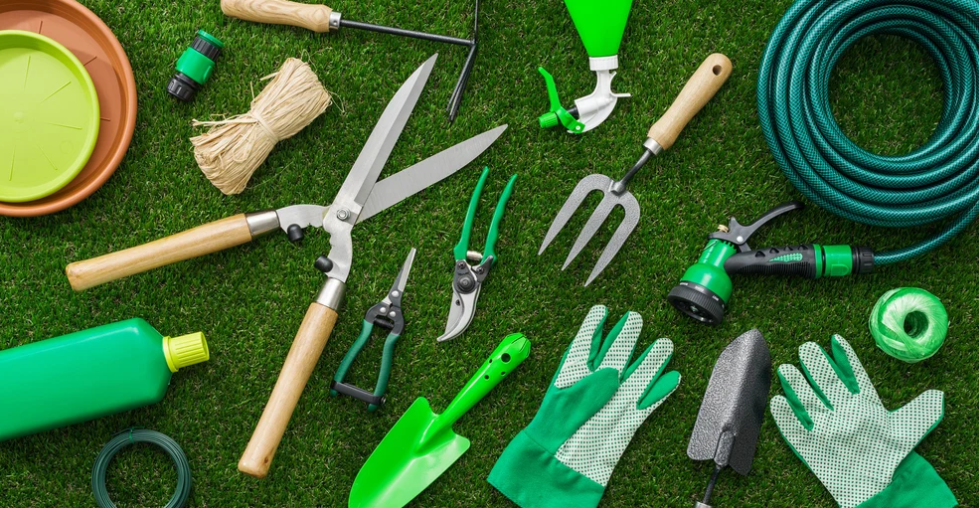
Gardening becomes much easier when you have the right tools for the job. Whether you are growing vegetables in a small backyard, maintaining flower beds, caring for fruit trees, or managing a large landscape, garden tools help you prepare the soil, plant seeds, control weeds, water plants, prune growth, and keep the garden tidy. Some tools are designed for simple hand tasks, while others make demanding jobs faster and less physically tiring.
There are hundreds of gardening tools and pieces of equipment available, ranging from basic items such as hand trowels and pruning shears to larger machines such as lawn mowers, tillers, leaf blowers, and garden tractors. You do not necessarily need every tool available. The best gardening tool collection depends on the size of your garden, the plants you grow, the type of soil you have, and the amount of maintenance required.
Understanding what each garden tool does can help you avoid buying equipment you rarely use. A hand trowel, for example, is excellent for planting small flowers and seedlings, whereas a spade is better suited to digging and moving soil. Similarly, pruning shears are useful for cutting small branches, while loppers and pruning saws are better choices for larger woody stems.
In this guide, you will find a detailed list of garden tools and equipment together with their uses. The list includes digging tools, planting tools, pruning equipment, watering equipment, lawn-care tools, soil-preparation equipment, harvesting tools, pest-control equipment, protective gear, and useful garden accessories. Whether you are a beginner or an experienced gardener, this guide can help you identify the tools that are most useful for your garden.
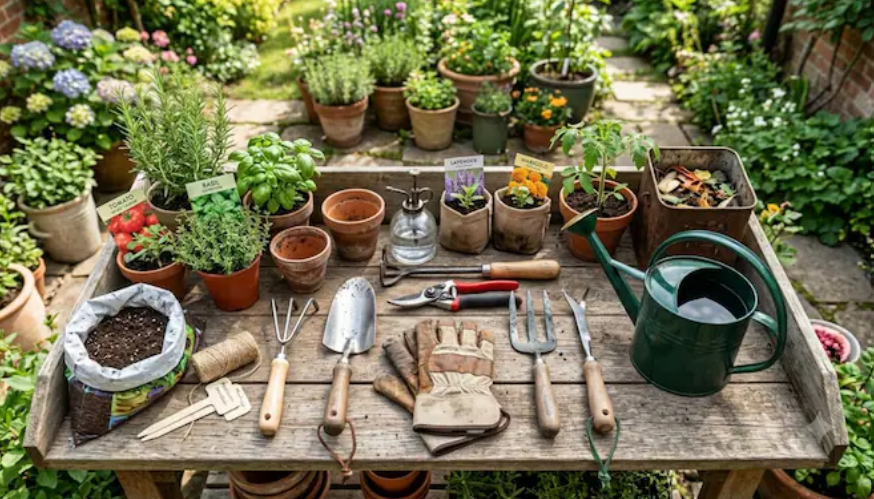
List of Garden Tools and Equipment
1. Hand Trowel
A hand trowel is one of the most useful basic gardening tools. It has a small pointed or rounded blade and a short handle.
Uses:
- Planting flowers and vegetables
- Digging small holes for seedlings
- Transplanting young plants
- Removing small weeds
- Mixing small amounts of soil or compost
A sturdy stainless-steel trowel is particularly useful for everyday gardening.
2. Garden Spade
A garden spade has a flat, relatively straight blade attached to a long handle.
Uses:
- Digging planting holes
- Turning soil
- Cutting through roots
- Moving soil
- Creating garden beds
- Edging borders
Its flat blade makes it particularly useful when you need clean, straight cuts in soil.
3. Garden Shovel
A garden shovel generally has a curved blade designed for scooping and moving loose materials.
Uses:
- Moving soil
- Scooping compost
- Loading mulch
- Moving gravel
- Digging larger holes
Shovels are indispensable for gardens where large amounts of soil or organic material must be moved.
4. Digging Fork
A digging fork has several strong metal tines instead of a solid blade.
Uses:
- Loosening compacted soil
- Turning garden soil
- Digging around plants
- Breaking apart clumps
- Mixing compost into soil
- Harvesting root vegetables
It is particularly useful in heavy or clay-rich soil.
5. Garden Fork
A garden fork is similar to a digging fork but can have slightly different tine configurations depending on its intended use.
Uses:
- Turning soil
- Mixing organic matter
- Aerating garden beds
- Moving loose plant material
- Breaking up compacted ground
6. Spading Fork
A spading fork is designed for digging and loosening soil.
Uses:
- Turning soil
- Digging beds
- Dividing perennial plants
- Loosening hard ground
- Lifting root crops
7. Garden Hoe
A garden hoe has a blade attached to a long handle.
Uses:
- Removing weeds
- Breaking up the soil surface
- Creating planting furrows
- Cultivating vegetable beds
- Mixing amendments into soil
Different hoe designs are suited to different gardening tasks.
8. Draw Hoe
A draw hoe has a broad blade that is pulled toward the gardener.
Uses:
- Removing weeds
- Preparing planting rows
- Breaking soil
- Creating furrows
- Cultivating vegetable gardens
9. Scuffle Hoe
A scuffle hoe is designed to move just below the soil surface.
Uses:
- Cutting small weeds
- Cultivating soil
- Removing weeds between rows
- Maintaining loose soil surfaces
10. Stirrup Hoe
A stirrup hoe has a loop-shaped blade.
Uses:
- Cutting weeds
- Cultivating vegetable beds
- Removing shallow-rooted weeds
- Working between established plants
Its design allows gardeners to work quickly without moving large quantities of soil.
11. Weeding Fork
A weeding fork is a small hand tool with narrow tines.
Uses:
- Removing weeds
- Loosening soil around weeds
- Extracting weeds with long roots
- Working in narrow planting spaces
12. Weeding Knife
A weeding knife, sometimes called a garden knife, has a pointed blade useful for precise garden work.
Uses:
- Cutting weeds
- Removing weeds from cracks
- Cutting roots
- Dividing small plants
- Opening bags of soil or fertilizer
13. Dandelion Weeder
A dandelion weeder has a narrow shaft and pointed end designed to reach deep roots.
Uses:
- Removing dandelions
- Extracting tap-rooted weeds
- Removing weeds from lawns and beds
14. Hand Cultivator
A hand cultivator usually has three or more curved tines.
Uses:
- Loosening soil
- Removing small weeds
- Mixing fertilizer into soil
- Breaking crusted soil
- Preparing planting areas
15. Garden Rake
A garden rake has a broad head with metal tines.
Uses:
- Leveling soil
- Removing stones
- Breaking soil clumps
- Preparing seedbeds
- Collecting garden debris
16. Leaf Rake
A leaf rake has flexible tines arranged in a fan shape.
Uses:
- Collecting fallen leaves
- Gathering grass clippings
- Cleaning lawns
- Collecting lightweight garden debris
17. Thatch Rake
A thatch rake has strong tines designed to remove accumulated thatch from lawns.
Uses:
- Removing dead grass
- Reducing excessive thatch
- Preparing lawns for renovation
- Improving air and water movement into the soil
18. Lawn Edger
A lawn edger creates a clean boundary between grass and other areas.
Uses:
- Defining lawn borders
- Maintaining paths
- Edging flower beds
- Creating neat landscape boundaries
19. Garden Scissors
Garden scissors are small cutting tools used for precise plant work.
Uses:
- Cutting flowers
- Deadheading plants
- Trimming herbs
- Cutting twine
- Harvesting delicate stems
20. Pruning Shears
Pruning shears, also called secateurs, are among the most important tools for maintaining plants.
Uses:
- Cutting small branches
- Removing dead stems
- Shaping shrubs
- Pruning flowers
- Harvesting fruits and vegetables
There are generally bypass and anvil styles, with bypass shears often preferred for clean cuts on living stems.
21. Loppers
Loppers have long handles and larger cutting blades than pruning shears.
Uses:
- Cutting thicker branches
- Pruning shrubs
- Removing damaged limbs
- Shaping trees and large plants
The long handles provide additional leverage.
22. Pruning Saw
A pruning saw has a toothed blade designed to cut branches too thick for shears or loppers.
Uses:
- Removing large branches
- Pruning trees
- Cutting dead wood
- Managing thick woody growth
23. Pole Pruner
A pole pruner allows gardeners to reach branches high above the ground.
Uses:
- Pruning high branches
- Removing dead limbs
- Maintaining small trees
- Cutting inaccessible growth
24. Hedge Shears
Hedge shears have long blades designed for trimming multiple stems at once.
Uses:
- Shaping hedges
- Trimming shrubs
- Maintaining formal plant shapes
- Cutting soft, uniform growth
25. Grass Shears
Grass shears are designed for trimming grass in areas where a mower cannot easily reach.
Uses:
- Trimming lawn edges
- Cutting grass around trees
- Maintaining narrow spaces
- Finishing lawn work
26. Pole Hedge Trimmer
A pole hedge trimmer combines a long shaft with powered cutting blades.
Uses:
- Trimming tall hedges
- Cutting high shrub growth
- Maintaining large hedges
- Reaching difficult areas
27. Lawn Mower
A lawn mower is essential for maintaining turfgrass.
Uses:
- Cutting grass
- Maintaining lawn height
- Managing large lawn areas
- Producing grass clippings for composting or mulch, depending on the mower
Common types include push, self-propelled, electric, battery-powered, and riding mowers.
28. String Trimmer
A string trimmer uses a rotating line to cut grass and weeds.
Uses:
- Trimming lawn edges
- Cutting grass around trees
- Clearing weeds
- Reaching areas inaccessible to lawn mowers
29. Brush Cutter
A brush cutter is a heavier-duty cutting machine than a typical string trimmer.
Uses:
- Cutting tall grass
- Clearing dense weeds
- Managing thick vegetation
- Clearing rough areas
30. Lawn Aerator
A lawn aerator creates openings in compacted soil.
Uses:
- Improving air circulation
- Allowing water to reach roots
- Reducing soil compaction
- Encouraging healthier grass roots
Aerators can be manual, spike-based, or powered.
31. Lawn Roller
A lawn roller is a heavy cylindrical tool rolled across the ground.
Uses:
- Leveling soil
- Firming newly seeded areas
- Preparing lawns
- Improving seed-to-soil contact
32. Lawn Spreader
A lawn spreader distributes materials evenly across the garden or lawn.
Uses:
- Applying fertilizer
- Spreading grass seed
- Distributing some soil amendments
- Applying granular lawn products
33. Broadcast Spreader
A broadcast spreader distributes material over a relatively wide area.
Uses:
- Spreading seed
- Applying granular fertilizer
- Covering large lawns efficiently
34. Drop Spreader
A drop spreader releases material directly below the machine.
Uses:
- Applying fertilizer accurately
- Spreading seed
- Working around garden boundaries
- Treating smaller lawns
35. Wheelbarrow
A wheelbarrow is one of the most useful pieces of garden equipment.
Uses:
- Transporting soil
- Moving compost
- Carrying mulch
- Transporting plants
- Removing garden debris
- Moving tools around the garden
36. Garden Cart
A garden cart is designed to transport heavier loads.
Uses:
- Moving soil
- Carrying firewood
- Transporting plants
- Hauling mulch and compost
- Moving gardening equipment
37. Garden Kneeler
A garden kneeler provides support when working close to the ground.
Uses:
- Planting seedlings
- Weeding
- Maintaining flower beds
- Reducing discomfort while kneeling
Some models can also be turned into small garden seats.
38. Garden Tool Bag
A garden tool bag keeps frequently used hand tools organized.
Uses:
- Carrying pruning shears
- Storing hand trowels
- Transporting gloves
- Keeping small gardening accessories together
39. Tool Belt
A gardening tool belt keeps small tools accessible while working.
Uses:
- Carrying pruners
- Holding scissors
- Storing small hand tools
- Keeping twine and other accessories nearby
40. Watering Can
A watering can is useful for delivering water directly to plants.
Uses:
- Watering seedlings
- Watering container plants
- Irrigating indoor plants
- Watering delicate flowers
A removable rose or sprinkler head helps distribute water more gently.
41. Garden Hose
A garden hose is one of the most common watering tools.
Uses:
- Watering lawns
- Irrigating flower beds
- Washing garden equipment
- Filling containers
- Connecting to sprinklers
42. Hose Reel
A hose reel stores and organizes a garden hose.
Uses:
- Preventing hose tangles
- Keeping hoses off walkways
- Extending hose life
- Making watering easier
43. Hose Nozzle
A hose nozzle controls how water leaves the hose.
Uses:
- Producing gentle sprays
- Watering plants
- Washing equipment
- Cleaning paths
- Providing stronger streams for certain cleaning tasks
44. Garden Sprinkler
A sprinkler distributes water over a larger area.
Uses:
- Watering lawns
- Irrigating garden beds
- Watering newly planted areas
- Covering large sections of a garden
45. Oscillating Sprinkler
An oscillating sprinkler moves water back and forth across a designated area.
Uses:
- Watering lawns
- Irrigating rectangular garden spaces
- Covering relatively large areas
46. Soaker Hose
A soaker hose slowly releases water along its length.
Uses:
- Watering vegetable beds
- Irrigating shrubs
- Delivering water near plant roots
- Reducing water loss from surface spraying
47. Drip Irrigation System
Drip irrigation delivers water slowly and directly to planting areas.
Uses:
- Watering vegetables
- Irrigating fruit trees
- Watering flower beds
- Conserving water
- Automating irrigation
48. Rain Barrel
A rain barrel collects rainwater from a roof or other collection surface.
Uses:
- Storing rainwater
- Providing water for gardens
- Reducing dependence on treated water
- Supporting water conservation
49. Water Timer
A water timer automatically controls when irrigation begins and ends.
Uses:
- Automating watering
- Maintaining consistent irrigation schedules
- Reducing accidental overwatering
- Managing irrigation while away
50. Soil Moisture Meter
A soil moisture meter measures moisture levels in soil.
Uses:
- Determining when plants need water
- Preventing unnecessary watering
- Monitoring container plants
- Checking moisture at root level
51. Soil pH Meter
A soil pH meter measures the acidity or alkalinity of soil.
Uses:
- Checking soil pH
- Helping select suitable plants
- Monitoring amended soil
- Identifying potential soil-management problems
52. Soil Thermometer
A soil thermometer measures soil temperature.
Uses:
- Determining whether soil is warm enough for seeds
- Monitoring planting conditions
- Checking temperatures for sensitive crops
53. Soil Test Kit
A soil test kit helps evaluate important soil properties.
Uses:
- Testing pH
- Checking nutrient levels
- Identifying potential deficiencies
- Guiding fertilizer and soil-amendment decisions
54. Compost Bin
A compost bin provides a controlled place for organic material to decompose.
Uses:
- Recycling plant material
- Producing compost
- Reducing garden waste
- Creating organic soil amendments
55. Compost Tumbler
A compost tumbler is a rotating container designed to make turning compost easier.
Uses:
- Mixing compost ingredients
- Aerating organic material
- Speeding convenient compost management
- Producing compost in relatively small spaces
56. Compost Aerator
A compost aerator is used to introduce air into compost.
Uses:
- Turning compost
- Improving airflow
- Mixing decomposing material
- Supporting aerobic decomposition
57. Garden Sieve
A garden sieve separates fine soil from stones, roots, and larger debris.
Uses:
- Preparing potting mixtures
- Creating fine seed-starting soil
- Removing stones
- Screening homemade compost
58. Soil Scoop
A soil scoop has a deep bowl-shaped blade.
Uses:
- Filling pots
- Moving potting soil
- Scooping compost
- Handling planting media
59. Dibber
A dibber is a pointed hand tool used to make small holes in soil.
Uses:
- Planting seeds
- Planting bulbs
- Making holes for seedlings
- Creating consistent planting depths
60. Bulb Planter
A bulb planter makes holes specifically for planting bulbs.
Uses:
- Planting flower bulbs
- Creating uniform planting holes
- Removing plugs of soil
61. Seedling Transplanter
A transplanter is a narrow planting tool designed for moving seedlings.
Uses:
- Planting young vegetables
- Transplanting flowers
- Creating narrow planting holes
- Working in crowded beds
62. Seed Spreader
A seed spreader distributes seeds over a designated area.
Uses:
- Sowing grass seed
- Spreading small seeds
- Establishing lawns
- Seeding larger garden areas
63. Seed Tray
A seed tray is a shallow container divided into sections for starting plants.
Uses:
- Germinating seeds
- Raising seedlings
- Organizing young plants
- Preparing plants for transplanting
64. Propagation Tray
Propagation trays provide space for starting plants from seeds or cuttings.
Uses:
- Starting seeds
- Rooting cuttings
- Raising young plants
- Organizing propagation projects
65. Garden Labels
Garden labels identify plants and planting areas.
Uses:
- Identifying plant varieties
- Recording planting dates
- Labeling seed trays
- Keeping track of different crops
66. Plant Supports
Plant supports include stakes, cages, trellises, and frames.
Uses:
- Supporting climbing plants
- Keeping plants upright
- Preventing stems from bending
- Supporting heavy fruit
They are particularly useful for tomatoes, peas, beans, cucumbers, and climbing flowers.
67. Garden Stakes
Garden stakes provide vertical support for plants.
Uses:
- Supporting young trees
- Supporting vegetables
- Training climbing plants
- Holding protective covers
68. Trellis
A trellis provides a structure for climbing plants.
Uses:
- Supporting vines
- Growing climbing flowers
- Training cucumbers and beans
- Saving garden space through vertical gardening
69. Tomato Cage
A tomato cage surrounds a tomato plant and provides structural support.
Uses:
- Supporting tomato stems
- Keeping fruit off the ground
- Reducing sprawling
- Improving access for harvesting
70. Plant Ties
Plant ties attach plants to stakes, trellises, or other supports.
Uses:
- Securing stems
- Training vines
- Supporting young trees
- Guiding climbing plants
Soft ties are preferable when plants need support without excessive stem damage.
71. Garden Netting
Garden netting provides a physical barrier around plants.
Uses:
- Protecting crops from birds
- Supporting climbing plants
- Creating barriers around garden beds
- Protecting fruit
72. Row Cover
Row covers are lightweight materials placed over crops.
Uses:
- Protecting plants from some insects
- Providing a degree of frost protection
- Reducing wind exposure
- Creating a more favorable growing environment
73. Shade Cloth
Shade cloth reduces the amount of sunlight reaching plants.
Uses:
- Protecting shade-sensitive plants
- Reducing heat stress
- Creating temporary shade
- Protecting seedlings during hot conditions
74. Garden Cloches
A garden cloche is a cover placed over an individual plant or small planting area.
Uses:
- Protecting young plants
- Providing temporary cold protection
- Creating a warmer microclimate
- Shielding plants from some pests
75. Cold Frame
A cold frame is a low, enclosed structure with a transparent cover.
Uses:
- Starting seedlings
- Extending growing seasons
- Protecting young plants
- Hardening off plants before outdoor planting
76. Greenhouse
A greenhouse creates a controlled growing environment.
Uses:
- Starting seedlings
- Growing plants in protected conditions
- Extending growing seasons
- Protecting plants from unfavorable weather
- Growing temperature-sensitive crops
77. Handheld Garden Sprayer
A handheld sprayer applies water or approved garden products in a controlled manner.
Uses:
- Misting plants
- Applying certain garden treatments
- Moistening seedlings
- Cleaning plant surfaces
Always follow the label instructions for any garden treatment.
78. Pump Sprayer
A pump sprayer has a tank and pressurized spray system.
Uses:
- Applying water
- Applying approved garden treatments
- Wetting large areas
- Treating plants more efficiently than with a small spray bottle
79. Backpack Sprayer
A backpack sprayer is carried on the gardener’s back.
Uses:
- Treating larger garden areas
- Applying approved plant-care products
- Watering or misting in some situations
- Covering extensive planting areas
Protective equipment and label directions should always be followed when applying garden products.
80. Garden Gloves
Garden gloves protect the hands during routine garden work.
Uses:
- Protecting against dirt
- Reducing minor scratches
- Handling rough materials
- Improving grip on tools
- Keeping hands cleaner
81. Thorn-Resistant Gloves
These gloves provide additional protection when handling thorny plants.
Uses:
- Pruning roses
- Handling thorny shrubs
- Moving prickly plants
- Clearing thorny vegetation
82. Garden Boots
Garden boots protect feet from mud, moisture, and rough terrain.
Uses:
- Working in wet soil
- Walking through muddy gardens
- Protecting feet from moisture
- Maintaining traction in outdoor conditions
83. Garden Kneeling Pad
A kneeling pad provides cushioning when working close to the ground.
Uses:
- Planting
- Weeding
- Pruning low plants
- Maintaining flower beds
84. Safety Glasses
Safety glasses protect the eyes during certain gardening tasks.
Uses:
- Protecting eyes while using powered equipment
- Preventing debris from reaching the eyes
- Providing protection during cutting and trimming tasks
85. Ear Protection
Ear protection can reduce exposure to loud sounds produced by powered garden machinery.
Uses:
- Working around loud lawn equipment
- Using certain powered trimmers
- Operating other noisy outdoor machinery
86. Garden Apron
A garden apron protects clothing and provides storage for small tools.
Uses:
- Carrying hand tools
- Holding seeds and labels
- Protecting clothing
- Keeping gardening accessories nearby
87. Leaf Blower
A leaf blower uses moving air to clear lightweight debris.
Uses:
- Clearing leaves
- Cleaning paths
- Moving grass clippings
- Clearing debris from patios and driveways
88. Garden Vacuum
A garden vacuum collects leaves and other lightweight debris.
Uses:
- Cleaning lawns
- Collecting leaves
- Removing garden debris
- Helping with leaf management
Some models also have a mulching function.
89. Garden Shredder
A garden shredder cuts branches and woody garden waste into smaller pieces.
Uses:
- Processing branches
- Reducing garden waste volume
- Producing material suitable for certain composting or mulching applications
90. Wood Chipper
A wood chipper processes larger branches and woody material.
Uses:
- Producing wood chips
- Reducing branches into smaller pieces
- Managing tree-pruning waste
- Creating material that may be useful as mulch where appropriate
91. Rotary Tiller
A rotary tiller, also called a rototiller, uses rotating tines to cultivate soil.
Uses:
- Breaking new ground
- Loosening soil
- Preparing large planting beds
- Incorporating organic matter
Tillers are most useful where significant soil preparation is required.
92. Cultivator
A cultivator is generally smaller and lighter than a full-size tiller.
Uses:
- Loosening garden soil
- Controlling small weeds
- Mixing amendments
- Maintaining established beds
93. Garden Tractor
A garden tractor is a larger riding machine designed for extensive property maintenance.
Uses:
- Mowing large lawns
- Pulling garden attachments
- Transporting materials
- Performing various landscape-maintenance tasks
94. Riding Lawn Mower
A riding mower allows the operator to sit while cutting grass.
Uses:
- Mowing large lawns
- Maintaining extensive grassy areas
- Reducing mowing time compared with many walk-behind mowers
95. Wheel Hoe
A wheel hoe has a wheel and interchangeable cultivating blades.
Uses:
- Removing weeds between rows
- Cultivating vegetable gardens
- Preparing soil
- Working large beds with less bending
96. Garden Auger
A garden auger is a drilling tool used to create holes in soil.
Uses:
- Planting bulbs
- Creating planting holes
- Installing stakes
- Preparing holes for certain plants
97. Post-Hole Digger
A post-hole digger is designed to create deep, narrow holes.
Uses:
- Installing fence posts
- Installing garden structures
- Planting larger supports
- Creating holes for trellises
98. Mattock
A mattock is a heavy digging tool with a pointed or cutting head.
Uses:
- Breaking hard ground
- Removing roots
- Digging rocky soil
- Clearing difficult planting areas
99. Pickaxe
A pickaxe is designed for breaking hard or rocky ground.
Uses:
- Breaking compacted soil
- Working in rocky areas
- Removing hard material
- Preparing difficult ground for planting
100. Garden Axe
A garden axe is useful for cutting woody material and certain heavy garden tasks.
Uses:
- Cutting branches
- Processing woody debris
- Clearing small woody growth
101. Hand Saw
A hand saw can be used for cutting branches and woody plant material.
Uses:
- Cutting branches
- Cutting wooden stakes
- Preparing garden supports
- Managing small pieces of timber
102. Grafting Knife
A grafting knife is a specialized sharp tool used in plant propagation.
Uses:
- Making precise cuts during grafting
- Budding plants
- Propagating selected fruit trees and ornamentals
Grafting requires appropriate technique and care when using sharp tools.
103. Budding Knife
A budding knife is designed specifically for budding propagation.
Uses:
- Making budding cuts
- Preparing plant material
- Propagating selected plants through budding
104. Harvesting Basket
A harvesting basket provides a container for collecting produce.
Uses:
- Harvesting vegetables
- Collecting fruit
- Gathering herbs
- Transporting freshly picked produce
105. Fruit Picker
A fruit picker has a long handle and a collection basket or catching mechanism.
Uses:
- Harvesting fruit from trees
- Reaching higher branches
- Reducing the need to climb trees
106. Harvesting Knife
A harvesting knife is used to cut produce from plants.
Uses:
- Harvesting vegetables
- Cutting herbs
- Removing fruits
- Cutting leafy crops
107. Garden Sickle
A sickle has a curved blade used for cutting vegetation.
Uses:
- Cutting grass
- Harvesting certain crops
- Clearing light vegetation
- Cutting weeds
108. Garden Scythe
A scythe has a long curved blade mounted on a long handle.
Uses:
- Cutting tall grass
- Managing vegetation
- Harvesting some grasses and crops
- Maintaining areas where powered equipment is unsuitable
109. Dibber Board
A dibber board is a planting aid designed to create multiple holes at consistent spacing.
Uses:
- Planting seeds
- Planting bulbs
- Maintaining uniform crop spacing
- Speeding up vegetable planting
110. Seedling Heat Mat
A seedling heat mat provides gentle bottom heat to propagation containers.
Uses:
- Encouraging seed germination for suitable plants
- Maintaining warmer root-zone temperatures
- Supporting indoor seed starting
111. Grow Light
A grow light provides artificial light for plants.
Uses:
- Starting seedlings indoors
- Supplementing natural sunlight
- Growing plants in spaces with inadequate light
- Supporting indoor propagation
112. Plant Mister
A plant mister produces a fine spray of water.
Uses:
- Moistening seedlings
- Watering delicate plants
- Maintaining humidity around plants when appropriate
- Cleaning some plant foliage
113. Humidity Tray
A humidity tray holds water beneath or near container plants.
Uses:
- Increasing local humidity around plants
- Supporting plants that prefer humid conditions
- Creating a more suitable microenvironment
114. Plant Pot
Plant pots are containers used to grow plants above ground.
Uses:
- Growing houseplants
- Growing herbs
- Raising seedlings
- Growing ornamental plants
- Managing plants where garden space is limited
115. Hanging Basket
A hanging basket allows plants to be grown above ground.
Uses:
- Growing trailing flowers
- Decorating patios
- Growing herbs and ornamental plants
- Making use of vertical space
116. Self-Watering Planter
A self-watering planter has a reservoir that supplies water to the growing medium.
Uses:
- Maintaining more consistent moisture
- Growing container plants
- Reducing the frequency of manual watering
117. Root Pruning Saw
A root pruning saw is designed to cut through roots when appropriate.
Uses:
- Managing certain root-related tasks
- Cutting roots during transplanting
- Dividing plants
118. Garden Hand Cultivator
A smaller hand cultivator is useful for detailed work in established beds.
Uses:
- Loosening soil around plants
- Removing shallow weeds
- Mixing compost into small areas
- Preparing soil around seedlings
119. Soil Knife
A soil knife combines several functions in one compact tool.
Uses:
- Cutting roots
- Digging
- Weeding
- Dividing plants
- Opening bags and cutting twine
120. Garden Twine
Garden twine is an inexpensive but highly useful gardening accessory.
Uses:
- Tying plants to stakes
- Supporting vines
- Marking planting rows
- Bundling garden waste
- Securing temporary structures
How to Choose the Right Garden Tools
You do not need to purchase every gardening tool on this list. Beginners can start with a small collection of versatile tools and add specialized equipment as their garden develops.
For a small flower or vegetable garden, a hand trowel, garden fork, hand cultivator, pruning shears, hoe, garden hose or watering can, rake, gloves, and wheelbarrow can cover many routine jobs.
For a larger property, additional equipment such as a lawn mower, string trimmer, leaf blower, wheelbarrow, garden cart, tiller, spreader, hedge trimmer, and pruning saw may be worthwhile.
The type of soil also matters. Gardeners working with hard or compacted soil may benefit from a digging fork, mattock, pickaxe, or rotary tiller. Those maintaining many trees and shrubs will likely use pruning shears, loppers, pruning saws, hedge shears, and pole pruners more frequently.
Garden Tools for Beginners
If you are creating your first gardening tool collection, consider starting with these essentials:
- Hand trowel
- Garden fork
- Garden spade
- Garden hoe
- Garden rake
- Hand cultivator
- Pruning shears
- Watering can
- Garden hose
- Wheelbarrow
- Garden gloves
- Weeding tool
- Garden scissors
- Garden kneeler
- Garden twine
These tools can handle many of the basic jobs involved in planting, weeding, watering, pruning, harvesting, and garden maintenance.
How to Maintain Garden Tools
Proper tool maintenance helps gardening equipment remain useful for longer. Clean soil and plant residue from tools after use, particularly from cutting tools. Dry metal components before storing them to reduce the risk of rust.
Pruning shears, loppers, and other cutting tools should be kept appropriately sharp. Dull blades can make pruning more difficult and may produce poor-quality cuts. Moving parts can also require occasional lubrication according to the manufacturer’s instructions.
Store tools in a dry, organized location. Long-handled tools can be hung on racks or hooks, while small tools can be kept in a tool bag or storage box. Before using powered equipment, inspect it according to the manufacturer’s safety and maintenance instructions.
Garden Tools vs. Garden Equipment
The terms garden tools and garden equipment are often used interchangeably, but there is a useful distinction.
Garden tools generally refer to smaller implements operated directly by hand, such as trowels, spades, hoes, rakes, pruning shears, and hand cultivators.
Garden equipment generally refers to larger, powered, mechanical, or supporting items such as lawn mowers, tillers, garden tractors, irrigation systems, leaf blowers, greenhouses, and compost tumblers.
Both categories are important because gardening involves many different types of work, from delicate seed planting to large-scale lawn maintenance.
Frequently Asked Questions About Garden Tools
What are the most important garden tools?
The most important basic tools include a hand trowel, spade, garden fork, hoe, rake, pruning shears, watering can or hose, gloves, weeding tool, and wheelbarrow. The ideal collection depends on the type and size of garden.
What tool is used for digging soil?
Spades, shovels, digging forks, mattocks, pickaxes, and rotary tillers can all be used for digging or loosening soil. The best choice depends on how hard the soil is and the size of the job.
Which garden tool is used to remove weeds?
Common weeding tools include hoes, hand cultivators, weeding forks, dandelion weeders, garden knives, and hand trowels. For larger areas, powered cultivators or other suitable equipment may be used.
What tool is used for pruning plants?
Pruning shears are suitable for many small stems, while loppers are designed for thicker branches. Pruning saws and pole pruners are useful for larger or harder-to-reach branches.
What equipment is used to water a garden?
Common watering equipment includes watering cans, garden hoses, hose nozzles, sprinklers, soaker hoses, drip irrigation systems, rain barrels, and water timers.
What tools are needed for vegetable gardening?
Vegetable gardeners commonly use a trowel, spade, garden fork, hoe, rake, hand cultivator, pruning shears, watering equipment, garden gloves, plant supports, seed trays, garden labels, and a harvest basket.
What tools are used for lawn care?
Lawn-care equipment can include a lawn mower, string trimmer, lawn edger, leaf rake, lawn aerator, lawn roller, spreader, sprinkler, and leaf blower.
What is the best garden tool for beginners?
A hand trowel is one of the most useful tools for beginners, but a basic collection containing a trowel, spade, fork, hoe, rake, pruning shears, watering equipment, gloves, and wheelbarrow is more practical for general gardening.
How should garden tools be stored?
Garden tools should ideally be cleaned, dried, and stored in a dry location. Long-handled tools can be hung from wall-mounted storage systems, while small tools can be kept together in a tool bag, box, or dedicated storage container.
Why is it important to use the right garden tool?
Using the appropriate tool can make gardening faster and easier while reducing unnecessary effort. A tool designed for a particular job is generally more effective than trying to use an unsuitable implement.
Garden Tools and Equipment at a Glance
| Garden tool or equipment | Main use |
|---|---|
| Hand trowel | Planting and transplanting |
| Spade | Digging and edging |
| Shovel | Moving soil and compost |
| Garden fork | Loosening and turning soil |
| Hoe | Weeding and cultivating |
| Rake | Leveling soil and collecting debris |
| Hand cultivator | Loosening soil and removing weeds |
| Pruning shears | Cutting small stems |
| Loppers | Cutting thicker branches |
| Pruning saw | Cutting large branches |
| Hedge shears | Trimming hedges |
| Lawn mower | Cutting grass |
| String trimmer | Trimming grass and weeds |
| Leaf blower | Clearing leaves and debris |
| Wheelbarrow | Moving garden materials |
| Garden cart | Hauling heavier loads |
| Watering can | Watering individual plants |
| Garden hose | General watering |
| Sprinkler | Watering larger areas |
| Soaker hose | Slow root-zone irrigation |
| Drip irrigation | Targeted watering |
| Rain barrel | Collecting rainwater |
| Lawn spreader | Applying seed or granular materials |
| Lawn aerator | Relieving soil compaction |
| Compost bin | Producing compost |
| Garden sieve | Screening soil and compost |
| Dibber | Making planting holes |
| Bulb planter | Planting bulbs |
| Trellis | Supporting climbing plants |
| Plant stakes | Supporting plants |
| Garden netting | Protecting or supporting plants |
| Greenhouse | Protected plant growing |
| Cold frame | Protecting and starting plants |
| Garden gloves | Protecting hands |
| Garden boots | Protecting feet |
| Kneeling pad | Supporting knees |
| Soil pH meter | Measuring soil acidity |
| Soil moisture meter | Checking soil moisture |
| Soil thermometer | Measuring soil temperature |
| Seed tray | Starting seedlings |
| Grow light | Providing supplemental plant light |
| Harvest basket | Collecting produce |
| Fruit picker | Harvesting high fruit |
| Garden shredder | Processing garden waste |
| Rotary tiller | Preparing soil |
| Garden tractor | Large-scale lawn and garden work |
Final Thoughts
Garden tools and equipment make it possible to perform everything from simple planting and watering to pruning trees, preparing soil, maintaining lawns, harvesting crops, and managing garden waste. While a large garden may require specialized machinery, even a small collection of well-chosen hand tools can handle a surprising number of gardening jobs.
The most useful approach is to choose tools based on the plants you grow and the work your garden actually requires. Investing in durable, comfortable tools and maintaining them properly can make gardening more efficient while helping your equipment last for many seasons.