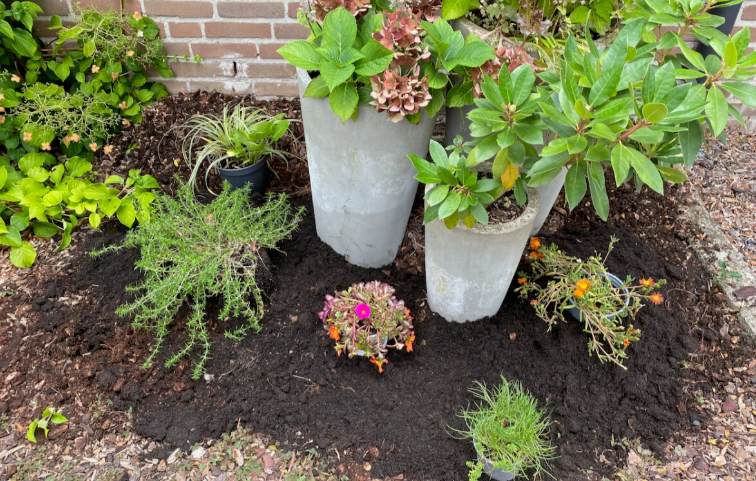
Shallow-rooted plants occupy a vital and often underappreciated role in the landscape. While deep-rooted plants are celebrated for their drought resilience and soil-building contributions, shallow-rooted species have their own set of qualities that make them indispensable in a wide range of landscaping situations — and understanding when and where to use them is one of the most important skills in practical planting design.
Shallow roots are not a weakness. They are an adaptation — one that allows plants to colonize thin soils over rock, to thrive in raised beds and containers with limited soil depth, to establish rapidly on disturbed ground, and to access the nutrient-rich, biologically active topsoil horizon that is often the most fertile layer available. Studies show that the majority of all soil nutrients and water-soluble minerals are concentrated in the top twelve to eighteen inches of soil — precisely the zone that shallow-rooted plants exploit most effectively.
For the landscape designer and homeowner, shallow-rooted plants offer several specific practical advantages. They are less likely to damage underground infrastructure — pipes, cables, drainage systems, and foundations — making them essential in urban landscaping situations where root intrusion is a significant concern. Research from the Urban Tree Foundation estimates that root damage to underground infrastructure costs the United States over 1.5 billion dollars annually, a figure that makes the selection of shallow-rooted plants near utilities and structures a genuinely important economic and practical consideration.
Shallow-rooted plants are also typically the best choices for roof gardens, green roofs, raised planters, courtyard gardens with limited soil depth, and sites where an impermeable layer — rock, hardpan, or a man-made surface — exists close to the soil surface. With an estimated 40 million square feet of green roof installed globally each year, the demand for shallow-rooting landscape plants suitable for these environments continues to grow rapidly.
1. Creeping Phlox
Creeping phlox is a low-growing, mat-forming perennial that roots in only the top four to six inches of soil — making it one of the most effective and ornamentally rewarding shallow-root plants for rocky slopes, thin soils over limestone, and green roof planting schemes.
In spring, the plant covers itself so completely in vivid flowers of pink, purple, white, or red that the foliage beneath is entirely concealed, creating one of the most spectacular shallow-soil flowering displays available. It spreads to eighteen to twenty-four inches across and provides effective evergreen ground coverage year-round.
It is one of the most widely planted spring-flowering groundcover plants in North America and is consistently rated among the top performers in shallow-soil rock garden trials.
2. Hens and Chicks
Hens and chicks are among the most extreme shallow-root plants in cultivation — their fibrous roots occupying only the top two to four inches of soil, allowing them to grow on the surface of bare rock, in wall crevices, on green roofs with a mere inch of substrate, and in containers with minimal growing medium.
Despite this shallow rooting, they are extraordinarily cold-hardy — surviving temperatures as low as -30°F (-34°C) — and drought-tolerant, storing water in their fleshy, tightly packed leaf rosettes. A single rosette produces dozens of offsets over its lifetime, eventually creating a dense, weed-suppressing mat.
Hens and chicks are one of the most commonly specified plants for extensive green roof systems worldwide, where their minimal substrate requirements and extreme hardiness make them almost uniquely suitable.
3. Sedum (Stonecrop)
Sedums are the backbone of shallow-soil landscaping — a vast and diverse genus of succulent perennials with roots occupying the top three to six inches of soil, making them the most widely used plants for green roofs, rock gardens, thin soils, and any landscaping situation where soil depth is severely limited.
The range of available sedums is extraordinary — from tiny, creeping ground covers barely an inch tall to bushy, upright perennials reaching two feet — and collectively they cover virtually every design need in shallow-soil situations. Green roof research consistently identifies sedums as the most reliable and long-lived plants for extensive systems with substrate depths of two to four inches.
An estimated 70 percent of all extensive green roofs installed globally use sedum as the primary or sole plant — a market dominance that reflects the combination of extreme shallow-root tolerance, drought resilience, and year-round ornamental value that no other plant group can match.
4. Ajuga
Ajuga — bugle — is a vigorous, spreading groundcover with roots in the top three to five inches of soil that forms one of the most effective and attractive shallow-soil carpets available for shaded and partially shaded landscape situations.
The vivid blue flower spikes of spring and the attractive, often bronze or purple-tinted foliage provide year-round ornamental value, and the plant’s ability to spread rapidly by stolons allows it to cover large areas of difficult ground quickly and decisively. It tolerates the shallow, root-filled soil beneath established trees better than most groundcover alternatives.
It is one of the top five most planted groundcover perennials in the United Kingdom and consistently performs in situations where deeper-rooted alternatives struggle against competition from established tree roots.
5. Creeping Jenny
Creeping Jenny is a low, spreading perennial with roots in the top two to four inches of soil that creates a bright, vivid carpet of rounded, coin-like leaves — vivid lime-green in the golden variety — in moist, partially shaded landscape situations including pond margins, container edges, and thin soils where its shallow root system is an advantage rather than a limitation.
It spreads rapidly by surface runners and can cover considerable ground in a single season. The golden-leaved variety Aurea is one of the most vivid and luminous foliage plants available for low-light situations and consistently brightens dark, difficult landscape corners.
It tolerates periodic flooding and waterlogged conditions better than most shallow-rooted perennials, making it one of the most useful plants for wet, difficult landscape margins.
6. Lily of the Valley
Lily of the valley is a woodland groundcover with shallow rhizomes in the top three to four inches of soil that spreads steadily and eventually forms dense, weed-suppressing colonies of considerable ornamental and fragrance value in shaded landscape situations.
The intensely sweet fragrance of the small, white, bell-shaped flowers in May is one of the most beloved and evocative of all garden scents — powerful enough to perfume an entire garden on still evenings. The plant’s shallow rooting allows it to colonize the thin, root-filled soil beneath established deciduous trees where most other groundcover alternatives fail.
It is however toxic if ingested and should be used with caution in gardens accessible to children and pets.
7. Hostas
Hostas are among the most popular and widely planted of all shade perennials, and their root systems — typically occupying the top six to ten inches of soil — make them suitable for a wide range of landscape situations with limited soil depth, including raised beds, large containers, and sites with compacted or shallow subsoil.
The range of hosta variety is extraordinary — from miniature varieties with leaves barely two inches across to giants with leaves exceeding two feet in width — and collectively they represent the most diverse and ornamentally complete genus of shallow-rooted shade perennials available to the landscape designer.
Hostas are consistently the best-selling shade perennial in the United States, with annual nursery sales exceeding $100 million — a commercial dominance that reflects their combination of shallow-root adaptability, ornamental excellence, and reliable performance.
8. Impatiens
Impatiens are shallow-rooted annual bedding plants with fibrous roots occupying only the top three to five inches of soil, making them ideal for window boxes, shallow containers, hanging baskets, and thin-soil landscape beds where their exceptional shade tolerance and prolific flowering provide color through the entire summer season.
They are among the most widely sold annual plants in the world — global impatiens sales exceed 500 million plants annually — and their combination of shade tolerance, continuous flowering, and shallow root requirements makes them effectively irreplaceable for certain landscape situations.
Modern varieties bred for improved downy mildew resistance have addressed the disease problems that devastated impatiens planting in the early 2010s, and the genus has largely recovered its commercial and landscape prominence.
9. Begonias
Wax begonias and tuberous begonias are shallow-rooted annual and tender perennial plants with fibrous roots in the top three to five inches of soil — a shallow rooting that makes them among the most versatile and widely used bedding plants for containers, window boxes, and thin-soil landscape situations worldwide.
The extraordinary range of flower colors — white, pink, red, orange, yellow, and bicolor in countless combinations — and the unusual ability of many varieties to perform well in both sun and shade gives begonias a design flexibility that few other shallow-rooted landscape plants can match.
Begonias rank among the top three most commercially important bedding plant genera globally, with annual sales in the United States alone exceeding $150 million.
10. Creeping Thyme
Creeping thyme is a low, mat-forming aromatic perennial with roots in the top two to three inches of soil that creates a fragrant, attractive, and surprisingly tough ground cover for thin soils, paving gaps, rocky slopes, and any landscape situation where minimal soil depth is available.
It tolerates light foot traffic, releasing its characteristic thyme fragrance when walked upon, making it one of the most sensory-rewarding plants for path edging, stepping stone surrounds, and low-traffic paved areas. The vivid pink to purple flowers produced in early summer attract bees in significant numbers.
Creeping thyme is one of the most recommended plants for filling gaps between paving stones in low-water landscape designs, offering a combination of shallow rooting, drought tolerance, and ornamental appeal that no other plant group quite replicates.
11. Moss Phlox
Moss phlox is a compact, cushion-forming perennial with roots in the top three to four inches that forms dense, needle-leaved mats on rocky slopes, stone walls, and thin soils — mats that cover themselves in vivid spring flowers of pink, white, lavender, and crimson in April and May with a completeness that ranks it among the most spectacular shallow-soil flowering plants available.
The dense, cushion-forming growth habit creates an effective physical barrier to weed germination, and the shallow roots allow it to establish on essentially bare rock where organic matter has accumulated in surface cracks and depressions.
It is a classic rock garden and slope planting plant that has been in continuous garden use for over a century, valued consistently for its spring display and its ability to thrive where others cannot.
12. Lamium
Lamium — dead nettle — is a spreading, semi-evergreen groundcover with roots in the top three to five inches of soil that provides one of the most reliable and ornamental shallow-root solutions for dry shade beneath established trees and shrubs, a situation that defeats the majority of landscape plants.
The silver-splashed or fully silver-leaved varieties — particularly White Nancy and Beacon Silver — provide vivid, year-round foliage interest in the darkest landscape positions, and the pink, white, or purple flowers produced through spring and summer add further seasonal color.
It spreads vigorously to cover large areas and is one of the consistently top-rated plants in competitive dry-shade groundcover trials across both North America and Europe.
13. Violas and Pansies
Violas and pansies are shallow-rooted, cool-season bedding plants with fibrous roots in the top three to four inches of soil — a shallow rooting that makes them ideal for window boxes, thin-soil borders, and container situations where they provide some of the brightest and most varied color available from any shallow-rooted annual planting.
The range of flower colors and patterns available in modern pansy and viola varieties is essentially limitless — virtually every color of the spectrum, from pure white to near-black, in solids, bicolors, and the characteristic face-patterned forms that have made the pansy one of the world’s most recognized and widely grown garden flowers.
Pansies and violas are among the top five best-selling bedding plants globally, with particular dominance in spring and autumn when their cool-season preference gives them a significant performance advantage over warm-season alternatives.
14. Lantana
Lantana is a warm-season perennial or annual with roots primarily in the top six to eight inches of soil that produces extraordinarily vivid, multi-colored flower heads in combinations of orange, yellow, red, pink, and white from late spring through the first frosts of autumn — one of the longest-blooming shallow-rooted landscape plants available.
The constant flower production makes lantana one of the most important nectar plants for butterflies in warm-climate landscapes, and established plants in favorable conditions can support hundreds of butterfly visits per day. It tolerates heat, drought, and poor soils with impressive resilience.
In frost-free climates, lantana can become invasive — it is listed as an invasive species in Florida, Hawaii, and several other warm-climate regions — and non-invasive sterile varieties should be selected where available.
15. Ornamental Kale and Cabbage
Ornamental kale and cabbage are cool-season shallow-rooted annuals with fibrous roots in the top four to six inches of soil that provide some of the most vivid and unusual foliage color available from any shallow-rooted landscape plant through autumn and early winter.
The rosettes of white, pink, red, and purple-tinted leaves develop their most intense color as temperatures cool in autumn, making ornamental kale and cabbage among the very few shallow-rooted plants that actually improve in appearance as winter approaches. They tolerate light frost and continue performing attractively into early winter.
They are particularly popular in commercial landscape planting where autumn container and bed displays need to carry color through the transition from summer into the cold months without replanting.
16. Marigolds
Marigolds are shallow-rooted warm-season annuals with fibrous roots in the top four to six inches of soil that produce some of the most prolific and long-lasting flower displays of any bedding plant, from late spring through first frost, in vivid shades of orange, yellow, gold, and cream.
They have the additional landscape value of producing allelopathic root compounds that suppress certain soil-borne nematode populations — a practical benefit that has made them one of the most recommended companion plants for vegetable gardens and mixed landscape planting. Studies have shown that marigold root compounds can reduce nematode populations by up to 50 percent in affected soils.
Marigolds are among the most widely grown annual plants in the world and are cultivated on a commercial scale across India, Mexico, and the Americas for flower production as well as landscape use.
17. Petunias
Petunias are shallow-rooted warm-season annuals with roots in the top three to five inches of soil that provide one of the most prolific and varied flower displays of any bedding plant — in virtually every color of the spectrum, in trailing, mounding, and upright habits, and with a heat tolerance and flowering persistence that makes them among the most reliable summer performers in the landscape.
The Wave petunia series — trailing varieties developed in the 1990s that spread rapidly to cover large areas of ground — transformed the landscape use of petunias from primarily a container plant to an effective shallow-soil groundcover, with individual Wave petunia plants covering up to four square feet of ground in a single season.
Petunias consistently rank among the top three best-selling annual bedding plants in the United States, with annual retail sales exceeding $150 million.
18. Gazania
Gazania is a South African perennial grown as an annual in cool climates, with roots in the top four to six inches of soil that produces large, vivid, daisy-like flowers in extraordinary shades of orange, yellow, red, pink, and bronze — flowers that close at night and on dull days and open fully in sunshine with a brilliance and clarity of color that few other shallow-rooted plants can match.
It is among the most drought-tolerant of all shallow-rooted bedding plants, thriving in hot, dry situations with poor soils where impatiens and begonias would immediately fail. This drought tolerance combined with shallow rooting makes it one of the most practical choices for thin-soil, sunny, dry landscape situations.
It is particularly effective in coastal landscape situations where its salt tolerance and sand-soil adaptation give it a significant advantage over most other flowering bedding plants.
19. Alyssum
Sweet alyssum is a compact, freely branching annual with roots in the top two to three inches of soil that produces masses of tiny, honey-scented white, pink, or purple flowers from late spring through autumn — one of the smallest and most shallow-rooted flowering landscape plants available, but one whose fragrance and prolific flowering make it disproportionately valuable in the landscape.
The honey fragrance is one of the most powerful and pleasant of any garden annual — a single established planting can perfume a considerable area on warm, still evenings — and the compact, shallow-rooting habit makes it ideal for path edges, wall crevices, container tops, and any thin-soil situation where a fragrant, low-growing plant is needed.
It self-seeds freely in congenial conditions, maintaining a landscape presence from year to year without replanting.
20. Dusty Miller
Dusty miller is a silvery-foliaged annual and short-lived perennial with roots in the top four to six inches of soil that provides one of the most effective and versatile foliage contrast plants for shallow-soil landscape situations — the vivid silver-white, finely divided leaves creating a striking contrast to green, purple, and colorful flowering companions.
The exceptional heat and drought tolerance of dusty miller in its target growing conditions makes it one of the most reliable summer foliage plants for thin-soil, sunny landscape situations, and its tolerance of coastal conditions including salt spray extends its landscape usefulness to difficult shoreline sites.
It is widely used in formal bedding schemes, container plantings, and border edging where the silver foliage provides a structural, year-round color note that persists through all the seasonal changes in the surrounding planting.
21. Portulaca
Portulaca — moss rose — is one of the most extreme shallow-root landscape plants in cultivation, with fibrous roots in the top one to three inches of soil that allow it to grow on essentially bare, gravelly, sandy ground in full sun with minimal organic matter — conditions that defeat the overwhelming majority of landscape plants.
The flowers are large, silky, and produced in vivid shades of red, orange, yellow, pink, and white — sizes and colors quite out of proportion to the modest, succulent plant body. They open fully in bright sunshine and close in shade and at night, giving the planting an animated, responsive quality.
Portulaca is one of the most drought-tolerant of all annual landscape plants and can survive periods of two to three weeks without rainfall while continuing to produce flowers — a resilience that makes it practically irreplaceable for thin, dry, sunny landscape situations.
22. Dianthus
Dianthus — pinks — are compact, clump-forming perennials and annuals with roots in the top four to six inches of soil that produce fragrant, fringed flowers in shades of pink, red, white, and bicolor combinations from late spring through summer, making them one of the most ornamentally complete shallow-rooted landscape plants for sunny border edges and container situations.
The clove-like fragrance carried by many varieties is one of the finest of any garden plant — sweet, spicy, and intensely floral — and it intensifies in the warmth of a sunny day to perfume a considerable area around the planting.
Dianthus has been cultivated in European gardens for over 2,000 years, with the first recorded cultivation dating to ancient Greece, making it one of the longest continuously cultivated ornamental plants in Western horticulture.
23. Thrift
Sea thrift is a compact, cushion-forming perennial with roots in the top three to five inches of soil that produces vivid pink to red ball-shaped flower heads above dense mounds of narrow, grass-like foliage from spring through early summer — one of the most drought-tolerant, wind-resistant, and salt-tolerant of all shallow-rooted landscape perennials.
It is native to coastal cliffs and headlands where it endures constant salt-laden winds, thin, impoverished soils, and periodic drought — conditions that have shaped its remarkable resilience and made it one of the most reliably performing plants for difficult, exposed landscape positions.
It is one of the most recommended plants for green roof systems in coastal and exposed situations, combining minimal substrate requirements with the ability to withstand the harsh conditions of elevated, exposed green roof environments better than most alternatives.
24. Creeping Rosemary
Creeping rosemary is a prostrate, spreading form of rosemary with roots in the top four to six inches of soil — shallower than the upright varieties — that creates a fragrant, evergreen, silvery-green ground cover for sunny, well-drained, thin-soil landscape situations including dry slopes, rock gardens, and wall tops.
The aromatic foliage is as ornamentally and culinarily valuable as that of upright rosemary, and the small blue flowers produced in spring attract bees and early pollinators. It spreads to three to four feet across and provides effective weed suppression through its dense, low canopy.
Creeping rosemary is one of the most recommended plants for Mediterranean-style low-water landscape designs across California, the American Southwest, and similar warm, dry climates.
25. Candytuft
Perennial candytuft is a low, spreading, evergreen perennial with roots in the top three to five inches of soil that produces a spectacular display of dense, pure white flower clusters in spring — a display so complete that the plant’s foliage is entirely hidden beneath a sheet of white blossom for several weeks.
The plant spreads to eighteen to twenty-four inches and provides attractive, dark green evergreen foliage through the rest of the year, creating an effective year-round ground cover for rock gardens, border edges, and wall faces in full sun. It is notably drought-tolerant once established and thrives on the lean, alkaline soils that many other ground-cover perennials find challenging.
It has been in continuous cultivation in European rock and border gardens for over three centuries, valued consistently for its spring display and its low-maintenance, evergreen character.
26. Lobelia (Annual)
Annual lobelia is a compact, trailing, or mounding bedding plant with roots in the top two to four inches of soil that produces masses of tiny, vivid blue, purple, white, or red flowers from late spring through autumn — one of the most intensely blue-flowered of all shallow-rooted landscape plants, filling a color niche that very few other shallow-root annuals occupy.
The trailing varieties are among the most popular and effective plants for hanging baskets, window boxes, and container edges, where their cascading stems of vivid blue create a flowing, waterfall-like effect of considerable decorative impact. The compact mounding varieties provide effective edging and shallow-soil bed coverage.
Annual lobelia is among the top ten best-selling bedding plants in the United Kingdom, where its vivid blue color and cool-season preference suit the climate particularly well.
27. Arabis
Arabis — rock cress — is a compact, mat-forming perennial with roots in the top two to four inches of soil that produces masses of small, white or pink flowers in spring above grey-green, often hairy foliage, creating one of the most effective and long-established shallow-soil rock garden and wall planting plants available.
It grows naturally on rocky cliff faces and limestone pavement across Europe and the Middle East, and its adaptation to these extreme shallow-soil environments has given it remarkable resilience in garden situations with equivalent conditions. The variegated variety, with cream-edged leaves, provides year-round foliage interest alongside the spring flower display.
It is one of the classic rock garden plants of the English gardening tradition, in continuous cultivation since at least the 17th century.
28. Aubrieta
Aubrieta is a trailing, mat-forming perennial with roots in the top two to four inches of soil that produces a spectacular spring cascade of vivid pink, purple, and violet flowers over grey-green foliage — one of the most familiar and beloved of all spring-flowering shallow-root landscape plants across European gardens.
It is native to rocky mountain habitats from southern Europe to central Asia, where its shallow roots have been shaped by thousands of years of adaptation to thin, rocky, often dry soils. In the garden it performs equally well on dry stone walls, rock faces, and border edges, where the flowering stems cascade downward under the weight of their blooms.
A well-established aubrieta on a dry stone wall in April is one of the most characteristic and celebrated sights of the British spring garden.
29. Snow-in-Summer
Snow-in-summer is a low-growing, spreading perennial with roots in the top two to three inches of soil that covers itself so completely in pure white flowers in May and June that it creates the effect of a fresh snowfall across the landscape — one of the most vivid and dramatic shallow-root landscape effects available.
The silver-grey, woolly foliage provides year-round ornamental value even outside the flowering season, and the plant’s exceptional drought and heat tolerance makes it one of the most self-sufficient and undemanding of all shallow-rooted landscape perennials. It tolerates poor, thin, rocky soils and exposed positions with equal indifference.
It is widely used on dry stone walls, rocky banks, and thin-soil slopes where its spreading habit and silver-white foliage provide effective visual coverage of difficult, bare ground.
30. Aloe Vera
Aloe vera is a succulent perennial with roots in the top six to eight inches of soil that provides one of the most ornamental and medicinally valuable shallow-root landscape plants for warm, arid climates — its rosettes of thick, succulent, grey-green leaves creating a bold, architectural effect with minimal water, fertilizer, or maintenance.
It is one of the most widely used medicinal plants in the world — global aloe vera production is estimated at 1.5 million tonnes of leaf annually, primarily for cosmetic and pharmaceutical use — and its cultivation as both a medicinal plant and a landscape specimen makes it one of the most commercially and ornamentally dual-purpose shallow-rooted plants available.
In frost-free landscapes it persists as a long-lived, increasingly impressive specimen, spreading by offsets to form large, architectural colonies that define the character of Mediterranean and desert landscape styles.
31. Gazania
Already covered earlier in this guide under its individual entry, gazania deserves a secondary mention here for its exceptional performance as a shallow-root slope stabilization plant — its spreading, mat-forming growth habit and roots in the top four to six inches providing effective surface coverage on dry, sunny banks where soil erosion is a concern and the extremely shallow soil discourages deeper-rooted alternatives.
32. Agapanthus
Agapanthus produces its roots primarily in the top six to ten inches of soil — shallower than might be expected for such a large and dramatic perennial — and this shallow rooting makes it one of the most effective and ornamentally spectacular plants for large containers, raised planters, and shallow-soil landscape situations in warm climates.
The large, spherical flower heads of vivid blue, purple, or white on tall, leafless scapes are among the most dramatic and immediately impressive of any shallow-rooted landscape perennial, and the strap-like foliage provides attractive year-round ground coverage in frost-free climates.
It is consistently rated among the top five most effective shallow-root large-scale landscape perennials in Mediterranean, South African, and Californian professional landscape design surveys.
33. Echeveria
Echeverias are rosette-forming succulents with roots in the top one to three inches of soil — among the most extreme shallow-root landscape plants in cultivation — that create some of the most visually striking and architecturally precise plant forms available for thin-soil, rock garden, and container landscape situations.
The geometric perfection of an echeveria rosette — layers of symmetrically arranged, often vividly colored or powdery-coated leaves arranged in a mathematically precise spiral — is one of the most immediately impressive ornamental features of any shallow-root plant, and the extraordinary range of species and varieties provides endless design possibilities.
They are among the most popular and widely collected ornamental plants in the world, with the global succulent market valued at over $800 million annually.
34. Thyme (Common)
Common thyme is an aromatic, woody perennial with roots in the top three to five inches of soil — a shallow rooting that makes it an excellent choice for thin soils, rock gardens, raised herb beds, and pathway edges in full sun where its culinary, aromatic, and ornamental qualities combine to make it one of the most complete and multi-functional shallow-root landscape plants available.
The small, vivid pink to purple flowers produced in early summer are outstanding for bees and pollinators, and the aromatic foliage provides year-round scent and culinary value. It forms a dense, low, spreading mat that suppresses weeds effectively.
Thyme has been cultivated in European gardens and fields for over 2,500 years, with records of its cultivation for culinary and medicinal use dating to ancient Greece and Rome.
35. Coreopsis
Coreopsis — tickseed — is a group of prairie-native perennials with roots primarily in the top four to six inches of soil that produce some of the longest-lasting and most vivid yellow, pink, and orange daisy flower displays of any shallow-rooted landscape perennial, often blooming continuously from early summer through to first frost.
The fine, delicate foliage and abundant flower production make coreopsis one of the most attractive and carefree of all shallow-soil landscape perennials, and its exceptional drought tolerance once established — reflecting its prairie origins — makes it one of the most practical choices for thin-soil, low-irrigation landscape situations.
The Threadleaf Coreopsis variety Moonbeam — winner of the Perennial Plant of the Year award in 1992 — remains one of the most widely planted and recommended shallow-rooted landscape perennials in North America.
36. Liriope
Liriope — lilyturf — is a grass-like perennial groundcover with roots in the top six to eight inches of soil that provides one of the most effective and widely used shallow-soil ground cover solutions in American commercial landscaping, tolerating shade, drought, compacted soil, and the root competition of established trees with a resilience that few other shallow-rooted plants can match.
It produces vivid spikes of purple to white flowers in late summer followed by black berries, providing a further season of ornamental interest beyond the year-round foliage contribution. The variegated forms add additional foliar interest.
Liriope is estimated to be the most widely planted groundcover in the southeastern United States — a dominance that reflects its extraordinary adaptability and low maintenance requirements in landscapes with challenging shallow-soil conditions.
37. Heuchera
Heuchera — coral bells — is a mound-forming perennial with roots in the top four to six inches of soil that provides some of the most vivid and diverse foliage color available from any shallow-root landscape perennial — the range of variety encompassing virtually every color from near-black to brilliant gold, through purples, bronzes, silvers, and greens.
The delicate, wiry flower stems bearing tiny bell-shaped flowers in red, pink, and white rise above the colorful mounds in early summer, and the bold, rounded leaves maintain their ornamental color throughout the growing season with minimal care. Heuchera is one of the most important shallow-root plants for providing year-round color interest in partially shaded landscape situations.
Sales of heuchera varieties have increased by over 400 percent in the United States over the past fifteen years, reflecting a dramatic surge in appreciation for foliage-first landscape planting.
38. Erigeron
Erigeron — fleabane — is a compact, spreading perennial with roots in the top three to five inches of soil that produces a near-continuous display of small, daisy-like flowers in shades of pink, lilac, and white from late spring through autumn — one of the longest-blooming shallow-root landscape perennials available.
It is native to rocky cliff faces and exposed coastal habitats where its shallow rooting and drought tolerance have been shaped by the extreme conditions of its native environment. In the garden it performs equally well in wall crevices, paving gaps, rock garden situations, and thin-soil border edges.
The variety ‘Profusion’ — covered in masses of small, pale pink daisies for virtually the entire growing season — is particularly popular and widely used in British and European landscape planting.
39. Armeria
Sea thrift’s close relative, armeria, provides similar shallow-root landscape performance in a slightly wider range of garden situations — the cushion-forming mounds of narrow, grass-like leaves and vivid pink to white ball-shaped flower heads performing effectively in thin soils, rock gardens, and coastal landscape planting from spring through midsummer.
The extraordinary tolerance of salt spray, wind exposure, and thin, infertile soils that armeria demonstrates in its native coastal cliff habitats translates directly to performance in the most challenging landscape situations where soil depth is severely restricted.
It is one of the most widely used plants for green roof systems in maritime climates, where its coastal habitat adaptations give it a significant performance advantage over inland-adapted shallow-root alternatives.
40. Stachys
Lamb’s ears — stachys — is a spreading, mat-forming perennial with roots in the top three to five inches of soil, grown primarily for its extraordinarily soft, woolly, silver-white leaves that provide one of the most tactile and visually effective foliage ground covers available for sunny, dry, shallow-soil landscape situations.
The silver foliage provides exceptional color contrast to surrounding plants, functioning as a living mulch that reflects light and creates vivid visual separation between neighboring plantings. The woolly leaf surface is adapted to reduce water loss — giving stachys outstanding drought tolerance in the thin, dry soils where it performs best.
It is one of the most consistently recommended plants for sensory gardens — the soft, woolly leaves providing an irresistible tactile experience that makes it one of the most child-friendly and engagement-focused landscape plants available.
41. Delosperma
Delosperma — ice plant — is a succulent, mat-forming perennial with roots in the top two to four inches of soil that provides some of the most vivid and long-lasting flower displays of any shallow-root landscape plant — the daisy-like, glistening flowers in vivid shades of magenta, yellow, orange, and white covering the plant so completely during peak bloom that no foliage is visible beneath.
Some species are surprisingly cold-hardy for succulent plants — surviving temperatures as low as -10°F (-23°C) — which extends their landscape usefulness well beyond the tropical and Mediterranean climates most often associated with ice plant family members.
They are among the most recommended plants for shallow-soil slope stabilization in dry, sunny climates, providing effective erosion control through their dense, mat-forming growth alongside an outstanding ornamental flower display.
42. Dianthus Deltoides (Maiden Pink)
Maiden pink is a compact, spreading, mat-forming perennial with roots in the top two to four inches that produces masses of small, vivid, deeply fringed pink flowers across the entire surface of the plant from late spring through summer — one of the most prolific and colorful shallow-root flowering groundcovers available for thin soils and rock garden situations.
It self-seeds freely in appropriate conditions, naturalizing into crevices, wall faces, and gravel surfaces with a spontaneous ease that makes it one of the most self-propagating and low-maintenance of all shallow-root landscape plants.
It is native to European rocky grasslands and has been in garden cultivation for over 400 years, valued throughout that time for its reliability, fragrance, and spectacular spring display on thin, alkaline soils.
43. Creeping Juniper
Creeping juniper is a low, spreading, evergreen conifer with roots in the top six to ten inches of soil that provides one of the most effective and widely used shallow-root evergreen ground covers for large-scale landscape situations — tolerating poor soils, steep slopes, full exposure, extreme cold, and prolonged drought with a reliability that few other landscape plants can match.
It spreads to six to eight feet in width over time and provides outstanding erosion control on slopes and banks through its dense, prostrate branching combined with the shallow but tenacious root mat it develops. The blue-green to silver-blue foliage develops warm purple tints in winter in some varieties.
Creeping juniper is one of the most widely used landscape plants in North American commercial and institutional planting, estimated to cover hundreds of millions of square feet of landscape surface across highways, corporate campuses, and residential developments.
44. Pachysandra
Pachysandra is an evergreen, spreading groundcover with roots in the top three to five inches of soil that forms one of the most effective and weed-suppressing shallow-root carpet plants for shaded, difficult landscape situations — tolerating the dry, root-filled conditions beneath established trees better than virtually any other shade-tolerant groundcover.
The glossy, dark green leaves remain attractive throughout the year, and the small white flower spikes in spring add a further seasonal dimension to the year-round foliage contribution. It spreads steadily but controllably by underground stems to eventually cover large areas with a uniform, neat, low-maintenance carpet.
Pachysandra is estimated to be the most widely planted shade groundcover in northeastern American residential landscapes — a dominance that reflects its unmatched combination of shade tolerance, dry-soil resilience, and evergreen year-round ornamental quality.
45. Sedge (Carex)
Ornamental sedges as a group have roots primarily in the top four to eight inches of soil — shallower than their size and visual presence might suggest — making them valuable and versatile plants for shallow-soil landscape situations including raised beds, containers, roof gardens, and thin-soil borders in shade or partial shade.
The range of ornamental sedges is extraordinarily diverse — from tiny, gold-leaved cushion forms barely four inches across to bold, bronze-colored mounds reaching two feet — and collectively they cover virtually every design requirement for shallow-soil situations across the full shade spectrum from deep shade to full sun.
Ornamental sedge sales in the United Kingdom have increased by over 250 percent in the past decade, reflecting their growing recognition as among the most versatile, year-round, and low-maintenance landscape plants for challenging shallow-soil situations.
46. Hellebore
Hellebores are woodland perennials with roots in the top six to eight inches of soil that provide some of the most beautiful and unusual flowers of any shallow-root landscape plant — the nodding, cup-shaped blooms in shades of white, pink, purple, red, and near-black appearing from January through April, making them among the most valuable winter and early-spring flowering plants for shaded landscape situations.
The bold, palmate, evergreen leaves provide year-round foliage coverage that suppresses weeds effectively, and the plants tolerate the dry, root-filled soil beneath established trees — one of the most challenging landscape conditions — better than most shade-tolerant alternatives.
Modern double-flowered and spotted hellebore varieties command prices of $25 to $40 per plant at specialist nurseries — the highest retail prices of any commonly available shallow-rooted herbaceous perennial — reflecting the extraordinary demand for quality hellebore varieties among discerning gardeners.
47. Epimedium
Epimedium — barrenwort — is a spreading, semi-evergreen groundcover with roots in the top three to five inches of soil that provides one of the most reliable and ornamental shallow-root solutions for dry shade — arguably the most difficult condition in all of landscaping — tolerating the combined stress of tree root competition, deep shade, and summer drought with a persistence and quiet beauty that no other shallow-root plant approaches.
The delicate, heart-shaped leaves develop attractive red and bronze tints in autumn and winter, and the small, spider-like flowers in yellow, white, pink, or purple appear in spring with a delicacy and charm that belies the plant’s exceptional toughness.
It is consistently rated as the number one shallow-root plant for dry shade in competitive trials conducted by the Royal Horticultural Society and the Chicago Botanic Garden.
48. Bergenia
Bergenia is a bold, spreading, evergreen perennial with roots in the top five to eight inches of soil that provides one of the most architecturally dramatic and year-round ornamentally valuable of all shallow-root landscape plants — the large, rounded, leathery leaves developing vivid red and burgundy winter tints that make it as ornamental in cold months as in summer.
The vivid pink to magenta flower spikes produced in early spring are among the most vivid and early-season-significant of any shallow-rooted perennial, and the plant’s tolerance of poor, thin soils, deep shade, and competition from established tree roots makes it one of the most practically useful landscape plants available for difficult situations.
The winter red leaf color — most intense in varieties such as Bressingham Ruby and Eroica — is among the most striking foliage effects of any hardy perennial, providing landscape color during the months when it is most valuable and least available.
49. Vinca Minor
Vinca minor — periwinkle — is a trailing, spreading, evergreen groundcover with roots in the top three to five inches of soil that is one of the most widely planted and consistently reliable shallow-root ground covers in temperate landscape planting worldwide, tolerating shade, drought, poor soil, and root competition with a tenacity that makes it effectively indestructible in appropriate situations.
The vivid blue to purple flowers produced in spring — and often again in autumn — provide excellent seasonal color above the year-round dark green foliage, and the plant’s ability to root at every stem node as it spreads gives it a self-propagating coverage capacity that allows it to fill large areas of difficult ground with minimal intervention.
Vinca minor is estimated to cover more ground in American residential and institutional landscapes than any other single shallow-root groundcover plant — a dominance reflecting its unique combination of shade tolerance, drought resilience, and evergreen year-round coverage.
50. Campanula Poscharskyana (Trailing Bellflower)
Trailing bellflower is a vigorous, spreading perennial with roots in the top two to four inches of soil that produces cascading stems of vivid lavender-blue, star-shaped flowers in summer — one of the most prolific and vivid flowering shallow-root landscape plants available for wall faces, raised bed edges, rocky slopes, and thin-soil situations.
It spreads by both surface runners and self-seeding to cover large areas of difficult terrain, and it is one of the few shallow-rooted plants that performs equally well hanging down a wall face and spreading across a horizontal surface, giving it a design flexibility unmatched by most other trailing shallow-root plants.
The intensity of blue flower color it produces — covering the plant so completely that the foliage is hidden beneath bloom during peak flowering — is among the most vivid and sustained of any shallow-root flowering perennial available in temperate landscape situations.