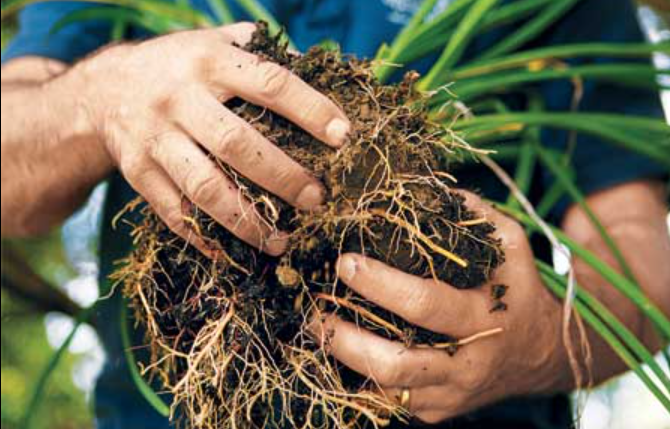
The root system of a perennial plant is far more than a simple anchoring mechanism. It is a dynamic, complex, and often vast underground architecture that determines the plant’s ability to survive drought, withstand wind, access nutrients, compete with neighboring plants, and contribute to the long-term health of the soil. Yet for most gardeners, roots remain almost entirely invisible — an afterthought compared to the flowers, foliage, and form that draw our attention above ground.
Deep-rooted perennials represent some of the most resilient and ecologically valuable plants available to the gardener and landscape designer. Their roots penetrate below the shallow soil horizons where moisture is quickly depleted in dry conditions, accessing subsoil water reserves that allow them to remain productive and healthy through droughts that devastate shallow-rooted plants. Research from multiple university turfgrass and horticulture departments has consistently shown that deep-rooted perennials require 30 to 60 percent less supplemental irrigation than shallow-rooted alternatives once established.
The ecological contributions of deep-rooted perennials extend well beyond individual plant survival. Their roots physically fracture compacted subsoil layers, improving drainage and aeration for neighboring plants. They bring deep-stored minerals to the surface through root turnover, enriching topsoil fertility over time. Many form extensive mycorrhizal associations — research suggests that the mycorrhizal networks associated with deep-rooted perennials can extend the effective root foraging range by up to 700 times the physical root surface area, creating an underground resource-sharing network of extraordinary efficiency.
Perhaps most significantly, deep-rooted perennials are among the most important plants for soil carbon sequestration. Studies at the Rodale Institute and the Land Institute in Kansas have documented that deep-rooted perennial plantings sequester two to five times more carbon per hectare annually than shallow-rooted annuals or conventional turf grass, with the carbon stored deep in the soil profile where it remains stable for decades or centuries. Choosing deep-rooted perennials for the garden is not merely a practical horticultural decision — it is an environmental one of real consequence.
Also Read: Drought Tolerant Lawn Grasses
1. Prairie Coneflower
The prairie coneflower is a North American native with a fibrous root system that extends four to six feet into the soil — roots that have been shaped by millennia of adaptation to the periodic, severe droughts of the Great Plains. The deep roots allow it to access subsoil moisture long after surface soils are completely dry.
It is a prolific bloomer, producing its distinctive, drooping yellow ray petals around a prominent dark central cone from midsummer through autumn. Once established, it requires virtually no supplemental watering in its native climate range and is one of the most self-sufficient and ecologically valuable native perennials available.
Studies have shown that prairie coneflower root systems contribute measurably to soil organic matter within two to three growing seasons of establishment.
2. Butterfly Weed
Butterfly weed is a native milkweed perennial with a single, thick, deep tap root that drives straight down to depths of four to six feet — a root so deep and tenacious that the plant can be nearly impossible to transplant once established, and so important ecologically that it has been called one of the single most valuable native perennials for wildlife in North America.
The deep tap root is the foundation of butterfly weed’s outstanding drought tolerance — accessing deep subsoil moisture through the hottest and driest summer conditions. It also makes the plant exceptionally cold hardy, maintaining viable crown tissue far below the frost line.
It is the exclusive larval food plant for monarch butterflies. With monarch populations having declined by an estimated 80 percent over the past two decades, planting deep-rooted butterfly weed in the garden has become one of the most impactful individual conservation actions a gardener can take.
3. Wild Bergamot
Wild bergamot is a fragrant, drought-tolerant native perennial of the North American prairie and woodland edge whose root system extends three to five feet, giving it the moisture access it needs to bloom prolifically through the hottest weeks of summer without irrigation.
The roots spread by rhizomes as well as descending deeply, creating a combined deep and spreading root architecture that provides excellent soil binding on slopes and dry banks. The aromatic foliage repels deer, making it as practical as it is ornamental.
It supports over 20 specialist native bee species — bees that depend exclusively on plants in the mint family for pollen — making its deep-rooted persistence through drought conditions a matter of ecological significance well beyond the individual plant.
4. False Indigo
False indigo — baptisia — develops one of the deepest and most extensive root systems of any herbaceous perennial, with roots documented at depths of eight to twelve feet in undisturbed prairie soils. This extraordinary root investment takes time — baptisia is notoriously slow to establish — but the result is a plant of remarkable longevity and self-sufficiency.
The roots fix atmospheric nitrogen through root nodule bacteria, enriching the surrounding soil while simultaneously accessing deep moisture through the tap root. A well-established baptisia clump becomes an increasingly impressive and virtually indestructible landscape feature.
Well-documented baptisia specimens have been in continuous growth for over 25 years in the same location without division or significant management — a longevity directly attributable to the deep, self-sustaining root system.
5. Purple Coneflower
Purple coneflower — echinacea — is one of the most widely grown native prairie perennials, and its deep, branching tap root extends three to five feet into well-drained soils, giving it outstanding drought tolerance and the ability to thrive in conditions that defeat more shallow-rooted garden perennials.
The deep root is the source of echinacea’s medicinal properties — root extracts have been used in traditional medicine for centuries, and the global echinacea supplement market was valued at over $1.3 billion in 2022, making it one of the most commercially significant medicinal plant roots in the world.
The deep root system also contributes to echinacea’s exceptional longevity in the garden — established clumps continue to improve for a decade or more, becoming increasingly drought-tolerant and productive as the root system develops.
6. Wild Columbine
Wild columbine is a woodland and rocky slope perennial with a surprisingly deep and penetrating root system — tap roots extending two to four feet into rocky soil and penetrating fissures in limestone and shale to access moisture and nutrients unavailable to more conventional roots.
The rock-penetrating capacity of columbine roots makes them particularly valuable on thin, stony soils where most garden perennials struggle, and the combination of deep rooting and tolerance of poor soils allows them to naturalize on difficult terrain where maintenance-free planting is desired.
It is the primary nectar plant for ruby-throated hummingbirds in eastern North America, with the long, spurred flowers precisely calibrated to the dimensions of the hummingbird’s bill.
7. Blazing Star
Blazing star — liatris — grows from a corm-like root structure that descends two to four feet into the soil, storing enormous reserves of energy and moisture that power the plant’s tall, vivid purple flower spikes in midsummer and allow it to survive extended periods of drought with minimal above-ground evidence of stress.
The corm can reach considerable size in old specimens, and the storage capacity it represents gives blazing star a drought resilience that exceeds most other prairie perennials of comparable size. It is one of the few perennials that flowers from the top of its spike downward — an unusual characteristic that extends the flowering display.
It supports specialist native bees and is a critical nectar source for monarch butterflies during their autumn migration through the American Midwest.
8. Prairie Dropseed
Prairie dropseed is a graceful, fine-textured native grass-perennial with roots that extend three to four feet — deep for a plant of such delicate, refined appearance — giving it outstanding drought tolerance and the self-sufficient, low-maintenance character that makes it one of the most recommended native perennials for low-input landscapes.
The roots develop slowly over the first two growing seasons, during which the plant invests the majority of its energy in root development rather than above-ground growth — a pattern that results in a plant of exceptional resilience once the root system is established. The fragrant, coriander-scented flower heads that appear in late summer are one of the most distinctive and charming features of any native grass.
Once established — typically in its third or fourth year — prairie dropseed requires essentially zero supplemental irrigation in its native climate range.
9. Compass Plant
Compass plant is a tall, architectural prairie perennial with one of the most extraordinary root systems in the plant world — a massive, carrot-like tap root that descends fifteen to twenty feet into prairie soils, making it one of the deepest-rooted herbaceous perennials documented anywhere on earth.
The depth of the tap root is achieved slowly — compass plant takes seven to ten years to reach flowering size, during which time it is building root infrastructure rather than canopy. The patience required is rewarded by a plant of exceptional longevity and resilience — documented specimens are over 100 years old.
The deeply lobed, sandpaper-textured leaves are oriented north to south — the behavior that gives the plant its common name, and which early American settlers used as a navigational aid on the featureless prairie.
10. Cup Plant
Cup plant is a tall, bold native prairie perennial whose root system extends four to six feet — deep roots that anchor the plant’s impressive above-ground structure of stout stems reaching eight to ten feet in height, and that allow it to access subsoil moisture through even the most severe summer droughts.
The distinctive cup-like structures formed where the opposite leaves clasp the stem collect rainwater — providing drinking water for birds and insects, a feature unique in the prairie flora. Birds have been observed visiting cup plants specifically to drink from these leaf cups.
It spreads by both rhizomes and self-seeding, and in appropriate conditions can colonize large areas of difficult terrain — making it one of the most self-propagating and site-stabilizing of all deep-rooted native perennials.
11. Prairie Smoke
Prairie smoke is a small but exceptionally deep-rooted native perennial of dry prairies and rocky slopes whose tap root extends three to five feet — a root system dramatically disproportionate to the plant’s modest six to twelve inch above-ground height.
The extraordinary root-to-shoot ratio reflects the challenging, dry, rocky habitats where prairie smoke naturally grows, where deep moisture access is the primary survival requirement. The feathery, pink-tinged seed heads that give the plant its common name are among the most ornamental seed structures of any small native perennial.
It is one of the first prairie perennials to flower each spring — blooming in April and May when the prairie landscape is still emerging from winter — and its deep roots allow it to access the limited early-season moisture with efficiency.
Also Read: Shrubs With Deep Roots
12. Wild Lupine
Wild lupine is a native woodland edge and prairie perennial with a long, penetrating tap root extending three to six feet — a root that fixes atmospheric nitrogen through bacterial nodules, enriching the surrounding soil while accessing deep moisture through the dry summers of its native range.
The nitrogen fixation capacity of wild lupine root systems can contribute 50 to 150 kilograms of nitrogen per hectare annually to the surrounding soil — a significant fertility contribution that benefits neighboring plants and gradually improves the growing conditions of the entire planting.
It is the exclusive larval food plant for the endangered Karner blue butterfly, and the loss of wild lupine populations through habitat degradation has been the primary driver of the Karner blue’s decline across its historical range.
13. Milkweed (Common)
Common milkweed has a deep, spreading root system that combines a tap root extending three to five feet with strong lateral roots that spread through the surrounding soil and produce new shoots by suckering — a growth strategy that creates expanding colonies of exceptional resilience and ecological value.
The deep roots allow common milkweed to survive conditions that defeat most garden perennials — compacted roadsides, dry slopes, infertile soils, and prolonged drought. Its persistence in these difficult conditions is precisely what makes it so valuable as a monarch butterfly host plant, as it maintains colonies where other food plants cannot grow.
The global decline of milkweed habitats through agricultural intensification is considered the primary cause of the monarch butterfly’s 80 percent population decline over the past 20 years.
14. Rattlesnake Master
Rattlesnake master is a bold, architectural native prairie perennial with a deep, woody tap root extending four to six feet — a root that gives it exceptional drought tolerance and the ability to perform on the dry, poor soils of its native prairie habitat without supplemental care.
The extraordinary, yucca-like foliage — spiny, blue-grey, architectural — provides year-round structural interest in the native garden, and the spherical, spiky flower heads of creamy white that appear in midsummer on tall stems are among the most unusual and distinctive of any prairie perennial.
Rattlesnake master has experienced a decline of over 70 percent from its historical range due to prairie conversion, making garden cultivation of this deep-rooted native an important conservation action.
15. Goldenrod
Goldenrod is a vigorous, rhizomatous native perennial whose root system combines deep tap roots reaching three to five feet with extensive lateral rhizomes that spread through the surrounding soil — creating a root architecture of both depth and breadth that provides exceptional drought tolerance and effective soil stabilization.
A single goldenrod plant can support over 100 native insect species — one of the highest insect support statistics of any single plant species documented in North American research — and the deep root system allows it to maintain this ecological contribution through dry conditions that reduce the value of shallower-rooted alternatives.
The deep roots also contribute to goldenrod’s exceptional longevity — established colonies persist for decades, becoming increasingly drought-tolerant and ecologically valuable as the root system develops over successive seasons.
16. Joe Pye Weed
Joe Pye weed is a tall, bold native perennial of moist meadows and woodland edges whose root system extends three to five feet — deeper than might be expected for a moisture-loving plant, and a root depth that gives it remarkable drought resilience despite its preference for moist conditions.
The roots spread by short rhizomes as well as growing deeply, creating a combined root architecture that anchors the plant effectively against wind — important for a perennial that reaches six to eight feet in height — and that provides access to both surface and deep soil moisture across a range of seasonal conditions.
It is consistently rated among the top five native perennials for pollinator support by organizations including the Xerces Society and the National Wildlife Federation, supporting dozens of specialist insect species in late summer and autumn.
17. Wild Quinine
Wild quinine is a native prairie and woodland edge perennial with a deep, woody tap root extending three to five feet that gives it outstanding drought tolerance and the self-sufficient, low-maintenance character of the best native prairie plants.
It is one of the longest-blooming of all native prairie perennials — the flat-topped, white flower heads persisting for six to eight weeks through midsummer — and the persistence of that bloom through the hottest, driest weeks of the season is a direct reflection of the deep root system accessing subsoil moisture when surface soils are depleted.
The plant is named for its traditional use as a quinine substitute in treating fever — a medicinal use derived from compounds produced in the deep root system rather than the leaves or flowers.
18. Pale Purple Coneflower
The pale purple coneflower has an even deeper root system than its more famous relative, with tap roots documented at five to seven feet in deep prairie soils — one of the deepest root systems of any echinacea species and a direct reflection of its adaptation to the drier, more exposed prairie habitats it occupies in the wild.
The pale, reflexed ray petals and prominent orange-brown central cone create a more delicate and refined flower than purple coneflower, and the plant’s exceptional drought tolerance makes it suitable for dry, difficult garden situations where standard echinacea would struggle.
It is considered one of the most cold and drought-hardy of all echinacea species, surviving temperature extremes and moisture deprivation that would challenge any other member of the genus.
19. Prairie Blazingstar
Prairie blazingstar — liatris pycnostachya — has one of the deepest corm root structures of all the liatris species, with the underground corm extending two to three feet while sending fibrous feeder roots to depths of four to five feet — a combined root system that makes this one of the most drought-tolerant of all the blazingstar species.
The tall, densely packed, vivid magenta flower spikes reach four to five feet in height — considerably taller than most blazingstar species — creating one of the most dramatic late-summer native perennial displays available in the Midwest garden.
It is one of the most important nectar plants for the regal fritillary butterfly, a species that has experienced significant population declines across its historical range.
20. Ironweed
Ironweed is a tall, vigorous native perennial of moist meadows and prairies whose root system extends four to six feet — deep roots that give it exceptional resilience across a wide range of growing conditions, from periodically wet to surprisingly dry soils, and that anchor the plant’s sturdy, upright stems against wind effectively.
The vivid, saturated magenta-purple flowers — produced in late summer when the prairie palette is dominated by gold and yellow — are among the most intensely colored of any native perennial, providing a striking complementary contrast to the concurrent bloom of goldenrod and rudbeckia.
Its common name reflects the extraordinary toughness of its stems and roots — ironweed is notoriously difficult to pull from the ground, its deep, fibrous root system resisting extraction with a tenacity that has frustrated farmers who consider it a pasture weed and delighted gardeners who value its persistence.
21. Wild Senna
Wild senna is a large, shrubby native perennial of prairies and woodland edges whose deep tap root extends four to six feet, giving it excellent drought tolerance and the ability to thrive on poor, well-drained soils without supplemental care once established.
The nitrogen-fixing root nodules of wild senna contribute significantly to soil fertility in the nutrient-poor habitats it naturally colonizes, enriching the growing conditions for neighboring plants while the deep tap root accesses moisture independently of surface conditions.
It is a specialist larval host plant for several sulfur butterfly species, and its large, bold foliage and vivid yellow late-summer flowers make it one of the most ornamentally significant large native perennials for wildlife-friendly gardens.
22. Prairie Blazing Star
Few prairie perennials can match the dramatic appearance of tall blazing star in full bloom — the dense, feathery, vivid purple spikes rising four to five feet above a base of narrow grass-like leaves in August and September, the color so intense it stops visitors in their tracks across the breadth of a large garden.
The corm and root system together extend three to four feet into the soil, and the plant’s ability to thrive on thin, rocky, and dry soils across the central United States reflects the depth of that root investment. It produces more nectar per unit of above-ground biomass than almost any other native prairie perennial.
Research at the University of Wisconsin found that established blazing star populations in restored prairies attracted 40 percent more monarch butterflies during autumn migration than equivalent areas without blazing star.
23. Stiff Goldenrod
Stiff goldenrod is a deep-rooted, drought-tolerant native perennial of dry prairies and open woodlands whose tap root extends three to five feet — deeper than most other goldenrod species and a direct adaptation to the drier, more exposed habitats it occupies relative to its moisture-loving relatives.
The stiff, upright stems — reaching three to four feet with minimal tendency to flop or sprawl — are a direct reflection of the robust root system that supports them, and the plant’s resistance to wind damage and drought-related lodging makes it one of the most structurally dependable of all the goldenrod species.
It is rated among the top native perennials for late-season pollinator support across the American Midwest and Great Plains, with over 75 native bee species recorded visiting its flowers.
24. Wild Ginger
Wild ginger is a low-growing woodland perennial with rhizomatous roots that spread horizontally while sending fibrous anchoring roots two to three feet into moist, humus-rich forest soils — a root system that allows it to form a dense, weed-suppressing groundcover in the most challenging dry-shade conditions beneath established trees.
The roots and rhizomes contain aromatic compounds similar to culinary ginger, and traditional uses of wild ginger as a food flavoring and medicinal plant stretch back thousands of years across its range in eastern North America and Asia. The deep fibrous roots give it exceptional drought tolerance for a woodland groundcover.
It is one of the most effective native groundcover perennials for dry shade beneath deciduous trees — a situation that defeats most other plants — with studies rating it among the top five performers in competitive dry-shade trials.
25. Bloodroot
Bloodroot is an early-spring woodland perennial with a thick, fleshy rhizome extending two to three feet into the leaf mold and humus-rich soil of its forest floor habitat — a root that stores the energy reserves necessary to power its remarkably early spring emergence and the development of its pure white flowers before the forest canopy closes overhead.
The rhizome contains bright red-orange sap — the source of the plant’s common name and the traditional pigment used by native peoples — and compounds with documented antibacterial and antifungal properties that have been the subject of extensive pharmaceutical research.
It is one of the earliest spring ephemerals to flower in eastern North American woodlands, often blooming in late February or March when snow is still possible, powered entirely by energy stored in the deep rhizome through the winter months.
26. Wild Bleeding Heart
Wild bleeding heart is a woodland perennial with a deep, rhizomatous root system extending two to three feet into moist, humus-rich forest soils — roots that store substantial energy reserves to power both the spring flowering season and a second flush of growth and bloom in late summer and autumn after the plant’s characteristic mid-summer dormancy.
It is one of the few native woodland perennials that reliably produces two distinct flowering seasons in a single year — a double bloom performance powered entirely by the deep root system’s ability to store and redistribute energy resources as seasonal conditions change.
The delicate, arching stems of pink heart-shaped flowers are among the most romantic and charming in the native plant palette, and the plant’s deep root system ensures its persistence in garden conditions across a wide range of climates.
27. Shooting Star
Shooting star is a spring-flowering prairie and woodland perennial with a deep, fleshy root system extending two to four feet — roots that store the energy necessary for the plant’s dramatic early-season performance before it retreats into dormancy through the heat of summer.
The reflexed petals of the flowers — swept back from the prominent central beak like a shooting star in mid-flight — are among the most structurally unusual and beautiful of any native spring perennial. The flowers open in May and June before the plant disappears entirely into summer dormancy.
The deep roots maintain viable meristematic tissue through both summer dormancy and winter cold, allowing reliable annual reappearance that can continue for many decades in appropriate growing conditions.
28. Trout Lily
Trout lily is an early spring ephemeral perennial whose deep bulb — descending two to three feet into forest soils through the production of contractile roots that actively pull the bulb downward each year — is the storage organ for the energy reserves that power one of the most beautiful spring displays in the woodland garden.
Each established colony produces a carpet of mottled, trout-marked leaves and nodding yellow flowers in March and April — a display that lasts only two to three weeks before the plant retreats into dormancy for the remainder of the year. The deep bulb location protects it from both soil-surface temperature extremes and competing plant roots.
A single trout lily colony can be extraordinarily long-lived — research in Canadian old-growth forests found colonies estimated to be over 300 years old, the deep-descending bulbs having moved progressively lower into the soil over centuries of contractile root activity.
29. Prairie Alumroot
Prairie alumroot is a drought-tolerant native perennial of rocky prairies and glades whose root system combines a woody tap root extending three to five feet with the characteristic corky, horizontal rhizome of the heuchera family — a combined deep and shallow root architecture that gives it exceptional persistence on the thin, rocky, exposed soils where it grows naturally.
The deep tap root accesses subsoil moisture that allows prairie alumroot to maintain its attractive, mounded foliage through summer droughts that cause most neighboring plants to wilt and decline. The bold, rounded leaves are often mottled with silver markings that add year-round ornamental interest.
It is considered one of the most drought-tolerant members of the heuchera family and is increasingly recommended for low-water garden situations across the American Midwest where more familiar heuchera varieties struggle in summer heat.
30. Wild Petunia
Wild petunia is a drought-tolerant native perennial of prairies and roadsides with a deep, spreading root system extending three to four feet — roots that allow it to thrive on the dry, disturbed, and often compacted soils where it naturally colonizes, providing a persistent carpet of lavender-blue flowers through the heat of summer.
It spreads both by seed and by underground stems, creating colonies that are remarkably effective at stabilizing disturbed, dry soil. The tubular, lavender-blue flowers are produced continuously from June through September — one of the longest blooming seasons of any native prairie perennial.
Wild petunia is a specialist host plant for several native sphinx moth species, and its deep roots maintain the colony through drought conditions that would eliminate less well-adapted host plants.
Also Read: Grasses With Deep Roots
31. Spiderwort
Spiderwort is a clump-forming native perennial of woodlands and prairies with fleshy, deep roots extending two to four feet — roots that give it exceptional adaptability across a range of soil moisture conditions, from the periodically wet soils of woodland edges to the dry, sandy soils of open prairies.
The vivid blue, purple, or pink three-petalled flowers open in the morning and close by early afternoon — a daily rhythm controlled by the deep root system’s ability to manage water pressure in the flower stems — creating a flowering pattern that makes fresh blooms available every morning for the weeks-long flowering season.
Spiderwort is one of the most adaptable and widely distributed native perennials in North America, occurring naturally from the Atlantic coast to the Rocky Mountains, a range that reflects the versatility of its deep, flexible root system.
32. Rosinweed
Rosinweed is a tall, robust native prairie perennial closely related to compass plant, with a deep, resinous tap root extending six to eight feet into prairie soils — a root that stores the characteristic sticky resin that gives the plant its common name and that makes it one of the most persistent and self-sufficient of all prairie perennials.
The deep root system supports the plant’s impressive above-ground structure — stout stems reaching four to six feet bearing large, rough-textured leaves and masses of yellow daisy flowers in late summer. The combination of great height, bold foliage, and abundant late-season flowers makes rosinweed one of the most visually commanding of all native prairie perennials.
Like compass plant — its close relative — rosinweed is slow to establish as the young plant invests heavily in root development before committing resources to above-ground growth.
33. Wild Bergamot Bee Balm
Bee balm — including both the native wild bergamot and the cultivated monarda varieties — develops a vigorous, spreading root system that combines surface rhizomes with deeper fibrous roots extending two to four feet into the soil, giving it a combined shallow and deep root architecture that provides both excellent soil stabilization and good drought resilience.
The aromatic foliage and vivid, shaggy flower heads — in shades of red, pink, purple, and white depending on the species — are among the most attractive and wildlife-rich of any garden perennial, supporting hummingbirds, specialist native bees, and numerous butterfly species through the midsummer flowering season.
The deep root system allows bee balm to spread and naturalize in conditions ranging from moist meadows to relatively dry, sunny borders — a versatility that reflects the depth and flexibility of its combined root architecture.
34. Black Cohosh
Black cohosh is a woodland perennial with a thick, horizontal rhizome extending two to three feet through the deep, humus-rich soils of eastern North American hardwood forests — a root system that stores substantial energy reserves and allows the plant to produce its tall, graceful flower wands of creamy-white in midsummer despite the dry conditions that often prevail in shaded forest soils during that season.
The roots and rhizomes have been used medicinally for centuries — native peoples and subsequently western herbalists and pharmaceutical companies have valued black cohosh root for its therapeutic compounds. Global wild harvest pressure has significantly depleted wild populations, making garden cultivation from sustainably sourced plants increasingly important.
Established garden specimens can live for 20 years or more — the deep, persistent rhizome system rebuilding each season with increasing vigor and production.
35. Culver’s Root
Culver’s root is a tall, elegant native perennial of moist prairies and woodland edges with a deep, fibrous root system extending three to five feet — roots that give it the combination of moisture access and structural anchoring necessary to support its impressive above-ground framework of tall, branching stems reaching four to six feet in height.
The white to pale lavender flower spikes — produced in elegant, candelabra-like arrangements at the top of the plant in midsummer — are among the finest and most architecturally distinguished of any native prairie perennial. They are exceptional nectar sources for native bees, including several specialist species.
Culver’s root was used medicinally by native peoples for centuries, the deep roots providing the primary source of the medicinally active compounds in traditional preparations.
36. Wild Sarsaparilla
Wild sarsaparilla is a woodland perennial with a long, aromatic, horizontal rhizome extending three to four feet through the forest floor — a spreading underground system that allows the plant to colonize large areas of forest floor with its characteristic three-parted compound leaves while maintaining access to moisture across a wide soil area.
The roots and rhizomes have the distinctive sarsaparilla fragrance and flavor that historically made them a popular substitute for true sarsaparilla in flavoring drinks and traditional medicines. The deep rhizomes store considerable energy that powers the plant’s early-season emergence and the production of its inconspicuous but ecologically valuable flower clusters.
It provides important food resources for a range of forest wildlife, including several bird species that feed on the small, dark berries produced in midsummer.
37. Wild Geum
Wild geum — particularly the prairie and meadow species — have deep, woody root systems extending two to four feet that give them exceptional persistence on the difficult, dry, or periodically wet soils of their native habitats. The root system develops a woody crown at the surface and sends fibrous roots to considerable depth below.
The nodding, orange or yellow flowers of some species and the upright, bright yellow or pink flowers of others provide early to midsummer color, and the ornamental seed heads — with their distinctive feathery awns — extend the plant’s decorative value well into autumn.
The deep, woody root crown makes wild geums among the most cold-hardy and persistent of all native wildflower perennials, surviving temperatures below -40°F (-40°C) in northern forms without any cold protection.
38. Wild Stonecrop
Wild stonecrop is a succulent perennial with surprisingly deep, fibrous roots extending two to three feet into rocky, thin soils — a root depth exceptional for a plant adapted to growing on exposed rock faces, cliff edges, and thin prairie soils where most plants cannot establish at all.
The combination of succulent water storage in the leaves and stems, and deep root access to moisture in rock fissures below the surface, gives wild stonecrop one of the most effective multi-level drought survival strategies of any small perennial.
It is one of the earliest-blooming native perennials across much of its range — flowering as early as April and May — and the vivid yellow star-shaped flowers provide critical early-season nectar for emerging native bees at a time when few other perennials are in bloom.
39. Prairie Phlox
Prairie phlox is a drought-tolerant native perennial of dry, open prairies and open woodlands whose root system extends three to four feet into well-drained, often sandy soils — deeper than the garden phlox varieties most commonly grown, and a root depth that gives it the self-sufficient character of a genuine native prairie plant.
The fragrant, lavender-pink flower clusters appear in May and June — earlier than most native prairie perennials — and their intense, sweet fragrance makes prairie phlox one of the most sensory-rich of all native spring wildflowers. The deep roots allow it to maintain its fragrance and flowering performance through the dry conditions of late spring in its native range.
It supports specialist native bees and is an important early-season nectar source for the eastern tiger swallowtail butterfly.
40. Partridge Pea
Partridge pea is a nitrogen-fixing annual to short-lived perennial with a deep tap root extending three to five feet — a root that fixes atmospheric nitrogen, provides deep moisture access, and anchors the plant on the disturbed, infertile soils it colonizes as one of the most effective pioneer plants in eastern North American grasslands.
The nitrogen fixed by partridge pea root nodules has been measured at 40 to 100 kilograms per hectare per year — a significant fertility contribution to the poor soils it colonizes. The golden-yellow flowers and sensitive compound leaves make it one of the most charming of the nitrogen-fixing native perennials.
It is a specialist larval host plant for several native sulfur butterflies and provides important seed resources for native birds, particularly bobwhite quail.
41. Wild Bergamot Hyssop
Anise hyssop is a fragrant, upright native perennial of prairie edges and dry woodland openings with a deep root system extending two to three feet — deeper than most aromatic herbs of its size — giving it the drought tolerance to produce its abundant, richly scented foliage and vivid purple flower spikes through the hottest and driest weeks of summer.
The anise fragrance released from the leaves when brushed is one of the most distinctive and instantly recognizable in the native plant world, and the long, dense flower spikes of deep lavender-purple are among the finest of any native perennial for attracting bees, butterflies, and hummingbirds.
It is rated by the Xerces Society as one of the top ten native perennials for supporting native bee populations, with the deep root system ensuring its continued ecological contribution through drought conditions.
42. Rough Blazingstar
Rough blazingstar is a drought-tolerant native perennial of dry prairies and open woodlands whose deep corm and root system extending three to four feet gives it the moisture access to produce its vivid magenta flower spikes in August and September — the height of the dry season across much of its native range.
The rough-textured leaves and stems that give the plant its common name reflect the structural adaptations to dry conditions that accompany its deep-rooting habit — reduced leaf surface area, thickened cell walls, and a general toughness of constitution that suits it to the most demanding prairie conditions.
It is one of the most reliable late-season native perennials for dry, infertile soils across the American Midwest and Great Plains, consistently performing where more demanding garden perennials fail.
43. Wild Geranium
Wild geranium is a woodland and meadow edge perennial with a deep, knotty, horizontal rhizome extending two to three feet through a wide range of soil types — a root system that gives it the adaptability to thrive in conditions ranging from moist, humus-rich woodland soils to dry, rocky, semi-shaded slopes.
The vivid pink-purple flowers in spring make it one of the most ornamentally appealing of all native spring wildflowers, and the deeply cut, palmate leaves provide attractive foliage interest through summer before developing warm russet and red tints in autumn.
Wild geranium supports over 20 native bee species and is particularly important for specialist mining bees that depend on Geranium family flowers for early-season pollen resources.
44. Lance-Leaved Coreopsis
Lance-leaved coreopsis is a native prairie perennial with a deep, fibrous root system extending three to four feet — deeper than most coreopsis species — that gives it exceptional drought tolerance and the ability to naturalize on poor, dry, well-drained soils without supplemental care once established.
It produces masses of vivid golden-yellow daisy flowers from May through August — one of the longest continuous blooming seasons of any native prairie perennial — and the combination of abundant flower production and deep drought-resistant roots makes it one of the most reliable and rewarding native plants for difficult, dry landscape situations.
It is listed as a threatened species in several northeastern US states despite being common across its core range — a reflection of the significant loss of dry, open grassland habitat that it depends on for its persistence.
45. Wild Peony
Wild peony species — the native and near-native peonies of the grasslands of central Asia and the Mediterranean — develop some of the deepest and most extensive root systems of any ornamental perennial, with thick, tuberous roots extending four to six feet into well-drained soils and storing extraordinary reserves of energy and moisture.
The deep, tuberous roots are the source of the wild peony’s legendary longevity — documented specimens in their native habitats are estimated to be over 50 years old, the roots having survived multiple severe droughts and harsh winters that would eliminate virtually any other herbaceous perennial.
These root reserves also power the production of the spectacularly large, fragrant flowers for which the peony genus is celebrated — flowers whose magnificence is in direct proportion to the depth and maturity of the root system that supports them.