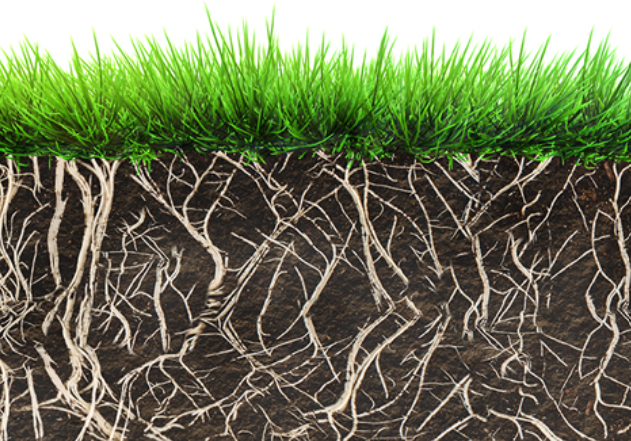
Beneath every blade of grass lies a root system that tells a story more remarkable than anything visible above ground. While we admire the waving plumes and colorful foliage of ornamental grasses, the real engineering genius of the grass family is hidden underground — in the extraordinary root architectures that allow certain species to reach deep into the soil, access water and nutrients unavailable to other plants, survive drought, prevent erosion, and build soil health over time.
The root systems of deep-rooting grasses are among the most impressive biological structures in the natural world. Some prairie grasses extend roots to depths of fifteen feet or more — deeper than the height of a two-story building. The combined root mass of a single big bluestem plant can exceed the weight of its above-ground biomass by a factor of three or four. When scientists first began excavating prairie grass root systems in the 19th century, they were so astonished by their scale and complexity that many early accounts were dismissed as exaggeration.
Deep-rooted grasses play a critical ecological role that extends far beyond individual plant survival. Their deep roots are among the primary mechanisms by which grassland ecosystems sequester carbon — capturing carbon dioxide from the atmosphere and storing it in organic matter deep in the soil profile where it remains for decades or centuries. The tallgrass prairies of North America, dominated by deep-rooted native grasses, once stored an estimated 35 billion tonnes of carbon in their soils — a carbon sink of global significance that has been dramatically reduced by the conversion of prairie to agricultural land.
From a practical gardening and landscaping perspective, deep-rooted grasses offer a combination of benefits that shallow-rooted alternatives simply cannot match — exceptional drought tolerance, outstanding erosion control on slopes and banks, minimal need for supplemental fertilization, and a long-term contribution to soil structure and health that improves the growing conditions for surrounding plants over time.
Big Bluestem
Big bluestem is the deep-rooting grass of legend — the iconic grass of the North American tallgrass prairie whose root system reaches depths of eight to twelve feet in undisturbed prairie soil, forming one of the most extensive and complex underground structures of any non-woody plant.
The roots are thick, dense, and branch repeatedly as they descend, creating a dense fibrous network that anchors the plant against wind and drought with extraordinary effectiveness. In a mature prairie, the combined root mass of big bluestem and its companion grasses creates a living soil structure of such depth and density that prairie soils developed into the most fertile agricultural soils in the world — the deep, black, organic-rich soils of the American Midwest.
Studies have shown that the carbon stored in big bluestem root systems can persist in the soil for over 1,000 years after the plant has died — making it one of the most effective long-term carbon sequestration plants in the temperate world.
Switchgrass
Switchgrass is a warm-season native prairie grass whose root system is considered by soil scientists to be one of the most effective carbon-sequestering root structures among all North American grasses — extending to depths of ten feet or more in mature prairie plantings and producing a continuous input of carbon-rich organic matter into the deep soil profile through root turnover.
Research at the Land Institute in Kansas found that switchgrass roots can store up to 2.7 tonnes of carbon per hectare per year in the soil — significantly more than most other prairie grass species. This extraordinary carbon storage capacity has made switchgrass one of the most intensively studied plants in the global effort to develop farming and landscaping practices that mitigate climate change.
Above ground, switchgrass reaches four to six feet and produces the airy, cloud-like flower heads and vivid autumn colors that have made it one of the most popular ornamental grasses in contemporary landscape design.
Buffalo Grass
Buffalo grass has one of the deepest and most extensive root systems of any common lawn or landscaping grass — its roots reaching five to eight feet into the soil and accessing moisture reserves unavailable to every other standard lawn grass species.
This extraordinary root depth is the foundation of buffalo grass’s legendary drought tolerance. Studies at Kansas State University documented buffalo grass surviving over fourteen consecutive weeks without rainfall or irrigation — remaining viable through dormancy while shallow-rooted grasses died permanently around it. When rain returned, the deep root system allowed rapid recovery.
The root biomass of buffalo grass typically exceeds the above-ground biomass by a ratio of five to one — meaning that for every pound of leaf and stem visible above the surface, there are five pounds of roots working quietly underground. This ratio is one of the highest of any common grass species.
Indiangrass
Indiangrass is a tall, warm-season native prairie grass whose root system extends to depths of seven to nine feet in deep, well-developed soils — one of the deepest of the classic tallgrass prairie species and a significant contributor to the extraordinary soil-building capacity of the prairie ecosystem.
The deep roots function as biological pipes, channeling rainfall deep into the subsoil rather than allowing it to run off the surface — a process that recharges groundwater supplies and reduces flooding downstream. Research has shown that intact prairie grass plantings dominated by deep-rooted species like indiangrass absorb rainfall up to six times faster than equivalent areas of conventional turfgrass.
It produces its characteristic golden, turkey-foot seed heads in late summer and develops vivid copper and orange autumn foliage that makes it one of the most ornamentally complete of all the deep-rooted native prairie grasses.
Little Bluestem
Little bluestem is a compact to medium native prairie grass whose root system is deceptively deep relative to its modest above-ground height — reaching depths of five to eight feet in undisturbed or well-established plantings, despite the plant itself reaching only two to four feet in height.
This deep root investment relative to plant size reflects little bluestem’s evolutionary strategy for surviving the periodic severe droughts that have characterized the North American plains for millennia. The roots maintain viable meristematic tissue deep in the soil even during surface conditions so dry that the above-ground plant enters complete dormancy.
It is one of the most important native grasses for slope stabilization and erosion control in the American Midwest and Great Plains, where its deep root system binds soil effectively on steep banks and roadsides where the rainfall is insufficient to support more demanding vegetation.
Bahia Grass
Bahia grass has one of the deepest root systems of any common lawn grass — its roots extending five to seven feet into sandy, infertile soils that defeat most other lawn grasses, giving it unmatched drought tolerance and persistence in the difficult growing conditions of the American Southeast.
The deep roots are the primary reason bahia grass remains green and productive on the sandy, nutrient-poor soils of Florida and the Gulf Coast when rainfall is erratic and supplemental irrigation is unavailable. Studies in Florida found that bahia grass lawns maintained acceptable appearance through drought periods that caused complete failure of bahia’s primary competitor, St. Augustine grass.
The same root depth that provides drought tolerance also makes bahia grass one of the most effective erosion control grasses for roadside banks and embankments throughout the southeastern United States, where its aggressive rooting stabilizes slopes against both erosion and surface slippage.
Sand Dropseed
Sand dropseed is a fine-leaved, drought-adapted native grass of the American Great Plains and Southwest whose root system is specifically engineered for survival in sandy, low-moisture soils — extending to depths of four to six feet while simultaneously producing a dense, shallow fibrous network near the surface that captures every available rain event.
This dual-depth root strategy is one of the most sophisticated water-capture systems in the grass world — the deep roots access subsoil moisture during drought, while the dense shallow roots absorb light rainfall events before the water evaporates from the surface. It is this dual-level system that allows sand dropseed to thrive in some of the most inhospitable, droughty soil conditions in North America.
It produces fine, delicate, airy flower heads of considerable ornamental charm and is increasingly valued in naturalistic plantings for dry, sandy sites where few other ornamental grasses perform reliably.
Prairie Cord Grass
Prairie cord grass is a tall, vigorous native grass of North American wetlands and moist prairies whose root system extends to depths of eight to ten feet — remarkable for a grass associated with wet conditions, and a characteristic that allows it to access both surface water and deep soil moisture depending on seasonal availability.
The root system of established prairie cord grass plantings is one of the most effective soil-binding structures in the native plant world — capable of stabilizing stream banks, wetland margins, and wet slopes against erosion from both water flow and wave action. It has been used extensively in stream bank restoration projects across the American Midwest and Great Plains.
Research from the Chicago Botanic Garden’s restoration plantings found that prairie cord grass root systems were fully established to their maximum depth within two growing seasons — faster than most other prairie grass species — making it one of the most practical choices for rapid erosion control in appropriate moist conditions.
Tall Fescue
Tall fescue is the deep-rooting champion of the cool-season lawn grasses — a species whose roots extend three to four feet into the soil under optimal conditions, dramatically deeper than the shallow, twelve-to-eighteen-inch root systems of Kentucky bluegrass and perennial ryegrass, and the primary reason for its superior drought tolerance among cool-season species.
This root depth allows tall fescue to access subsoil moisture during the summer dry periods that stress shallow-rooted cool-season grasses, and it is largely responsible for tall fescue’s ability to maintain green color two to four weeks longer into summer drought than its cool-season competitors.
Research at the University of Georgia found that tall fescue root systems extract moisture from soil depths that Kentucky bluegrass roots never reach — effectively giving it access to a larger volume of soil water per square foot of surface than any other common cool-season lawn grass.
Vetiver Grass
Vetiver grass has one of the most remarkable root systems of any plant in the world — straight, downward-growing roots that extend to depths of ten to thirteen feet within the first year of establishment, and to fifteen feet or more in mature plants, creating a living anchor of extraordinary depth and tensile strength.
Unlike the horizontally spreading roots of most grasses, vetiver roots grow almost exclusively downward — creating a deep, dense, curtain-like root wall in the soil rather than a surface mat. This growth pattern makes vetiver uniquely effective as an erosion control plant on steep slopes and embankments, where it has been used in over 100 countries as part of the World Bank’s Vetiver System for land conservation.
Studies in India found that hillsides planted with vetiver hedges experienced up to 70 percent reduction in soil erosion compared to unplanted slopes, and the roots have been shown to withstand the tensile forces of landslides and flash flooding that would dislodge any other grass.
Blue Grama Grass
Blue grama is a fine-leaved native grass of the short-grass prairie whose root system reaches depths of four to six feet in deep soils — exceptional for a grass reaching only eight to twelve inches in height above ground, and a reflection of the evolutionary pressures of the semi-arid plains where rainfall can be scarce and unpredictable for months at a time.
The root-to-shoot ratio of blue grama is among the highest of any grass species — the underground root biomass typically exceeds the above-ground biomass by a factor of six or seven to one. This enormous investment in root infrastructure over leaf production is the defining survival strategy of the short-grass prairie ecosystem.
Blue grama is one of the most important range grasses on the Great Plains, covering an estimated 130 million acres across the western United States, Canada, and Mexico, and the deep root systems of these vast grasslands represent one of the largest terrestrial carbon stores in North America.
Eastern Gamagrass
Eastern gamagrass is a tall, bold, warm-season native grass closely related to corn that produces one of the most extraordinary root systems of any grass in cultivation — extending to depths of ten to twelve feet in mature plantings with a root volume that can exceed twelve tonnes per acre.
It is considered by many soil scientists to be the most soil-building grass native to North America — its deep, extensive roots adding more organic matter to the soil per unit area per year than virtually any other grass species. The roots penetrate compacted subsoil layers that defeat most other plants, physically fracturing hardpan and creating channels through which water and other plant roots can follow.
Research at The Land Institute in Kansas found that eastern gamagrass root systems created measurable improvements in soil structure, water infiltration, and organic matter content within just three growing seasons of establishment — one of the most rapid and dramatic soil-building performances documented in any agricultural or horticultural grass study.
Weeping Lovegrass
Weeping lovegrass is a warm-season ornamental and erosion-control grass from Africa whose root system reaches depths of four to six feet within a single growing season — one of the fastest deep root establishment rates of any common ornamental grass and a quality that makes it particularly valuable for rapid erosion control on disturbed sites.
The speed of its root development is matched by its exceptional above-ground growth rate — capable of reaching two to three feet in height in its first season from seed and producing its characteristic arching, fountain-like mounds of fine foliage topped with airy, purple-tinged flower heads by midsummer.
It has been widely used in erosion control seeding programs across the American Southwest, Africa, and Australia, where its combination of rapid establishment, deep rooting, drought tolerance, and ornamental appearance make it one of the most practical and multi-functional grasses available for difficult revegetation situations.
Bermuda Grass
Bermuda grass is the most widely planted warm-season lawn and sports turf grass in the world, and its deep root system — extending two to four feet into the soil under optimal conditions — is one of the primary contributors to its outstanding drought tolerance and rapid recovery from stress.
The roots are not only deep but exceptionally dense and fibrous, creating a root mat of remarkable tenacity that binds soil very effectively and allows the grass to recover from even severe drought through regrowth from deep, viable crown and rhizome tissue. Studies have shown that bermuda grass can survive up to eight weeks of complete water deprivation through dormancy and green up within days of rainfall returning.
Bermuda grass grows on an estimated eight billion square feet of turf surfaces in the United States alone — sports fields, golf courses, home lawns, and commercial landscapes — making its deep root system one of the most agriculturally and horticulturally significant in the world.
Sideoats Grama
Sideoats grama is the official state grass of Texas — a fine-leaved native of the southern and central Great Plains whose root system extends to depths of five to seven feet in deep soils, with roots that are proportionally among the deepest relative to plant height of any Great Plains native grass.
The roots are known for their ability to penetrate and grow through rocky, caliche-hardened, and otherwise compacted soils that are impenetrable to most other grass species — a critical advantage on the shallow, rocky, calcium-carbonate-hardened soils of the Texas Hill Country and similar challenging terrain across the southern plains.
Sideoats grama is one of the primary grasses used in highway revegetation and rangeland restoration programs across Texas, Oklahoma, and New Mexico, where over three million acres of degraded rangeland have been successfully restored using seeding mixes dominated by this and other native deep-rooted prairie species.