The Lantana plant belongs to the genus Lantana and the family Verbenaceae. Native to tropical regions of the Americas and Africa, Lantana has become naturalized in parts of the American Southeast. With over 150 species, these flowering plants bloom nonstop from late spring all the way through frost. In warmer climates, they’ll even keep flowering nearly year-round!
Lantana can be grown as an annual in cooler regions, while it’s perennial in USDA zones 9 to 11. Its growth habit varies from low-growing ground covers to mounding shrubs that can reach up to 6 feet tall in tropical climates. Lantana thrives in full sun and well-draining soil, with a preference for slightly acidic to neutral pH levels (6.0-8.0). It is drought-tolerant and can withstand temperatures as low as 28 degrees Fahrenheit, though a light frost may not kill it.
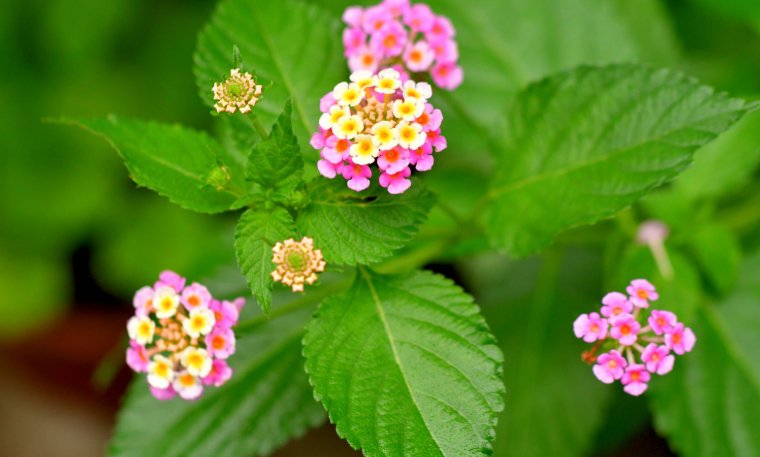
Lantana’s multicolored flowers can be in shades of orange, pink, purple, red, white, and yellow, and they can change color as they age. Lantana can be toxic to pets and people, so it’s best to plant it in areas where small children and curious animals won’t be tempted to bother it.
Major Species
- Common lantana (Lantana camara)
- Trailing Lantana (Lantana montevidensis)
- Popcorn Lantana (Lantana trifolia)
- Weeping Lantana (Lantana depressa)
- Buttonsage (Lantana involucrata)
- Texas lantana (Lantana urticoides)
- Desert lantana (Lantana achyranthifolia)
- Creeping lantana (Lantana amoena)
- Brushland shrubverbena (Lantana achyranthifolia)
1. Lantana Camara (Common Lantana)
Common lantana is the foundational species from which the vast majority of ornamental lantana cultivars have been developed — a robust, vigorous shrub native to tropical America that produces the characteristic multicolor flower heads of the genus in combinations of yellow, orange, red, and pink through the entire warm season.
It grows to three to six feet in frost-free climates where it persists as a permanent shrub, and to two to three feet as an annual in cooler regions. The aromatic, slightly rough-textured leaves and the continuous flower production make it one of the most prolific and long-season flowering shrubs available for warm-climate gardens.
The species is considered invasive in over 50 countries worldwide — a spread driven by the abundant small black berries produced after flowering that are consumed and distributed by birds across vast areas, demonstrating both the plant’s ecological adaptability and the importance of selecting sterile varieties where available.
2. Lantana Montevidensis (Weeping Lantana)
Weeping lantana is a trailing, ground-covering species quite distinct in character from the upright, mounding common lantana — its long, flexible stems spreading and cascading to create a prostrate, mat-forming plant of two to three feet in height but six to eight feet or more in spread.
The flower heads are typically lavender to lilac-purple — a cooler, more restrained color than the vivid multicolor displays of common lantana — produced in abundance from the tips of the trailing stems through the entire warm season. The trailing habit makes it outstanding for hanging baskets, container edges, and slope coverage.
It is considered slightly less cold-tolerant than common lantana but considerably less invasive — the smaller, less abundant seed production of the trailing species making it a safer choice in regions where lantana invasiveness is a concern.
3. Lantana ‘Radiation’
Radiation is one of the most vivid and classically multicolored of all lantana cultivars — producing flower heads in the most intensely saturated combination of bright orange at the petal centers transitioning to vivid red at the outer florets, creating one of the most brilliantly warm-toned and eye-catching flower displays available from any summer-flowering plant.
The rich, vivid combination of orange and red — the colors of fire and heat — is perfectly suited to the hot, sun-baked conditions in which lantana performs best, and the flower display continues with remarkable consistency from late spring through the first frosts without deadheading or significant maintenance.
It grows to two to four feet with a mounding, spreading habit and is one of the most consistently popular and widely grown lantana cultivars in American garden centers — its vivid, uncompromising color impact making it a reliable commercial bestseller across multiple growing regions.
Also Read: Types of Elephant Ear Plants
4. Lantana ‘Miss Huff’
Miss Huff is one of the most cold-hardy of all lantana cultivars — a large, vigorous, orange-and-pink-flowered variety that has repeatedly demonstrated the ability to survive winters in USDA Zone 7 and even the warmer parts of Zone 6 when planted in appropriate, well-drained situations.
It was discovered growing in the garden of Huff Rushing in Georgia — hence the name — and its cold hardiness was noted when it survived winters that killed all other lantana cultivars in the same garden. The discovery elevated it to one of the most important lantana selections for gardeners in transition climates between the warm South and the cold North.
It grows vigorously to four to six feet in warm climates — considerably larger than most lantana cultivars — and produces its orange and pink bicolor flower heads in great abundance from late spring through first frost.
5. Lantana ‘Dallas Red’
Dallas Red is a classic, deeply colored lantana cultivar producing flower heads of rich, dark red to deep crimson — a color of considerable intensity and warmth that provides a vivid, jewel-like flower display in the summer border without the multicolor complexity of varieties that combine several colors in each head.
The single-toned, richly saturated red creates a bold, unambiguous color statement that is particularly effective in combination with silver-grey foliage plants, blue salvias, and the warm copper and bronze tones of ornamental grasses in late-summer planting schemes.
It grows to three to four feet with a robust, spreading habit and excellent heat tolerance — performing reliably through the hottest conditions that Texas, Florida, and the American South can produce, making it one of the most practically useful large-flowered red lantanas for warm-climate landscapes.
6. Lantana ‘New Gold’
New Gold is a distinctive, single-colored lantana of exceptional ornamental quality — producing pure, vivid, clear golden-yellow flower heads without the color-changing multicolor complexity of most lantana varieties, creating a bold, consistent, unambiguous yellow color statement through the entire warm season.
The clear, saturated yellow is one of the most vivid and luminous flower colors available from any summer-season shrub, and the continuous, uninterrupted bloom production from late spring through first frost makes New Gold one of the most reliably and consistently yellow landscape plants available for hot, sunny, drought-prone situations.
It grows to two to three feet with a mounding, spreading habit and is exceptional as a mass planting for highway medians, public landscapes, and large-scale garden beds where consistent, sustained yellow color is required with minimal maintenance.
7. Lantana ‘Confetti’
Confetti is one of the most exuberantly multicolored of all lantana cultivars — a variety that takes the color-changing quality of the genus to its most vivid and celebratory extreme, producing flower heads in which individual florets in yellow, pink, red, orange, and lavender are present simultaneously.
The multiple colors in each flower head create an almost confetti-like effect of scattered, vivid color that is genuinely unique in the flowering plant world — no other commonly grown ornamental produces quite the same naturally occurring multicolor spectacle. It grows to two to three feet with a spreading, mounding habit.
It is a favorite of butterfly gardeners — the multicolor, nectar-rich flowers attracting an extraordinary range of butterfly species through the warm months, with studies in the American South documenting over 20 butterfly species visiting established confetti lantana plantings in a single day.
8. Lantana ‘Patriot Rainbow’
Patriot Rainbow is a vivid bicolor lantana from the Patriot series producing flower heads in a striking combination of vivid yellow at the floret centers and vivid pink to magenta at the outer edge — one of the most visually striking and clearly defined bicolor combinations available in the lantana family.
The precise contrast between the inner yellow and the outer pink-magenta creates a flower head with an almost optical precision — the two color zones distinctly separated and vividly contrasting in a way that reads clearly from considerable distances across the garden. It grows to two to three feet.
The Patriot series was developed specifically to combine improved cold tolerance with outstanding flower performance in the upper South and transition zone climates where standard lantana varieties were marginally reliable — making the series one of the most important commercial lantana developments for extending the geographic range of reliable lantana cultivation.
Also Read: Types of Ninebark Shrubs
9. Lantana ‘Bandana Cherry’
Bandana Cherry is a large-flowered, compact lantana from the highly successful Bandana series — a group of cultivars developed specifically to produce larger individual florets, more compact and well-branched plants, and improved cold tolerance compared to older lantana varieties.
The flower heads are a rich, warm cherry-red to coral-pink — a vivid, saturated warm color of considerable impact — and the compact, well-branched plant habit of the Bandana series produces a more densely clothed, better-proportioned plant than many older lantana cultivars. It grows to twenty to twenty-four inches.
The Bandana series has become one of the most commercially successful lantana introductions of the 21st century, with multiple color variants achieving consistent top-ten status in annual bedding plant sales across North America and Europe.
10. Lantana ‘Lemon Swirl’
Lemon Swirl is a variegated lantana of unusual ornamental character — a variety in which the leaves are edged and marked with irregular cream-yellow variegation that provides year-round foliage interest alongside the yellow-and-white flower heads produced through the warm season.
The combination of variegated cream-and-green foliage with the pale yellow and white flowers creates an overall planting effect of considerable freshness and lightness — a cooler, more restrained character quite different from the vivid, hot-colored impact of most lantana varieties. It grows to two to three feet.
Variegated lantanas represent a relatively small but distinct category within the genus — varieties grown as much for their foliage interest as for their flowers, providing a year-round ornamental contribution that standard green-leaved lantanas cannot offer during the periods between flowering flushes.
11. Lantana ‘Mozelle’
Mozelle is a medium-sized, free-flowering lantana cultivar of considerable practical landscape value — producing flower heads in soft shades of yellow transitioning to soft pink and peach as the florets age, creating a gentler, more pastel-toned multicolor effect that provides an alternative to the more assertive, vivid multicolor combinations of standard varieties.
The soft, peachy-pink and yellow color combination suits a wider range of garden color schemes than many lantanas — integrating comfortably into pastel borders and cottage-style plantings where the more vivid orange-red combinations would be jarring. It grows to two to three feet with a mounding habit.
It is valued by garden designers who appreciate the multicolor qualities of lantana but require a softer, more harmonious color expression that complements rather than dominates the surrounding planting palette.
12. Lantana ‘Spreading Sunset’
Spreading Sunset is a large-growing, wide-spreading lantana cultivar producing vivid bicolor flower heads in a warm combination of orange and red — the sunset tones of its name — on vigorous, sprawling plants that spread to four to six feet in width while reaching only two to three feet in height.
The wide, spreading habit makes it one of the most effective lantana varieties for large-scale slope coverage, bank planting, and ground cover situations where its horizontal spread provides rapid, effective coverage of difficult terrain. The warm-toned flowers are produced continuously through the summer season.
It is one of the most widely used lantana cultivars in highway and large-scale commercial landscape planting in the American Southwest and South, where its drought tolerance, heat resilience, and effective spreading habit provide low-maintenance landscape coverage of considerable practical value.
13. Lantana ‘White Lightning’
White Lightning is one of the finest white-flowered lantana cultivars — a variety producing pure, clean white flower heads that age only very slightly to cream rather than the vivid multicolor transitions of standard lantana varieties, providing a consistent, elegant white flower display of considerable refinement.
Pure white in lantana is a relatively uncommon and particularly sought-after color — the naturally multicolor flower-head character of the genus makes the breeding of consistently white varieties technically challenging, and White Lightning represents one of the most successful achievements in white lantana selection.
It grows to two to three feet and is particularly effective in white garden planting schemes, in moonlight gardens designed for evening viewing, and in combination with dark purple companions where the white flowers provide maximum contrast.
14. Lantana ‘Landmark Citrus’
Landmark Citrus is a mounding, compact lantana from the commercially successful Landmark series — a group of cultivars bred for improved performance in northern landscapes, better branching habits, and more vivid flower colors in a compact, well-proportioned plant form suitable for container and bedding use.
The flower heads are a vivid, fresh combination of lemon-yellow and orange — the citrus color palette of its name — produced in abundance on compact, well-branched plants of eighteen to twenty-four inches. The Landmark series is known for its improved performance in cooler conditions compared to standard lantana varieties.
The Landmark series has become one of the most important commercial lantana developments for northern and transition zone markets, extending reliable lantana cultivation to regions where the genus was previously considered too marginal for commercial recommendation.
15. Lantana ‘Purple Trailing’
Purple trailing lantana — derived from Lantana montevidensis — is a selected form of the trailing species producing flower heads of particularly vivid, deep lavender-purple on the most ground-covering and spreading of all lantana habits, creating an effective and ornamentally rewarding ground cover and cascade plant for slopes, walls, and containers.
The deep lavender-purple flower color is the most consistently cool-toned in the lantana palette — providing a useful balance to the predominantly warm orange, red, and yellow tones of most lantana cultivars and expanding the color range available from the genus. It grows to two to three feet in height with a spread of four to six feet.
It is one of the most reliable and widely grown trailing lantanas for warm-climate ground cover, slope planting, and hanging basket cultivation — its lavender flower color and prostrate habit combining ornamental quality with practical coverage of considerable effectiveness.
Also Read: Best Cold Hardy Palm Trees
16. Lantana ‘Samantha’
Samantha is a striking variegated lantana cultivar with bright, clean, cream-and-green variegated foliage that provides a bold, year-round foliar display alongside its vivid yellow flower heads — a combination of ornamental foliage and flower performance that makes it one of the most complete and multi-season ornamental lantanas available.
The cream and green variegation is bold and clearly defined — not the subtle, broken variegation of some variegated plants but a bold, clean, two-toned leaf pattern of considerable visual impact. The vivid yellow flowers provide a complementary warm-toned contrast to the cool-toned variegated foliage.
It is grown as much for its foliage as for its flowers in many landscape situations — used in container arrangements and mixed borders where its year-round variegated leaf interest provides a structural design element that green-leaved lantanas cannot offer.
17. Lantana ‘Tangerine’
Tangerine is a single-colored, vivid orange lantana cultivar producing flower heads of pure, rich, tangerine-orange — one of the most saturated and luminous orange flower colors available from any warm-season landscape plant, a vivid, pure orange that reads powerfully across the garden in hot, sunny conditions.
The single-color orange display — without the multicolor transitions of typical lantana varieties — creates a bold, unambiguous color statement that is particularly effective in tropical-inspired planting schemes where vivid orange is used in combination with deep purple, vivid blue, and rich burgundy companions.
It grows to two to three feet and performs reliably in the hottest summer conditions — thriving in the heat, drought, and full sun exposure that most other flowering plants find challenging, and maintaining its vivid flower color with minimal fading even in the most intense summer heat.
18. Lantana ‘Ham and Eggs’
Ham and Eggs is one of the most charmingly named and most enduringly popular of all traditional lantana cultivars — a variety whose bicolor flower heads combine vivid yellow at the floret centers with pink to lavender-pink at the outer edge in a combination that the common name captures with cheerful accuracy.
The yellow and pink combination is one of the most classic and widely recognized of all lantana color combinations — present in the wild species across its native range in tropical America — and the cultivar represents a selected, improved form of this natural bicolor that produces larger, more abundant, and more consistently colored flower heads than unselected wild plants.
It grows to three to four feet and has been in commercial cultivation for decades — one of the longest-established lantana cultivars still in widespread production, its persistent popularity reflecting the enduring appeal of the classic yellow-and-pink color combination.
19. Lantana ‘Bandana Lemon Zest’
Bandana Lemon Zest is a fresh, vivid, single-colored lantana from the successful Bandana series producing clear, bright lemon-yellow flower heads of exceptional color clarity and intensity — one of the most purely and cleanly yellow of all the compact lantana cultivars available for bedding and container use.
The clear lemon-yellow is particularly vivid in the compact, densely branched Bandana plant form — the concentration of well-formed flower heads on a neat, eighteen to twenty-four inch plant creating a dense, vivid yellow display of considerable impact in both garden and container situations.
The Bandana series as a whole has achieved one of the strongest consistent commercial performances of any lantana series introduction — the combination of compact habit, improved flower size, and broader climatic adaptability making it a reliable commercial proposition across a wider geographic range than most lantana cultivars.
20. Lantana ‘Lucky White’
Lucky White is one of the finest and most consistent white-flowered lantanas in the Lucky series — a group of compact, free-flowering cultivars developed for improved performance in container and small-space garden situations with particular attention to plant habit, flower size, and color consistency.
The white flowers are produced in abundance on compact, well-branched plants of twelve to eighteen inches — smaller than most white lantana cultivars and particularly well-suited to container planting, window box use, and formal bedding situations where a clean, precisely scaled white-flowered plant is required.
The Lucky series has become one of the most significant recent commercial lantana developments for the container plant market, the compact size and vigorous flowering performance of the series making it one of the most practical and versatile groups for pot and mixed container planting.
21. Lantana Urticoides (Texas Lantana)
Texas lantana is a native American species of the southwestern United States and Mexico — a smaller, more cold-hardy, and more drought-tolerant native alternative to the widely planted but potentially invasive Lantana camara, offering similar flower impact with considerably better ecological compatibility with North American native plant communities.
It produces vivid orange and red bicolor flower heads on a compact shrub of two to four feet and is exceptionally drought-tolerant and heat-resistant — native to the dry, rocky, calcareous soils of Texas and adjacent states where summer temperatures and drought conditions routinely challenge non-native plants.
As a native species it supports native butterfly and bee populations more effectively than non-native varieties and poses no invasiveness risk in its native range — a combination of ornamental quality and ecological responsibility that has made it an increasingly popular choice in Texas native plant landscaping.
Also Read: Types of Begonia Plants
22. Lantana ‘Chapel Hill Gold’
Chapel Hill Gold is a compact, cold-hardy, golden-yellow lantana cultivar that has demonstrated excellent overwinter survival in USDA Zone 7b — making it one of the most cold-hardy yellow lantana cultivars available and a valuable option for gardeners in the Piedmont South and similar transitional climates.
The pure golden-yellow flower heads are produced continuously from late spring through first frost on compact, mounding plants of two to three feet that develop into increasingly impressive and more flower-productive specimens with each successive growing season in climates where they survive winter.
It is valued as a companion to Miss Huff in cold-hardy lantana collections — while Miss Huff provides the warm bicolor, Chapel Hill Gold provides a clean, single-toned yellow alternative that expands the color range of cold-hardy lantana planting.
23. Lantana ‘Silver Mound’
Silver Mound is an unusual and attractive compact lantana producing cream to pale yellow-white flower heads that age to nearly pure white — creating one of the most subtle and refined color expressions available in the lantana family, a pale, almost ivory-toned flower display quite unlike the vivid multicolors and saturated single tones of most varieties.
The pale, cream-white flowers against the typically medium-green lantana foliage create a fresh, clean, cottage-garden character that integrates comfortably into soft-colored border schemes and white garden plantings where more vivid lantanas would be too assertive.
It grows to two to three feet with a compact, mounding habit and is a useful plant for gardeners who appreciate the heat tolerance and butterfly value of lantana but prefer more restrained, sophisticated flower colors to the vivid primary tones that dominate the commercial lantana market.
24. Lantana ‘Bandana Orange’
Bandana Orange is the orange-flowered member of the Bandana series — a compact, free-flowering cultivar producing vivid, pure orange flower heads of considerable size and intensity on well-branched plants of eighteen to twenty-four inches, combining the improved plant habit of the Bandana series with one of the most vivid and luminous orange flower colors available in compact lantana form.
The vivid orange is one of the most commercially successful flower colors in the Bandana series — orange lantanas consistently testing well in garden center consumer trials for their immediate visual impact and their effectiveness in the mixed container and summer bedding markets where vivid warm colors perform particularly strongly.
It tolerates heat, drought, and full sun exposure with exceptional reliability — maintaining its vivid flower color and continuous production through the most challenging summer conditions without the wilting, color loss, or reduced flowering that affects many other summer annuals in extreme heat.
25. Lantana Depressa (Florida Native Lantana)
Florida native lantana — Lantana depressa — is a low-growing, spreading native species of southern Florida that is critically endangered in the wild, with its natural populations severely reduced by habitat loss, hybridization with the invasive common lantana, and the collecting pressure that its rarity has unfortunately attracted.
It produces yellow flower heads on a low, spreading, perennial shrub of one to two feet that is exceptionally well-adapted to the poor, sandy, alkaline soils and periodic flooding of its native south Florida scrub and pine rockland habitats. As a native it poses no invasiveness risk and provides optimal support for native south Florida pollinators.
Conservation botanists and native plant enthusiasts have made the cultivation and preservation of this endangered native lantana an important priority — growing it in appropriate gardens not only provides ornamental value but contributes directly to the survival of a species under genuine threat of extinction.
26. Lantana ‘Sunset’
Sunset is a traditional, large-growing lantana cultivar producing one of the most classically warm-toned multicolor displays in the genus — flower heads combining vivid yellow, orange, and deep red in a naturally blending progression that captures precisely the visual quality of a vivid tropical sunset.
The warm, harmoniously blended orange-red-yellow flower combination has been a staple of warm-climate gardening for generations and represents the traditional lantana color combination that most people picture when they think of the genus. It grows to three to five feet in frost-free climates.
It is one of the most important butterfly and hummingbird plants in warm-climate gardens — the vivid, warm-colored, nectar-rich flower heads being particularly attractive to tiger swallowtails, monarchs, and painted ladies, making established Sunset lantana plantings some of the most productive butterfly habitat available in the ornamental garden.
Also Read: Grasses With Winter Interest
27. Lantana ‘Popcorn’
Popcorn is a compact, mounding lantana producing yellow flower heads that mature to pure white as the florets age — creating a bicolor flower head of unusual character where the central florets are vivid yellow and the outer, older florets are clean white, the two-toned effect resembling freshly popped popcorn with its golden centers and pale outer puffs.
The yellow-to-white color transition is one of the more unusual and botanically interesting color expressions in the lantana family — the natural aging process of the florets producing a distinct, clearly readable bicolor effect that develops and changes throughout the flowering season.
It grows to eighteen to twenty-four inches with a compact, neat habit that suits container and formal bedding use, and its unusual color combination attracts considerable attention and interest from visitors encountering it for the first time in garden and show settings.
28. Lantana Trifolia (Prickly Lantana)
Lantana trifolia is an African and tropical American species that differs significantly in character from the more commonly grown Lantana camara — producing smaller, lilac-purple to mauve flower heads in elongated, oval clusters rather than the flat or rounded heads of most other species, and small, vivid purple berries that are among the most ornamentally attractive fruiting structures of any lantana.
The unusual elongated flower head form, the soft lilac-purple flower color, and the vivid purple berry clusters that follow the flowers in abundance give lantana trifolia a distinctly different ornamental character from the standard species — more refined, more softly colored, and with a particularly valuable fruiting season of considerable ornamental appeal.
It grows to four to six feet in frost-free climates as a permanent shrub and is considered a moderate invasiveness risk in some tropical regions — but the combination of attractive flower form, unusual color, and ornamental berry production make it one of the most botanically interesting and ornamentally distinctive members of the entire lantana genus.