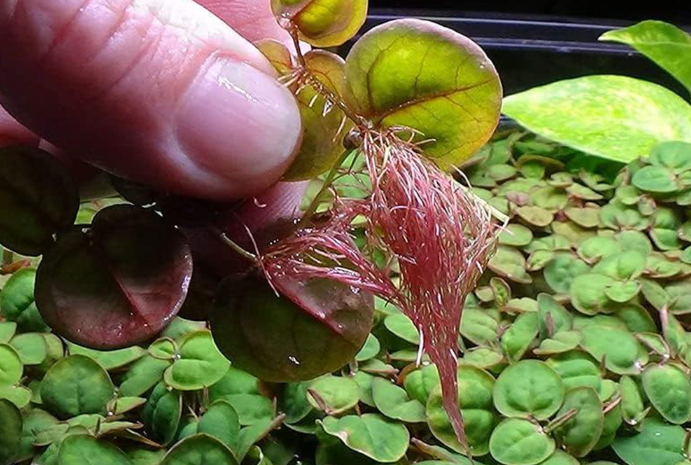
Root color in plants is determined largely by pigments stored in the outer bark-like layer, the periderm, and sometimes in the inner tissue itself, with red and reddish hues typically arising from anthocyanins, betalains, or naphthoquinone compounds that the plant produces for reasons ranging from chemical defense to pollinator attraction elsewhere in the plant. Unlike leaf or flower color, which is often highly visible and studied for its role in photosynthesis or pollination, root pigmentation tends to be a more overlooked trait, since roots spend their entire life underground, out of sight from casual observation. Yet the same biochemical pathways that turn a beet dark crimson or a rhubarb stalk bright red are frequently at work in the root tissue as well, and in many species the root is in fact the primary or most concentrated site of that pigment, sometimes far more saturated in color than any part of the plant visible above ground.
Red-rooted plants span a remarkably wide range of botanical families and uses, from common garden vegetables and ornamentals to obscure wild herbs historically prized for dyeing cloth. Many of the most famous examples, such as beets and madder, owe their cultural significance directly to this root pigmentation, since humans have exploited red root color for thousands of years as a source of natural dye for textiles, cosmetics, and food coloring long before synthetic alternatives were developed. Other red-rooted plants are valued instead for culinary or medicinal purposes, where the pigmented root itself is the part consumed or processed, while still others are simply distinctive wildflowers or woodland plants whose vivid root color serves as a helpful identification feature for foragers, herbalists, and native plant enthusiasts.
It is worth noting that a “red root” can mean several different things depending on the species in question. In some plants, the entire root is uniformly red or reddish throughout its flesh, as in beets, where the pigment is distributed evenly through the interior tissue and is the very trait that makes the vegetable so recognizable at the market. In others, only the outer skin or bark of the root carries the red coloration, while the interior flesh remains pale, cream-colored, or white, a pattern common among many red-skinned radishes and certain wild dye plants. Still other species produce a reddish sap or latex within the root that oxidizes to a deep red or orange upon exposure to air, a phenomenon most famously associated with bloodroot, whose very name derives from this dramatic visual effect.
Gardeners and foragers should approach red-rooted plants with a measure of caution and curiosity in equal parts, since red root color is not itself an indicator of edibility or safety; some red-rooted species are prized food crops, others are valued purely for dye or medicinal use in carefully regulated preparations, and a few are genuinely toxic if the root is mishandled or ingested without proper knowledge. Positive identification down to the species level, ideally with the help of a qualified botanist or a reliable regional field guide, remains essential before any red-rooted plant is used for food, dye, or herbal preparation, since several unrelated species across very different plant families happen to share this same striking root trait. With that context in mind, the following twenty-one plants offer a representative tour of the many different botanical, culinary, and historical roles that red roots have played across cultures and continents.
Types of Plants With Red Roots
Beet
The common beet, Beta vulgaris, is perhaps the most universally recognized red-rooted plant, prized in kitchens around the world for its deep crimson to magenta interior flesh, a color produced by a group of pigments called betalains rather than the anthocyanins responsible for red coloration in most other plants. The root itself is a swollen taproot that develops just beneath the soil surface, often forming concentric rings of alternating color intensity when sliced crosswise, a pattern that has made beets a popular subject for decorative culinary presentation as well as a staple in soups, salads, and pickled preparations. Beyond the kitchen, beet juice has long been used as a natural food coloring agent, and the plant’s tolerance for cool growing conditions has made it a reliable staple crop across temperate gardens for centuries.
Red Radish
Common red radishes, cultivars of Raphanus sativus, are grown for their small, fast-maturing roots whose outer skin ranges from bright cherry red to a deeper crimson, while the interior flesh typically remains crisp white, creating the familiar two-tone appearance seen when a radish is sliced open. This surface pigmentation comes from anthocyanins concentrated in the outermost cell layers of the root, and breeders have selected for increasingly vivid and uniform red skin color over generations of cultivation, since visual appeal is a significant factor in the vegetable’s market appeal. Radishes are among the fastest-growing root vegetables commonly planted in home gardens, often ready for harvest within three to four weeks of sowing, making the vivid red root one of the more instantly gratifying results in vegetable gardening.
Alkanet
Alkanet, Alkanna tinctoria, is a Mediterranean herb in the borage family whose roots contain a deep red pigment called alkannin, historically extracted and used as a natural dye for coloring fabrics, cosmetics, and even food and wine in the ancient and medieval world. Unlike beets, where the red color permeates the entire root uniformly, alkanet’s pigment is concentrated primarily in the outer bark layer of the root, which was traditionally scraped, dried, and processed separately from the paler inner core to extract the dye in its most concentrated form. The plant itself produces small blue flowers typical of the borage family above ground, offering little outward hint of the vivid red dye hidden in its root system below, and it remains cultivated today by dye enthusiasts and herbalists interested in traditional natural coloring methods.
Bloodroot
Bloodroot, Sanguinaria canadensis, is a spring-blooming woodland wildflower native to eastern North America, named for the vivid red-orange sap that flows from its rhizome, a thickened underground stem that functions much like a root, when the tissue is cut or broken. This sap contains sanguinarine, a compound historically used by Indigenous peoples as a dye for baskets, textiles, and skin decoration, though the compound is also caustic and has been associated with tissue damage in modern medicinal misuse, making careful handling and expert guidance essential for anyone working with the plant. Above ground, bloodroot produces a single delicate white flower that emerges wrapped in a distinctive lobed leaf each spring, a striking visual contrast to the deep red coloration hidden within its underground rhizome.
Madder
Madder, Rubia tinctorum, is a scrambling perennial vine native to parts of Europe and Asia, cultivated for many centuries specifically for the vivid red dye, known as alizarin, contained within its long, slender roots. The roots were traditionally harvested after several years of growth, then dried and ground into a powder used to dye textiles a range of shades from soft pink to a deep, rich brick red, a color so closely associated with the plant that “madder red” became a recognized textile dye category in its own right across historical Europe and the Middle East. Madder cultivation declined sharply following the invention of synthetic alizarin dye in the nineteenth century, though the plant remains grown today by natural dye enthusiasts and historical textile conservators seeking authentic traditional coloring methods.
Pokeweed
Pokeweed, Phytolacca americana, is a large, vigorous perennial native to eastern North America, easily recognized by its tall purple-red stems, dark berries, and a thick, fleshy taproot that carries a distinctly reddish tint beneath its pale outer skin. Every part of the mature plant, including the root, contains toxic compounds that can cause serious gastrointestinal illness if ingested without proper preparation, and the root in particular is considered the most toxic portion of the entire plant, making pokeweed a species best appreciated for its dramatic ornamental appearance and wildlife value rather than any culinary use. Despite its toxicity, the young shoots of pokeweed have a long history of careful traditional preparation in parts of the southern United States, though the reddish root itself is universally avoided in these preparations due to its concentrated toxin content.
New Jersey Tea
New Jersey Tea, Ceanothus americanus, is a low, deciduous shrub native to the eastern and central United States, commonly called “redroot” because of the distinctly reddish-brown to brick-red coloration of its extensive, deeply penetrating root system, a trait that gives the plant its most widely used common name among foragers and native plant gardeners. During the American Revolutionary War, the plant’s dried leaves were brewed as a substitute for imported tea, giving rise to its more formal common name, while its striking red roots have also seen limited historical use in traditional dye and medicinal preparations among various Indigenous communities. The shrub produces attractive clusters of small white flowers in early summer and is valued today in native plant landscaping for its drought tolerance and its ability to fix nitrogen in the soil through symbiotic root bacteria.
Redroot Pigweed
Redroot pigweed, Amaranthus retroflexus, is a widespread and fast-growing annual weed found across much of North America, named directly for the reddish coloration typically visible at the base of its taproot just below the soil surface, a feature that helps distinguish it from several visually similar amaranth relatives. Though generally regarded as an agricultural weed capable of competing aggressively with cultivated crops for water and nutrients, the young leaves of redroot pigweed have a long history of use as a nutritious wild green in various culinary traditions, even though the reddish root itself is not typically eaten. The plant produces dense, bristly flower spikes and can grow quite tall under favorable conditions, making it one of the more visually conspicuous weeds found in disturbed soil, roadsides, and cultivated fields throughout the growing season.
Rhubarb
Rhubarb, Rheum rhabarbarum, is best known for its bright red, edible leaf stalks, but the plant’s thick underground rhizome and root system also frequently carries a reddish-brown coloration, particularly when cut, revealing pigmented tissue beneath the coarse outer bark. Unlike the tart, commonly cooked stalks, the root and rhizome of rhubarb are not eaten, since they contain a much higher concentration of oxalic acid and other compounds than the stalks, along with a notably bitter flavor that makes them culinarily undesirable regardless of any potential safety concerns. Historically, dried rhubarb root, particularly from related Asian Rheum species, has been used in traditional medicine systems for its reputed digestive properties, a use entirely separate from the familiar stalks that dominate rhubarb’s modern culinary reputation in pies and preserves.
Red Valerian
Red Valerian, Centranthus ruber, is a hardy, drought-tolerant perennial originally native to the Mediterranean region, grown widely as an ornamental for its long-blooming clusters of small pink to deep red flowers that appear atop sturdy, upright stems throughout much of the growing season. Beneath the soil, the plant develops a fibrous, somewhat woody root system that often carries a reddish-brown tint, particularly in younger roots closer to the crown of the plant, though the roots are rarely the focus of attention given the far more conspicuous display of flowers above ground. Despite its common name, red valerian is not closely related to true medicinal valerian, Valeriana officinalis, and it has become a popular self-seeding garden plant prized for attracting butterflies and thriving in poor, rocky soils where many other ornamentals struggle.
Bistort
Bistort, known botanically as Bistorta officinalis or Persicaria bistorta, is a herbaceous perennial found across cooler regions of Europe and Asia, named for its distinctively twisted, S-shaped rhizome, which carries a reddish-brown to deep red coloration on its exterior and a pinkish tint within when the tissue is cut open. The plant’s common name derives from the Latin for “twice twisted,” referring directly to this characteristic curled rhizome shape, which has historically been dried and used in traditional herbal preparations valued for its strongly astringent properties. Above ground, bistort produces attractive, dense spikes of small pink flowers held on tall, slender stems, making it a popular choice in cottage gardens and naturalized plantings, particularly in moist meadow or woodland-edge settings where its reddish rhizome can spread gradually over time.
Sheep Sorrel
Sheep sorrel, Rumex acetosella, is a low-growing perennial weed found widely across temperate regions, distinguished by its slender, arrow-shaped leaves with a notably sour, tangy flavor and by its thin, wiry, reddish roots and rhizomes that allow the plant to spread persistently through lawns, pastures, and disturbed soil. The reddish tint of the root system becomes especially pronounced in acidic, nutrient-poor soils, where sheep sorrel tends to thrive most vigorously, often serving as an informal indicator plant that gardeners use to gauge soil acidity in a given area. While the tart leaves have occasionally been used sparingly in salads and traditional folk remedies, the plant’s aggressive spreading habit through its reddish underground root system makes it more commonly regarded as a persistent garden and lawn weed than as a deliberately cultivated plant.
Rhatany
Rhatany, or Krameria lappacea, is a low, woody shrub native to arid regions of South America, particularly Peru and Bolivia, valued historically and in traditional herbal medicine for its notably reddish, deeply astringent root, which has long been dried, powdered, and processed into extracts used in mouth rinses and other topical preparations. The root’s characteristic reddish-brown color and pronounced tannin content are responsible for its strongly astringent, puckering taste, a property that made it historically popular as an ingredient in dental powders and traditional remedies aimed at soothing irritated gums and mucous membranes. The plant itself is a partial root parasite, drawing some nutrients from the roots of neighboring desert shrubs, and it produces small, deep red to purple flowers that echo the coloration found underground in its harvested roots.
Indian Madder
Indian Madder, Rubia cordifolia, is a scrambling, vine-like perennial native to South and East Asia, closely related to European madder and valued for the same type of vivid red dye compounds concentrated within its slender, trailing roots. Long used throughout the Indian subcontinent and neighboring regions as a source of natural red and pink textile dye, the plant’s roots were traditionally harvested, dried, and processed using techniques quite similar to those developed independently for European madder, reflecting a broadly parallel history of red root dye use across separate but climatically similar regions of the world. In addition to its dyeing applications, Indian madder has a long history of use in traditional Ayurvedic medicine, where preparations from the reddish root have been employed for a range of purposes according to historical practice, distinct from its better-documented role as a textile coloring agent.
Carolina Redroot
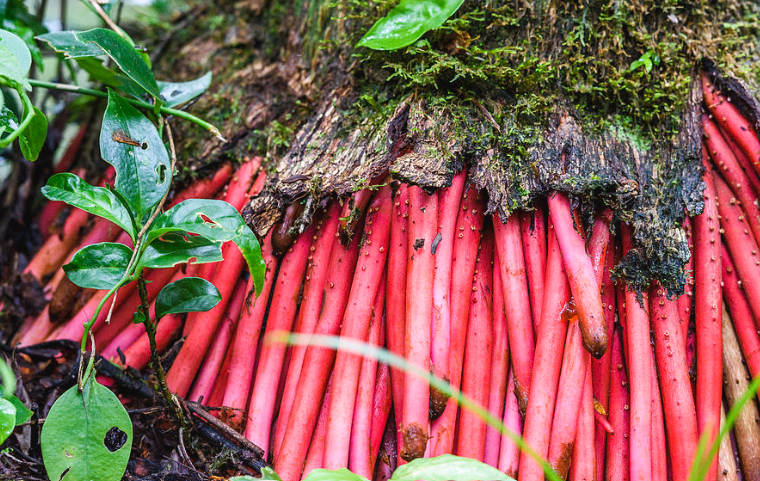
Carolina redroot, Lachnanthes caroliniana, is a wetland perennial native to the eastern coastal United States, easily identified by the strikingly bright red to orange coloration of its rhizomes and roots, a trait so pronounced and distinctive that it gives the plant its common name outright. Found growing naturally in bogs, marshes, and other consistently wet, acidic habitats, the plant produces tufted clusters of narrow, sword-like leaves and small woolly white flower clusters atop tall stems, offering little visual hint above ground of the vividly colored root system hidden in the saturated soil beneath it. Historically, the red pigment from the roots was used by some Indigenous communities as a natural dye, and the plant remains of interest today to native wetland gardeners and ecologists studying acidic bog and pine savanna plant communities where it commonly occurs.
Coralroot Orchid
Coralroot orchids, belonging to the genus Corallorhiza, are unusual native North American orchids that lack chlorophyll entirely and instead obtain their nutrients through a parasitic relationship with underground fungi, a lifestyle reflected directly in their distinctive, coral-like underground rhizome system, which is typically reddish-brown to deep red in color and branches in a manner that closely resembles marine coral. Because the plant does not photosynthesize, it produces no green leaves at all, instead sending up a slender reddish or brownish flowering stalk directly from its coral-like rhizome each growing season, making the underground red root structure arguably the plant’s most visually defining feature. Coralroot orchids are typically found in shaded woodland settings with rich organic soil and an established fungal network, and their unusual, largely underground lifestyle makes them considerably more difficult to cultivate deliberately than most other garden orchids.
Hoary Puccoon
Hoary puccoon, Lithospermum canescens, is a native North American prairie wildflower valued historically by several Indigenous peoples for the reddish-purple dye obtained from its roots, which were traditionally used to color quills, textiles, and other decorative materials, giving the plant its common name derived from an Indigenous word for a plant used in dyeing. Above ground, the plant produces clusters of small, bright orange-yellow flowers covered in fine silvery hairs that give the foliage a soft, hoary appearance, while its taproot beneath the soil carries the distinctly reddish pigmentation that made it a valued traditional dye source. Hoary puccoon is adapted to dry, well-drained prairie soils and has become an increasingly popular choice in native plant restoration projects aimed at recreating authentic tallgrass and mixed-grass prairie plant communities.
Canada Wild Ginger
Canada wild ginger, Asarum canadense, is a low-growing, shade-loving woodland perennial native to eastern North America, forming dense mats of heart-shaped leaves that largely conceal its creeping rhizome system, which carries a reddish-brown coloration and a distinctly spicy, ginger-like aroma when cut or crushed, despite being entirely unrelated botanically to true culinary ginger. The reddish rhizome spreads horizontally just beneath the leaf litter, gradually expanding the plant’s colony over time, and it has a documented history of limited use in traditional herbal preparations among various Indigenous communities, valued for both its aromatic properties and its distinctive coloration. Wild ginger’s unusual dark maroon, cup-shaped flowers bloom low to the ground, often hidden beneath the foliage and pollinated by ground-dwelling insects, adding to the plant’s overall reputation as a subtly hidden woodland curiosity both above and below the soil surface.
Bloody Dock
Bloody dock, Rumex sanguineus, is an ornamental relative of common dock grown primarily for its striking foliage, in which deep red to burgundy veins run vividly across otherwise green leaves, a coloration pattern that extends partially into the plant’s fibrous root system as well, particularly near the crown where the roots transition into the above-ground stem tissue. Though closely related to the more common, less ornamental docks often regarded as weeds, bloody dock has been specifically selected and cultivated for its dramatic red-veined foliage, making it a popular accent plant in shade gardens and mixed perennial borders where its unusual coloration provides strong visual contrast against more uniformly green companion plants. Like its wild relatives, bloody dock tolerates a wide range of soil conditions and can self-seed readily if flower spikes are left to mature, occasionally naturalizing beyond its originally planted location in garden settings.
Chicory
Chicory, Cichorium intybus, is a hardy perennial herb widely naturalized across roadsides and disturbed soils in temperate regions, cultivated in certain varieties specifically for its long taproot, which develops a notably reddish-brown to tan exterior coloration, particularly in cultivated forcing varieties bred for the production of Belgian endive. The root’s interior, once dried, roasted, and ground, has a long history of use as a coffee substitute or additive, valued for its slightly bitter, earthy flavor that closely complements or extends true coffee in various regional culinary traditions. Above ground, chicory produces cheerful sky-blue flowers that open only during the daytime and typically close by early afternoon, a striking contrast to the humble, reddish-toned taproot working away in the soil below, which represents by far the plant’s most economically significant feature.
Dyer’s Bugloss
Dyer’s bugloss, Anchusa officinalis, is a bristly-leaved herbaceous perennial native to Europe and closely related to alkanet within the borage family, historically valued for the reddish dye compounds present in its roots, which were used in a manner quite similar to true alkanet for coloring fabrics, oils, and cosmetic preparations before the wide availability of synthetic dyes. The plant produces attractive clusters of small blue to purple, funnel-shaped flowers that are highly attractive to bees and other pollinators, offering a useful ornamental and pollinator-friendly quality above ground that stands in contrast to the far less visible reddish dye root working beneath the soil. Though somewhat less concentrated in pigment than true alkanet, dyer’s bugloss root was historically used as an accessible substitute in regions where true alkanet was less readily available, reflecting the broader historical pattern of related plant species being pressed into similar dyeing roles across different parts of Europe.